
 By admin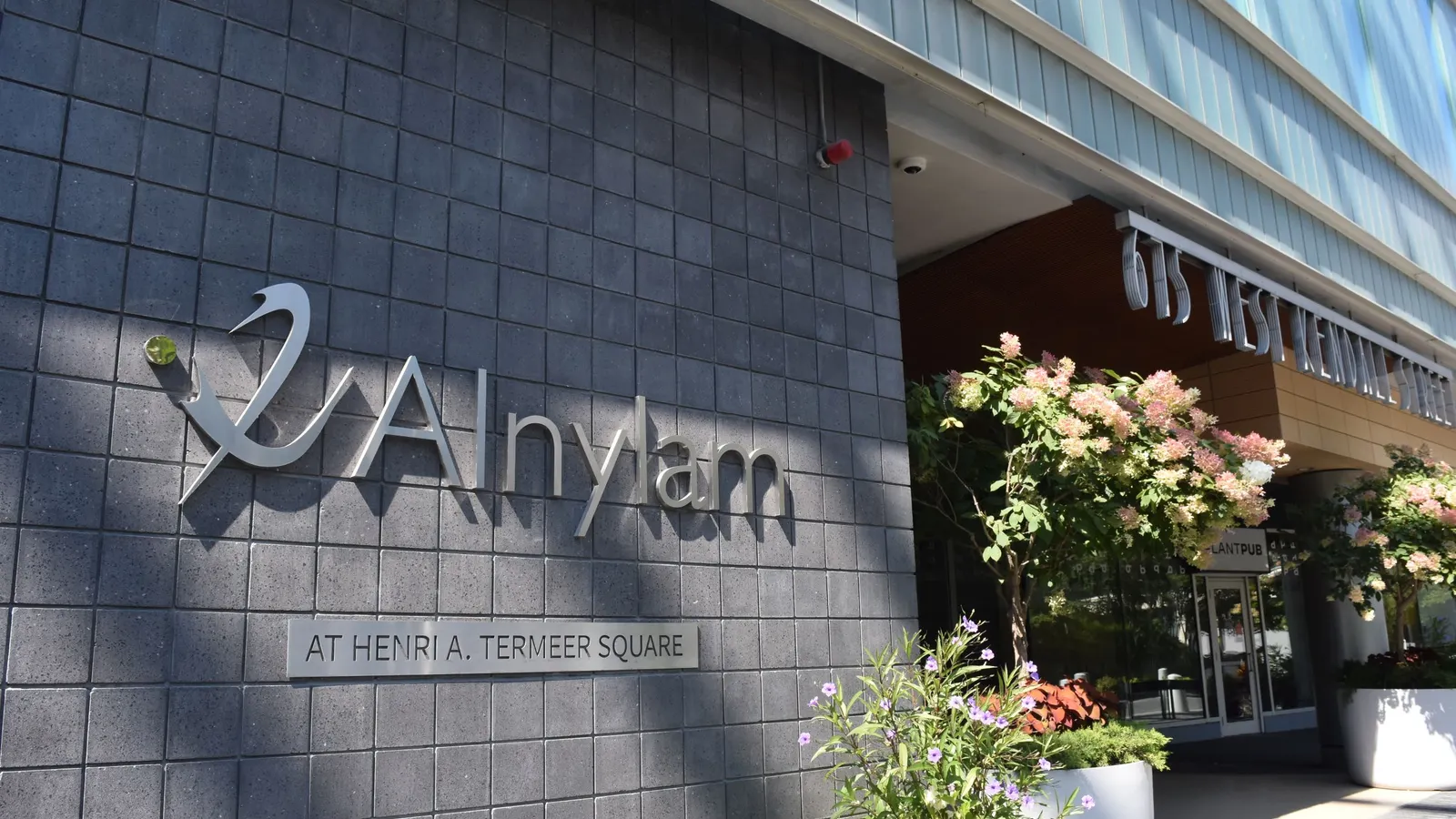
Cambridge, MA – Alnylam Pharmaceuticals, a pioneering force in RNA interference (RNAi) therapeutics, experienced a significant market downturn on July 30, 2026, as its stock plummeted by an alarming 30%. The sharp decline was triggered by mounting investor concerns regarding the performance of its flagship drug, Amvuttra (vutrisiran), and an unexpected reduction in the company’s financial guidance for 2026. This sudden reversal has cast a shadow over the RNA-focused biotech, raising critical questions about its core TTR amyloidosis business and its near-term growth trajectory.
The dramatic sell-off saw Alnylam shares closing at approximately $200 apiece by late Thursday afternoon, a steep fall from their $286 close just the previous day. This substantial erosion of market value reflects a compounding of anxieties that began earlier in the month, culminating in what analysts are describing as a "one-two punch" to the company’s investor confidence. The immediate catalyst was the disclosure of second-quarter earnings, which revealed Amvuttra sales of $1.01 billion, falling 3% short of the average analyst estimate of $1.05 billion. More significantly, the company’s decision to revise its full-year guidance downwards, particularly so early in the fiscal year, caught many market watchers by surprise and intensified fears about the sustainability of its growth projections.
Alnylam’s Pioneering Role in RNAi Therapeutics
To understand the magnitude of Alnylam’s recent challenges, it is essential to contextualize its position within the biopharmaceutical landscape. Founded in 2002, Alnylam Pharmaceuticals has been at the forefront of developing medicines based on RNA interference (RNAi), a groundbreaking biological process where RNA molecules inhibit gene expression or translation, thereby silencing specific genes. This innovative approach allows for the targeting of disease-causing genes at their source, offering a novel therapeutic modality for a wide range of genetic and other diseases.
Over two decades, Alnylam has meticulously built a robust pipeline and brought several first-in-class RNAi therapeutics to market. Its initial commercial success came with Onpattro (patisiran), approved in 2018 for hereditary transthyretin-mediated (hATTR) amyloidosis with polyneuropathy. This was followed by Givlaari (givosiran) for acute hepatic porphyria and Oxlumo (lumasiran) for primary hyperoxaluria type 1. The company also developed Leqvio (inclisiran), a cholesterol-lowering drug partnered with Novartis, which has shown significant commercial promise.
Amvuttra, approved in 2022, represents a significant advancement over Onpattro. Designed for the treatment of hATTR amyloidosis with polyneuropathy, Amvuttra offers subcutaneous administration and a longer dosing interval (quarterly), improving patient convenience and adherence compared to Onpattro’s intravenous infusions. Its expanded label and ease of use quickly established it as a critical revenue driver for Alnylam, making its recent sales performance and guidance revision particularly concerning for investors. The drug’s success was seen as crucial for Alnylam’s sustained growth and leadership in the RNAi space, solidifying its position against competitors in the highly competitive TTR amyloidosis market.
The Intricate Landscape of TTR Amyloidosis
Transthyretin (TTR) amyloidosis is a rare, progressive, and fatal disease caused by the misfolding of the transthyretin protein, leading to the accumulation of amyloid deposits in various organs and tissues. These deposits impair organ function, primarily affecting the peripheral nerves (polyneuropathy) and the heart (cardiomyopathy). The disease can be hereditary (hATTR), caused by a mutation in the TTR gene, or wild-type (wtATTR), which is non-hereditary and typically affects older individuals.
Treatment strategies for TTR amyloidosis primarily focus on two approaches: reducing the production of TTR protein (gene silencing, like Amvuttra and Onpattro) or stabilizing the TTR protein to prevent its misfolding (e.g., Pfizer’s Vyndaqel/Vyndamax). Alnylam’s RNAi therapies, Amvuttra and Onpattro, work by silencing the TTR gene, thereby reducing the production of both normal and variant TTR protein. This mechanism aims to halt or slow the progression of the disease by preventing further amyloid deposition.
The market for TTR amyloidosis treatments is highly competitive and rapidly evolving. Pfizer’s Vyndaqel (tafamidis) and Vyndamax (tafamidis meglumine) are well-established for ATTR cardiomyopathy, representing a significant portion of the market. Beyond Alnylam, other companies are actively developing or commercializing TTR-targeting therapies. This intense competition means that any perceived weakness in a product’s efficacy, market uptake, or commercial strategy can have profound implications for a company’s stock performance and future prospects.
A Chronology of Compounding Concerns
The events leading to Alnylam’s dramatic stock drop did not occur in isolation but represent a series of developments that gradually eroded investor confidence.
Early July 2026: Eplontersen Setback Signals Market Volatility
The initial tremor in Alnylam’s market valuation occurred earlier in July with the announcement of a study setback for eplontersen, another investigational drug targeting TTR amyloidosis. Eplontersen, developed through a collaboration between AstraZeneca and Ionis Pharmaceuticals, is an RNAi therapeutic designed to reduce the production of TTR protein. The setback, reportedly in a study evaluating its utility in TTR cardiomyopathy, raised thorny questions within the investment community. While the specific details of the study failure were not immediately elaborated, the news cast a pall over the entire TTR therapeutic landscape.
For Alnylam, the eplontersen setback was particularly concerning because it sparked broader anxieties about the competitive landscape and the potential limitations of TTR-silencing drugs, especially in patients already receiving other treatments or with advanced disease. Investors began to ponder whether the market for TTR therapies was becoming saturated or if the efficacy profile of these drugs might be more nuanced than initially assumed. Such concerns directly impact the perceived market opportunity for Amvuttra, particularly as the focus shifts towards combination therapies or treatment in more challenging patient populations. The uncertainty surrounding eplontersen’s future and its implications for the broader class of TTR reducers created an initial downward pressure on Alnylam’s shares, foreshadowing the more significant drop to come.
Late July 2026: Earnings Miss and Guidance Cut Deliver the "One-Two Punch"
The second, and more impactful, blow came with Alnylam’s second-quarter 2026 earnings report. Despite the company’s strong reputation and previous growth trajectory, the report delivered two pieces of news that profoundly disappointed investors: a sales miss for Amvuttra and a subsequent downward revision of its full-year financial guidance.

Amvuttra sales, which totaled $1.01 billion for the quarter, fell short of the consensus analyst estimate of $1.05 billion. While a 3% miss might appear modest in isolation, it was interpreted by the market as a significant deviation from expected performance, particularly for a cornerstone product in a competitive therapeutic area. This miss, combined with the earlier eplontersen news, amplified concerns about Amvuttra’s market penetration and the overall demand dynamics for TTR amyloidosis treatments.
However, it was the company’s decision to cut its 2026 financial guidance that sent shockwaves through the market. Alnylam had previously set ambitious targets for the year, reflecting its confidence in the continued growth of its RNAi portfolio. The early-year revision suggested that internal projections or market conditions had shifted more dramatically than anticipated. While the specific revised figures were not immediately detailed, the mere act of reducing guidance so early in the fiscal year signaled potential underlying challenges that extended beyond a single quarter’s performance. This unexpected move directly contradicted previous market expectations and undermined investor confidence in the company’s ability to meet its strategic objectives.
Analyst Reactions and Market Scrutiny
The twin blows of the eplontersen setback and Alnylam’s earnings report triggered immediate and pointed reactions from leading financial analysts, whose assessments underscored the gravity of the situation.
Olivia Brayer Saunders, an analyst at Cantor Fitzgerald, characterized the events as a "one-two punch" for Alnylam. She noted that while expectations for 2026 had been acknowledged as ambitious, a guidance cut was entirely unexpected. Saunders expressed concern that the "overhang" from these developments would persist, particularly until the failed eplontersen study’s data is presented at a medical meeting in late August. This presentation is crucial, as it could either provide clarity that alleviates some market anxieties or further complicate the competitive landscape for TTR therapies, potentially exacerbating Alnylam’s challenges. The specific details revealed at the meeting will be critical in shaping investor perceptions of the broader TTR market.
Kostas Biliouris, an analyst at Oppenheimer, echoed the sentiment of surprise regarding the guidance reduction. He highlighted that while some investors might have anticipated such a move, it came as a shock to his team, especially given its timing "this early in the year." Biliouris’s analysis further revealed a disconnect between Alnylam’s revised outlook and external market indicators. He pointed out that prescription rates tracked by healthcare data specialist Iqvia suggested the company was on track to meet its original predictions. This discrepancy raises questions about the specific factors contributing to Alnylam’s conservative revised guidance. Is it due to unforeseen competitive pressures, slower-than-expected patient uptake, challenges in reimbursement, or perhaps a more cautious approach to forecasting in a volatile market? The gap between external market data and internal company projections adds another layer of uncertainty for investors trying to gauge Alnylam’s true market performance.
Faisal Khurshid, an analyst at Jefferies, provided perhaps the most stark assessment, stating that the earnings miss and guidance cut invite "major" questions about the future outlook of Alnylam’s TTR business. Khurshid underscored the intensity of the "bull/bear debate" surrounding the company, emphasizing that "today’s update underscores the complexity." He specifically warned that his team does not envision "the overhang passing easily" and expressed skepticism about the company’s ability to pivot, noting that he is "not convinced there’s enough investor interest" in Alnylam’s pipeline to "make up for TTR uncertainty." This suggests that even with a diversified pipeline, the market’s focus remains heavily on the performance of its core commercial assets, particularly Amvuttra. The perceived weakness in this crucial segment diminishes the attractiveness of its future projects, at least in the short to medium term.
The Broader Competitive Landscape in TTR Amyloidosis

The challenges faced by Alnylam must be viewed within the context of an increasingly competitive and evolving TTR amyloidosis market. Key players include:
- Pfizer (Vyndaqel/Vyndamax): These oral TTR stabilizers are a dominant force, particularly in ATTR cardiomyopathy, and have established a strong market presence. Their long-standing approval and broad label make them formidable competitors.
- AstraZeneca/Ionis (Eplontersen): Despite its recent study setback, eplontersen represents another RNAi therapeutic in development, aiming to compete with Alnylam’s offerings. Its potential future approval, even with delays or narrower indications, could intensify pricing pressure and market share battles.
- BridgeBio Pharma (Acoramidis): This investigational oral TTR stabilizer has shown promising results in clinical trials for ATTR cardiomyopathy and is expected to launch in the near future. Its entry could further fragment the market, forcing existing players to differentiate more aggressively.
The intense competition means that market share is fiercely contested, and any perceived advantage or disadvantage can significantly impact commercial success. Alnylam’s Amvuttra, while offering convenience advantages, faces continuous pressure to demonstrate superior outcomes and cost-effectiveness in a crowded field. The eplontersen setback, while seemingly a competitor’s issue, ironically fueled concerns for Alnylam by highlighting the inherent risks and complexities of developing and commercializing TTR therapies, irrespective of the specific drug or mechanism.
Alnylam’s Strategic Imperatives and Future Outlook
In the wake of these developments, Alnylam Pharmaceuticals faces critical strategic imperatives. While the company has not yet issued a formal public statement directly addressing the stock plunge beyond its earnings call, it is highly probable that Alnylam will reaffirm its commitment to the TTR amyloidosis market, emphasizing the clinical value of Amvuttra and the broader RNAi portfolio. During upcoming investor calls or conferences, management will likely seek to provide greater clarity on the factors that led to the guidance revision, outlining specific measures to optimize Amvuttra’s performance and address investor concerns. This might include discussions on enhanced commercial strategies, patient access initiatives, or new data presentations that could differentiate Amvuttra further.
The late August medical meeting, where the eplontersen study data will be presented, represents a crucial near-term catalyst. Depending on the nature of the data and its interpretation, it could either provide relief by clarifying the specific limitations of eplontersen (rather than the entire TTR-silencing class) or deepen concerns about the market dynamics. Alnylam will likely be prepared to articulate how these findings, regardless of their content, impact its own TTR strategy.
Looking beyond the immediate challenges, Alnylam’s long-term prospects hinge on several factors. Its robust pipeline, extending beyond TTR amyloidosis into areas like hypertension (with zilebesiran) and other rare diseases, remains a significant asset. However, as Jefferies analyst Faisal Khurshid noted, investor confidence in these pipeline assets might be overshadowed by the current uncertainties surrounding the core TTR business. The company will need to demonstrate strong clinical progress and clear commercial pathways for its investigational drugs to restore broad investor enthusiasm.
Operational efficiency, strategic partnerships, and effective communication with the investment community will be paramount. Alnylam’s ability to navigate this period of heightened scrutiny will depend on its capacity to transparently address market concerns, articulate a compelling growth strategy, and consistently deliver on its revised financial commitments.
Broader Implications for the Biotech Sector

Alnylam’s recent market reversal carries broader implications for the biotechnology sector, particularly for companies reliant on a few key commercial products and those operating in competitive therapeutic areas. It serves as a stark reminder of the inherent volatility and risk associated with biopharmaceutical investments. Even for established players with groundbreaking technology, unexpected sales misses or guidance cuts can trigger significant capital outflows.
The episode also highlights the critical role of investor expectations and the nuanced interpretation of clinical trial data. A setback for one drug, even a competitor’s, can ripple across an entire therapeutic class, prompting investors to re-evaluate the market potential for similar therapies. Furthermore, the discrepancy between external prescription data (Iqvia) and internal company projections underscores the complexity of forecasting in dynamic markets, where factors such as market access, reimbursement policies, competitive launches, and evolving treatment paradigms can rapidly alter commercial trajectories.
For the RNAi technology space specifically, while Alnylam’s challenges are product- and company-specific, the incident could prompt a broader, albeit temporary, re-evaluation of valuation multiples for companies primarily focused on this modality. However, the fundamental promise of RNAi as a therapeutic platform remains strong, given its precision and potential to address a wide array of diseases. Alnylam’s experience will likely reinforce the importance of diversified pipelines, robust commercial execution, and clear communication in maintaining investor confidence in this innovative and high-growth segment of the biotech industry.
The coming months will be critical for Alnylam as it works to restore investor trust, clarify its market position, and demonstrate the resilience of its RNAi platform. The late August medical meeting and subsequent financial updates will be closely watched indicators of the company’s ability to rebound from this significant market setback.
