
 By Nana O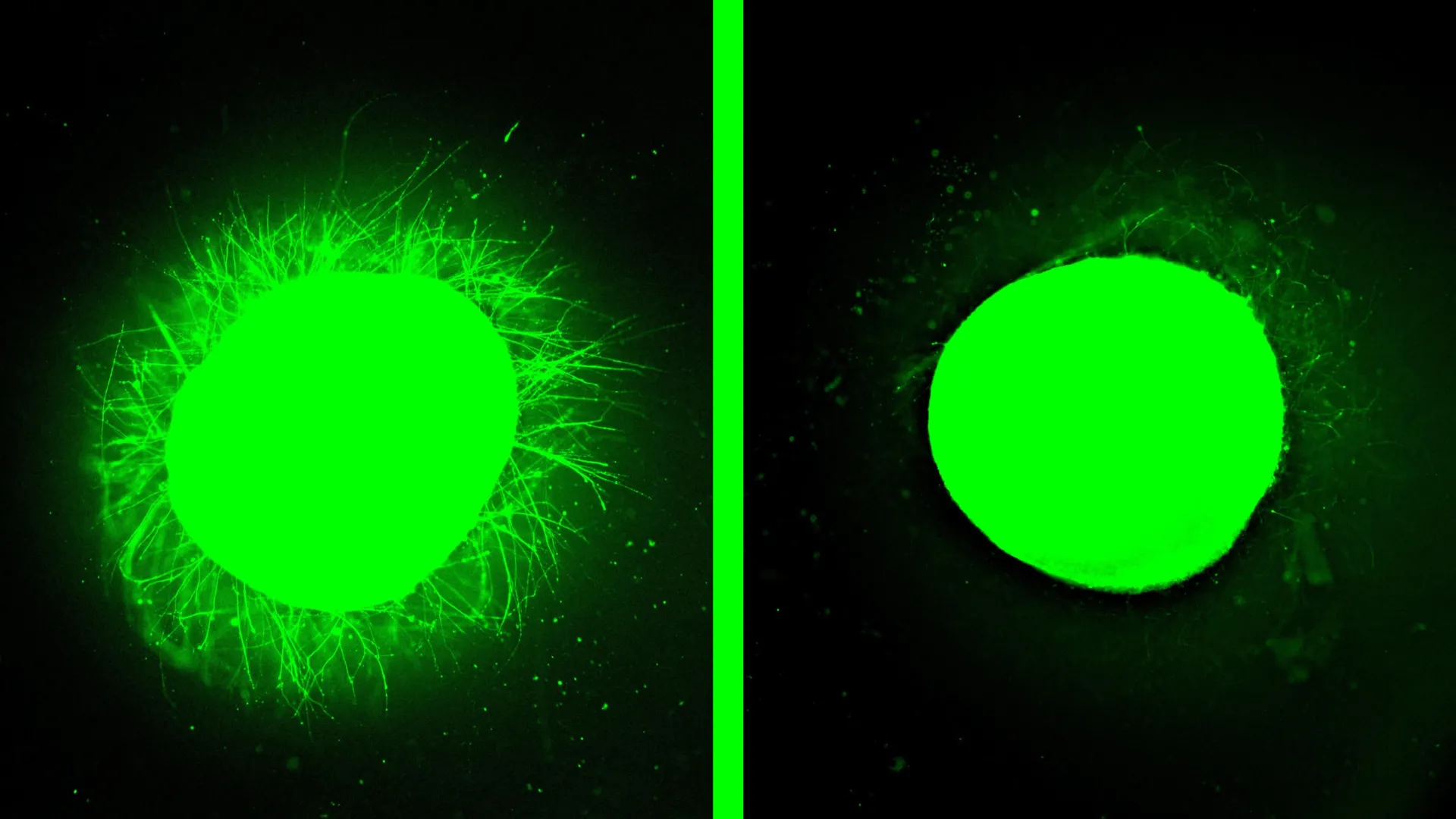
Northwestern University scientists have achieved a significant breakthrough in the study of human spinal cord injury (SCI) by developing the most sophisticated lab-grown model to date. This advanced model, utilizing human spinal cord organoids derived from stem cells, has allowed researchers to meticulously recreate the complex biological consequences of SCI and, crucially, to evaluate the efficacy of a novel regenerative treatment known as "dancing molecules." The findings, published on February 11 in the esteemed journal Nature Biomedical Engineering, represent a pivotal step towards understanding and treating this devastating condition.
Replicating the Devastation of Spinal Cord Injury
For the first time, this new research demonstrates that human spinal cord organoids can accurately mirror the profound biological impacts of SCI. The organoids exhibited key pathological hallmarks observed in human patients, including widespread cell death, significant inflammatory responses, and the formation of glial scars. These glial scars, a dense accumulation of scar tissue, act as formidable physical and chemical barriers, critically impeding the natural regenerative capacity of damaged nerve cells.
The Northwestern team meticulously guided induced pluripotent stem cells over several months to develop complex spinal cord tissue. This intricate process not only formed neurons and astrocytes but also, for the first time in such a model, incorporated microglia. These specialized immune cells of the central nervous system are crucial for replicating the inflammatory cascade that characterizes SCI. The inclusion of microglia makes this organoid model exceptionally realistic, as it now encompasses the biochemical signals produced by the resident immune system in response to injury.
The organoids, measuring several millimeters in diameter, were mature enough to accurately simulate traumatic damage. Researchers employed two distinct injury models to mimic common SCI scenarios: a precise scalpel incision to represent lacerations, akin to surgical wounds, and a compressive contusion injury, designed to emulate the force of accidents like car crashes or falls. Both injury types reliably triggered cell death and the formation of glial scars, precisely as observed in actual human SCI. The researchers were able to differentiate between astrocytes that were part of the normal tissue structure and those within the glial scar, which are characteristically larger and more densely packed. Furthermore, they detected the production of chondroitin sulfate proteoglycans, key molecules in the nervous system that are known to be upregulated in response to injury and disease.
"Dancing Molecules": A Beacon of Hope for Regeneration
The transformative potential of this research lies not only in the advanced injury model but also in the successful application of a promising regenerative therapy. When the damaged organoids were treated with "dancing molecules"—a therapy previously shown to restore movement and repair tissue in animal studies—the results were nothing short of dramatic. The injured tissue exhibited substantial neurite outgrowth, a critical indicator of nerve repair, as the long extensions that facilitate neuronal communication began to regenerate. Concurrently, the scar-like tissue was significantly reduced, becoming barely detectable in some instances.
This therapy, belonging to a broader class of supramolecular therapeutic peptides (STPs), leverages the controlled motion of molecules to stimulate the body’s innate repair mechanisms. Introduced in 2021, the "dancing molecules" therapy utilizes large assemblies of over 100,000 molecules designed to activate cell receptors and initiate natural healing processes. These therapies are delivered as a liquid injection that rapidly self-assembles into a nanofiber scaffold, mimicking the spinal cord’s natural extracellular matrix. By precisely controlling the dynamic movement of these molecules within the scaffold, researchers have enhanced their ability to interact with the constantly shifting cellular receptors, thereby boosting their therapeutic efficacy.
The concept of supramolecular therapies is not entirely new, with similar principles being applied in current GLP-1 drugs for weight loss and diabetes, an area that Stupp’s lab explored nearly 15 years ago. The core principle behind the "dancing molecules" is that the dynamic motion of the therapeutic molecules increases their likelihood of encountering and engaging with cellular receptors. As Dr. Samuel I. Stupp, the study’s senior author and inventor of the dancing molecules, explained, "Given that cells themselves and their receptors are in constant motion, you can imagine that molecules moving more rapidly would encounter these receptors more often. If the molecules are sluggish and not as ‘social,’ they may never come into contact with the cells."
Validation and Future Implications
The current study provides compelling validation for the potential of this therapy in humans. "One of the most exciting aspects of organoids is that we can use them to test new therapies in human tissue," stated Dr. Stupp, a distinguished Board of Trustees Professor at Northwestern University with appointments across multiple schools and director of the Center for Regenerative Nanomedicine (CRN). "Short of a clinical trial, it’s the only way you can achieve this objective. We decided to develop two different injury models in a human spinal cord organoid and test our therapy to see if the results resembled what we previously saw in the animal model. After applying our therapy, the glial scar faded significantly to become barely detectable, and we saw neurites growing, resembling the axon regeneration we saw in animals. This is validation that our therapy has a good chance of working in humans."
The findings offer significant support for the therapeutic approach, which recently received Orphan Drug Designation from the U.S. Food and Drug Administration (FDA). This designation is a critical milestone, acknowledging the therapy’s potential to address rare diseases and paving the way for expedited development and regulatory review. The implications are profound, suggesting a tangible pathway to improved recovery for individuals living with spinal cord injuries, a condition that affects millions worldwide, often resulting in paralysis, loss of sensation, and significant lifelong disability.
The Power of Human Organoids in Research
Organoids, miniature organs grown from stem cells in a laboratory setting, represent a paradigm shift in biological research. While simplified versions of their full-sized counterparts, they remarkably replicate the structure, cellular diversity, and functional characteristics of native human tissues. This makes them invaluable tools for studying diseases, testing therapeutic interventions, and unraveling developmental processes. Importantly, organoids offer a more ethical and often more cost-effective alternative to traditional animal experimentation and human clinical trials, allowing researchers to accelerate the pace of discovery.
While other research groups have successfully generated spinal cord organoids for fundamental biological studies, the Northwestern model stands out for its advanced capacity to simulate injury. The incorporation of microglia, as mentioned, was a monumental achievement, enabling a more accurate representation of the inflammatory response. "It’s kind of a pseudo-organ," Dr. Stupp noted. "We were the first to introduce microglia into a human spinal cord organoid, so that was a huge accomplishment. It means that our organoid has all the chemicals that the resident immune system produces in response to an injury. That makes it a more realistic, accurate model of spinal cord injury."
The Mechanism of "Dancing Molecules"
The "dancing molecules" therapy functions through the precise orchestration of molecular motion. In previous animal experiments, a single injection administered 24 hours post-injury in mice led to significant functional recovery, with animals regaining the ability to walk within four weeks. Crucially, formulations exhibiting faster molecular motion demonstrated superior performance compared to their slower counterparts, underscoring the direct correlation between increased molecular movement and enhanced bioactivity and cellular signaling.
To further elucidate the role of molecular motion, the Northwestern team conducted experiments on healthy organoids. "Before we even developed the injury model, we tested the therapy on a healthy organoid," Dr. Stupp revealed. "The dancing molecules spun out all these long neurites on the surface of the organoid but, when we used molecules that had less or no motion, we saw nothing. This difference was very vivid." This experiment powerfully illustrates that the dynamic nature of the molecules is fundamental to their ability to promote neurite extension, even in the absence of injury.
Charting a Course for the Future
The implications of this research extend beyond immediate therapeutic development. The Northwestern team is committed to further refining their organoid models. Future efforts will focus on engineering even more advanced organoids capable of replicating chronic, long-standing injuries, which are characterized by thicker and more resilient scar tissue. This will allow for the testing of therapies tailored to these more challenging conditions.
Looking further ahead, Dr. Stupp envisions a future where these miniature spinal cords could play a pivotal role in personalized medicine. By generating implantable tissue derived from a patient’s own stem cells, the risk of immune rejection could be significantly mitigated, offering a highly tailored approach to regenerative therapy. This represents a long-term vision for the application of organoid technology, moving beyond research models to direct clinical interventions.
The study, titled "Injury and therapy in a human spinal cord organoid," was made possible by the support of the Center for Regenerative Nanomedicine at Northwestern University and a generous gift from the John Potocsnak Family specifically for spinal cord injury research. This collaborative effort underscores the growing recognition of the urgency and importance of finding effective treatments for SCI, a condition that continues to challenge medical science and profoundly impact the lives of those affected. The successful integration of advanced organoid technology with innovative therapeutic strategies like "dancing molecules" heralds a new era in the quest for spinal cord regeneration.
