
 By Hendra Lukman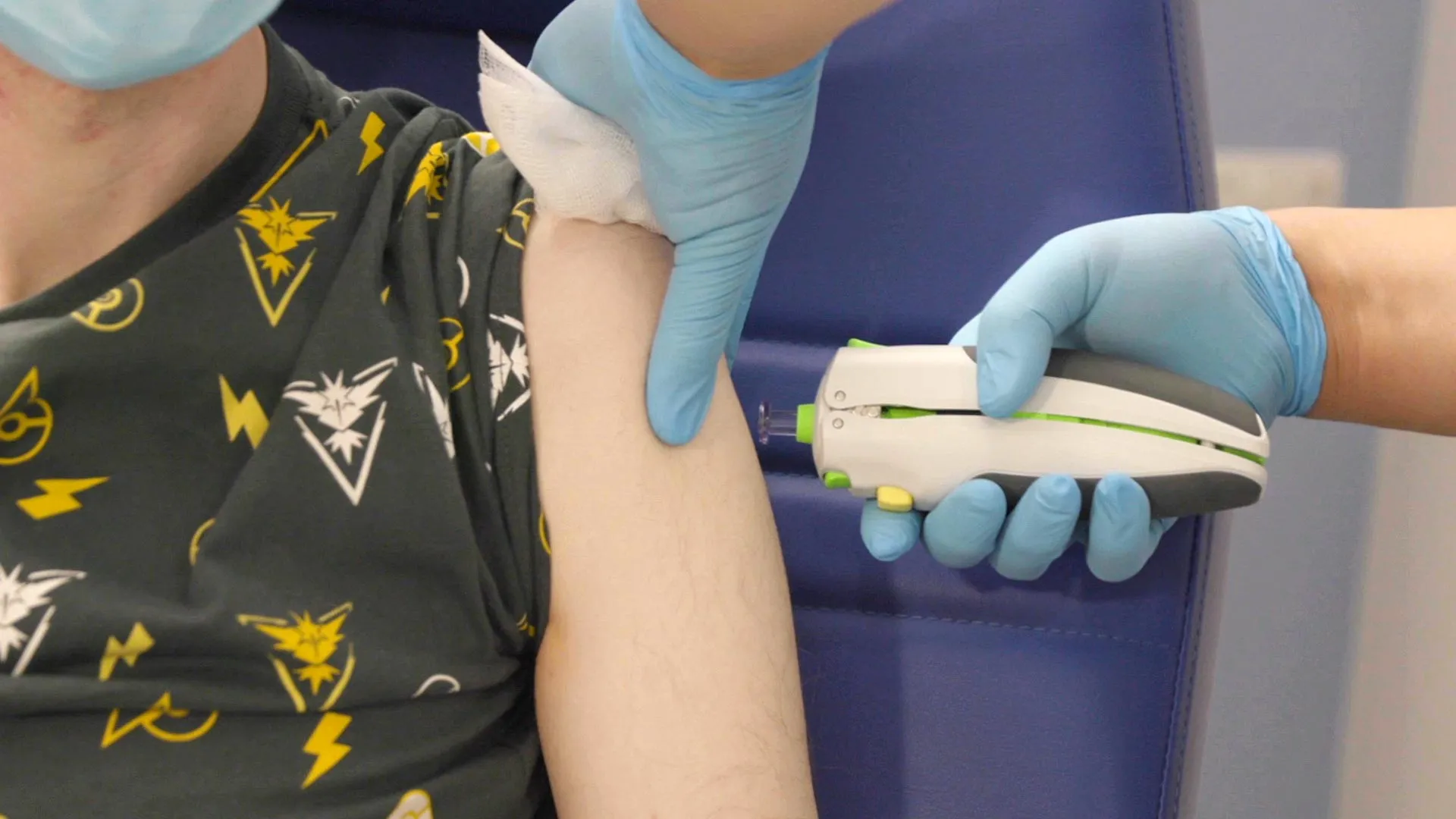
A groundbreaking development in the fight against emerging infectious diseases has been announced, with a novel universal coronavirus vaccine successfully completing its first human clinical trial. This significant milestone represents a crucial step towards a future where humanity possesses broader, more resilient protection against viral threats, potentially averting future pandemics. Developed collaboratively by researchers at the University of Cambridge and the university spinout company DIOSynVax (DVX) Ltd, the experimental vaccine demonstrated a strong safety profile, eliciting no significant adverse effects in a study involving 39 healthy volunteers.
This innovative vaccine distinguishes itself from conventional approaches by moving beyond targeting specific virus strains. Instead, it was meticulously designed to confer protection against a wide spectrum of viruses within the Sarbeco coronavirus family. This family is particularly relevant due to its inclusion of SARS-CoV-2, the causative agent of the ongoing COVID-19 pandemic, as well as the SARS virus and a host of related bat coronaviruses. The latter group poses a persistent threat, carrying the potential for future zoonotic spillover events into human populations. The initial human trial results have indicated that the vaccine successfully stimulated immune responses not only against SARS-CoV-2 and SARS but also against these concerning bat viruses that have yet to establish themselves in humans. The comprehensive findings of this pivotal study have been formally published in the esteemed Journal of Infection.
AI-Powered Vaccine Design: A Paradigm Shift in Development
The successful completion of this trial heralds another significant achievement: it marks the first instance of a vaccine whose active ingredient was conceived and generated entirely through sophisticated computer simulations. This represents a revolutionary departure from traditional vaccine development methodologies. Researchers harnessed the power of artificial intelligence (AI) and machine learning algorithms to engineer what they term a "super-antigen." In vaccine terminology, an antigen is the crucial component that educates the immune system, equipping it to recognize and effectively combat a specific infection.
Instead of focusing on the genetic makeup of a single, circulating virus strain, the AI system embarked on a comprehensive analysis of genetic information drawn from Sarbeco coronaviruses. This data was amassed through extensive global surveillance programs, meticulously collecting samples and genetic sequences from various animal reservoirs. By analyzing this vast dataset, the AI was able to identify conserved features – those elements that are shared across the entire Sarbeco coronavirus group, regardless of individual strain mutations. These commonalities were then ingeniously combined into a single, potent vaccine antigen. The overarching objective behind this strategy is to establish a robust immune defense that can anticipate and neutralize not only currently known viruses but also future strains that have not yet emerged or been identified.
Professor Jonathan Heeney, a leading figure in this research from the Lab of Viral Zoonotics at the University of Cambridge’s Department of Veterinary Medicine, emphasized the transformative nature of this approach. "This trial proves the safety of an entirely new way of designing vaccines," Professor Heeney stated. "The technology uses an AI-designed ‘super-antigen’ to provide lasting protection against a broad range of viruses — for example the Ebola group, or Sarbeco coronavirus group — even as they mutate." This sentiment is echoed by the research team, who believe that this AI-driven strategy holds immense promise and could eventually be extrapolated to develop universal vaccines for other significant virus families, including the highly dangerous Ebola viruses and the ever-evolving influenza viruses.
Moving Beyond the Reactive Cycle of Vaccine Updates
The need for a more proactive and enduring vaccine strategy has become acutely apparent in recent years. Many of our current vaccines, including the annual flu shots and the frequently updated COVID-19 vaccines, are developed in response to virus strains that are already circulating within human populations. Viruses, by their very nature, are constantly evolving and mutating. This relentless genetic drift necessitates a continuous cycle of reformulation and annual updates for existing vaccines, a process that is often a race against time and can leave populations vulnerable to emerging variants.
Professor Heeney articulated how this new AI-driven approach could fundamentally alter this dynamic. "We’ve converted vaccine development from being reactive to being future proof," he explained. "Our vaccines will continue to provide protection against viruses even as they mutate into new strains." He further elaborated on the limitations of traditional methods: "We’ve overcome the problem of traditional vaccines, which have limited protection. It means we can escape the constant cycle of chasing the virus variants circulating in humans and updating the vaccines to try to catch up, like a dog chasing its tail." By strategically targeting the fundamental, conserved features shared across an entire virus family, researchers are optimistic that this new vaccine will maintain its efficacy and provide sustained protection even as new variants emerge and spread.
The Chronology of a Groundbreaking Trial
The journey from concept to human trial for this AI-designed vaccine involved several key stages:
- Early Research and AI Design: Years of foundational research at the University of Cambridge focused on understanding viral evolution and identifying conserved antigenic targets. This culminated in the development of sophisticated AI algorithms capable of designing novel, broad-spectrum antigens.
- DIOSynVax Formation: The spinout company DIOSynVax was established in 2017, with the explicit mission to translate these cutting-edge vaccine design technologies into tangible medical countermeasures.
- Pre-clinical Studies: Extensive animal studies were conducted to assess the safety and immunogenicity of the AI-designed super-antigen. These studies demonstrated the vaccine’s ability to elicit potent immune responses against multiple coronavirus strains.
- Regulatory Approval and Phase 1 Trial Initiation: Following successful pre-clinical evaluations, the researchers sought and obtained regulatory approval to proceed with human clinical trials. The Phase 1 trial, designed primarily to assess safety and tolerability, commenced with 39 healthy volunteers.
- Trial Conduct and Data Collection: The trial participants, aged between 18 and 50 years, received the vaccine at designated National Institute for Health and Care Research (NIHR) Clinical Research Facilities located in Southampton and Cambridge. The study was meticulously managed and sponsored by University Hospital Southampton NHS Foundation Trust (UHSFT).
- Publication of Results: Upon completion of the data analysis, the groundbreaking findings, confirming the vaccine’s safety and its ability to stimulate immune responses, were published in the Journal of Infection.
Human Clinical Trial: Safety and Immunogenicity Assessed
The Phase 1 clinical trial focused on evaluating the safety and tolerability of the experimental vaccine in a cohort of 39 healthy adult volunteers, aged between 18 and 50 years. These individuals received the vaccine at NIHR Clinical Research Facilities in Southampton and Cambridge, under the sponsorship of University Hospital Southampton NHS Foundation Trust (UHSFT). The study revealed that the vaccine was well-tolerated, with no significant side effects reported among the participants. This crucial finding provides a strong foundation for further development and testing.
Beyond safety, the trial also aimed to assess the vaccine’s ability to provoke an immune response. Preliminary data indicated that the vaccine successfully stimulated the production of antibodies and other immune cells capable of recognizing and neutralizing various coronaviruses. This included not only SARS-CoV-2 and SARS but also evidence of immune activity against related bat coronaviruses, underscoring the vaccine’s intended broad-spectrum protection.
An intriguing aspect of the delivery method used in this trial is its non-needle-based approach. The vaccine’s super-antigen was administered as a DNA vaccine utilizing a microfluidic jet system. This needle-free method offers several potential advantages: it may appeal to individuals who experience anxiety or discomfort with injections, and it could streamline the logistics of large-scale vaccination campaigns, particularly in resource-limited settings where traditional injection equipment and cold chain requirements can pose significant challenges.
Official Responses and Expert Endorsements
The successful completion of this Phase 1 trial has garnered significant attention and praise from public health officials and leading scientists.
Professor Saul Faust, the chief investigator of the trial from the University of Southampton, highlighted the urgency and potential impact of this new vaccine class. "Viruses like Influenza, Coronaviruses and the Ebola group are evolving continuously and by the time vaccines are rolled out, they may be poorly matched — the current "reactive" vaccine system struggles to keep pace," Professor Faust commented. He emphasized the forward-thinking nature of the DIOSynVax technology: "This new class of universal vaccines are future-proofed. They not only protect against many variants simultaneously, but potentially against related viruses that haven’t yet emerged and spilt over to humans." He further underscored the potential to save lives and mitigate societal disruption: "If we can develop and clinically advance this new class of vaccines before a virus outbreak begins, millions of lives could be saved, lockdowns avoided and the economy preserved."
Professor Marian Knight, Scientific Director for NIHR Infrastructure, described the results as a "pivotal leap forward." She stated, "The remarkable success of this AI-designed ‘super-antigen’ trial marks a pivotal leap forward in our ability to deliver broad, lasting viral protection." Professor Knight also acknowledged the collaborative effort involved: "This milestone was only made possible through partnerships between the life sciences sector and our world-class NIHR infrastructure in Cambridge and Southampton, whose Clinical Research Facilities provided the vital expertise and environment needed to safely fast-track this innovation, and bring it one big step closer to patients."
Broader Implications: Preparing for Future Pandemic Threats
The implications of this development extend far beyond the immediate concern of COVID-19. Scientists underscore the persistent and urgent need for broader vaccine protection due to the continuous circulation of numerous potentially dangerous viruses in animal populations worldwide. The risk of zoonotic spillover events remains a significant global health concern, and predicting which virus will emerge next, and when, is an impossible task.
The DIOSynVax vaccine technology, by targeting conserved viral features, offers a promising strategy to stay ahead of viral evolution. This proactive approach contrasts sharply with the current "reactive" system, which often struggles to keep pace with the rapid mutations of viruses. The potential to develop vaccines that can offer protection against entire families of viruses, including those not yet known to infect humans, could fundamentally alter our preparedness for future pandemics.
The success of this AI-designed super-antigen in a human trial represents a significant step towards a future where broad, lasting viral protection is a reality. The technology is not limited to coronaviruses; DIOSynVax has indicated that its vaccine development pipeline includes candidates targeting other high-priority threats, such as seasonal and pandemic influenza, hemorrhagic fever viruses, and indeed, coronaviruses beyond SARS-CoV-2.
The Path Forward: Next Steps and Enduring Challenges
While the results of this Phase 1 trial are highly encouraging, the vaccine still requires extensive further evaluation before it can be made available to the public. The next critical step will be a larger Phase 2 study. This expanded trial will aim to assess the vaccine’s immunogenicity and efficacy in a broader and more diverse participant population. The primary goal will be to confirm the vaccine’s ability to generate strong, wide-ranging, and durable protection against the targeted viral family.
The development of this AI-designed universal vaccine was primarily funded by Innovate UK, a testament to governmental support for cutting-edge biomedical research. DIOSynVax, founded in 2017 as a spinout from the University of Cambridge with support from Cambridge Enterprise, stands at the forefront of this innovative vaccine design approach. The company’s journey, from initial research to human trials, exemplifies the power of academic-industry collaboration in tackling global health challenges.
As the world continues to grapple with the ongoing impact of COVID-19 and remains vigilant for the next emerging infectious disease, advancements like the DIOSynVax universal coronavirus vaccine offer a beacon of hope. They represent a significant stride towards a more resilient and prepared global health infrastructure, capable of confronting the ever-present threat of viral evolution and emergent pathogens. The successful completion of this first human trial is not merely a scientific achievement; it is a crucial step in safeguarding global health for generations to come.
