
 By admin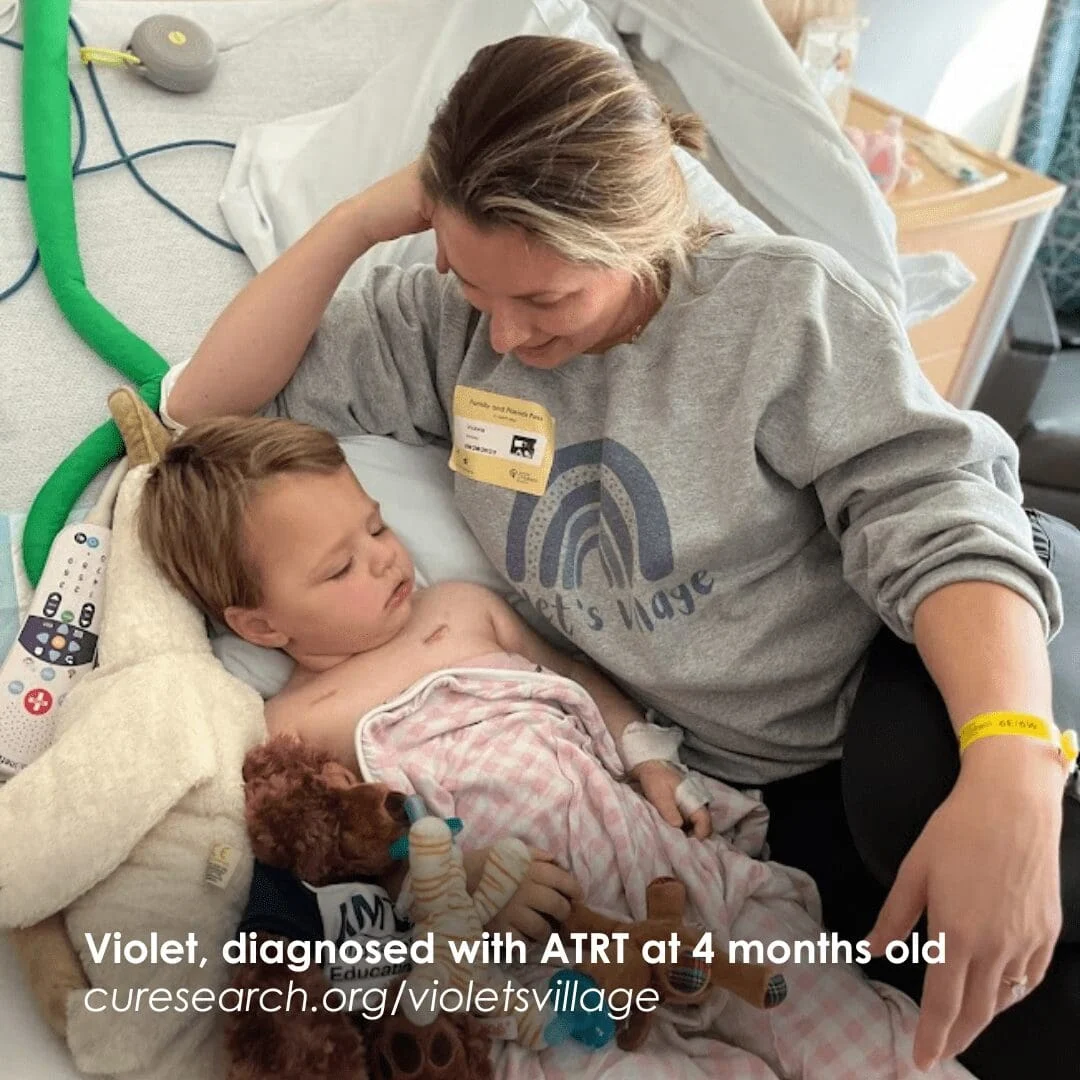
The landscape of pediatric oncology is poised for a significant shift as CureSearch for Children’s Cancer officially announces Dr. John Prensner of the University of Michigan as the recipient of the 2025 Young Investigator Award. This prestigious grant is specifically earmarked to accelerate research into Atypical Teratoid Rhabdoid Tumor (ATRT), a rare and exceptionally aggressive form of brain cancer that predominantly affects infants and toddlers. By focusing on the "dark matter" of the human genome—segments of DNA previously dismissed as non-functional—Dr. Prensner’s work aims to identify new therapeutic targets for a disease that has long eluded the successes seen in other areas of pediatric cancer treatment.
The Critical Challenge of Atypical Teratoid Rhabdoid Tumor
Atypical Teratoid Rhabdoid Tumor (ATRT) represents one of the most formidable challenges in modern pediatric medicine. Diagnosed most frequently in children under the age of three, ATRT is a fast-growing tumor that typically develops in the cerebellum or the brainstem. These regions are the command centers for essential life functions, including motor coordination, balance, breathing, and heart rate regulation. Because the tumors grow so rapidly and occur in such sensitive areas, the clinical window for intervention is often narrow.
Current epidemiological data suggests that while ATRT accounts for only about 3% of all pediatric brain tumors, it represents a much higher percentage of brain tumors in infants under 12 months old. The prognosis for these patients remains sobering. Despite aggressive multi-modal therapies, the five-year survival rate for children with ATRT has historically hovered between 30% and 50%, significantly lagging behind the 80% or higher survival rates seen in common pediatric leukemias.
The current standard of care involves a grueling combination of surgical resection, high-dose chemotherapy, and, in some cases, radiation. However, these treatments are often "blunt instruments." Surgery in the infant brain carries immense risks of permanent neurological deficit, and the long-term toxicity of chemotherapy on developing organs can lead to lifelong cognitive and physical impairments. Furthermore, many ATRT cases prove resistant to conventional chemotherapy, leading to rapid recurrence.
Breaking the Genomic Silence: Dr. Prensner’s Research Focus
The primary obstacle in treating ATRT has been its lack of "druggable" genetic mutations. Unlike many adult cancers, which are driven by a series of identifiable genetic errors that can be targeted with specific medications, ATRT is characterized by a relatively "quiet" genome. The most common hallmark is the loss of the SMARCB1 gene, but beyond this, researchers have struggled to find vulnerabilities that could be exploited by targeted therapies.
Dr. John Prensner’s research at the University of Michigan seeks to bypass this roadblock by looking where others have not: at small open reading frames (sORFs). For decades, large portions of the human genome were labeled as "junk DNA" because they did not appear to code for the large proteins that drive cell function. However, recent advancements in genomic sequencing have revealed that these overlooked segments can produce microproteins.
Dr. Prensner’s hypothesis is that these microproteins may be the hidden drivers of ATRT growth and survival. By mapping the "sORF-ome" of ATRT cells, his team intends to identify which of these tiny proteins are essential for the cancer’s progression. If successful, this research could unveil an entirely new class of genes that could serve as the foundation for the next generation of precision medicine.
"Children with ATRT don’t have the same opportunities to benefit from cutting-edge, targeted treatments that are available for other cancers," stated Dr. Paisley Myers, Director of Research and Programs at CureSearch. "We urgently need to change that narrative. Dr. Prensner’s work represents the kind of high-risk, high-reward innovation necessary to move the needle for these families."
Chronology of the 2025 Young Investigator Award
The selection of Dr. Prensner is the culmination of a rigorous, year-long vetting process designed to identify the most promising early-career scientists in the field of pediatric oncology.
- Call for Proposals (Early 2024): CureSearch issued a national call for applications, seeking projects that focused on high-priority, underserved pediatric cancers with a clear path toward clinical application.
- Scientific Peer Review (Mid-2024): Applications underwent a double-blind peer review process conducted by a panel of leading oncologists and researchers. Proposals were evaluated based on scientific merit, innovation, and the potential to reach clinical trials within a five-year timeframe.
- Collaborative Funding Alignment (Late 2024): Recognizing the scale of the ATRT challenge, CureSearch engaged in a co-funding model, bringing together the Jeff Gordon Children’s Foundation (JGCF) and Violet’s Village: The Violet Kenney Legacy Fund.
- Award Announcement (Late 2024/Early 2025): Dr. Prensner was officially named the 2025 awardee, with funding scheduled to begin in the first quarter of the year.
This award is specifically designed to address the "brain drain" in pediatric research. Early-career investigators often face a "funding gap" between their initial fellowships and the large federal grants (such as NIH R01 grants) required to sustain a laboratory. By providing financial stability at this critical juncture, CureSearch ensures that brilliant minds like Dr. Prensner remain dedicated to childhood cancer research rather than moving into adult oncology or private industry.
Supporting Data: The Funding Disparity in Pediatric Oncology
The necessity of the Young Investigator Award is highlighted by the systemic underfunding of pediatric cancer research. According to the National Cancer Institute (NCI), only about 4% of federal cancer research funding is dedicated specifically to pediatric cancers. When that 4% is further subdivided among dozens of different pediatric cancer types, rare diseases like ATRT often receive negligible amounts of federal support.
This funding disparity creates a reliance on private philanthropic organizations. CureSearch has filled this void by focusing on "translationally" focused research—projects that are not just interested in the "why" of cancer, but the "how" of curing it. The co-funding model utilized for Dr. Prensner’s project illustrates a growing trend in the nonprofit sector: strategic alliances to maximize impact.
The Jeff Gordon Children’s Foundation, a long-time leader in the field, has contributed significantly to this initiative. "JGCF is incredibly excited to partner with CureSearch and Violet’s Village to support Dr. Prensner’s project taking aim at ATRT," said Susan Robinson, Executive Director for the Jeff Gordon Children’s Foundation. "Brain tumors are the deadliest form of childhood cancer, so we’re eager to advance scientific knowledge and develop better therapeutics to improve outcomes for kids facing such a devastating diagnosis."
Official Responses and Clinical Implications
The reaction from the scientific and advocacy communities has been one of cautious optimism. For the families associated with Violet’s Village, the award is a deeply personal milestone. Violet’s Village was established in memory of Violet Kenney, a young girl who battled ATRT. The legacy fund seeks to ensure that future families do not have to endure the same lack of treatment options that Violet faced.
Dr. Prensner himself emphasized the gravity of the task ahead. "My hope is that this work will lead to the discovery of new genes that inform the next phase of drug development for ATRT," he said. "This CureSearch award will be important for us to continue to develop a new understanding of the childhood cancer genome for ATRT."
From a clinical perspective, the implications of identifying sORF-derived microproteins are vast. If a specific microprotein is found to be essential for ATRT cell survival, researchers can begin the process of "high-throughput screening" to find chemical compounds that inhibit that protein. Because these microproteins are often unique to the cancer cells or specific developmental stages, the resulting drugs could potentially be much less toxic than traditional chemotherapy, sparing the healthy brain tissue of developing toddlers.
Broader Impact and the Future of Pediatric Brain Tumor Research
The 2025 Young Investigator Award serves as a bellwether for the future of pediatric oncology. It signals a move away from "one-size-fits-all" treatments and toward a more nuanced understanding of the genetic and proteomic landscape of rare tumors.
As Dr. Prensner begins his work at the University of Michigan, the data generated will likely have ripple effects across the field of oncology. The techniques used to identify sORFs in ATRT could be applied to other "recalcitrant" pediatric tumors, such as Diffuse Intrinsic Pontine Glioma (DIPG) or Osteosarcoma.
Furthermore, this project reinforces the importance of the University of Michigan as a hub for pediatric research. By housing this project, the university continues to foster an environment where clinical care and laboratory innovation are inextricably linked, allowing for a faster "bench-to-bedside" transition.
In the broader context of healthcare policy, the success of such private-sector initiatives puts pressure on federal agencies to reconsider the allocation of research dollars. If a single Young Investigator can uncover the "hidden" drivers of a deadly brain tumor through private funding, it builds a compelling case for a more robust national investment in pediatric genomic research.
For now, the focus remains on the laboratory and the young patients who stand to benefit. The 2025 Young Investigator Award is more than just a financial grant; it is a commitment to the idea that no cancer is too rare to ignore and no patient is too young to fight for. As Dr. Prensner and his team delve into the hidden segments of the ATRT genome, they carry with them the hopes of thousands of families looking for a future where a diagnosis of ATRT is no longer a terminal sentence, but a treatable condition.
