
 By Budi Oetomo Narendra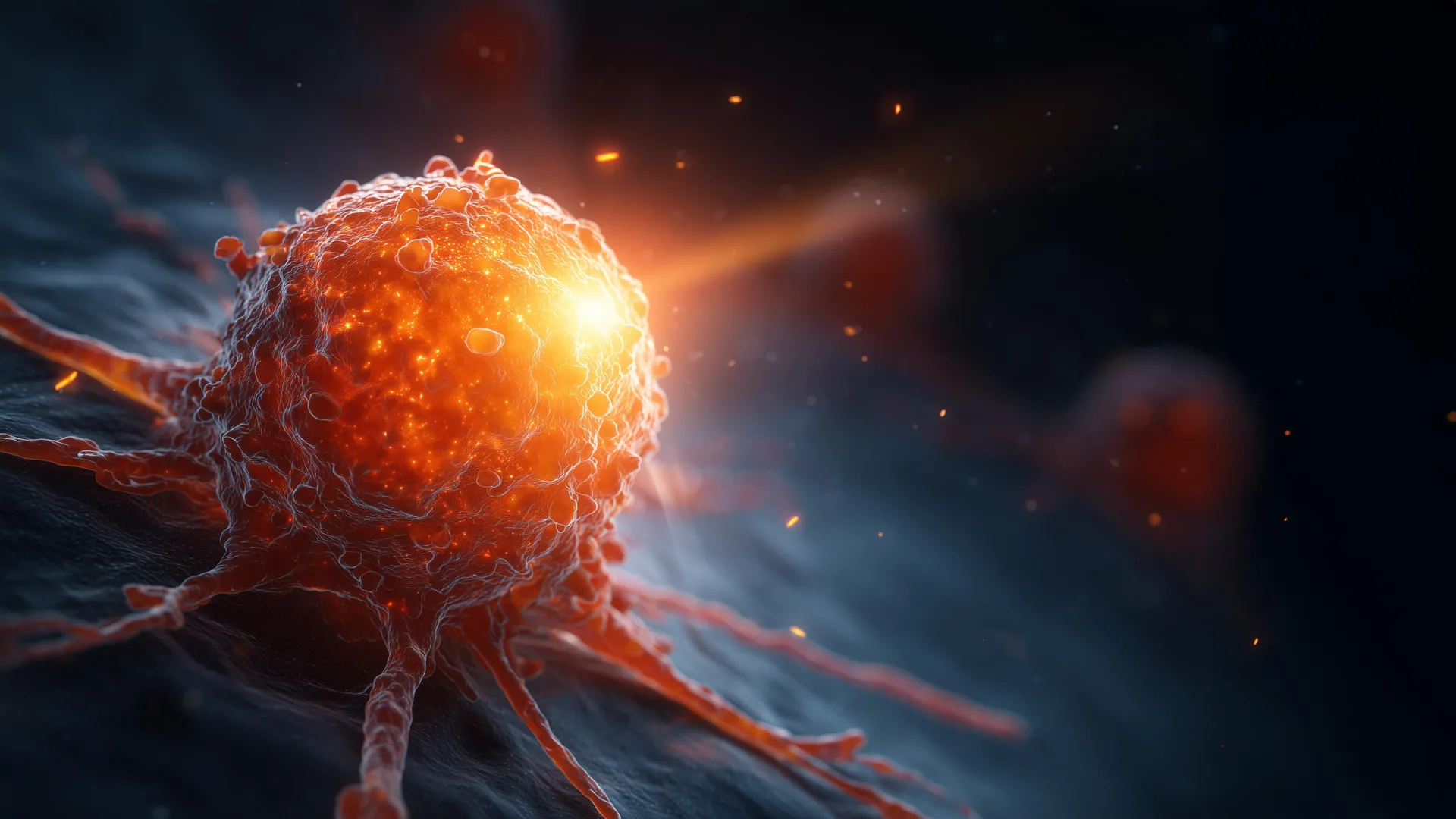
A groundbreaking development from ETH Zurich offers a novel strategy to combat one of cancer’s most insidious defenses: dormancy. Researchers have successfully engineered a sophisticated system that can selectively rouse quiescent cancer cells, making them vulnerable to existing treatments. This innovative approach, which leverages light for precise spatial control, could dramatically enhance therapeutic outcomes, particularly in cancers prone to recurrence due to drug-resistant dormant cells.
The Enigma of Cancer Dormancy and Treatment Evasion
Cancer cells are notoriously adept at survival. Beyond their capacity for uncontrolled proliferation and metastasis, some cancer cells possess the remarkable ability to enter a dormant, sleep-like state. In this quiescent phase, cellular division slows dramatically, and metabolic activity is significantly reduced. This physiological shift allows these cells to effectively evade the cytotoxic effects of many conventional cancer drugs, which primarily target actively dividing cells. While dormant, these cells remain a persistent threat, acting as reservoirs for future relapse, often years after initial treatment. This phenomenon contributes significantly to treatment failure and recurrence in various aggressive cancers, including certain forms of lung cancer, pancreatic cancer, and melanoma.
Globally, lung cancer remains a leading cause of cancer-related mortality, with an estimated 1.8 million deaths annually according to the World Health Organization. A significant challenge in treating lung cancer, especially non-small cell lung cancer (NSCLC), is the high rate of recurrence, often attributed to the survival of these dormant cells. These "persister" cells can lie in wait, reactivating and re-establishing tumors when treatment ceases or when environmental conditions become favorable. The inability to effectively eliminate these dormant populations represents a major hurdle in achieving long-term remission and cure.
A key trigger for this dormant state, particularly in certain cancers, has been identified as stress hormones. Inside tumor cells, specialized proteins known as glucocorticoid receptors (GRs) detect these hormones. Once activated by stress signals, these receptors can initiate a complex cascade of events, ultimately pushing the cancer cells into a state of suspended animation. This mechanism, while protective for the cancer cell, renders many highly effective therapies far less potent, as their action mechanisms rely on active cell division or metabolism.
A New Paradigm in Precision Oncology: Localized Intervention
For years, researchers have sought methods to disable these glucocorticoid receptors or otherwise "wake up" dormant cancer cells, thereby re-sensitizing them to treatment. However, this pursuit has been fraught with challenges. Glucocorticoid receptors are ubiquitous, found in virtually every cell throughout the human body. They play critical roles in numerous physiological processes, including immune system regulation, inflammation control, metabolism, and stress response. Systemic inhibition or elimination of GRs would therefore lead to severe, potentially life-threatening side effects, ranging from immunosuppression and metabolic dysregulation to adrenal insufficiency.
This fundamental dilemma — the need to target cancer cells without harming healthy tissue — has driven the quest for highly selective therapeutic strategies. The team at ETH Zurich, under the leadership of Katharina Gapp, Professor of Epigenetics and Neuroendocrinology, and in collaboration with Professor of Organic Synthesis Erick Carreira, has developed a potential solution that embodies the principles of precision oncology. Their breakthrough lies in creating a system that can trigger the destruction of glucocorticoid receptors specifically within tumor cells, while simultaneously offering a mechanism to safeguard nearby healthy tissue using light.
Robin Scheuplein, a joint first author of the study and a doctoral student in Professor Gapp’s research group, emphasized the pragmatic nature of their innovation: "This system is based on existing medical technology and therefore offers a realistic prospect of localized therapies." This integration with established techniques hints at a potentially faster translational path from laboratory to clinic.
Unpacking the Mechanism: A Molecular Switch with Light-Responsive Precision
The ingenuity of the ETH Zurich approach lies in its sophisticated manipulation of the body’s natural cellular recycling machinery. Cells constantly monitor the integrity and function of their proteins. Damaged, misfolded, or no-longer-needed proteins are marked for disposal through a process called ubiquitination, where small molecular tags called ubiquitin are attached. These "ubiquitin tags" serve as a signal, directing the marked proteins to the proteasome, a cellular complex responsible for breaking down and recycling unwanted proteins.
The ETH Zurich team ingeniously adapted this ubiquitous cellular process to specifically target and degrade glucocorticoid receptors within tumor cells. They designed a bespoke molecular switch, a microscopic construct composed of three critical components:
- A Glucocorticoid Receptor (GR) Binder: One part of the switch is designed to specifically and tightly attach to the glucocorticoid receptor within the cell.
- An E3 Ligase Binder: Another component of the switch binds to an E3 ubiquitin ligase enzyme. E3 ligases are the crucial enzymes responsible for attaching ubiquitin tags to target proteins.
- A Flexible, Photo-Responsive Connector: The linchpin of the system is a flexible linker positioned between the GR binder and the E3 ligase binder. This connector is engineered to respond to light of a specific wavelength.
Under normal, ambient lighting conditions (or in the absence of the specific wavelength of light), this connector remains in an extended configuration. In this extended state, it acts as a molecular bridge, bringing the E3 ligase enzyme into close proximity with the glucocorticoid receptor. With the enzyme positioned correctly, it efficiently attaches ubiquitin tags to the GR, effectively labeling it as cellular waste. Once tagged, the cell’s natural protein degradation machinery rapidly breaks down and removes the GR.
However, the magic happens when the system is exposed to light of a specific, predetermined wavelength. Upon illumination, the flexible connector undergoes a precise conformational change – it bends. This change in shape is critical: it physically disrupts the alignment between the E3 ligase enzyme and the glucocorticoid receptor. With the enzyme and receptor no longer correctly positioned, the tagging process is halted. Consequently, ubiquitin tags are not attached to the GR, preventing its destruction. The receptor remains intact and functional in the light-exposed areas.
This elegant light-controlled mechanism provides an unprecedented level of spatial and temporal control over GR degradation, allowing researchers to "switch off" the destructive process in healthy cells while keeping it active in tumor cells.
From Concept to Cell Culture: Promising Results in Lung Cancer
The development of this sophisticated technology was a testament to interdisciplinary collaboration among several research groups at ETH Zurich. Professor Erick Carreira’s laboratory, renowned for its expertise in organic synthesis, played a pivotal role in producing multiple versions of the crucial photo-responsive connector component. This iterative synthesis and testing process was essential to identify connectors that exhibited the desired light-activated conformational changes.
Rigorous testing of these molecular switches demonstrated their precise control. Two specific connectors behaved exactly as intended, reliably transitioning the system between an "active" state (where GRs are destroyed) and an "inactive" state (where GRs are left untouched) simply by applying or removing light of the specific wavelength.
The initial validation of this system focused on laboratory cultures of lung cancer cells, a highly relevant and challenging target. The results were compelling. The treatment rapidly and effectively broke down glucocorticoid receptors within the tumor cells. Furthermore, subsequent analyses of gene activity within these cells provided crucial evidence that they were indeed emerging from their dormant state. The re-activation of genes associated with proliferation and metabolic activity indicated that the cells were becoming metabolically active and potentially re-entering the cell cycle, thereby making them susceptible to conventional chemotherapies.
"Of course, this will now need to be verified in living organisms as well," Scheuplein cautiously noted, underscoring the necessary steps in the preclinical development pathway. While cell culture studies are foundational, their findings must be replicated and validated in more complex in vivo models to assess efficacy, safety, and pharmacokinetics within a living system.
Navigating the Path to Clinical Application: Challenges and Vision
The researchers are acutely aware that significant additional development is required before this system can be translated into a viable treatment for cancer patients. One of the primary limitations, common to many light-based therapies, is the relatively shallow penetration of visible light into biological tissues. Visible light can typically penetrate only a few millimeters into tissue, meaning that for the desired protective boundary around a tumor to be established, the light source must be positioned relatively close to the treatment area.
For certain superficial tumors or those accessible via natural orifices, this limitation could be managed with existing medical technologies. In the context of lung cancer, for instance, an endoscope equipped with a light source could potentially be guided into the airways to illuminate the tumor region, allowing for precise control.
However, for tumors located deeper within the body, which constitute a significant proportion of cancer cases, deeper light penetration is essential. To address this, the ETH Zurich team is actively pursuing the development of modified versions of the molecular switch that respond to longer wavelengths of light, such as near-infrared (NIR) light. NIR light has the distinct advantage of being able to travel farther through tissue and with less scattering and absorption, offering the potential to reach deeper-seated tumors more effectively and gently.
The long-term vision for this technology is a highly precise and localized cancer treatment. Researchers envision a scenario where the molecular switch is injected directly into a tumor. A carefully controlled light source would then be used to illuminate the surrounding healthy tissue, deactivating any switch molecules that might have diffused beyond the tumor boundaries. This approach would create a precise "protective boundary" where healthy cells are shielded from GR degradation, while tumor cells within the unilluminated core are subjected to GR breakdown, rousing them from dormancy.
"Activity can therefore be strictly limited to the tumor core, preserving the surrounding tissue and causing significantly fewer side effects. The effect is reversible and can be controlled precisely," Scheuplein reiterated, highlighting the paramount importance of minimizing collateral damage to healthy cells – a perennial challenge in oncology.
Beyond Lung Cancer: A Modular Platform for Broad Therapeutic Impact
Beyond its immediate implications for lung cancer, the ETH Zurich platform holds promise for a much broader therapeutic impact. The researchers emphasize the modular nature of their system. "We’ve developed a modular system that we can also use to switch off other receptors," explains Scheuplein. This inherent adaptability suggests that the core design principle – a light-responsive molecular switch that controls protein degradation – could be repurposed to target a wide array of other disease-relevant receptors.
Potential targets include the estrogen receptor, which is a critical driver in hormone-dependent breast cancer, affecting millions of women globally. Similarly, the androgen receptor, implicated in the progression of advanced prostate cancer, could be another prime candidate for this precision degradation approach. By swapping out the GR-binding component of the switch for binders specific to other receptors, the technology could be customized to address different cancer types, opening new avenues for personalized medicine.
Furthermore, the system’s precise control over receptor activity makes it an invaluable research tool. Scientists could employ this light-activated switch to meticulously control the presence or absence of specific receptors in various cell types and disease models. This capability would significantly enhance our understanding of complex signaling pathways involved not only in cancer biology but also in neurodegenerative diseases, metabolic disorders, and immunological conditions. By precisely modulating receptor levels, researchers can gain deeper insights into their functional roles and identify new therapeutic targets.
The Future Landscape of Cancer Treatment
This innovative research from ETH Zurich represents a significant stride in the ongoing battle against cancer. By offering a refined method to overcome drug resistance stemming from cellular dormancy, it promises to enhance the efficacy of existing chemotherapies and potentially reduce the incidence of relapse. The ability to precisely control therapeutic action with light heralds a new era of highly localized and personalized treatments, moving away from systemic therapies that often cause debilitating side effects.
The implications for patient quality of life are substantial. Fewer side effects would mean a better treatment experience, potentially allowing patients to maintain a higher quality of life during therapy. Economically, more effective and targeted therapies could reduce the long-term costs associated with managing relapsed disease and its complications.
While the journey from laboratory discovery to clinical application is long and arduous, requiring extensive preclinical testing, regulatory approvals, and multi-phase clinical trials, the foundation laid by the ETH Zurich team is robust. This research aligns perfectly with the overarching trend in oncology towards precision medicine, where treatments are tailored to the specific molecular characteristics of a patient’s tumor. As research continues to advance, the prospect of awakening dormant cancer cells with a flash of light offers a compelling vision for a future where cancer is not just treated, but truly conquered.
