
 By Hendra Lukman
A groundbreaking universal coronavirus vaccine, designed to offer broad protection against a spectrum of SARS-related viruses, has successfully completed its initial human clinical trial, signaling a significant advancement in the global fight against infectious diseases and future pandemic threats. Developed collaboratively by researchers at the prestigious University of Cambridge and their spinout company, DIOSynVax (DVX) Ltd, the experimental vaccine demonstrated a strong safety profile, eliciting no significant adverse effects in a cohort of 39 healthy adult volunteers. This achievement marks a pivotal moment, moving beyond the reactive model of traditional vaccine development towards a proactive, future-proofed strategy.
The innovative vaccine’s design represents a paradigm shift from conventional approaches that target specific virus strains. Instead, this experimental jab was engineered to confer immunity against multiple members of the Sarbeco coronavirus family. This crucial family encompasses SARS-CoV-2, the causative agent of the ongoing COVID-19 pandemic, as well as the original SARS virus, and a range of bat coronaviruses that pose a latent risk of zoonotic spillover into human populations. The trial’s findings, published in the esteemed Journal of Infection, revealed that the vaccine not only stimulated robust immune responses against SARS-CoV-2 and SARS but also showed efficacy against related bat coronaviruses that have not yet demonstrated human infectivity.
AI-Powered Vaccine Design: A Technological Leap Forward
This trial also heralds a significant technological milestone: it is the first time a vaccine whose active immunological component was conceived and formulated entirely through sophisticated computer simulations has been tested in humans. Researchers leveraged the power of artificial intelligence (AI) and machine learning to meticulously design what they term a "super-antigen." This super-antigen is the critical component within a vaccine that educates the immune system to recognize and effectively combat a specific pathogen.
Instead of fixating on a single viral strain, the AI system undertook an exhaustive analysis of genetic data from numerous Sarbeco coronaviruses. This data was meticulously gathered through extensive global surveillance programs. By identifying conserved features shared across the entire viral group, the AI was able to synthesize these elements into a single, potent vaccine antigen. The overarching objective of this advanced methodology is to establish immunity not only against known viral threats but also against future, as-yet-undiscovered strains that may emerge.
Professor Jonathan Heeney, the leading scientific mind behind this research from the Lab of Viral Zoonotics at the University of Cambridge’s Department of Veterinary Medicine, articulated the transformative potential of this technology. "This trial proves the safety of an entirely new way of designing vaccines," Professor Heeney stated. "The technology uses an AI-designed ‘super-antigen’ to provide lasting protection against a broad range of viruses — for example the Ebola group, or Sarbeco coronavirus group — even as they mutate." This forward-thinking approach suggests a future where a single vaccine platform could offer enduring protection against entire families of viruses, irrespective of their evolutionary trajectory.
Moving Beyond the Cycle of Constant Vaccine Updates
The development of this universal vaccine directly addresses a significant limitation of many current immunization strategies, including seasonal flu shots and repeatedly updated COVID-19 vaccines. These existing vaccines are typically formulated to target specific virus strains that are actively circulating within human populations. However, viruses are in a perpetual state of evolution, necessitating frequent reformulation and annual updates to maintain efficacy.
Professor Heeney emphasized that this novel approach could fundamentally alter this reactive cycle. "We’ve converted vaccine development from being reactive to being future proof," he explained. "Our vaccines will continue to provide protection against viruses even as they mutate into new strains." He further elaborated on the long-standing challenge this innovation aims to surmount: "We’ve overcome the problem of traditional vaccines, which have limited protection. It means we can escape the constant cycle of chasing the virus variants circulating in humans and updating the vaccines to try to catch up, like a dog chasing its tail." By targeting conserved features shared across an entire virus family, researchers are optimistic that the vaccine will retain its effectiveness even as new variants emerge.
The Journey from Lab to Trial: A Chronology of Innovation
The genesis of this universal vaccine can be traced back to foundational research into viral zoonoses and the application of advanced computational biology. The DIOSynVax company was established in 2017 as a University of Cambridge spinout, with crucial support from Cambridge Enterprise, the university’s commercialization arm. This strategic foundation allowed for the translation of cutting-edge academic research into tangible product development pipelines.
The initial design phase, employing AI and machine learning to craft the super-antigen, represented a significant investment in computational resources and expert biological analysis. This was followed by extensive pre-clinical animal studies, which demonstrated the vaccine’s capacity to elicit potent immune responses against a range of coronaviruses. These promising preclinical results paved the way for the initiation of the first-in-human clinical trial.
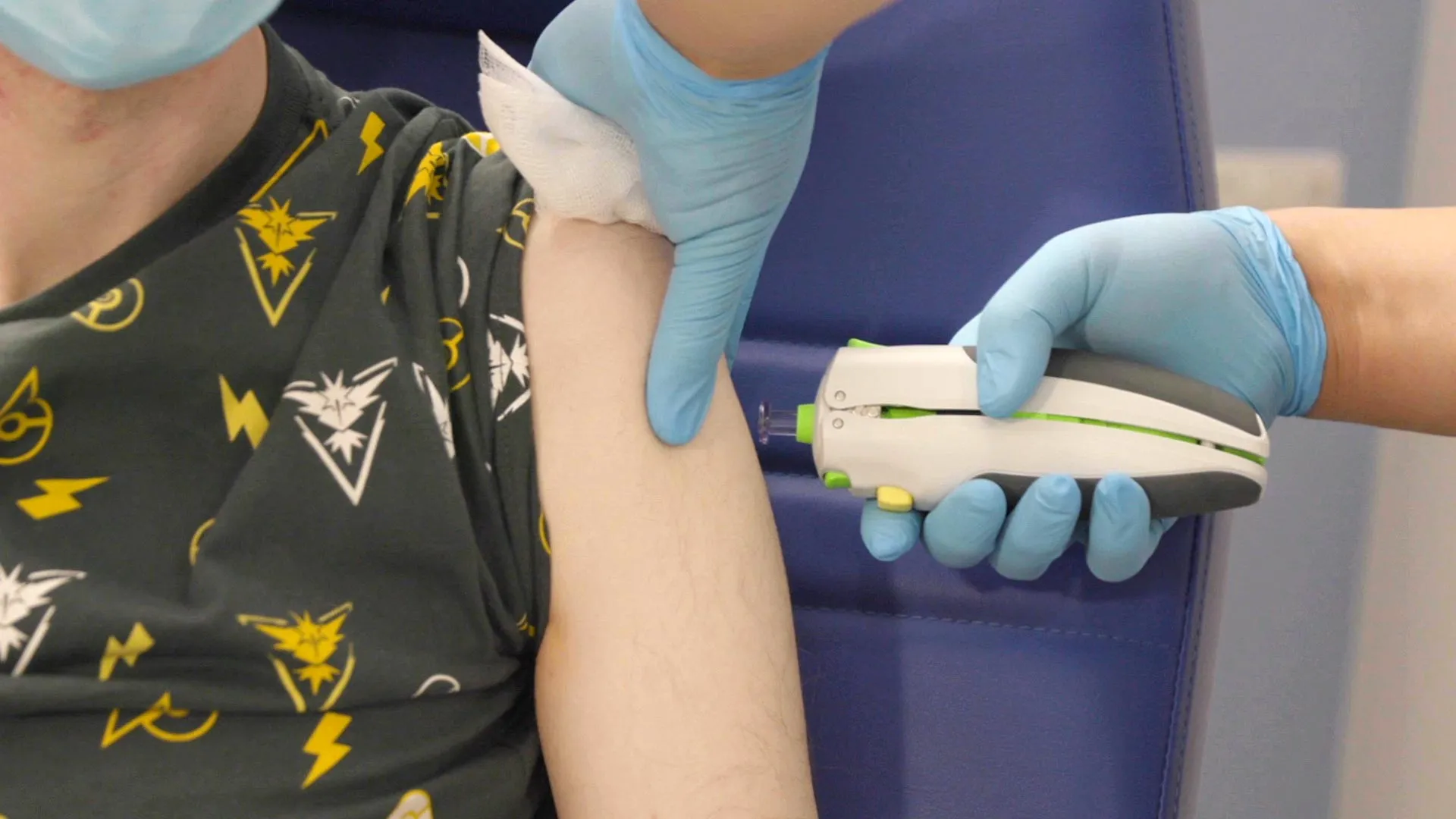
The Phase 1 trial, conducted at National Institute for Health and Care Research (NIHR) Clinical Research Facilities in Southampton and Cambridge, involved healthy volunteers aged between 18 and 50. The trial was meticulously overseen and sponsored by University Hospital Southampton NHS Foundation Trust (UHSFT). Participants received the vaccine, delivered as a DNA vaccine utilizing a novel microfluidic jet system. This needle-free delivery method, while not the primary focus of the trial’s efficacy assessment, offers a potential advantage for individuals who experience anxiety around injections and could streamline large-scale vaccination campaigns, particularly in resource-limited settings.
Rigorous Trial Execution and Early Results
The Phase 1 trial was designed primarily to assess the safety and tolerability of the DIOSynVax vaccine. The 39 healthy volunteers were closely monitored for any adverse reactions. The absence of significant side effects reported in this initial cohort is a crucial validation of the vaccine’s safety profile. Beyond safety, the trial also provided preliminary insights into the vaccine’s immunogenicity, with researchers observing that it stimulated immune responses against the targeted coronaviruses. The findings, rigorously peer-reviewed and published in the Journal of Infection, provide the scientific community with a transparent account of the trial’s conduct and outcomes.
Broader Implications and Future Directions
The success of this AI-designed super-antigen trial represents a "pivotal leap forward" in the global capacity to deliver broad and lasting viral protection, according to Professor Marian Knight, Scientific Director for NIHR Infrastructure. This advancement is underscored by the collaborative nature of the project, which saw a synergistic partnership between the life sciences sector and the UK’s world-class NIHR infrastructure. The Clinical Research Facilities in Cambridge and Southampton provided the essential expertise and environment for the safe and rapid progression of this innovation, bringing it significantly closer to potential patient use.
The implications of this universal vaccine technology extend far beyond the immediate threat of coronaviruses. Researchers believe that the same AI-driven design strategy could be adapted and applied to other high-priority virus families, including influenza viruses and Ebola viruses. This offers a tantalizing prospect of developing a versatile vaccine platform capable of addressing multiple global health threats with a single, adaptable approach.
Professor Saul Faust from the University of Southampton, the trial’s chief investigator, highlighted the urgent need for such "future-proofed" vaccines. He stated, "Viruses like Influenza, Coronaviruses and the Ebola group are evolving continuously and by the time vaccines are rolled out, they may be poorly matched — the current ‘reactive’ vaccine system struggles to keep pace." He further emphasized the potential to preempt future outbreaks: "This new class of universal vaccines are future-proofed. They not only protect against many variants simultaneously, but potentially against related viruses that haven’t yet emerged and spilt over to humans." The ability to develop effective vaccines before a major outbreak begins could be transformative, potentially saving millions of lives, averting debilitating lockdowns, and preserving global economic stability.
The Path Ahead: Further Trials and Global Health Security
While the results of this Phase 1 trial are highly encouraging, the vaccine still requires extensive further testing before it can be considered for public deployment. A larger Phase 2 study is already being planned. This subsequent trial will aim to evaluate the vaccine’s immune responses in a broader and more diverse participant group, further confirming its ability to generate robust and wide-ranging protection. Subsequent phases will assess its efficacy in preventing infection and disease.
The ongoing circulation of SARS-CoV-2 and other Sarbeco coronaviruses remains a significant public health concern. Simultaneously, the constant evolution and spillover potential of other viruses harbored in animal populations worldwide underscore the perpetual threat of novel zoonotic diseases. The current global public health infrastructure, while enhanced by lessons learned from recent pandemics, still faces the fundamental challenge of predicting and rapidly responding to emergent viral threats.
The DIOSynVax vaccine pipeline is already robust, with candidate vaccines in development targeting seasonal influenza, pandemic influenza threats, hemorrhagic fever viruses, and a range of coronaviruses, including SARS-CoV-2. The successful completion of this initial human trial provides critical validation for the company’s core AI-driven vaccine design platform.
The project received primary funding from Innovate UK, a testament to its perceived national and global importance. The DIOSynVax initiative, supported by Cambridge Enterprise, represents a powerful model of academic-industry collaboration, transforming cutting-edge scientific discovery into practical solutions for global health challenges. As the world continues to grapple with the lingering effects of the COVID-19 pandemic and faces the ever-present risk of future outbreaks, this AI-designed universal vaccine offers a beacon of hope, promising a more secure and resilient future against the persistent threat of viral pandemics.
