
 By admin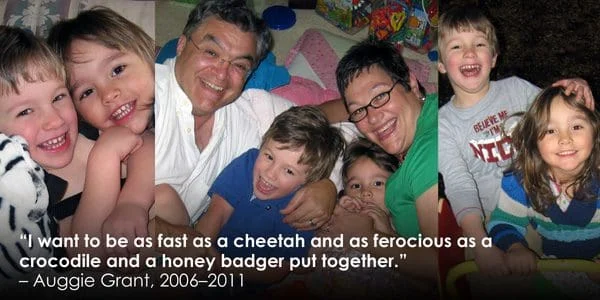
The tragic passing of five-year-old Augusto “Auggie” Grant in 2011 serves as a stark reminder of the aggressive nature of pediatric malignancies and the critical need for accelerated medical research. Auggie, a child characterized by his parents as a "force" of nature with aspirations of becoming an astronaut, a superhero, and a "ninja warrior," succumbed to acute monoblastic leukemia just five days after his initial diagnosis. His story has since become a cornerstone for advocacy during Childhood Cancer Awareness Month, highlighting the systemic gaps in pediatric oncology and the transformative power of memorial-based philanthropy through organizations like CureSearch for Children’s Cancer.
The Life and Sudden Illness of Augusto Grant
Augusto Grant, known affectionately as Auggie, was a child of immense energy and imagination. His parents, Jon and Cheryl Grant, describe a boy who lived life at a relentless pace, often donning "uniforms"—firefighter gear or superhero costumes—to face the world. This vibrancy, however, masked a silent and lethal progression of disease. Despite his high activity levels and an apparent outward display of health, Auggie was unknowingly battling a severe form of blood cancer that would claim his life within a week of clinical detection.
In late 2011, a routine medical assessment led to a five-minute blood test that revealed the severity of his condition. The diagnosis was acute monoblastic leukemia (AML-M5), a subtype of acute myeloid leukemia that is particularly aggressive in pediatric patients. On December 5, 2011, less than a week after the diagnosis was delivered, Auggie passed away. The speed of his decline underscored a harrowing reality for many families: by the time symptoms of certain pediatric cancers become unmistakable, the window for effective intervention may have already closed.
Chronology of Events and the Transition to Advocacy
The timeline of Auggie’s illness is a brief but devastating sequence that mirrors the experiences of thousands of families globally.
- Pre-Diagnosis (Late 2011): Auggie remained active and asymptomatic to the casual observer, though the cancer was already proliferating in his bloodstream.
- Diagnosis (Late November 2011): A blood test confirmed the presence of acute monoblastic leukemia.
- Hospitalization and Rapid Decline: Immediate medical intervention was sought, but the disease’s progression was too advanced for the available protocols.
- Death (December 5, 2011): Auggie passed away at age five, leaving a profound void in his community.
- Formation of a Legacy (Post-2011): In lieu of flowers, the Grant family requested donations to CureSearch, beginning a decade-long commitment to fundraising and research advocacy.
Following Auggie’s death, Cheryl Grant sought a way to channel the outpouring of grief from friends and family into a constructive force. After consulting with Auggie’s oncologist, the family identified CureSearch for Children’s Cancer as the primary beneficiary of their efforts. This decision was rooted in the organization’s specific mission: funding research that is fast-tracked for clinical use, recognizing that children with high-risk diagnoses do not have the luxury of time.
Supporting Data: The Landscape of Childhood Cancer
The urgency of Auggie’s story is supported by sobering statistics regarding pediatric oncology in the United States and globally. According to the National Cancer Institute (NCI) and the American Cancer Society, childhood cancer remains the leading cause of death by disease among children past infancy.
- Incidence and Mortality: Approximately 1 in 285 children in the U.S. will be diagnosed with cancer before their 20th birthday. While survival rates for some cancers, like certain types of ALL (acute lymphoblastic leukemia), have improved significantly, others like AML remain difficult to treat.
- The Funding Gap: A persistent point of contention in the medical community is the disparity in research funding. Historically, only about 4% of the National Cancer Institute’s federal budget is dedicated specifically to pediatric cancer research. The remaining 96% is directed toward adult cancers, which are biologically distinct from childhood malignancies.
- Treatment Toxicity: Many of the treatments currently used for children were developed decades ago for adults. Because children’s bodies are still developing, these "hand-me-down" treatments can cause severe long-term side effects, including secondary cancers, heart disease, and cognitive impairments.
- Drug Development: In the last 30 years, only a fraction of new drugs approved by the FDA were specifically developed for children, compared to hundreds for adult cancers. This necessitates the work of organizations like CureSearch to incentivize and fund pediatric-specific trials.
The Role of CureSearch and the Ultimate Hike
CureSearch for Children’s Cancer differentiates itself by focusing on "translational research"—the process of moving laboratory discoveries into clinical trials as quickly as possible. For families like the Grants, this mission is vital. The organization targets the "valley of death" in drug development, where promising research often stalls due to a lack of funding or pharmaceutical interest.
To support these initiatives, Jon and Cheryl Grant founded "Auggie’s Honey Badgers," a fundraising team named after one of Auggie’s favorite animals, known for its ferocity and resilience. The team participates in the "Ultimate Hike," a signature CureSearch event that challenges participants to complete a 28.3-mile trek in a single day.
Jon Grant has noted that the Ultimate Hike experience has been "transformative," evolving his grief into a sense of communal purpose. The "Honey Badgers" have become a fixture of the event, raising significant capital that goes directly toward funding clinical trials and international research collaborations. This grassroots fundraising model has proven essential in a landscape where federal and private pharmaceutical funding for pediatric rare diseases often falls short.
Official Responses and Medical Implications
The medical community frequently cites cases like Auggie’s to advocate for better diagnostic tools and more specialized treatments. Pediatric oncologists emphasize that acute monoblastic leukemia requires highly specific therapeutic approaches that differ from adult AML. The rapid progression seen in Auggie’s case highlights the need for "precision medicine"—treatments tailored to the genetic makeup of a specific tumor.
Statements from CureSearch leadership emphasize that the goal is not just "survival," but "survival with quality of life." By funding research into targeted therapies, the organization aims to replace broad-spectrum chemotherapy with drugs that attack cancer cells while sparing healthy tissue. The Grants’ advocacy has been lauded by the organization as a model for how bereaved families can impact the future of medicine. Cheryl Grant’s observation—that "it only takes five minutes to set up a recurring donation," the same amount of time it took for the blood test that diagnosed Auggie—serves as a powerful rhetorical tool for mobilizing donors.
Broader Impact: Childhood Cancer Awareness Month
Every September, Childhood Cancer Awareness Month brings stories like Auggie’s to the forefront of national conversation. The impact of these narratives is measured in legislative and scientific progress. Advocacy by families and organizations has led to the passage of significant legislation, such as the Research to Accelerate Cure and Equity (RACE) for Children Act, which requires companies developing adult cancer drugs to also evaluate those drugs in children if the molecular targets are relevant.
However, the work is far from complete. The story of Augusto Grant is a reminder that behind every statistic is a child with "big dreams" and a family left to navigate a lifetime of absence. The shift from grief to purpose demonstrated by the Grant family illustrates a broader trend in the non-profit sector: the rise of "venture philanthropy," where donors are not just contributors but stakeholders in the scientific outcomes of the research they fund.
Analysis of Future Challenges in Pediatric Oncology
While the efforts of "Auggie’s Honey Badgers" and CureSearch have provided much-needed resources, several hurdles remain in the quest to eliminate childhood cancer:
- Small Patient Populations: Because childhood cancers are relatively rare compared to adult versions, it is difficult to recruit enough participants for large-scale clinical trials. This requires international cooperation and data sharing.
- Economic Disincentives: Pharmaceutical companies often view pediatric drugs as less profitable due to the smaller market. This makes philanthropic funding the primary driver for early-stage pediatric research.
- Diagnostic Speed: As seen in Auggie’s case, some cancers progress so rapidly that even the most advanced treatments currently available cannot be administered in time. Developing faster, more sensitive diagnostic screenings is a critical frontier in pediatric medicine.
Augusto Grant’s legacy is not merely one of loss, but of "jubilant ferocity." His memory continues to fuel a movement that demands better for the next generation of children. Through the Ultimate Hike, recurring donations, and a relentless focus on fast-tracked research, his parents and the CureSearch community are working toward a future where a five-minute blood test leads to a lifetime of opportunity rather than a five-day countdown. The transformation of a single family’s tragedy into a systemic push for medical innovation remains one of the most poignant examples of advocacy in modern healthcare.
