
 By admin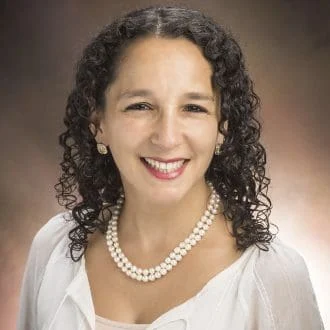
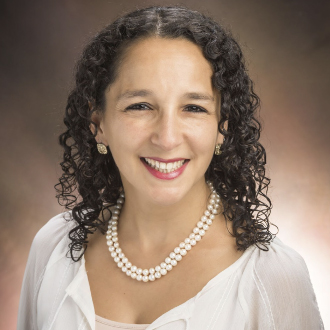
CureSearch for Children’s Cancer has officially announced a $1 million grant to Dr. Yael Mossé of the Children’s Hospital of Philadelphia (CHOP) to spearhead the development of a precision-targeted treatment for high-risk neuroblastoma. This funding, delivered through the organization’s prestigious Acceleration Initiative Award, aims to bridge the gap between laboratory discovery and clinical application for one of the most aggressive forms of pediatric cancer. Neuroblastoma, a disease that originates in early nerve cells, remains a significant challenge for oncologists due to its propensity for rapid progression and resistance to traditional therapies. The grant represents a strategic investment in "bench-to-bedside" science, designed to provide safer and more effective therapeutic options for children who currently face limited survival prospects.
The Critical Challenge of High-Risk Neuroblastoma
Neuroblastoma is the most common extracranial solid tumor in childhood, accounting for approximately 8% to 10% of all pediatric cancer diagnoses. Despite its relative rarity in the broader context of oncology, it is disproportionately lethal, responsible for roughly 15% of all childhood cancer-related deaths. The disease primarily affects infants and young children, with the median age of diagnosis being five years old.
While low- and intermediate-risk cases often respond well to standard treatments, "high-risk" neuroblastoma presents a vastly different clinical profile. Patients in this category often have metastatic disease at the time of diagnosis or possess specific genetic markers, such as MYCN amplification, that signal an aggressive course. For these children, the five-year survival rate has historically hovered around 50%, even with intensive multimodal therapy involving high-dose chemotherapy, surgery, radiation, and stem cell transplants.
The toxicity of these current treatments is a major concern for the medical community. Survivors often face lifelong "late effects," including hearing loss, cardiovascular issues, growth impairment, and a heightened risk of secondary cancers later in life. Dr. Mossé’s research focuses on bypassing these systemic toxins by utilizing precision medicine—a method that targets the specific molecular drivers of the cancer while leaving healthy cells unharmed.
Dr. Yael Mossé and the Precision Medicine Frontier
Dr. Yael Mossé, a Professor of Pediatrics in the Cancer Center at CHOP, has long been a leading figure in neuroblastoma research. Her previous work was instrumental in identifying the role of the Anaplastic Lymphoma Kinase (ALK) gene in the development of neuroblastoma. In 2008, her team discovered that mutations in the ALK gene are the primary cause of the rare, inherited form of neuroblastoma and are also present in a significant percentage of non-inherited, "sporadic" high-risk cases.
The new $1 million project funded by CureSearch builds upon this foundation. The research seeks to optimize novel therapeutic agents that can inhibit the mutated proteins driving tumor growth. By focusing on the unique genetic signatures of a patient’s tumor, the team aims to develop a "lock and key" approach to treatment. This level of specificity is intended to increase the potency of the treatment against the tumor while drastically reducing the side effects associated with traditional, non-specific chemotherapy.
The Acceleration Initiative Award specifically targets projects that have already shown significant promise in the laboratory and are ready for the final stages of pre-clinical validation. Dr. Mossé’s project was selected through a rigorous peer-review process involving a panel of international experts who evaluated the potential for the research to reach clinical trials within an accelerated timeframe.
The Acceleration Initiative: Bridging the "Valley of Death"
In the world of drug development, the transition from successful laboratory results to human clinical trials is often referred to as the "Valley of Death." This phase requires significant capital and specialized resources that are often unavailable through traditional federal grants. CureSearch’s Acceleration Initiative was created specifically to navigate this hurdle.
The initiative focuses on three core pillars:
- Speed: Prioritizing projects that can move into the clinic within three years.
- Impact: Focusing on cancers with the highest mortality rates and the least amount of existing innovation.
- Translatability: Ensuring that the science is not just theoretical but has a clear pathway to becoming a regulated, manufacturable drug.
The $1 million grant to Dr. Mossé is part of a broader strategy by CureSearch to address the chronic underfunding of pediatric cancer research. While the National Cancer Institute (NCI) allocates billions to cancer research annually, only about 4% of federal funding is directed toward pediatric-specific cancers. Private organizations like CureSearch, supported by donors such as the Norcross Foundation, play a vital role in ensuring that pediatric-specific innovations do not stall due to a lack of resources.
A Chronology of Progress in Neuroblastoma Research
The path to this latest grant is the result of decades of incremental scientific breakthroughs. To understand the significance of Dr. Mossé’s current work, it is necessary to look at the timeline of neuroblastoma treatment evolution:
- 1980s – 1990s: Treatment was largely limited to intensive chemotherapy and surgery. Survival rates for high-risk patients remained below 30%.
- 2008: Dr. Mossé and her colleagues at CHOP published a landmark study in the journal Nature, identifying ALK mutations as a major driver of neuroblastoma. This opened the door for the use of ALK inhibitors, a class of drugs already being used in certain adult lung cancers.
- 2010s: Clinical trials began for first-generation ALK inhibitors like crizotinib. While initial results were promising, researchers found that tumors often developed resistance to these drugs.
- 2020 – Present: The focus shifted toward next-generation inhibitors and combination therapies designed to overcome drug resistance. Dr. Mossé’s team has been at the forefront of testing more potent inhibitors like lorlatinib, which can cross the blood-brain barrier—a crucial requirement for treating neuroblastoma that has metastasized to the central nervous system.
- Current Award: The $1 million CureSearch grant will fund the optimization of these next-generation precision therapies, focusing on streamlining the drug development process to reach the widest possible patient population as quickly as possible.
Institutional Perspectives and Economic Analysis
The announcement has drawn praise from both the academic and philanthropic sectors. Dr. Mossé emphasized that the award is "unprecedented" in its ability to accelerate the entire drug development pipeline. "This translation of our science could not be possible without the support of CureSearch," she stated, noting that the funding allows her team to focus on the complex regulatory and manufacturing hurdles that often delay new treatments.
From an economic perspective, the investment in precision medicine for pediatric cancer has long-term benefits for the healthcare system. While the initial costs of developing targeted therapies are high, the reduction in long-term morbidity for survivors can save millions in lifetime healthcare costs. By avoiding the chronic health issues caused by toxic chemotherapy, survivors are more likely to lead productive lives, reducing the economic burden on social safety nets and healthcare providers.
The Norcross Foundation, which provided partial support for this project, highlighted the importance of community-driven philanthropy in the face of uncertain federal budgets. As federal research priorities shift, the role of private foundations in maintaining the momentum of specialized pediatric research becomes increasingly critical.
Broader Implications for Pediatric Oncology
The success of Dr. Mossé’s research could serve as a blueprint for treating other "recalcitrant" childhood cancers. The methodologies used to identify and target mutations in neuroblastoma—such as liquid biopsies to monitor treatment response and genomic sequencing to identify new mutations—are increasingly being applied to pediatric brain tumors and sarcomas.
Furthermore, this grant highlights the growing importance of Children’s Hospital of Philadelphia as a global hub for pediatric innovation. CHOP’s ability to integrate high-level research with direct patient care allows for a feedback loop where clinical observations inform laboratory experiments, and vice versa.
As Dr. Mossé moves forward with this project, the goal remains clear: to transform high-risk neuroblastoma from a potentially fatal diagnosis into a manageable, and ultimately curable, condition. The $1 million award is not just a recognition of past achievements but a catalyst for a future where childhood cancer treatment is defined by its precision and its humanity.
Conclusion and Future Outlook
The partnership between CureSearch, the Norcross Foundation, and the Children’s Hospital of Philadelphia underscores a pivotal shift in how pediatric cancer research is funded and executed. By prioritizing speed and precision, the Acceleration Initiative Award ensures that the most promising scientific discoveries do not languish in laboratory notebooks.
For the families of children diagnosed with high-risk neuroblastoma, this research offers more than just clinical hope; it represents a commitment from the scientific community to move beyond the "one-size-fits-all" approach of the past. As Dr. Mossé’s work progresses into its next phase, the medical community will be watching closely, hopeful that this $1 million investment will yield a new standard of care that preserves both the lives and the long-term health of the youngest cancer patients.
