
 By Suherman Candra Maholtra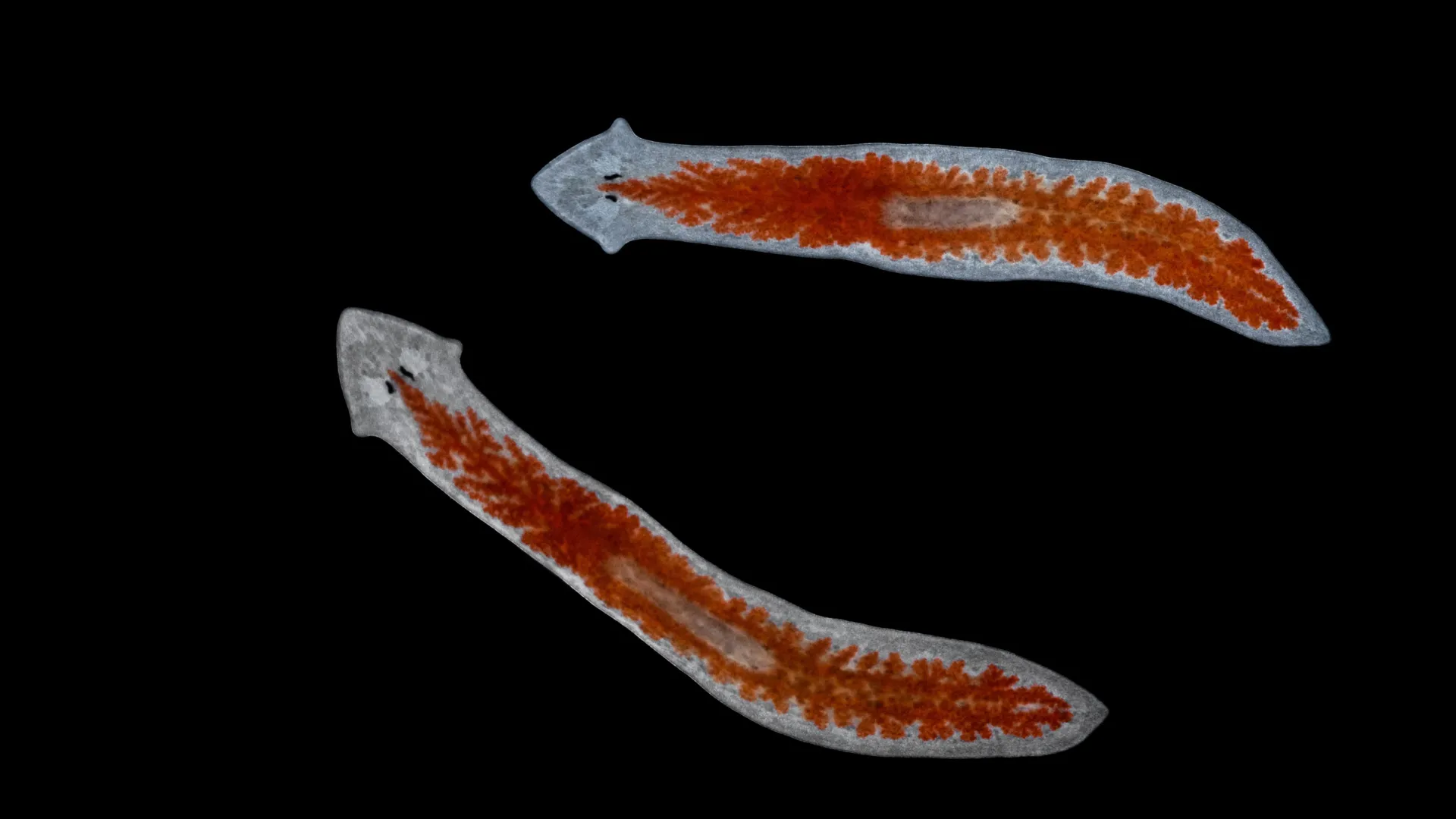
In a landmark study that disrupts decades of established biological theory, researchers at the Stowers Institute for Medical Research have revealed that planarian flatworms possess a unique, decentralized method of stem cell regulation that differs fundamentally from almost all other known animal species. The research, published in the prestigious journal Cell Reports on October 15, 2025, demonstrates that planarian stem cells do not rely on immediate neighboring cells—traditionally known as a "niche"—to dictate their behavior. Instead, these highly versatile cells appear to receive their primary instructions from distant organs, specifically the intestine, through a global communication network. This discovery not only provides a long-sought explanation for the flatworm’s legendary ability to regenerate its entire body from a mere fragment but also offers profound implications for the future of human regenerative medicine and oncology.
The Traditional Paradigm: The Stem Cell Niche
For nearly half a century, the cornerstone of stem cell biology has been the concept of the "niche." First proposed in the late 1970s to describe the environment of blood-forming stem cells in bone marrow, the niche is defined as a specific physical location where specialized neighboring cells provide the necessary signals to keep stem cells in a state of readiness. In humans and most complex organisms, these niches act as strict "micromanagers." They provide the biochemical and physical cues that tell a stem cell when to remain dormant, when to divide to self-renew, and when to differentiate into a specific tissue type, such as muscle, nerve, or skin.
Without this localized control, human stem cells often fail to function or, more dangerously, begin to proliferate uncontrollably. When stem cells "go rogue" and ignore the signals of their niche, the result is frequently the formation of tumors or the development of systemic cancers like leukemia. This rigid dependency, while protective against cancer, also limits the regenerative potential of human tissues. Once a limb or a complex organ is lost, the localized niches are destroyed, and the body’s ability to replace those specific structures is effectively neutralized.
Planarians: The Exceptions to the Rule
The planarian flatworm, specifically the species Schmidtea mediterranea, has long been the "gold standard" for studying regeneration. These simple organisms can be cut into dozens of pieces, and each piece will regrow into a complete, perfectly proportioned miniature worm within a matter of weeks. Central to this ability are "neoblasts," a population of adult stem cells that comprise roughly 20% to 30% of the worm’s total cell count. Unlike human adult stem cells, which are typically multipotent (limited to a few cell types), neoblasts are pluripotent, meaning they can become any cell type in the animal’s body.
The study led by Frederick "Biff" Mann, Ph.D., a Postdoctoral Research Associate in the laboratory of Stowers President and Chief Scientific Officer Alejandro Sánchez Alvarado, Ph.D., sought to identify the elusive niche that governed these neoblasts. Given the sheer number of stem cells in a planarian, scientists had long assumed that the entire body must be a mosaic of countless tiny niches. The findings of the Stowers team, however, suggest that the "niche" as we know it simply does not exist in these animals.
Discovery of the Hecatonoblast and the Role of Spatial Transcriptomics
To map the environment of the neoblasts, the research team employed a cutting-edge technology known as spatial transcriptomics. Unlike traditional sequencing, which requires breaking tissues down into a "soup" of cells, spatial transcriptomics allows scientists to see exactly which genes are being expressed in individual cells while they are still in their original positions within the tissue.
During this mapping process, the team discovered a previously unknown cell type. This cell was remarkably large and featured numerous fingerlike projections extending from its surface, weaving through the surrounding tissue. In a nod to Greek mythology, the researchers named these cells "hecatonoblasts," after the Hecatoncheires—the hundred-armed giants who were the offspring of Gaia and Uranus.
Initially, the proximity of the hecatonoblasts to the stem cells led the team to believe they had finally found the planarian niche cell. However, further analysis yielded a surprising result: the hecatonoblasts were not controlling the stem cells. Despite their physical intimacy, the gene expression patterns indicated that the hecatonoblasts were not providing the instructional signals typically associated with a niche.
Long-Distance Signaling: The Intestinal Connection
If the immediate neighbors were not the masters of the stem cells, the researchers had to look further afield. By analyzing the broader spatial dataset, the team found that the most significant instructional signals were originating from the planarian’s intestine. This suggests that the intestine acts as a "global signaling hub," broadcasting instructions that reach stem cells across the entire body.
"I tend to think about this as local versus global communication networks," said co-corresponding author Blair Benham-Pyle, Ph.D., an Assistant Professor at the Baylor College of Medicine and a former Stowers researcher. "While interactions between stem cells and their neighboring cells influence how a stem cell reacts immediately, distant interactions may control how that same stem cell responds to big changes in an organism, such as an injury or amputation."
This "global" model explains why a small fragment of a planarian knows how to rebuild a head or a tail. Because the stem cells are not tethered to a local "micromanager," they are free to respond to systemic signals that communicate the status of the entire organism. This independence allows them to migrate to where they are needed and transform into whatever tissue is missing, rather than being restricted by their immediate surroundings.
Chronology of the Research and Methodology
The study published in Cell Reports is the culmination of several years of intensive investigation at the Stowers Institute. The timeline of the discovery highlights the rapid evolution of genomic tools:
- Phase I (Identification): The team used single-cell RNA sequencing to categorize the various cell types in the planarian, identifying a subset of neoblasts that appeared to be in different stages of "readiness."
- Phase II (Spatial Mapping): Using spatial transcriptomics, the researchers mapped these neoblasts to their physical locations. This led to the discovery of the hecatonoblasts in early 2024.
- Phase III (Functional Analysis): Throughout late 2024 and early 2025, the team performed gene knockdown experiments (RNA interference) to see if removing the hecatonoblasts or specific intestinal signals would halt regeneration.
- Phase IV (Synthesis): The team concluded that while local "friends"—cells that the stem cells create as they differentiate—provide some context, the primary regulatory "logic" is decentralized and dynamic.
Supporting Data and Technical Insights
The data presented in the paper reveals that planarian stem cells exist in a "dynamic environment" rather than a fixed one. In humans, if a hematopoietic stem cell is removed from its bone marrow niche, it loses its "stemness" almost immediately. In contrast, planarian neoblasts maintain their pluripotency even as they move through different tissue environments.
The study highlighted several key data points:
- Gene Expression Profiles: Neoblasts showed a high degree of transcriptional homogeneity across different body regions, suggesting they are not being "primed" by local tissues until the very last moment of differentiation.
- Signal Range: The signaling molecules identified from the intestinal cells were found to belong to highly conserved pathways (such as Wnt and BMP signaling), but they were utilized in a "broadcast" fashion rather than the "point-to-point" fashion seen in vertebrates.
- Cell Density: The ratio of stem cells to hecatonoblasts remained constant even during regeneration, suggesting a structural rather than a regulatory relationship.
Broader Implications for Human Medicine and Cancer Research
The discovery that stem cells can function effectively without a traditional niche has profound implications for how we view human disease and healing. One of the greatest hurdles in regenerative medicine is the "niche problem." To repair a damaged heart or a severed spinal cord in a human, scientists must not only provide the stem cells but also recreate the complex, localized environment that those cells require to survive and function.
If researchers can figure out the "basic rules" that allow planarian stem cells to remain independent and follow global signals, they might be able to replicate those conditions in human tissues. This could lead to therapies where a patient’s own stem cells are "unlocked" from their restrictive niches to perform wide-scale repairs.
Furthermore, the study provides a new lens through which to view cancer. "Our hope is to uncover the basic rules that guide stem cells to become specific tissues as opposed to going rogue," said Sánchez Alvarado. Most human tumors are essentially stem cells that have stopped following the rules of their niche. By studying how planarians allow their stem cells to be "independent" without becoming cancerous, scientists may discover new ways to re-establish control over tumor cells or prevent them from losing their regulatory cues in the first place.
Official Responses and Scientific Impact
The scientific community has reacted to the findings with a mixture of surprise and optimism. The study challenges the universality of the niche concept, which has been a "holy grail" in developmental biology for decades.
"This finding challenges our concept of a stem cell ‘niche’ and may significantly advance our understanding of how to control stem cells’ abilities to restore damaged tissues," Sánchez Alvarado noted.
Dr. Mann added that the role of a traditional niche might be more of a limitation than a necessity for life. "We’ve now shown having a normal niche may not be essential for stem cells to work. Some stem cells… have figured out a way to be independent and can turn into any type of cell without needing a nearby niche."
The research was supported by the National Institute for General Medical Sciences of the National Institutes of Health (NIH) and the Stowers Institute. As researchers move forward, the next step will be to identify the specific molecules the intestine uses to communicate with neoblasts and to determine if any similar "long-distance" pathways exist in a vestigial or dormant state within the human body.
Conclusion
The Stowers Institute’s discovery marks a paradigm shift in our understanding of biological organization. By proving that the most regenerative animal on Earth operates by ignoring the "local rules" of stem cell management, the study opens a new frontier in biology. The planarian flatworm continues to be a source of wonder, suggesting that the secret to immortality and perfect healing lies not in the "micromanagement" of cells, but in a sophisticated, body-wide symphony of communication that allows every cell to know its place in the grand design of the organism. As science continues to decode these "global networks," the dream of one day triggering similar regenerative feats in humans moves one step closer to reality.
