
 By admin
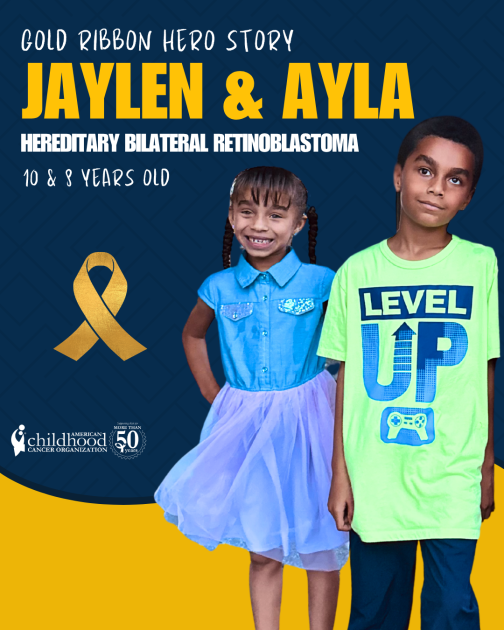
The narrative of Jaylen and Ayla, two siblings aged 10 and 8, respectively, serves as a poignant case study in the intersection of rare pediatric oncology and the systemic challenges faced by parents with disabilities within the healthcare sector. Both children are survivors of hereditary bilateral retinoblastoma, a rare form of eye cancer that affects both eyes and is typically linked to a germline mutation. Their journey from initial symptoms to successful remission highlights the critical importance of early detection, the complexities of multi-modal cancer treatment, and the indispensable role of parental advocacy in navigating a medical system that is not always equipped to accommodate diverse needs.
Early Detection and the Significance of the Leukocoria Reflection
The medical journey began with Jaylen when he was just two months old. His mother, Denice, observed a subtle but concerning physical symptom: his left eye began veering outward, a condition known clinically as strabismus. In many cases of pediatric eye cancer, strabismus is one of the first visible indicators that a tumor may be interfering with central vision. Furthermore, the family retrospectively identified another classic warning sign of retinoblastoma in early photographs—the "glow."
In clinical terms, this glow is known as leukocoria, or a white pupillary reflex. While a healthy eye typically reflects a red color in flash photography (the "red-eye effect" caused by blood vessels in the retina), an eye with a retinoblastoma tumor reflects a white or yellowish light. This occurs because the light from the camera flash bounces off the white mass of the tumor inside the eye. At the time, Jaylen’s family attributed the reflection to standard camera light distortion, a common occurrence that often delays the diagnosis of this aggressive cancer.
Systemic Barriers and the Fight for Equitable Care
The diagnostic process for Jaylen was significantly hindered by systemic failures regarding accessibility. When Jaylen was four months old, Denice sought medical intervention at a scheduled check-up. However, the medical facility refused to provide services because Denice is deaf and the clinic lacked an American Sign Language (ASL) interpreter. This refusal represented a significant breach of the Americans with Disabilities Act (ADA), which mandates that healthcare providers ensure effective communication with patients and their companions through auxiliary aids and services.
Faced with a medical establishment that turned her away during a critical window for her son’s health, Denice was forced to navigate the healthcare landscape independently. She spearheaded the search for a provider who would respect her rights as a mother and provide the necessary diagnostic screenings for Jaylen. This period of forced self-advocacy underscores a broader issue within the United States healthcare system: the "accessibility gap" that can lead to delayed diagnoses and exacerbated health outcomes for children of parents with disabilities.
Once Jaylen was finally seen by a specialist, the diagnosis was confirmed as bilateral retinoblastoma. Because the hereditary form of the disease is caused by a mutation in the RB1 gene, there is a 50% chance of the condition being passed from a carrier parent to a child. In cases where the first child presents with bilateral disease, subsequent siblings are considered high-risk. Consequently, when Denice became pregnant with Ayla, the medical team implemented a rigorous monitoring protocol. Ayla was diagnosed with the same condition at just four weeks old, allowing for much earlier intervention than her brother had received.
Clinical Interventions and the Path to Remission
The treatment of bilateral retinoblastoma is complex, as oncologists must balance the necessity of eradicating life-threatening tumors with the goal of preserving as much vision and ocular structure as possible. For Jaylen and Ayla, the treatment journey spanned several years and involved a combination of local and systemic therapies.
Their clinical protocols included:
- Chemotherapy: Used to shrink the tumors (chemoreduction) to make them more manageable for focal treatments.
- Cryotherapy: A technique involving the application of extreme cold to freeze and destroy cancer cells in the retina.
- Laser Therapy (Thermotherapy): The use of infrared light to heat and kill tumor cells.
- Strabismus Surgery: Performed specifically for Jaylen to correct the misalignment of his eyes caused by the initial tumor growth.
- Enucleation: A surgical procedure to remove the eye. This is typically reserved for cases where the tumor is too large to be treated by other means or where there is a high risk of the cancer spreading via the optic nerve.
Ayla underwent enucleation for one of her eyes, a common outcome in bilateral cases where one eye is more severely affected than the other. Both siblings have since adapted to the use of prosthetic eyes. Modern ocular prosthetics are custom-made to match the patient’s remaining eye, but Ayla has notably embraced her prosthetic as a form of self-expression. She maintains a collection of custom-colored irises, allowing her to exercise autonomy over her appearance and transform a medical necessity into a "style" choice.
Supporting Data: Understanding Retinoblastoma
Retinoblastoma is the most common primary intraocular malignancy of childhood, yet it remains a rare disease, occurring in approximately 1 in 15,000 to 20,000 live births. In the United States, roughly 200 to 300 children are diagnosed annually.
There are two distinct forms of the disease:
- Sporadic (Non-hereditary): Usually affects only one eye (unilateral) and occurs in children with no family history of the disease.
- Hereditary: Often affects both eyes (bilateral) and is caused by a germline mutation in the RB1 tumor suppressor gene. Approximately 40% of all retinoblastoma cases are hereditary.
The survival rate for retinoblastoma in developed nations is remarkably high, exceeding 95% when detected early. However, the hereditary form carries long-term implications. Individuals with the germline RB1 mutation have a significantly higher risk of developing secondary cancers later in life, such as osteosarcoma or soft tissue sarcomas. This necessitates lifelong surveillance and specialized follow-up care, moving beyond the initial oncological clearance.
Analysis of Implications: Advocacy as a Medical Necessity
The case of Jaylen and Ayla highlights the dual burden placed on parents navigating pediatric cancer: the emotional trauma of the diagnosis and the logistical labor of medical management. Denice’s experience of being turned away due to her deafness is a stark reminder that medical expertise is insufficient if it is not accessible.
"It was compounded by anger and frustration at the medical system that tried turning a deaf mother away," Denice stated. Her response—to "lock in" and become the "ultimate advocate and manager"—is a common theme among "cancer parents." In this context, advocacy is not just about support; it is a clinical necessity. When a parent is barred from communication, the patient’s safety is compromised. Denice’s success in securing care despite these barriers likely saved her children’s lives and sight.
Furthermore, the family’s decision to share their story online has invited public scrutiny regarding their parenting style, which Denice describes as "beautifully spoiling" her children. From a psychological perspective, this approach represents a shift toward "post-traumatic growth." Families who survive life-threatening illnesses often re-prioritize immediate joy and emotional presence over traditional disciplinary structures, recognizing the fragility of life.
Conclusion and Future Outlook
Today, Jaylen and Ayla are thriving. Their transition from patients to survivors is marked by a commitment to raising awareness about the "glow" and the importance of early eye exams for infants. Ayla’s proactive learning of ASL during her recovery from surgery further emphasizes the family’s resilience and their embrace of their linguistic and cultural identity.
The broader implications of their story serve as a call to action for the medical community to improve ADA compliance and for parents to trust their intuition when observing physical anomalies in their children. By highlighting the "glow" and the reality of life after enucleation, Jaylen and Ayla demonstrate that a cancer diagnosis, while devastating, does not preclude a future defined by joy, independence, and "legendary" triumphs.
As organizations like the American Childhood Cancer Organization (ACCO) continue to advocate for increased research and support, the story of this family remains a testament to the power of a mother’s persistence. Their journey underscores the fact that while children cannot fight cancer alone, they can overcome it when supported by a system—and a family—that refuses to take "no" for an answer.
