
 By admin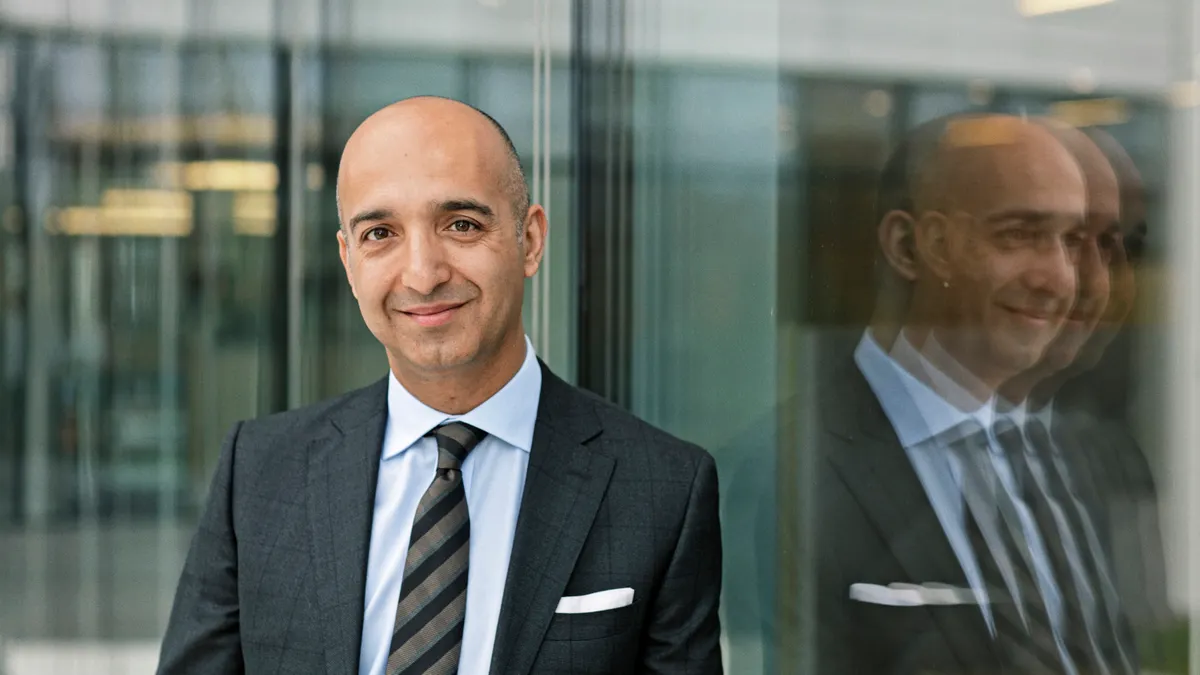
London, UK – September 21, 2026 – In a pivotal "capital markets day" held in London today, pharmaceutical giant Novo Nordisk unveiled a comprehensive strategic roadmap aimed at aggressively competing with its formidable rival, Eli Lilly, and introducing a pipeline of multibillion-dollar products within the rapidly expanding obesity and metabolic disease landscape. The highly anticipated event, attended by investors, analysts, and media, sought to reassert Novo Nordisk’s long-term vision and innovative capabilities amidst a period of intense market scrutiny and competitive pressures that have seen Eli Lilly gain significant ground.
The presentations, led by newly appointed CEO Mike Doustdar and other senior executives, detailed a multi-pronged approach encompassing accelerated research and development, strategic acquisitions, cutting-edge AI partnerships, and a restructured organizational framework. This bold declaration comes as the global market for obesity drugs is projected to reach unprecedented valuations, with some analysts forecasting it could exceed $100 billion by the early 2030s, driven by a growing understanding of obesity as a chronic disease and the increasing efficacy of novel treatments.
The High-Stakes Battle for Dominance in Metabolic Health
Novo Nordisk, historically a pioneer in diabetes and obesity care, ushered in a new era for weight management when its daily GLP-1 (glucagon-like peptide-1) receptor agonist, liraglutide, initially approved for diabetes, received clearance for weight loss as Saxenda a decade ago. This was followed by the groundbreaking success of semaglutide, marketed as Wegovy for obesity and Ozempic for diabetes, which offered patients the convenience of a weekly injection and demonstrated superior weight loss efficacy. For years, Novo Nordisk held a commanding lead in this burgeoning therapeutic area, capitalizing on its first-mover advantage and robust clinical data.
However, the competitive landscape dramatically shifted with the emergence of Eli Lilly’s tirzepatide, a dual GIP (glucose-dependent insulinotropic polypeptide) and GLP-1 receptor agonist. Approved as Mounjaro for diabetes and subsequently as Zepbound for obesity, tirzepatide quickly established itself as a formidable contender. Clinical trials showcased Zepbound’s ability to induce significantly greater weight loss compared to existing GLP-1 monotherapies, including Novo Nordisk’s Wegovy. For instance, head-to-head data demonstrated Zepbound achieving average weight reductions often exceeding 20-25% from baseline in certain patient cohorts, surpassing the typical 15-18% observed with semaglutide. This perceived efficacy advantage, coupled with robust marketing and manufacturing scale, propelled Lilly’s market capitalization to unprecedented heights, briefly surpassing Novo Nordisk’s and prompting a re-evaluation of market leadership.
Novo Nordisk has openly contested some of Lilly’s claims regarding Zepbound’s superiority, particularly in the context of specific trial designs and comparative dosages. This has led to legal skirmishes over marketing practices, underscoring the ferocity of the competition. The market has also seen the introduction of oral formulations, with Novo Nordisk initially beating Lilly to market with its oral GLP-1 pill for weight loss. However, sales of Novo’s oral Wegovy pill missed Wall Street’s expectations between April and June of this year, a performance that analysts attributed to a combination of factors including initial market penetration challenges, patient preference for injectables, and the rapid response from Lilly. Months later, Lilly secured approval for its own oral obesity pill, Foundayo (orforglipron), further intensifying the race for convenient, non-injectable treatment options.
A Strategic Overhaul: Leadership, Restructuring, and Innovation
The capital markets day served as a critical platform for Novo Nordisk to demonstrate its resilience and renewed strategic focus following a period of intense pressure. The company has undergone significant internal changes in response to the escalating competition and investor concerns. Mike Doustdar, who assumed the CEO role amidst this challenging environment, has spearheaded a comprehensive organizational overhaul. This included a restructuring that led to the difficult decision to lay off approximately 9,000 workers, aimed at streamlining operations, reducing overhead, and reallocating resources towards core strategic priorities. The board of directors has also seen changes, signaling a commitment to refreshed governance and strategic direction.
A cornerstone of Novo Nordisk’s revitalized strategy is a significant investment in external partnerships and advanced technologies to accelerate drug discovery and development. Leading up to today’s presentation, the company announced a landmark deal with AI specialist Anthropic. This collaboration is designed to leverage Anthropic’s advanced artificial intelligence capabilities, particularly in areas like predictive modeling and large language models, to revolutionize various stages of the drug lifecycle. Potential applications include identifying novel drug targets, optimizing lead compounds, designing more efficient clinical trials, and enhancing real-world evidence generation. Such an alliance reflects a growing trend in the pharmaceutical industry to harness AI for accelerating innovation and reducing the time and cost associated with bringing new medicines to market.
Further underscoring its commitment to pipeline diversification, Novo Nordisk also announced a strategic partnership with startup Orbis Medicines. This collaboration focuses on macrocyclic peptides, a class of molecules with immense potential for developing novel oral obesity drugs. Macrocyclic peptides offer improved oral bioavailability and metabolic stability compared to traditional peptides, addressing a key challenge in creating effective oral formulations. The aim is to develop next-generation oral treatments that offer superior efficacy, convenience, and potentially fewer side effects, thereby expanding market access and patient adherence. In addition, the company recently acquired a trio of obesity drug prospects from Kallyope, another young biotechnology firm, demonstrating an aggressive inorganic growth strategy to bolster its early-stage pipeline with promising, differentiated assets. These partnerships and acquisitions collectively signal Novo Nordisk’s intent to explore multiple therapeutic avenues beyond its current GLP-1 franchise.
Deep Dive into the Pipeline: CagriSema and Beyond

A major focus of the capital markets day was the detailed update on Novo Nordisk’s clinical pipeline, particularly its highly anticipated combination therapy, CagriSema. CagriSema combines cagrilintide, an amylin analog, with semaglutide, a GLP-1 receptor agonist. The rationale behind this combination is to leverage the synergistic effects of both mechanisms: semaglutide primarily reduces appetite and food intake, while cagrilintide is thought to enhance satiety, slow gastric emptying, and potentially reduce body fat more effectively.
Initial investor doubts surrounding CagriSema emerged following a head-to-head trial where it was perceived to be "beaten" by Eli Lilly’s Zepbound. While specific data from that trial highlighted Zepbound’s statistically superior weight loss, Novo Nordisk executives today presented new, more favorable results from another trial. This latest study showed CagriSema to be superior to Zepbound, although a crucial detail revealed that this comparison was made against the second-lowest dose of Lilly’s drug. This nuance quickly became a point of discussion among analysts, who noted that while a win is positive, a comparison against a sub-maximal dose of a competitor’s leading product may not fully alleviate concerns about ultimate head-to-head efficacy against Zepbound’s highest, most effective doses. Nevertheless, Novo Nordisk emphasized the clinical significance of CagriSema’s robust weight loss profile and its potential to offer a compelling alternative for patients who may not achieve optimal results with monotherapy. The company indicated that CagriSema remains a cornerstone of its near-term obesity pipeline, with ongoing efforts to bring it to regulatory review as swiftly as possible.
Beyond CagriSema, Novo Nordisk’s immediate regulatory pipeline appears somewhat constrained. Currently, the only other drug under review by the U.S. Food and Drug Administration (FDA) is a prospective hemophilia treatment, highlighting the company’s reliance on its existing diabetes and obesity portfolio, and the long lead times for new drug approvals. A significant portion of its broader obesity pipeline is still in Phase 2 development or earlier stages, indicating that the impact of these newer assets is several years away. This includes novel GLP-1 compounds, dual agonists, and other mechanisms of action targeting various metabolic pathways, developed both internally and through its new partnerships.
Adding to the challenges, Novo Nordisk recently suffered a setback with ziltivekimab, a highly touted prospect for heart disease. Ziltivekimab, an anti-inflammatory monoclonal antibody targeting interleukin-6 (IL-6), was acquired through its purchase of Corvidia Therapeutics. Expectations were high for this drug to address residual cardiovascular risk in patients with chronic kidney disease. However, the Zeus study, a large Phase 3 trial, did not meet its primary endpoint or showed insufficient benefit to warrant further development, leading to a significant blow to the company’s diversification efforts beyond its core metabolic franchise. This setback underscores the inherent risks and unpredictability of pharmaceutical R&D, placing even greater pressure on the success of its obesity pipeline.
Financial Outlook and Future Market Dynamics
Novo Nordisk’s near-term financial outlook remains a critical point of investor discussion. The company projects that its sales growth will be "in line" with its peers from 2026 to 2030. While this might appear a conservative estimate given the explosive growth of the GLP-1 market, it likely reflects anticipated competitive headwinds and the long development cycles for new blockbuster products. Analysts interpret "in line" to mean average pharmaceutical industry growth, rather than the exponential growth seen during the initial launch phases of Wegovy and Ozempic. This projection also implicitly accounts for the impending "patent cliff" for semaglutide, the active ingredient in Wegovy. The U.S. patent protection for semaglutide is set to expire in 2032, a date that looms large for Novo Nordisk’s long-term revenue streams. The company will need to have successfully launched multiple new, differentiated products by then to mitigate the impact of generic competition.

The strategic moves announced today – including the Anthropic AI partnership, the Orbis Medicines collaboration for oral macrocyclic peptides, and the Kallyope acquisitions – are all geared towards building a robust and diversified pipeline that can sustain growth beyond the semaglutide patent expiry. The focus on oral formulations, in particular, is seen as crucial for market expansion, as pills offer a less invasive and potentially more accessible option for a broader patient population, including those hesitant about injectables.
Analyst Perspectives and Broader Implications
Industry analysts offered a mixed but cautiously optimistic assessment of Novo Nordisk’s capital markets day. Many lauded the company’s proactive steps in leadership change, restructuring, and its aggressive pursuit of external innovation. The AI and peptide partnerships were particularly well-received as forward-looking initiatives. However, some expressed lingering concerns about the immediate competitive gap with Eli Lilly, especially regarding the perceived efficacy advantage of tirzepatide and the nuanced interpretation of the latest CagriSema data.
"Novo Nordisk is clearly fighting back with a comprehensive strategy, not just incremental changes," commented Dr. Sarah Jenkins, a senior pharmaceutical analyst at Global Pharma Insights. "The shift towards AI-driven drug discovery and novel oral peptides is smart, but the market will be looking for clear clinical differentiation and blockbuster sales from these new assets in the coming years. The 2032 patent cliff for semaglutide is a stark reminder of the urgency."
The broader implications of this intensified rivalry extend beyond corporate balance sheets. The innovation spurred by this competition is set to transform the landscape of obesity and metabolic disease treatment. Patients are likely to benefit from a wider array of more effective and convenient treatment options, potentially leading to better health outcomes and a reduction in the burden of obesity-related comorbidities such as cardiovascular disease, type 2 diabetes, and certain cancers. However, challenges related to drug accessibility, pricing, and insurance coverage will remain critical as these highly effective but expensive therapies become more widespread.
In conclusion, Novo Nordisk’s capital markets day marked a defiant stand in the face of escalating competition. By outlining a clear strategy of innovation, strategic partnerships, and organizational agility, the company aims to not only defend its position but also to redefine the future of metabolic health. While the path ahead remains challenging, marked by fierce competition and pipeline hurdles, Novo Nordisk has signaled its unwavering commitment to reclaim leadership in one of the most dynamic and critical therapeutic areas in modern medicine. The coming years will reveal whether its ambitious roadmap can translate into sustained market dominance and a new era of blockbuster success.
