
 By admin
The medical journey of siblings Jaylen and Ayla highlights the intersection of rare pediatric oncology and the systemic barriers faced by patients and caregivers with disabilities. Jaylen, now 10, and his sister Ayla, 8, are both survivors of hereditary bilateral retinoblastoma, a rare form of eye cancer that affects both eyes. Their path to survival was marked not only by intensive medical interventions but also by a significant struggle for equitable access to care, driven by their mother Denice’s advocacy in the face of communication barriers within the healthcare system.
A Chronology of Diagnosis and Systemic Barriers
The family’s experience with retinoblastoma began when Jaylen was two months old. His mother, Denice, observed that his left eye was veering outward, a condition known as strabismus. While early photographs of Jaylen occasionally captured a distinct "glow" or white reflection in his pupil—a clinical sign known as leukocoria—the family initially attributed the phenomenon to camera flash reflections. This is a common occurrence in many retinoblastoma cases, where the life-saving diagnostic sign is often dismissed as a photographic anomaly.
The situation reached a critical juncture during Jaylen’s four-month wellness check-up. Denice, who is Deaf, sought medical evaluation for her son’s ocular symptoms. However, the medical facility refused to provide services, citing the lack of an available American Sign Language (ASL) interpreter. Under the Americans with Disabilities Act (ADA), healthcare providers are generally required to provide effective communication aids, including qualified interpreters, to ensure equal access to care. The refusal forced Denice to navigate the complex medical landscape independently, searching for a provider who would both respect her rights as a parent and address the urgent needs of her child.
Upon securing a secondary consultation, Jaylen was diagnosed with bilateral retinoblastoma. Because the condition was determined to be hereditary—linked to a mutation in the RB1 gene—his younger sister, Ayla, was monitored from birth. This proactive monitoring led to Ayla’s diagnosis at just four weeks old. While the news of a second diagnosis was devastating, the early detection afforded by the family’s prior experience allowed for immediate intervention.
Understanding Hereditary Bilateral Retinoblastoma
Retinoblastoma is a rare cancer of the retina, the light-sensitive tissue at the back of the eye, typically affecting children under the age of five. According to data from the American Cancer Society, approximately 200 to 300 children are diagnosed with retinoblastoma in the United States each year. The disease occurs in two forms: sporadic (non-hereditary) and hereditary.
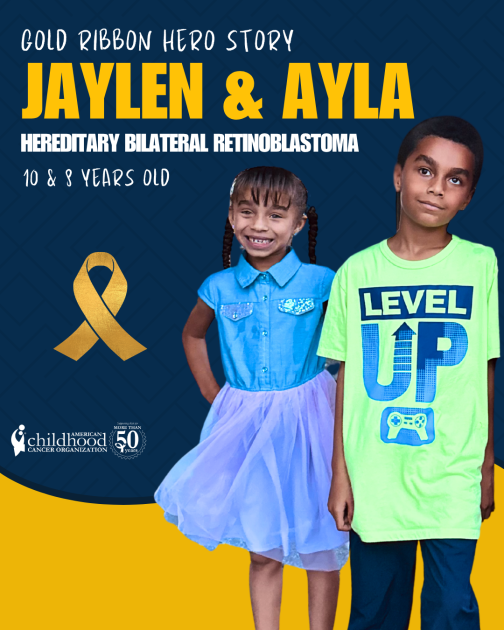
Bilateral retinoblastoma, which affects both eyes, is almost always hereditary. It occurs when a child inherits a mutation in the RB1 tumor suppressor gene from a parent or when a new mutation occurs very early in embryonic development. Children with the hereditary form are at a higher risk for developing multiple tumors in both eyes and face an increased lifetime risk of developing other types of cancer, such as osteosarcoma or soft tissue sarcomas.
The "glow" mentioned by Denice is the most common presenting symptom of the disease. In a healthy eye, a camera flash reflects off the red blood vessels of the retina, resulting in "red-eye." In an eye with retinoblastoma, the light reflects off the white surface of the tumor, creating a white or yellow glow in the pupil. Other symptoms include strabismus (misaligned eyes), persistent eye redness, and swelling.
Treatment Modalities and Surgical Interventions
The treatment of bilateral retinoblastoma is complex, as oncologists must balance the eradication of the cancer with the preservation of vision and the minimization of long-term side effects. For Jaylen and Ayla, the treatment regimen spanned several years and involved a multidisciplinary approach.
- Chemotherapy: Systematic or intra-arterial chemotherapy is often used to shrink tumors (chemoreduction) so that focal treatments can be more effective.
- Cryotherapy: This involves using extreme cold to freeze and destroy small tumors on the periphery of the retina.
- Laser Therapy (Photocoagulation): High-energy light is used to cut off the blood supply to the tumors or destroy the cancerous tissue directly.
- Strabismus Surgery: Jaylen underwent corrective surgery to realign his eyes, addressing the initial symptom that led to his diagnosis.
- Enucleation: In cases where the tumor is too large to treat with other methods or where there is a high risk of the cancer spreading to the optic nerve, the eye must be surgically removed. Ayla underwent an enucleation of one eye to ensure her survival.
Both siblings now utilize prosthetic eyes. Modern ocular prosthetics are custom-made to match the patient’s remaining eye, but as Denice noted, Ayla has embraced her situation by incorporating personal style into her medical journey. Ayla maintains a collection of custom-colored irises, allowing her to exercise autonomy and express her personality through her prosthetics.
The Role of Parental Advocacy and Disability Rights
The challenges Denice faced as a Deaf mother are reflective of broader issues in the American healthcare system regarding accessibility. According to the National Association of the Deaf (NAD), communication barriers in medical settings can lead to misdiagnosis, improper treatment, and significant psychological distress for patients and their families.
Denice’s experience of being turned away at a critical diagnostic window highlights the necessity of hospital compliance with federal civil rights laws. The ADA mandates that "public accommodations," which include private hospitals and doctors’ offices, provide auxiliary aids and services to ensure effective communication. By "locking in" and becoming a fierce advocate, Denice not only secured the necessary care for Jaylen and Ayla but also underscored the importance of parental agency in pediatric oncology.
In the years following the diagnoses, Denice has utilized social media to share her children’s progress. While she reported facing online criticism regarding her parenting choices—specifically her decision to "spoil" her children and focus on the present moment—she maintains that the trauma of the cancer journey has earned the family the right to prioritize joy. This perspective is supported by many pediatric psychologists who emphasize the importance of "normalizing" life for children with chronic or life-threatening illnesses to foster emotional resilience.
Broader Implications for Early Detection and Awareness
The survival of Jaylen and Ayla serves as a case study for the importance of "The Glow" awareness campaigns. Organizations such as "Know the Glow" and the American Childhood Cancer Organization (ACCO) work to educate parents and pediatricians on the early signs of retinoblastoma. Because the disease is highly curable if caught early—boasting a survival rate of over 95% in developed nations—public education is a primary tool in preventing vision loss and death.
The case also brings attention to the long-term needs of childhood cancer survivors. Survivors of hereditary retinoblastoma require lifelong monitoring due to their genetic predisposition to secondary cancers. This necessitates a transition from pediatric oncology to adult survivorship programs that specialize in genetic counseling and frequent screenings.
Conclusion: A Legacy of Joy and Independence
Despite the rigors of their treatment, Jaylen and Ayla have achieved significant milestones. Ayla, who began learning ASL during her recovery from enucleation surgery, has demonstrated a high degree of independence and adaptability. The siblings’ ability to thrive after such intensive medical intervention is a testament to the advancements in pediatric ocular oncology and the impact of dedicated caregiving.
By sharing their story, the family contributes to a larger narrative of triumph over childhood cancer. They emphasize that while a diagnosis of bilateral retinoblastoma is life-altering, it does not preclude a life of activity and happiness. Their journey remains a call to action for healthcare providers to ensure that medical environments are accessible to all parents, regardless of disability, to ensure that no child’s diagnosis is delayed by systemic failure.
For those seeking more information on retinoblastoma or looking to support families navigating pediatric cancer, resources are available through the American Childhood Cancer Organization. Advocacy and donations continue to fund the research necessary for less invasive treatments and to provide support systems for families facing the complexities of a cancer diagnosis. Through awareness of the "glow" and the enforcement of equitable healthcare practices, the medical community can continue to improve outcomes for children like Jaylen and Ayla.
