
 By admin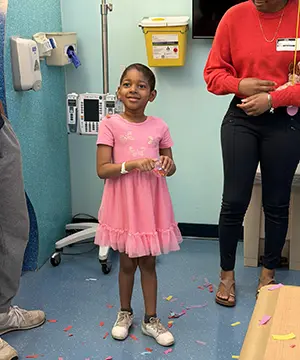
The trajectory of a family’s life can be fundamentally altered in the span of a single evening, a reality Cora H. and her daughter, Amari, experienced when a routine school night escalated into a medical emergency. What began as a discovery of blood in the child’s urine led to a rapid admission to the emergency department, culminating in a 3:00 AM diagnosis that would introduce the family to the complex and grueling world of pediatric oncology. Physicians identified a significant tumor on Amari’s kidney, setting into motion a multi-month clinical intervention involving intensive chemotherapy and high-stakes surgery. As the medical community observes June as National Cancer Survivors Month, Amari’s transition from a critical diagnosis of Stage 3 anaplastic Wilms tumor to active survivorship highlights both the advancements in pediatric surgical techniques and the ongoing necessity for specialized research funding.
Clinical Diagnosis and the Challenges of Wilms Tumor
The initial diagnosis of a renal mass in a pediatric patient often necessitates a rapid and aggressive treatment protocol. In Amari’s case, the mass was identified as a Wilms tumor, also known as a nephroblastoma. This is the most common type of kidney cancer in children, typically affecting those between the ages of three and four. According to data from the American Cancer Society, approximately 500 to 600 new cases of Wilms tumor are diagnosed in the United States annually. While the overall five-year survival rate for Wilms tumor is relatively high—approaching 90 percent—the specific histology of the tumor plays a critical role in determining the prognosis and the intensity of the required treatment.
Amari’s diagnosis was specifically categorized as Stage 3 anaplastic Wilms tumor. In the field of oncology, "anaplastic" refers to cells that appear highly abnormal under a microscope, indicating a more aggressive form of the disease that is often more resistant to standard chemotherapy. Stage 3 indicates that the cancer had spread beyond the kidney to nearby tissues or lymph nodes within the abdomen, though it had not yet reached distant organs like the lungs or liver. This classification required a rigorous 32-week chemotherapy regimen, designed to target residual malignant cells following surgical intervention.
Advancements in Nephron-Sparing Surgery
One of the most critical junctures in Amari’s medical journey involved the surgical removal of the tumor. Historically, the standard of care for a unilateral Wilms tumor was a radical nephrectomy, which involves the total removal of the affected kidney. However, modern pediatric surgery has increasingly explored nephron-sparing surgery, or partial nephrectomy, when oncologically feasible. The primary objective is to remove the malignancy while preserving as much healthy renal tissue as possible to safeguard the patient’s long-term kidney function.
For Amari, the surgical team initially prepared the family for the total loss of her left kidney. However, following a preliminary course of chemotherapy intended to shrink the tumor, surgeons were able to perform a complex procedure that successfully excised the mass while preserving approximately 60 percent of the healthy kidney. This preservation is a significant clinical victory, as it reduces the long-term risk of chronic kidney disease and hypertension, which are common late-effects for pediatric cancer survivors who have undergone radical nephrectomies.
A Chronology of Treatment and Resilience
The timeline of Amari’s treatment reflects the standard but exhausting path of pediatric oncology. Following the emergency room visit and the discovery of the tumor, the family was thrust into a cycle of diagnostic imaging, biopsies, and the commencement of chemotherapy. The treatment plan was divided into distinct phases:
- Initial Stabilization and Induction: Following the ER visit, doctors stabilized the patient and utilized chemotherapy to reduce the tumor’s volume, making the subsequent surgery safer and more effective.
- Surgical Intervention: The partial nephrectomy was performed after the initial chemo cycles, resulting in the successful removal of the Stage 3 mass.
- Post-Operative Consolidation: Due to the anaplastic nature of the cells, Amari underwent a grueling 32-week course of chemotherapy. This phase is often the most taxing for pediatric patients, involving repeated hospitalizations, suppressed immune systems, and physical exhaustion.
- The Bell-Ringing Ceremony: The conclusion of the 32-week regimen was marked by the traditional "ringing of the bell," a symbolic act in oncology wards that signifies the end of active treatment. Amari’s ceremony coincided with the birthday of her late grandmother, adding a layer of familial significance to the clinical milestone.
Throughout this period, Amari continued to participate in cheerleading, a pursuit that her mother, Cora, identifies as a vital component of her daughter’s emotional resilience. By maintaining a connection to her pre-diagnosis life and her aspirations—including a goal to eventually join the Dallas Cowboys Cheerleaders—Amari demonstrated the importance of psychosocial support in pediatric recovery.
The Role of Research and Advocacy Organizations
Amari’s successful transition to survivorship is a testament to the efficacy of current pediatric protocols, many of which are developed through clinical trials and funded by specialized organizations. CureSearch for Children’s Cancer, the organization highlighting Amari’s story, emphasizes that pediatric cancer research remains underfunded relative to adult cancers. While adult cancer research often focuses on lifestyle-related factors and prevention, pediatric research is centered on genetic mutations and developmental biology.
Data from the National Cancer Institute (NCI) indicates that while the overall death rate for childhood cancer has declined by more than 50 percent since the 1970s, cancer remains the leading cause of death by disease among children in the United States. Furthermore, survivors often face "late effects" from their treatment, including secondary cancers, heart damage, and infertility. Advocacy groups argue that more targeted research is needed to develop treatments that are not only effective in achieving remission but also less toxic to developing bodies.
Statements and Broader Implications for Families
Cora H., speaking on the experience of navigating the healthcare system, emphasized the necessity of transparency and hope. "I made one promise to my daughters: I would never lie to them," she stated, reflecting a common recommendation by child life specialists who advise parents to use age-appropriate, honest communication to reduce a child’s anxiety during medical procedures. Cora’s message to other families currently in the "heavy moments" of waiting for diagnostic news is one of steadfastness, urging them not to lose hope even when the prognosis involves high-risk classifications like anaplasia.
The broader impact of stories like Amari’s serves to humanize the statistical data surrounding National Cancer Survivors Month. Survivorship is not merely the absence of disease; it is a lifelong process of monitoring and adaptation. For Amari, survivorship involves a return to her interests in K-pop, "Demon Slayer," and dancing, but it also includes regular follow-up scans and blood work to ensure she remains in remission.
Analysis of the Pediatric Oncology Landscape
The case of Amari highlights several trends in modern pediatric oncology. First, the move toward "organ-sparing" surgeries indicates a shift in focus from mere survival to the long-term quality of life. As survival rates for many pediatric cancers exceed 80 percent, the medical community is increasingly focused on the "survivorship" phase, ensuring that the children who survive cancer do not face debilitating health issues in their 20s and 30s.
Second, the psychological resilience of the patient is increasingly recognized as a factor in treatment adherence and overall well-being. Integration of normal childhood activities—such as Amari’s cheerleading—is now seen as a therapeutic necessity rather than a distraction. Hospital programs that facilitate meetings with role models, such as the Dallas Cowboys Cheerleaders, play a documented role in maintaining a patient’s morale during long-term chemotherapy.
Finally, the reliance on private donations and advocacy for June’s Cancer Survivors Month underscores a gap in federal research allocation. Advocates point out that only a small fraction of the NCI’s federal budget is dedicated specifically to pediatric cancer. This makes the role of non-profit organizations and individual donors critical in the development of new drugs and surgical techniques that saved Amari’s kidney and, ultimately, her life.
Conclusion
Amari’s journey from a traumatic 3:00 AM emergency room diagnosis to her current status as a thriving survivor serves as a definitive example of the progress made in treating Wilms tumor. However, her story also serves as a reminder of the thousands of children still undergoing treatment. As the medical and survivor communities celebrate National Cancer Survivors Month, the focus remains on advancing research so that every child, regardless of the stage or histology of their diagnosis, has the opportunity to ring the bell and pursue their dreams. Amari’s light, which remained undimmed by 32 weeks of chemotherapy, stands as a testament to the efficacy of modern medicine and the enduring strength of the human spirit in the face of pediatric illness.
