
 By Hendra Lukman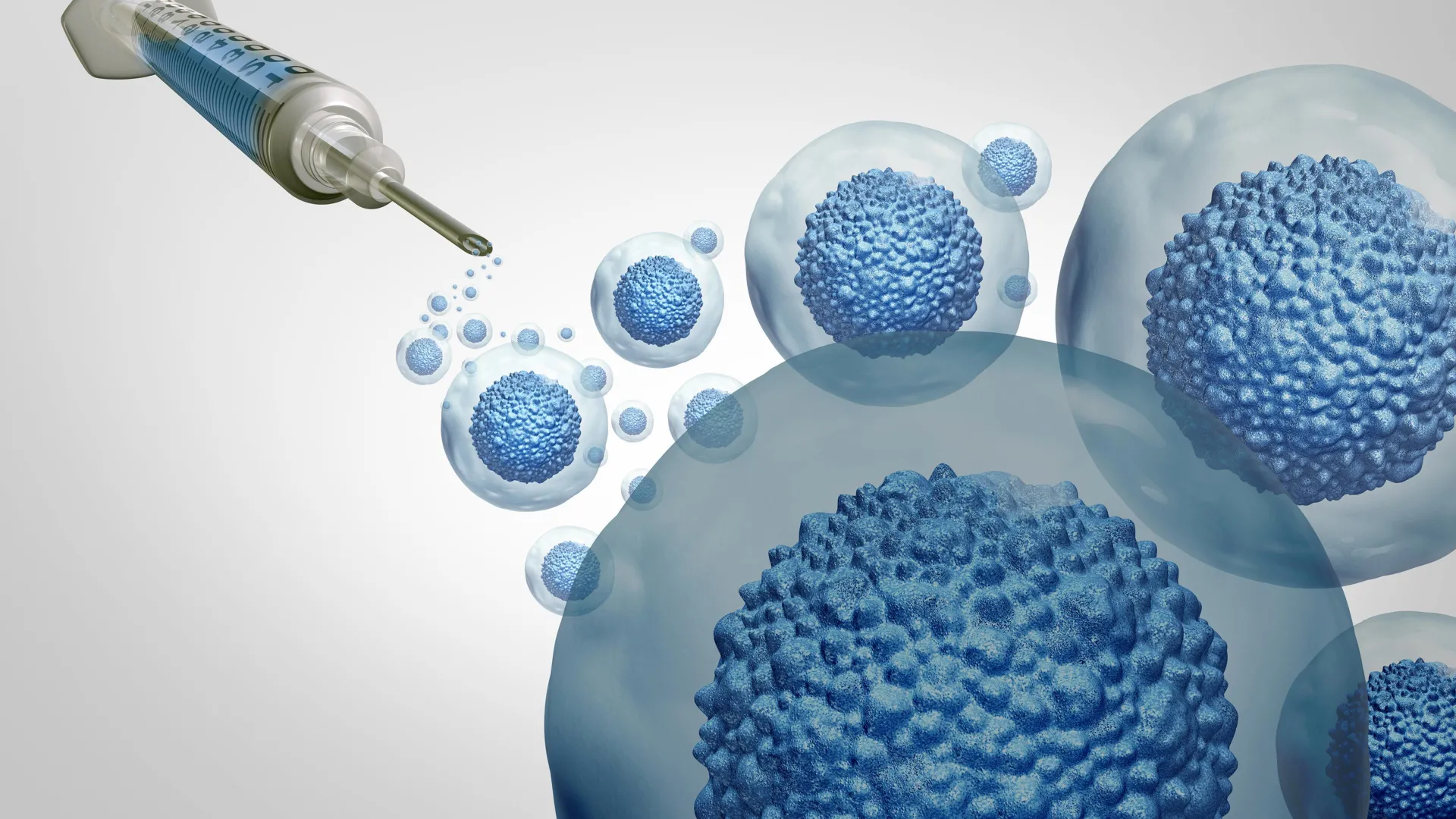
A groundbreaking advancement in stem cell transplant preparation has emerged from Stanford Medicine, where researchers have developed an innovative antibody therapy that successfully prepares patients for bone marrow transplants without the need for the historically debilitating and toxic chemotherapy or radiation. This pivotal development, detailed in the results of a Phase 1 clinical trial, represents a significant paradigm shift, particularly for individuals with rare genetic disorders like Fanconi anemia, where traditional transplant protocols have posed extreme risks. The implications of this research extend far beyond Fanconi anemia, offering a beacon of hope for a broader spectrum of inherited diseases requiring stem cell transplantation.
The study, published in the prestigious journal Nature Medicine, focused on a cohort of children diagnosed with Fanconi anemia, a severe inherited condition characterized by a defect in DNA repair mechanisms. This defect leads to progressive bone marrow failure, rendering patients highly susceptible to life-threatening infections and bleeding due to the body’s inability to produce sufficient blood cells. Historically, the only curative treatment for Fanconi anemia has been a stem cell transplant, but the preparative regimens—typically involving intense radiation and genotoxic chemotherapy agents like busulfan—carried significant risks of secondary cancers, infertility, and other long-term health complications.
"We were able to treat these really fragile patients with a new, innovative regimen that allowed us to reduce the toxicity of the stem cell transplant protocol," stated Agnieszka Czechowicz, MD, PhD, assistant professor of pediatrics and co-senior author of the study. "Specifically, we could eliminate the use of radiation and genotoxic chemotherapy called busulfan, with exceptional outcomes." This statement underscores the dual achievement of the research: reducing toxicity while maintaining or improving transplant success rates.
A New Dawn for Transplant Conditioning
The core of this revolutionary approach lies in the utilization of an antibody, known as briquilimab, that targets a specific protein called CD117. This protein is found in abundance on hematopoietic stem cells, the crucial cells responsible for generating all blood and immune cells. By binding to CD117, briquilimab effectively targets and eliminates the patient’s own blood-forming stem cells, a critical step in preparing the bone marrow for the infusion of healthy donor cells. This antibody-mediated depletion offers a precise and significantly less damaging alternative to the indiscriminate cellular destruction wrought by radiation and chemotherapy.
"The antibody, briquilimab, safely removed those cells without the damaging side effects of traditional conditioning treatments," explained Dr. Czechowicz. This method builds upon decades of foundational research at Stanford Medicine, tracing back to the early 2000s. Dr. Czechowicz’s own work began in 2004 as an undergraduate with Irving Weissman, MD, who was then the director of Stanford’s Institute for Stem Cell Biology and Regenerative Medicine. Their initial studies in mice demonstrated the feasibility of using CD117-blocking antibodies to eliminate stem cells without recourse to radiation or chemotherapy. This early promise was meticulously translated into a human-compatible therapy, culminating in the recent clinical trial.
The trial successfully facilitated transplants for three young patients with Fanconi anemia. These children, all under the age of 10 and presenting with different genetic variations of the disease, received a single intravenous dose of briquilimab approximately 12 days prior to their transplant. This was followed by standard immunosuppressive medications, but crucially, no busulfan or radiation. The results have been nothing short of remarkable. Two years post-transplant, all three children are reported to be doing exceptionally well, with their bone marrow demonstrating robust engraftment by donor stem cells.
Rajni Agarwal, MD, professor of pediatric stem cell transplantation and co-first author of the study, highlighted the critical need for such advancements. "If they don’t get a transplant in time, Fanconi anemia patients’ bodies eventually will not make blood, so they die of bleeding or infections," she stated. "The reason I am so excited about this trial is that it is a novel approach to help these patients, who are very vulnerable." The traditional conditioning regimens, while effective in eliminating the patient’s faulty stem cells, often left them vulnerable to a host of debilitating side effects. For Fanconi anemia patients, the risk of developing secondary cancers by age 40 approached 80% with conventional treatments. The Stanford team’s antibody-based approach aims to drastically reduce this grim statistic.
Addressing the Donor Match Dilemma
Beyond revolutionizing the conditioning regimen, the Stanford team also addressed another significant barrier to successful stem cell transplantation: the challenge of finding a perfectly matched donor. In many cases, up to 40% of patients are unable to proceed with a transplant due to the scarcity of compatible donors. To circumvent this hurdle, the researchers employed a modified approach to donor bone marrow preparation.
The donated bone marrow was enriched for CD34+ cells, which are the specific progenitor cells that develop into all blood and immune cells. Simultaneously, immune cells known as alpha/beta T-cells were removed. These T-cells are the primary culprits behind graft-versus-host disease (GVHD), a dangerous complication where the donor’s immune system attacks the recipient’s body. This innovative processing technique, pioneered by Alice Bertaina, MD, PhD, enables the use of stem cells from half-matched donors, significantly expanding the pool of potential donors to include family members, such as parents.
"We are expanding the donors for stem cell transplantation in a major way, so every patient who needs a transplant can get one," Dr. Agarwal emphasized. This dual innovation—a less toxic conditioning regimen and broader donor availability—represents a transformative leap forward in the field of stem cell transplantation.
Ryder’s Remarkable Recovery: A Testament to the New Therapy
The tangible impact of this pioneering therapy is vividly illustrated by the story of Ryder Baker, an 11-year-old boy from Seguin, Texas, who was the first patient to undergo this novel treatment. Ryder was transplanted at Lucile Packard Children’s Hospital Stanford in early 2022. Prior to the transplant, his mother, Andrea Reiley, described his condition: "He was so tired, he didn’t have stamina. It’s completely different now." Ryder’s Fanconi anemia had significantly impacted his quality of life, limiting his energy and making him prone to illness.
Today, Ryder is thriving. He has regained his stamina, completed fifth grade, participates in sports, and even received an "Up and Coming Player" award from his school soccer team. His mother’s relief is palpable: "She added that her son’s Fanconi anemia ‘doesn’t slow him down like it used to.’" While the transplant process itself remains demanding, involving a hospital stay of over a month and temporary side effects like exhaustion, nausea, and hair loss, the absence of the severe long-term risks associated with traditional conditioning offers profound peace of mind. "It was heartbreaking to see him go through things like that — I’d rather go through it than my child," Reiley shared. "I felt the heartbreak for him, and now he doesn’t have to."
Ryder’s recovery extends beyond the resolution of his immediate health concerns. He has grown taller, gained weight, and is no longer plagued by frequent illnesses. "It used to be huge hits when he would get sick at all, and I really don’t have to worry about that anymore," Reiley noted. She also instills in Ryder a sense of purpose, telling him that his experience as one of the first patients will help pave the way for others. "I think he takes a lot of pride in that, too," she said.
Expanding Horizons: Future Applications and Implications
The success of this Phase 1 trial has ignited optimism for its broader application. Dr. Czechowicz elaborated on the potential, stating, "Bone marrow or stem cell transplants are most commonly used in blood cancers, in which the bone marrow is full of malignant cells and patients have no other options. But as we’re making these transplants better and safer, we can expand them to more patients including those with many different diseases."
The immediate next step for the Stanford team is a Phase 2 clinical trial involving a larger cohort of children with Fanconi anemia. Beyond this, researchers are actively exploring the feasibility of applying this antibody-based conditioning regimen to patients with other rare bone marrow failure disorders, such as Diamond-Blackfan anemia.
Furthermore, the implications for cancer patients are significant. While the primary goal for many cancer patients undergoing transplantation remains the elimination of malignant cells—a process often still requiring some degree of chemotherapy or radiation—the Stanford team is investigating whether the antibody therapy can benefit elderly cancer patients who are too frail to tolerate traditional, high-intensity conditioning regimens. "That population is often at a disadvantage," Dr. Agarwal observed. "It may provide us with a way to treat them with less intensity so it’s possible for them to get a transplant." This could unlock the life-saving potential of transplantation for a previously ineligible patient group.
The research team is not resting on their laurels and is actively developing next-generation antibody-based treatments. These efforts aim to further refine the conditioning process, enhance efficacy, and ultimately improve outcomes for patients with Fanconi anemia and a wide range of other diseases requiring stem cell transplantation.
A Collaborative Effort and Sustained Support
This significant scientific achievement is the result of extensive collaboration and dedicated support. Key contributors to the study include co-senior author Matthew Porteus, MD, PhD, and researchers from a consortium of esteemed institutions: the University of California, San Francisco; Kaiser Permanente Bernard J. Tyson School of Medicine; St. Jude Children’s Research Hospital; Memorial Sloan Kettering Cancer Center; and Jasper Therapeutics Inc.
The research received crucial funding from anonymous donors, the California Institute of Regenerative Medicine, and the Fanconi Cancer Foundation. Jasper Therapeutics provided the vital antibody, briquilimab, and the Stanford Clinical Trial Program offered essential support for the study’s implementation.
The successful Phase 1 trial of briquilimab marks a watershed moment in the field of stem cell transplantation. By offering a less toxic and more accessible pathway to curative treatment, this innovative antibody therapy promises to dramatically improve the lives of patients with Fanconi anemia and holds immense potential to revolutionize care for a multitude of other serious conditions. The era of relying on high-dose chemotherapy and radiation to prepare for transplants may be drawing to a close, ushering in a new age of precision medicine and enhanced patient well-being.
