
 By Suherman Candra Maholtra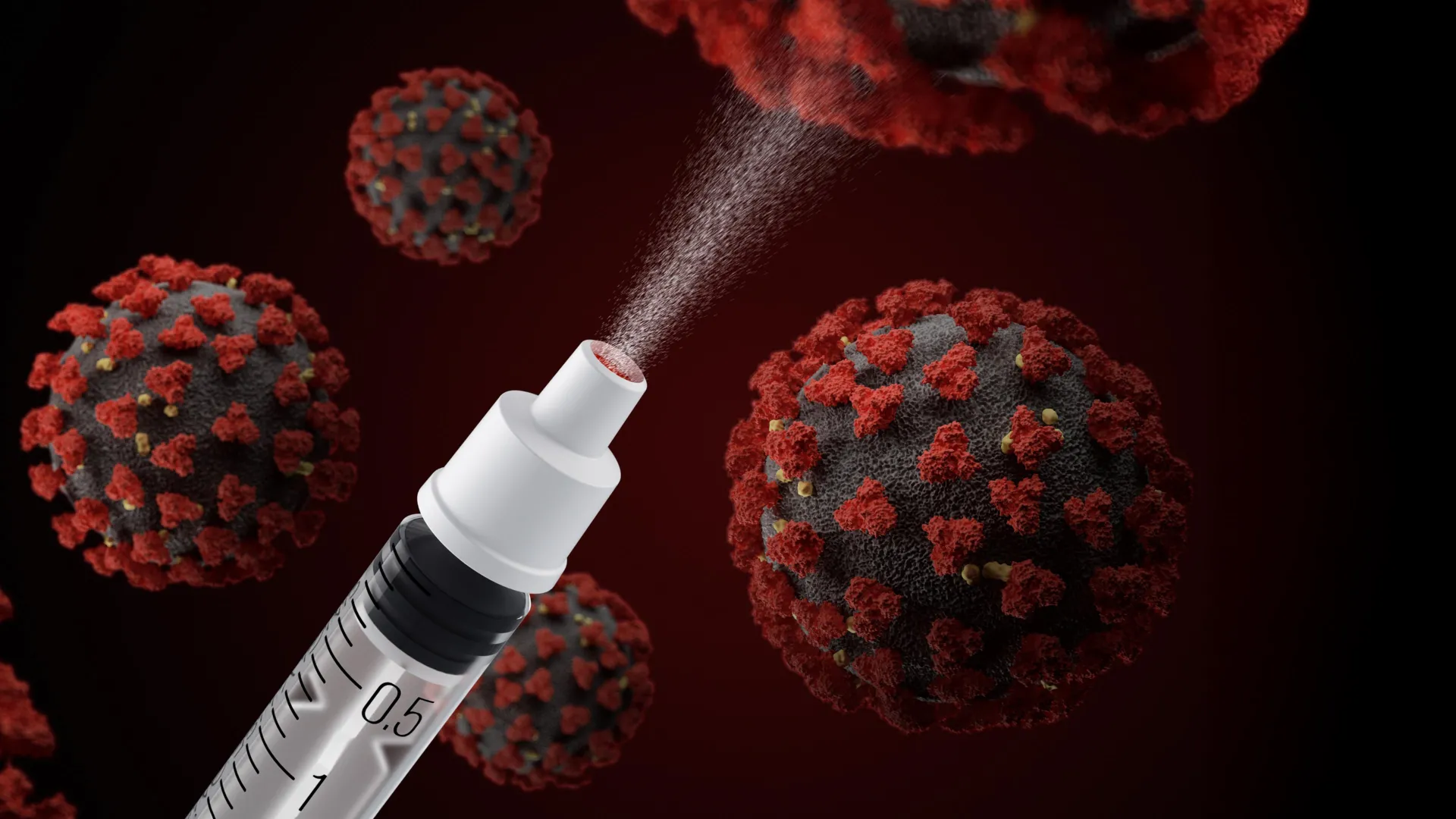
In a breakthrough that could redefine the landscape of preventative medicine, a multidisciplinary team led by Stanford Medicine has announced the development of an experimental universal vaccine capable of providing broad-spectrum protection against an array of respiratory threats. For decades, the pursuit of a "universal" vaccine—one that does not require constant updating to match the latest viral mutations—has been considered the holy grail of immunology. This new research, published on February 19 in the journal Science, suggests that such a goal may finally be within reach. The experimental vaccine, delivered via a nasal spray, has demonstrated the ability to shield mice from various coronaviruses, antibiotic-resistant bacteria, and even common environmental allergens for several months at a time.
The study represents a fundamental shift in how scientists approach immunization. While traditional vaccines are designed to teach the body to recognize specific "fingerprints" of a pathogen, this new formulation focuses on a more holistic activation of the immune system. By synchronizing the body’s rapid-response innate defenses with its long-term adaptive memory, the researchers have created a biological "early warning system" that keeps the lungs in a state of high alert. If the results translate to human subjects, the medical community could see a future where a single seasonal nasal spray replaces the need for separate, recurring shots for influenza, COVID-19, and pneumonia.
The Limitations of the 230-Year-Old Antigen Paradigm
To understand the significance of the Stanford discovery, one must look at the history of vaccinology. Since 1796, when Edward Jenner used cowpox to confer immunity against smallpox, the field has relied almost exclusively on antigen specificity. This method involves introducing a harmless piece of a pathogen—an antigen—to the immune system. The body then produces antibodies and T cells tailored specifically to that shape.
While this "lock and key" mechanism has eradicated diseases like polio and smallpox, it struggles against rapidly evolving respiratory viruses. Pathogens like influenza and SARS-CoV-2 undergo constant antigenic drift, changing the "locks" so that the old "keys" (antibodies from previous vaccines) no longer fit. This biological cat-and-mouse game is the reason for annual flu shot reformulations and the frequent need for updated COVID-19 boosters. Bali Pulendran, PhD, the senior author of the study and the Violetta L. Horton Professor II at Stanford, noted that many pathogens act like a "leopard that changes its spots," making the traditional specific-target approach increasingly difficult to maintain in a globalized world.
A Novel Mechanism: Integrating Innate and Adaptive Immunity
The human immune system consists of two primary divisions: the innate and the adaptive. The innate immune system is the first responder; it reacts within minutes to any perceived foreign threat using cells like macrophages and neutrophils. However, this response is non-specific and usually fades within a few days. The adaptive immune system is the specialized force; it takes days or weeks to mobilize but creates long-lasting "memory" cells that recognize specific pathogens years later.
The Stanford team’s innovation lies in bridging these two systems. Instead of merely presenting an antigen, the new vaccine, currently designated as GLA-3M-052-LS+OVA, mimics the complex communication signals—specifically cytokines—that immune cells exchange during a natural infection.
The research was inspired by a 2023 discovery by Pulendran’s lab regarding the Bacillus Calmette-Guerin (BCG) tuberculosis vaccine. Scientists had long observed that infants given the BCG vaccine had lower mortality rates from unrelated infections. The Stanford team found that the BCG vaccine recruited T cells to the lungs which, in turn, sent signals that kept the innate immune system "switched on" for months rather than days. The new experimental vaccine uses a synthetic approach to replicate this persistent state of innate readiness.
Experimental Results: The "Double Whammy" of Protection
In the mouse trials led by postdoctoral scholar Haibo Zhang, PhD, the vaccine was administered as intranasal droplets. The results exceeded the research team’s initial expectations in terms of both breadth and duration. Mice that received three doses of the vaccine spaced one week apart showed near-total protection against SARS-CoV-2 and other related coronaviruses for at least 90 days.
The data revealed what Pulendran describes as a "double whammy" effect. First, the sustained innate response in the lungs reduced viral loads by a staggering 700-fold compared to unvaccinated subjects. Second, because the immune system was already in a state of high alert, the adaptive response (the production of virus-specific antibodies and T cells) was triggered in just three days. In unvaccinated mice, this process typically takes two weeks—a delay that often allows a virus to cause severe tissue damage or death.
The vaccinated mice showed minimal weight loss and no signs of the severe lung inflammation that typically accompanies respiratory infections. In contrast, the control group suffered significant morbidity and high mortality rates when exposed to the same viral loads.
Beyond Viruses: Battling Superbugs and Allergens
One of the most striking aspects of the study is the vaccine’s efficacy against non-viral threats. The researchers tested the formulation against Staphylococcus aureus and Acinetobacter baumannii, two bacteria frequently associated with hospital-acquired infections and high levels of antibiotic resistance. The vaccinated mice demonstrated robust protection against these bacterial pathogens for the same three-month window.
The versatility of the vaccine was further proven when the team introduced house dust mite proteins—a common trigger for allergic asthma. Typically, allergens trigger a "Th2" immune response, leading to mucus buildup and airway constriction. However, the vaccine redirected the immune response, significantly weakening the Th2 reaction and keeping the airways of the mice clear.
This suggests that the vaccine does not just fight "germs" in the traditional sense; it modulates the entire pulmonary environment to resist a variety of inflammatory and infectious challenges. This multi-threat capability marks the transition from a "pathogen-specific" vaccine to a "site-specific" defense system for the lungs.
Chronology of Development and Collaborative Efforts
The journey toward this universal vaccine began several years ago, gaining momentum during the height of the COVID-19 pandemic.
- 2021-2022: Pulendran’s lab began investigating why some vaccines provided "off-target" benefits, focusing on the innate immune system’s memory, often called "trained immunity."
- Early 2023: The team published findings on the BCG vaccine, identifying the specific T cell signals that sustain innate immunity in the lungs.
- Late 2023 – 2024: The researchers synthesized a formulation (GLA-3M-052-LS+OVA) that could mimic these signals without requiring a live bacterial component like the BCG vaccine.
- February 2025: The full results of the mouse study were published in Science, detailing the success across viruses, bacteria, and allergens.
The project was a massive collaborative effort, involving specialists from Emory University School of Medicine, the University of North Carolina at Chapel Hill, Utah State University, and the University of Arizona. Funding was provided by the National Institutes of Health (NIH), the Soffer Fund, and Open Philanthropy, reflecting the high level of institutional interest in broad-spectrum pandemic preparedness.
Implications for Public Health and Pandemic Preparedness
The potential implications of this research are profound. In the event of a "Pathogen X"—a new, unknown virus that triggers a pandemic—the world currently has to wait months for a specific vaccine to be developed, tested, and manufactured. A universal nasal vaccine could serve as a vital "stop-gap," providing immediate, broad protection to the population while more specific interventions are developed.
Furthermore, the vaccine addresses the growing crisis of antimicrobial resistance (AMR). By providing a non-antibiotic method of preventing bacterial pneumonia and other respiratory infections, it could reduce the global reliance on antibiotics, thereby slowing the evolution of "superbugs."
From a logistical standpoint, a nasal spray is far easier to administer than injectable vaccines, requiring less medical infrastructure and potentially increasing public uptake. For patients with chronic respiratory conditions or severe allergies, the ability to dampen allergic responses while simultaneously protecting against the flu would be a significant quality-of-life improvement.
The Road to Human Application
Despite the success in mice, the researchers caution that human biology is significantly more complex. The next phase of research involves a Phase I safety trial to ensure the formulation does not cause over-activation of the immune system or "cytokine storms" in humans.
Pulendran estimates that if funding remains consistent and safety trials are successful, a universal respiratory vaccine could be available to the public within five to seven years. Future studies will likely look at how many doses are required for humans—Pulendran suggests two doses may be sufficient—and how long the protection lasts in a human lung environment compared to the three months observed in mice.
"Imagine getting a nasal spray in the fall months that protects you from all respiratory viruses including COVID-19, influenza, respiratory syncytial virus (RSV), and the common cold, as well as bacterial pneumonia and early spring allergens," Pulendran said. "That would transform medical practice."
As the scientific community moves away from the 18th-century model of "one bug, one drug," the Stanford study stands as a testament to the power of integrated immunology. It moves the focus of medicine from the identity of the invader to the resilience of the host, offering a glimpse into a future where the lungs are permanently fortified against the myriad threats of the modern world.
