
 By admin
The urgent text message sent from Erika to her husband, Joe, from an emergency room waiting area contained only a few words, but they signaled a life-altering shift for their family: “Come here right now. Something big is happening.” Their nine-year-old son, Fritz, who would later be named the 2026 Glamorama Ambassador for the Children’s Cancer Research Fund (CCRF), had just been rushed into a CT scan. The speed of the hospital’s response—bypassing the standard waiting room procedures and involving a multi-disciplinary team of specialists immediately—indicated the gravity of the situation. Erika recalled the chilling realization of the moment, noting that when a medical facility "rolls out the red carpet" in the emergency department, it is rarely a sign of good news.
The crisis had begun earlier that same day with a routine visit to the dentist. Erika had suspected her son was suffering from a common, albeit painful, impacted tooth. However, the dental examination revealed something far more sinister: a mass that did not align with typical dental issues. Recognizing the potential severity, the dentist bypassed standard referrals and sent the family directly to the hospital. Upon arrival, doctors performed an immediate biopsy. The procedure underscored the volatility of the growth; the tumor was so heavily vascularized that Fritz lost nearly a liter of blood during the sampling, necessitating an immediate blood transfusion. Shortly thereafter, the pathology results confirmed a diagnosis of Ewing sarcoma, a highly aggressive and often relentless form of bone cancer.
A Rare Clinical Presentation
Ewing sarcoma is a rare malignancy that primarily affects children and young adults, typically manifesting in the long bones of the arms and legs or the pelvis. According to the American Cancer Society, Ewing sarcoma accounts for only about 1% of all childhood cancers, with approximately 200 to 250 cases diagnosed annually in the United States. However, Fritz’s case was a statistical anomaly within an already rare category. His tumor was located in his jaw, a presentation that occurs in less than 1% of all Ewing sarcoma cases. This "rarest of the rare" status presented unique challenges for his oncology team, requiring a highly specialized and aggressive intervention strategy.
Because of the aggressive nature of the disease and the unusual location of the primary tumor, the medical team at the children’s hospital moved with extraordinary speed. The proximity of the jaw to the airway and vital neurological structures meant that any delay could result in permanent disability or death. The diagnosis transformed the family’s life overnight, moving them from the familiar routines of childhood to the sterile, high-stakes environment of pediatric oncology.

The Rigors of Treatment: Surgery and the Red Devil
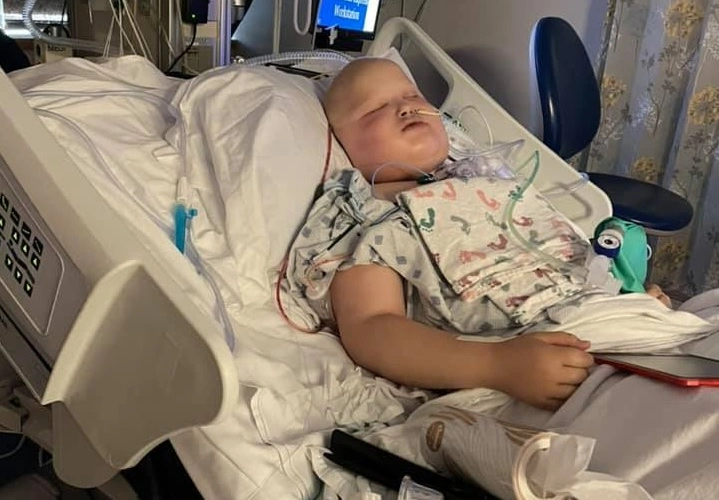
Fritz’s treatment plan was an intensive regimen designed to eradicate the primary tumor while preventing the systemic spread of the cancer cells. The first major hurdle was a complex surgical procedure to remove the malignancy. Surgeons were forced to excise more than two-thirds of Fritz’s jawbone to ensure clear margins. To reconstruct his face and restore function, doctors performed a fibula flap transfer, a sophisticated microsurgical procedure where a portion of the bone from the leg is harvested and transplanted to the jaw, along with its associated blood vessels, to create a new mandibular structure.
Following the surgery, Fritz underwent months of intensive chemotherapy. Central to his regimen was Doxorubicin, a potent chemotherapeutic agent colloquially known in the oncology community as the “Red Devil.” The nickname stems not only from the drug’s bright red hue but also from its notorious toxicity and the severe side effects it inflicts on the body, including potential long-term cardiac damage. For a nine-year-old, the physical toll of such a regimen is immense, involving chronic nausea, hair loss, and extreme fatigue.
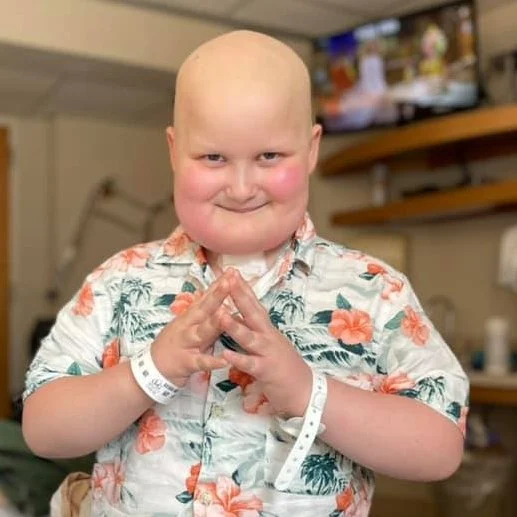
The medical journey did not end with chemotherapy. Fritz also required a complex airway reconstruction surgery to ensure he could breathe and swallow properly following the extensive changes to his jaw and neck anatomy. Throughout these harrowing months, Fritz’s parents noted that he maintained a resilient spirit. Despite the pain and the clinical environment, he frequently used humor and practical jokes to engage with his nurses and doctors. Joe, Fritz’s father, expressed a profound pride in his son’s ability to maintain his identity and sense of humor despite the trauma of the treatment.
The Long-Term Sequelae of a Cure
Today, Fritz’s medical scans show "No Evidence of Disease" (NED), a milestone that every cancer family hopes to reach. However, the victory over the initial malignancy has come at a significant cost. The "cure" for pediatric cancer often involves treatments designed for adult bodies, which can leave survivors with lifelong health complications. Erika pointed out the stark transition Fritz made, moving from a child who required only a daily vitamin to a teenager who manages a complex pharmacy of medications typically reserved for much older populations.
Fritz’s current reality involves a grueling schedule of follow-up care. He is managed by a massive team of specialists, including oncologists to monitor for recurrence, surgeons to check the structural integrity of his jaw, endocrinologists to manage hormonal imbalances caused by treatment, and sleep medicine doctors to address respiratory issues related to his airway reconstruction. It is not uncommon for Fritz to spend entire days at the hospital moving from one appointment to the next.
The long-term side effects, often referred to by clinicians as "late effects," are a major focus of modern pediatric oncology research. Statistics from the Children’s Oncology Group indicate that by age 45, more than 95% of childhood cancer survivors will have a chronic health condition related to their treatment, and 80% will have a severe or life-threatening condition. Fritz’s story serves as a poignant reminder that survival is only the first step; the quality of that survival is a secondary, equally important battle.
The Critical Role of Private Philanthropy
Because childhood cancers are relatively rare compared to adult malignancies, they often receive a disproportionately small share of federal research funding. In the United States, the National Cancer Institute (NCI) allocates approximately 4% of its annual budget to pediatric cancer research. This funding gap makes private philanthropy and organizations like the Children’s Cancer Research Fund (CCRF) essential to the development of new treatments.
Fritz’s role as the 2026 Glamorama Ambassador highlights the intersection of community support and medical advancement. Glamorama, a high-profile fashion and fundraising event, serves as a vital revenue stream for CCRF. These funds are directed toward high-risk, high-reward research that might not otherwise receive government backing. For example, CCRF-funded research into Ewing sarcoma recently contributed to the launch of a major clinical trial exploring targeted therapies. Unlike traditional chemotherapy, which attacks all rapidly dividing cells, targeted therapies aim to interfere with specific molecules involved in the growth and spread of cancer. This approach holds the promise of being more effective while causing significantly fewer debilitating side effects for young patients.
Analysis: The Shifting Paradigm of Pediatric Oncology
Fritz’s case illustrates a broader shift in the field of pediatric oncology: the move toward precision medicine. As researchers better understand the genetic drivers of rare tumors like Ewing sarcoma, the goal is to move away from the "one-size-fits-all" approach of heavy chemotherapy and toward personalized protocols. For Fritz, the standard of care involved "The Red Devil" and radical surgery—methods that saved his life but left lasting scars. The next generation of Fritz’s, researchers hope, will have access to treatments that are as sophisticated as the cancers they fight.
The advocacy of the family and Fritz’s participation in public awareness campaigns are crucial for maintaining the momentum of this research. Joe’s statement—"It takes a community of people who say, ‘our kids deserve better,’ and then help make it happen"—encapsulates the necessity of public engagement. The progress made in the last decade has significantly improved survival rates for Ewing sarcoma, but the focus is now shifting toward reducing the "toxicity of the cure."
Conclusion: A Legacy of Resilience
As Fritz enters his teenage years, he continues to navigate the complexities of being a cancer survivor. His story is not just one of medical triumph, but a testament to the necessity of continued innovation in the face of rare diseases. The 2026 Glamorama event will serve as a platform to share his journey, reminding donors and the medical community alike that behind every statistic is a child who deserves a future free from the burden of chronic illness.
The battle against Ewing sarcoma remains a formidable challenge, but the integration of advanced surgical techniques, targeted research funding, and the indomable spirit of patients like Fritz provides a roadmap for the future. The commitment of the Children’s Cancer Research Fund and its supporters ensures that for the "rarest of the rare," there is always hope for a better, healthier answer.
