
 By Gabriel Paijo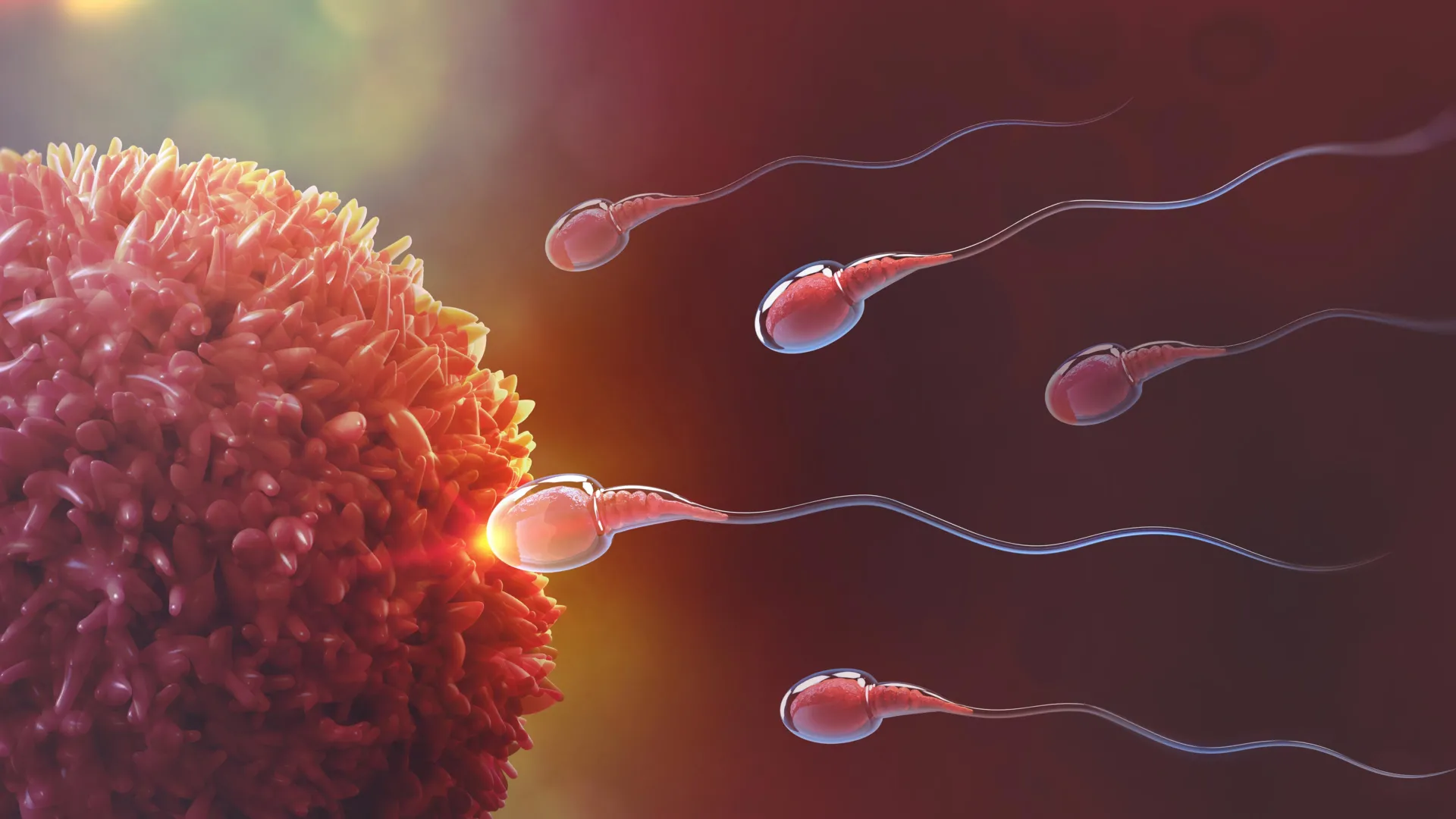
The quest to understand the intricacies of human reproduction has taken a significant leap forward as researchers at Michigan State University (MSU) have successfully identified a specific molecular "switch" that regulates the surge of energy sperm require to fertilize an egg. This discovery, centered on the metabolic reprogramming of sperm cells, offers a dual promise: the refinement of clinical infertility treatments and the realization of a safe, nonhormonal male contraceptive. By mapping the biochemical pathways that govern sperm motility and function, the research team has provided a blueprint for manipulating reproductive outcomes with unprecedented precision.
Sperm cells are unique biological entities with a singular, high-stakes mission. Unlike other cells in the human body that manage a variety of homeostatic functions, a sperm cell’s existence is defined by a frantic sprint toward fertilization. Melanie Balbach, an assistant professor in the Department of Biochemistry and Molecular Biology at MSU and the senior author of the study, emphasizes that sperm metabolism is distinct because it is entirely optimized for a single burst of energy. This metabolic specialization is what makes sperm both a challenging subject of study and an ideal model for understanding how cells rapidly shift their internal energy production to meet extreme physical demands.
The Biological Transition: From Dormancy to Hyperactivation
Before the moment of ejaculation, mammalian sperm exist in a state of relative metabolic dormancy. While stored in the male reproductive tract, they consume minimal energy, maintaining a baseline level of activity that preserves their longevity. However, the environment changes dramatically once they enter the female reproductive tract. This transition triggers a process known as capacitation, followed by hyperactivation.
During these phases, sperm undergo profound physiological transformations. They begin to swim with significantly more force—a requirement for navigating the viscous fluids of the oviduct and penetrating the protective layers of the egg. Simultaneously, the outer membranes of the sperm cell undergo structural adjustments to facilitate the eventual fusion with the egg’s plasma membrane. These mechanical and structural changes are not "free"; they require a massive and immediate influx of Adenosine Triphosphate (ATP), the primary energy currency of the cell. Until the publication of the MSU study, the exact mechanisms that triggered this sudden metabolic surge remained one of the more elusive mysteries in reproductive biology.
Mapping the Glucose Highway: A Breakthrough in Metabolomics
To solve this puzzle, Balbach and her team, which included collaborators from the Memorial Sloan Kettering Cancer Center and the Van Andel Institute, turned to advanced metabolomics. They developed a sophisticated method to track the processing of glucose, the primary sugar that sperm absorb from their environment to fuel their journey.
The methodology involved a high-tech version of chemical mapping. Balbach describes the process through a vivid analogy: "You can think of this approach like painting the roof of a car bright pink and then following that car through traffic using a drone." In this scientific application, the "pink paint" consisted of stable isotopes that allowed the researchers to trace the movement of glucose molecules through various metabolic intersections within the cell.
By utilizing MSU’s state-of-the-art Mass Spectrometry and Metabolomics Core, the researchers compared the metabolic profiles of inactive sperm with those that had been activated. The results were stark. In activated sperm, the "pink cars" (glucose molecules) moved through the metabolic pathways at a much higher velocity. Furthermore, the researchers identified specific "intersections" or enzymatic steps where the traffic tended to flow or become congested, providing a clear map of how the cell prioritizes energy production during the critical window of fertilization.
The Role of Aldolase: The Gatekeeper of Fertility
At the heart of this metabolic surge is an enzyme known as aldolase. The study identified aldolase as a key regulator in the glycolytic pathway—the series of chemical reactions that break down glucose to release energy. The researchers found that aldolase acts as a primary controller of the metabolic switch, determining how efficiently and rapidly glucose is converted into usable fuel.
In addition to the role of aldolase, the study revealed that sperm do not rely solely on external glucose. They also draw upon internal energy reserves—pre-packaged fuel sources they carry from the moment they leave the male tract. This dual-reliance system ensures that even if the immediate environment is nutrient-poor, the sperm has a "reserve tank" to power its initial efforts. The discovery of these regulatory enzymes provides specific targets for future medical interventions. If an enzyme like aldolase can be inhibited, the sperm’s "engine" could effectively be stalled, preventing it from reaching or penetrating the egg.
Implications for the Global Infertility Crisis
The findings hold immediate relevance for the field of assisted reproductive technology (ART). Infertility is a global health issue, affecting approximately one in six individuals of reproductive age, according to the World Health Organization. In many cases, male-factor infertility is linked to poor sperm motility—sperm that simply do not have the "horsepower" to reach the egg.
By understanding the metabolic switch that powers sperm, clinicians may be able to develop better diagnostic tools to assess sperm health beyond simple count and shape. "Better understanding the metabolism of glucose during sperm activation was an important first step," Balbach noted. "Now we’re aiming to understand how our findings translate to other species, like human sperm."
In a clinical setting, this could lead to media additives for In Vitro Fertilization (IVF) that specifically "prime" the sperm’s metabolic pathways, increasing the success rates of fertilization for couples struggling with low motility. It also offers a potential way to select the most metabolically robust sperm for procedures like Intracytoplasmic Sperm Injection (ICSI).
A New Frontier in Male Contraception
Perhaps the most culturally significant application of this research lies in the development of nonhormonal male birth control. For decades, the burden of contraception has fallen disproportionately on women, largely because the biological task of stopping millions of sperm is more complex than stopping a single egg.
Previous attempts at male contraceptives have largely focused on hormonal interventions that suppress sperm production entirely. However, these methods often come with significant side effects, including mood swings, weight gain, and acne, mirroring the complaints often associated with female hormonal birth control. Furthermore, hormonal methods can take months to become effective and equally long to reverse.
The MSU research suggests a "precision strike" alternative. Instead of stopping sperm production, a drug could target the metabolic switch—specifically enzymes like aldolase—to temporarily disable the sperm’s ability to "rev up." This would result in "on-demand" contraception: sperm would be present but functionally unable to complete the fertilization process. Because this approach does not interfere with testosterone or other hormones, the risk of systemic side effects is significantly lower.
"Right now, about 50% of all pregnancies are unplanned, and this would give men additional options and agency in their fertility," Balbach explained. "Likewise, it creates freedom for those using female birth control, which is hormone-based and highly prone to side effects."
Chronology of Discovery and Future Research
This discovery is the culmination of years of focused research. Earlier in her career at Weill Cornell Medicine, Balbach was part of a team that demonstrated that blocking a specific sperm enzyme could cause temporary, reversible infertility in mice. That foundational work proved that the concept of a metabolic inhibitor was viable.
Since joining Michigan State University in 2023, Balbach has expanded this work, leveraging the university’s advanced metabolomics infrastructure to move from identifying "that" it happens to "how" it happens. The current study, published in the Proceedings of the National Academy of Sciences (PNAS) and supported by the National Institute of Child Health and Human Development, represents the most detailed mapping of sperm energy transitions to date.
The next phase of the research involves moving from mouse models to human applications. The team is currently investigating how sperm utilize different fuel sources, such as fructose (which is abundant in the seminal fluid) versus glucose (found in the female reproductive tract). Understanding these nuances is critical for ensuring that any potential contraceptive or fertility treatment is both effective and safe for human use.
Analysis of Broader Societal Impact
The identification of the aldolase "switch" marks a shift in how science approaches reproductive health. By moving away from broad hormonal shifts and toward targeted enzymatic regulation, the research aligns with the broader trend of precision medicine.
From a societal perspective, the development of a nonhormonal male contraceptive could redefine the landscape of reproductive responsibility. If successful, such a product would provide a reversible, non-permanent alternative to vasectomies and a more reliable option than condoms, without the physiological toll of hormones.
As the MSU team continues to peel back the layers of sperm biochemistry, the "pink car" moving through the metabolic traffic serves as a symbol of progress. Whether the goal is to help a car reach its destination or to safely park it at the starting line, the ability to control the "traffic" of life at a molecular level is a milestone in modern biology. Balbach remains optimistic about the path ahead: "I’m excited to see what else we can find and how we can apply these discoveries."
