
 By Gabriel Paijo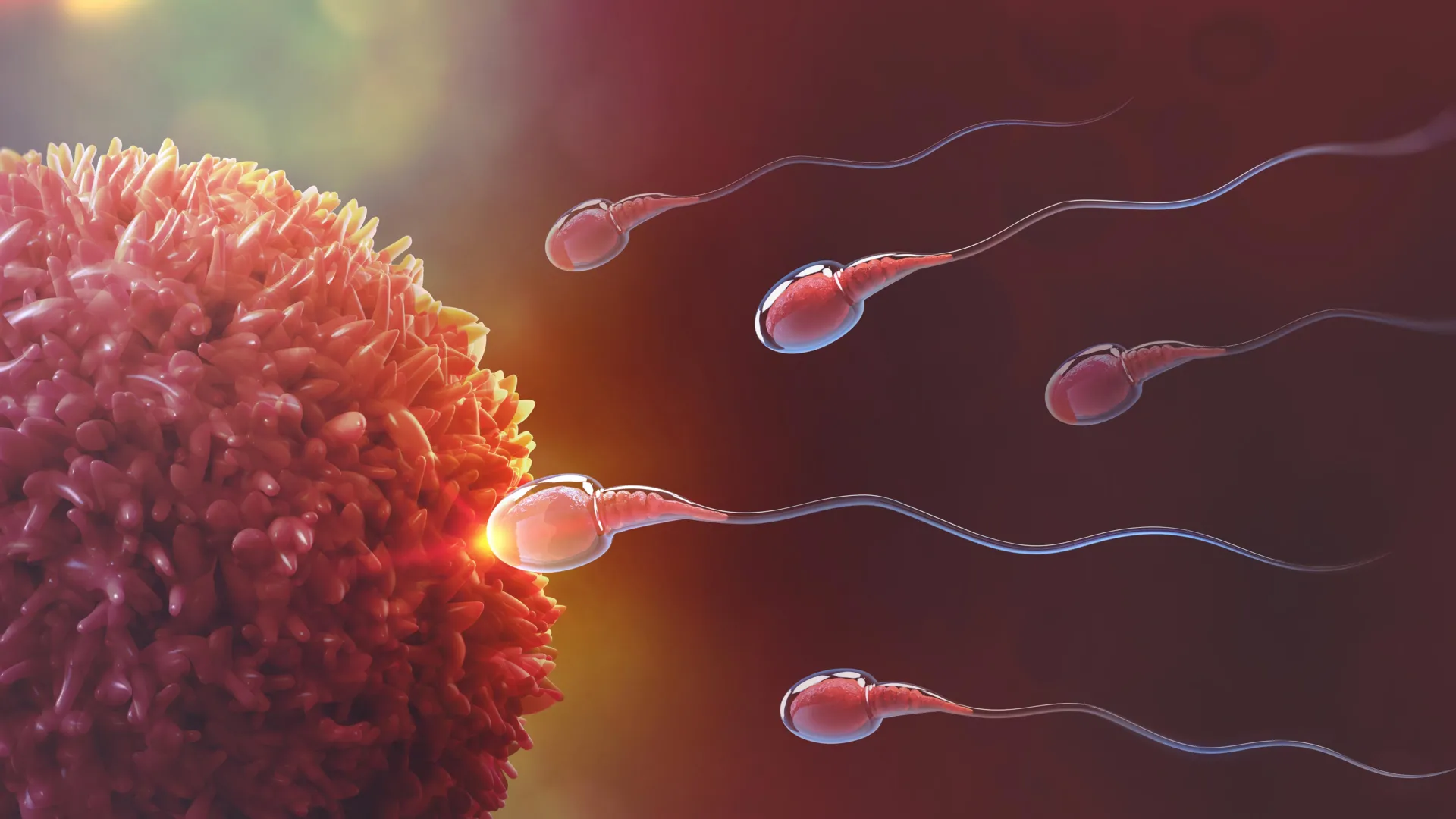
A team of researchers at Michigan State University has announced the discovery of a critical molecular "switch" that governs the energy surge in sperm required for successful fertilization. This breakthrough, published in the Proceedings of the National Academy of Sciences, provides a detailed map of how sperm transition from a dormant state to a high-energy "hyperactivated" state. The findings represent a significant leap forward in reproductive biology, offering potential solutions for the global infertility crisis and a viable framework for the development of the world’s first effective, nonhormonal male birth control.
The study, led by Melanie Balbach, an assistant professor in the Department of Biochemistry and Molecular Biology at Michigan State University (MSU), identifies the specific metabolic reprogramming that occurs within sperm as they enter the female reproductive tract. By understanding the enzymatic triggers that facilitate this energy boost, scientists believe they can now develop targeted therapies to either enhance sperm motility for struggling couples or temporarily inhibit it for contraceptive purposes.
The Unique Energetic Demands of the Male Gamete
Sperm cells are unique in the biological world due to their singular, terminal mission. Unlike other cells that must maintain various homeostatic functions over long periods, a sperm cell’s primary purpose is to navigate the complex environment of the female reproductive tract to reach and penetrate an egg. This journey requires a massive and sudden increase in metabolic output.
"Sperm metabolism is special since it’s only focused on generating more energy to achieve a single goal: fertilization," explained Dr. Balbach, the senior author of the study. Before ejaculation, mammalian sperm are kept in a state of metabolic quiescence within the male reproductive system. This low-energy state preserves their limited resources. However, once introduced into the female reproductive tract, they undergo a process known as capacitation.
During capacitation, sperm must swim more forcefully—a state called hyperactivation—and undergo structural changes to their outer membranes. These physiological shifts are energy-intensive, requiring a rapid surge in adenosine triphosphate (ATP) production. Until this study, the exact mechanisms that triggered and sustained this metabolic "flip" remained largely speculative.
Mapping the Metabolic Highway: The "Pink Car" Methodology
To uncover the secrets of sperm energy production, Dr. Balbach’s team, including collaborators from the Memorial Sloan Kettering Cancer Center and the Van Andel Institute, utilized advanced metabolomics. They focused on how sperm process glucose, the primary sugar found in the reproductive tract that serves as the fuel for their journey.
The researchers developed a sophisticated tracking method to observe glucose as it moved through the various metabolic pathways within the cell. Dr. Balbach used a vivid analogy to describe the complexity of this task: "You can think of this approach like painting the roof of a car bright pink and then following that car through traffic using a drone."
By "painting" glucose molecules with isotopic labels, the team could monitor the speed and direction of the sugar’s breakdown. They observed that in activated sperm, the "pink car" moved significantly faster and followed different "routes" compared to inactive sperm. This mapping allowed the researchers to identify exactly where the metabolic process accelerated and where it encountered potential bottlenecks.
The research relied heavily on the MSU Mass Spectrometry and Metabolomics Core, which provided the high-resolution data necessary to see the individual chemical steps of glucose conversion. This detailed picture revealed that the metabolic reprogramming in sperm is far more complex than a simple increase in speed; it involves a fundamental shift in which enzymes are prioritized.
The Role of Aldolase and Internal Energy Reserves
The central discovery of the study is the pivotal role of an enzyme called aldolase. Aldolase acts as a primary regulator in the glycolytic pathway—the process of breaking down glucose to release energy. The researchers found that aldolase functions as the molecular switch that initiates the high-energy state. When this enzyme is activated, the sperm’s energy production sky-rockets.
Furthermore, the study revealed a surprising nuance: sperm do not rely solely on external glucose. They also carry internal energy reserves that they begin to consume the moment their journey starts. Certain enzymes act as "traffic controllers," directing the flow of these internal and external fuels to ensure the sperm has a constant, reliable supply of ATP during the most critical moments of the trek toward the egg.
This discovery of "internal fuel" management explains why some sperm are able to survive and remain motile for several days within the female reproductive tract, a fact that has long-standing implications for the timing of conception.
A New Frontier in Infertility Diagnostics
The clinical implications for infertility are profound. Currently, the World Health Organization (WHO) estimates that approximately 17.5% of the adult population—roughly one in six people worldwide—experience infertility. Male factor infertility contributes to nearly half of these cases, yet diagnostic tools for male fertility remain relatively rudimentary, often focusing only on sperm count and basic motility.
"Better understanding the metabolism of glucose during sperm activation was an important first step," Balbach noted. By identifying aldolase and other metabolic regulators, clinicians may eventually be able to test for "metabolic fitness" in sperm. This could lead to more accurate diagnoses for men who have normal sperm counts but whose sperm lack the metabolic "engine" required to reach the egg.
Furthermore, these findings could improve assisted reproductive technologies (ART), such as in vitro fertilization (IVF). By optimizing the metabolic environment in which sperm are prepared for IVF or intrauterine insemination (IUI), labs may be able to "jump-start" sperm energy, potentially increasing the success rates of these expensive and emotionally taxing procedures.
The Quest for Nonhormonal Male Contraception
Perhaps the most culturally significant application of this research is the development of a male contraceptive. For decades, the burden of birth control has fallen disproportionately on women. Most female contraceptives are hormone-based, which can lead to side effects ranging from mood changes and weight gain to increased risks of blood clots and stroke.
Existing efforts to create a "male pill" have largely focused on suppressing the production of sperm altogether. However, hormonal approaches for men often come with significant drawbacks, including a long lead time to become effective (often months) and a similarly long period to regain fertility after stopping the medication. There are also concerns regarding permanent impacts on testosterone levels.
The MSU research suggests a different path: an "on-demand," nonhormonal inhibitor. By targeting the aldolase enzyme or other metabolic "traffic controllers" identified in the study, researchers could potentially create a drug that temporarily "turns off" the sperm’s ability to switch to a high-energy state.
"One option is to explore if one of our ‘traffic-control’ enzymes could be safely targeted as a nonhormonal male or female contraceptive," Balbach said. Such a drug would not stop sperm production; instead, it would leave the sperm unable to swim forcefully enough to reach the egg. Because this approach does not involve hormones, it would likely have fewer systemic side effects and could provide a more immediate form of contraception that is easily reversible.
Socioeconomic Impact and Unplanned Pregnancy
The societal need for such an intervention is clear. According to global health data, approximately 50% of all pregnancies worldwide are unplanned. Dr. Balbach emphasized that providing men with more agency in their fertility would be a transformative step for public health.
"This would give men additional options and agency in their fertility," she stated. "Likewise, it creates freedom for those using female birth control, which is hormone-based and highly prone to side effects."
The development of a nonhormonal male contraceptive would represent one of the most significant advancements in reproductive health since the introduction of the female birth control pill in the 1960s. By shifting the focus from sperm production to sperm function (specifically metabolism), the MSU team has bypassed many of the biological hurdles that have stalled male contraceptive research for half a century.
Chronology of Discovery and Future Research
This latest study is the culmination of years of pioneering work by Dr. Balbach. Earlier in her career at Weill Cornell Medicine, she was part of a team that demonstrated that blocking a specific sperm enzyme could cause temporary, reversible infertility in mice. That discovery proved the concept that sperm function could be targeted without affecting the underlying reproductive system.
Since joining Michigan State University in 2023, Balbach has expanded this research, utilizing the university’s specialized facilities to move from general observations to the specific molecular mapping achieved in the current study.
The next phase of the research involves "translational" science—determining how these findings in mammalian models apply to human physiology. The team is currently setting up studies to observe human sperm metabolism using the same isotopic labeling and mass spectrometry techniques.
"I’m excited to see what else we can find and how we can apply these discoveries," Balbach said. Future investigations will also look at how different fuel sources, such as fructose (which is also present in the reproductive tract), interact with the glucose pathways.
Conclusion: A Milestone in Reproductive Science
The research conducted at Michigan State University marks a pivotal moment in the study of reproductive biology. By identifying the metabolic "switch" that powers the final sprint of the sperm, Dr. Balbach and her colleagues have opened two major doors: one leading to more effective treatments for those wishing to conceive, and another leading to a new era of reproductive autonomy for men through nonhormonal contraception.
Supported by the National Institute of Child Health and Human Development, this work underscores the importance of basic biochemical research in solving complex global health challenges. As the team moves toward human trials, the scientific community remains optimistic that the "pink car" of sperm metabolism will eventually lead to a new generation of medical breakthroughs that benefit both men and women worldwide.
