
 By Gabriel Paijo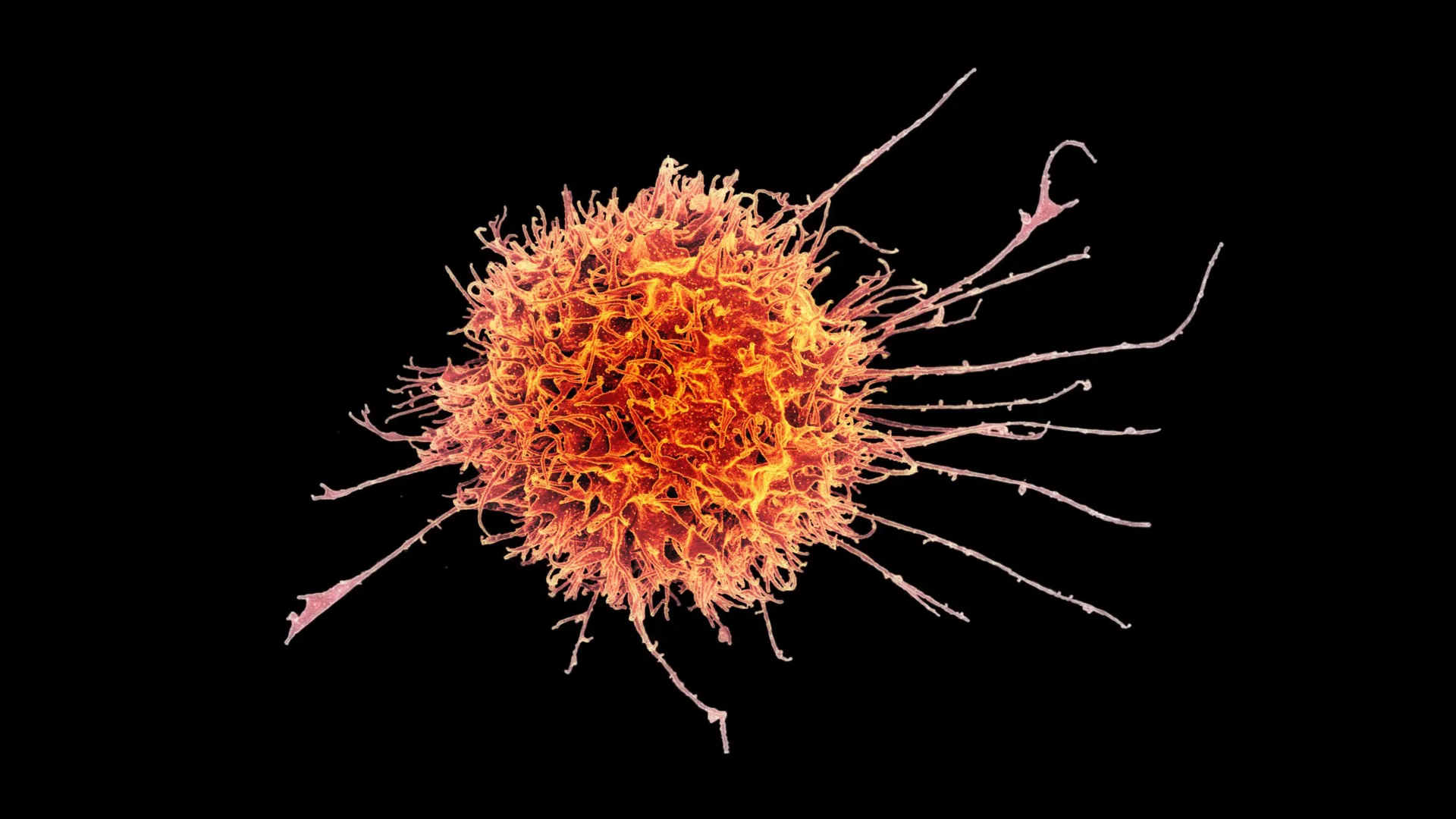
The landscape of oncology has been fundamentally altered by the advent of cell-based immunotherapies, yet a persistent divide remains between the treatment of liquid and solid cancers. While chimeric antigen receptor (CAR) T-cell therapies have achieved remarkable success in treating leukemias and lymphomas, solid tumors—which account for approximately 90% of adult cancer cases—have proven far more resilient. These dense masses are protected by a hostile microenvironment that physically excludes immune cells and chemically suppresses those that manage to enter. In a significant leap forward, researchers at Stanford Medicine and several collaborating institutions have unveiled a novel strategy to breach these defenses. By reprogramming natural killer (NK) cells into a specialized "tissue-resident" state, the team has successfully demonstrated a method to infiltrate and destroy solid tumors, paving the way for a new generation of "off-the-shelf" cancer treatments.
The study, published in Science Translational Medicine, highlights a major shift in how scientists approach the biology of the immune system. Led by senior author John Sunwoo, MD, the Edward C. and Amy H. Sewall Professor in the School of Medicine, the research team focused on a subset of immune cells that have historically been overlooked in the context of tissue-specific behavior. Their findings suggest that by mimicking the natural signals found within human organs, circulating natural killer cells can be "trained" to enter solid tumors and maintain their aggressive killing capabilities.
The Challenge of the Solid Tumor Microenvironment
To understand the significance of the Stanford discovery, one must first look at why conventional immunotherapies often fail against solid tumors. Unlike blood cancers, where malignant cells circulate freely and are easily accessible to intravenous treatments, solid tumors like melanoma, lung cancer, and squamous cell carcinoma create complex, fortress-like structures.
These tumors utilize several layers of defense. First, they develop a dense extracellular matrix that acts as a physical barrier. Second, the interior of a tumor is often hypoxic (low in oxygen) and acidic, which drains the energy of infiltrating immune cells. Third, tumors secrete immunosuppressive signaling molecules, such as transforming growth factor-beta (TGF-β), which effectively "turns off" the immune response.
Conventional natural killer cells—the "first responders" of the innate immune system—are highly effective at patrolling the bloodstream. However, they typically lack the molecular "passports" required to leave the blood and take up permanent residence within tissues. When they do manage to enter a tumor, the high concentrations of TGF-β often render them dysfunctional. The Stanford team’s breakthrough lies in their ability to harness this very signal to create a more resilient type of immune cell.
Decoding the Tissue-Resident Signal: The Goldilocks Effect
Natural killer cells were first identified in the 1970s and were named for their innate ability to recognize and kill abnormal cells without prior sensitization. Unlike T-cells, which require a specific antigen to be presented to them, NK cells use a complex system of activating and inhibitory receptors to identify "stressed" cells.
In recent years, immunologists have realized that not all NK cells are the same. While some circulate in the blood, others—known as tissue-resident NK cells—stay within specific organs like the liver, lungs, or skin. These resident cells are better adapted to the local environment, but their role in cancer has been a subject of intense debate. Some studies suggested they were weak killers, while others found them to be highly potent.
Dr. Sunwoo and his team set out to resolve this contradiction. By isolating circulating NK cells from healthy human donors and exposing them to various combinations of cellular signals, they discovered that the secret to a potent tissue-resident cell lay in a "Goldilocks" application of TGF-β.
"It’s a Goldilocks kind of thing where if you give just enough of a TGF-β signal, then the natural killer cells become tissue resident with strong toxic activity against malignant cells," Sunwoo explained. "If you give too much TGF-β, they’re still tissue resident, but they’re inhibited and dysfunctional, and they don’t kill."
The researchers found that a brief, intense exposure to TGF-β—delivered via direct physical contact with human epithelial tumor cells—was the catalyst required to transform the cells into a highly aggressive, tissue-resident form. This contact-dependent signaling provided the necessary cues for the NK cells to express specific surface proteins, such as CD49a, CD103, and notably, CD39, which served as a marker for the most effective cancer-killers.
Molecular Machinery and Enhanced Killing Power
The study’s co-lead authors—Nina Horowitz, PhD; Imran Mohammad, PhD; and June Ho Shin, PhD—performed a detailed molecular analysis to determine what made these modified cells superior. They discovered that the "strong" tissue-resident NK cells were packed with significantly higher levels of perforin and granzyme A.
Perforin is a specialized protein that acts like a molecular drill, creating holes in the membrane of a target cancer cell. Once the holes are formed, granzymes—toxic molecules—are injected through the openings to trigger programmed cell death (apoptosis). The modified cells not only possessed more of this "ammunition" but were also better at deploying it within the confines of a tumor.
Furthermore, the expression of CD103 and CD49a allowed these cells to "anchor" themselves within the tumor tissue, preventing them from being washed back into the circulation and ensuring they remained on the front lines of the battle against the malignancy.
Experimental Results and Synergistic Effects
To validate their findings, the researchers tested the modified NK cells in mouse models of human melanoma and head and neck squamous cell carcinoma. The results were reproducible and striking. The modified cells successfully infiltrated the tumors and significantly slowed their growth compared to conventional NK cells.
The most dramatic results, however, occurred when the modified cells were paired with cetuximab, a monoclonal antibody currently used to treat certain types of colorectal and head and neck cancers. Cetuximab works by binding to the epidermal growth factor receptor (EGFR) on cancer cells, marking them for destruction. While cetuximab often shows limited efficacy as a monotherapy in advanced cases, it acted as a powerful "guide" for the modified NK cells.
In the mouse studies, a single dose of the combination therapy suppressed tumor growth for over a month. While the control groups and those receiving single-agent treatments saw rapid tumor progression, the mice receiving the combination therapy remained healthy and showed no apparent adverse effects.
"Even at day 30, when the other mice were sick, the mice that received the combination seemed very healthy," Sunwoo noted. While he cautioned that mouse models do not always perfectly predict human outcomes, the "proof of concept" was undeniably strong.
The "Off-the-Shelf" Advantage: A Paradigm Shift in Access
One of the most significant implications of the Stanford study is the potential for these cells to be used as an "off-the-shelf" medication. Current CAR-T therapies are "autologous," meaning they must be manufactured using a patient’s own cells. This process is incredibly expensive, time-consuming (often taking weeks), and logistically complex. Furthermore, some patients are too ill to provide healthy enough cells for manufacturing.
Natural killer cells offer a distinct advantage: they generally do not cause graft-versus-host disease (GvHD), a dangerous condition where donor immune cells attack the recipient’s healthy tissues. This allows NK cells to be "allogeneic," meaning they can be harvested from healthy donors, processed, and given to any patient regardless of HLA (human leukocyte antigen) matching.
Dr. Sunwoo’s team has already developed and applied to patent a method for mass-producing these cytotoxic tissue-resident NK cells. They estimate that a single donor could provide enough cells to produce approximately 20 treatment doses in just two weeks. These doses can be cryopreserved (frozen) and shipped to hospitals worldwide.
"It would be almost an off-the-shelf drug," Sunwoo said. "It could make cell therapy much more accessible to a wider variety of patients." This could potentially reduce the cost of cell therapy from hundreds of thousands of dollars to a fraction of that price, while eliminating the life-threatening delays currently associated with autologous cell manufacturing.
Chronology and Future Directions
The journey toward this breakthrough began years ago with the team’s initial interest in the immunology of the head and neck. By studying the specific environment of mucous membranes and skin, they began to piece together the unique role of tissue-resident cells.
The timeline for the transition from the laboratory to the clinic is now accelerating:
- Last Month: Publication of the full study in Science Translational Medicine, detailing the TGF-β "Goldilocks" mechanism.
- Current Phase: Finalizing manufacturing protocols for clinical-grade cells and preparing the Investigational New Drug (IND) application for the FDA.
- Late 2024 / Early 2025: Anticipated launch of a Phase I clinical trial. This trial will focus on patients with advanced squamous cell carcinoma who have failed standard treatments.
The Phase I trial will primarily assess safety and determine the optimal dosage for humans. If successful, subsequent phases will look more closely at efficacy across a broader range of solid tumor types, including potentially lung, breast, and liver cancers.
Broader Implications for Oncology
The Stanford study arrives at a time when the field of immunotherapy is searching for its "second act." While checkpoint inhibitors (like Keytruda) have helped many, a large percentage of patients do not respond to them because their tumors are "cold"—meaning they lack an active immune presence.
By creating a cell that is specifically designed to turn a "cold" tumor "hot" through direct infiltration, Sunwoo and his colleagues are providing a blueprint for overcoming the most significant hurdle in modern cancer treatment. The ability to manufacture these cells in large batches further democratizes the technology, moving cell therapy out of specialized academic centers and into community hospitals.
The research was a multi-institutional effort, involving scientists from Ohio State University and Washington University School of Medicine. Funding was provided by the National Institutes of Health, the Tai Tsun Wu Research Fund for Natural Killer Cell Immunotherapy, and the Stanford Bio-X Fellowship.
As the medical community awaits the start of human trials, the discovery stands as a testament to the power of basic biological inquiry. By asking why certain immune cells behave differently in different tissues, the Stanford team may have unlocked the key to treating the most stubborn forms of human cancer.
