
 By Billy Candra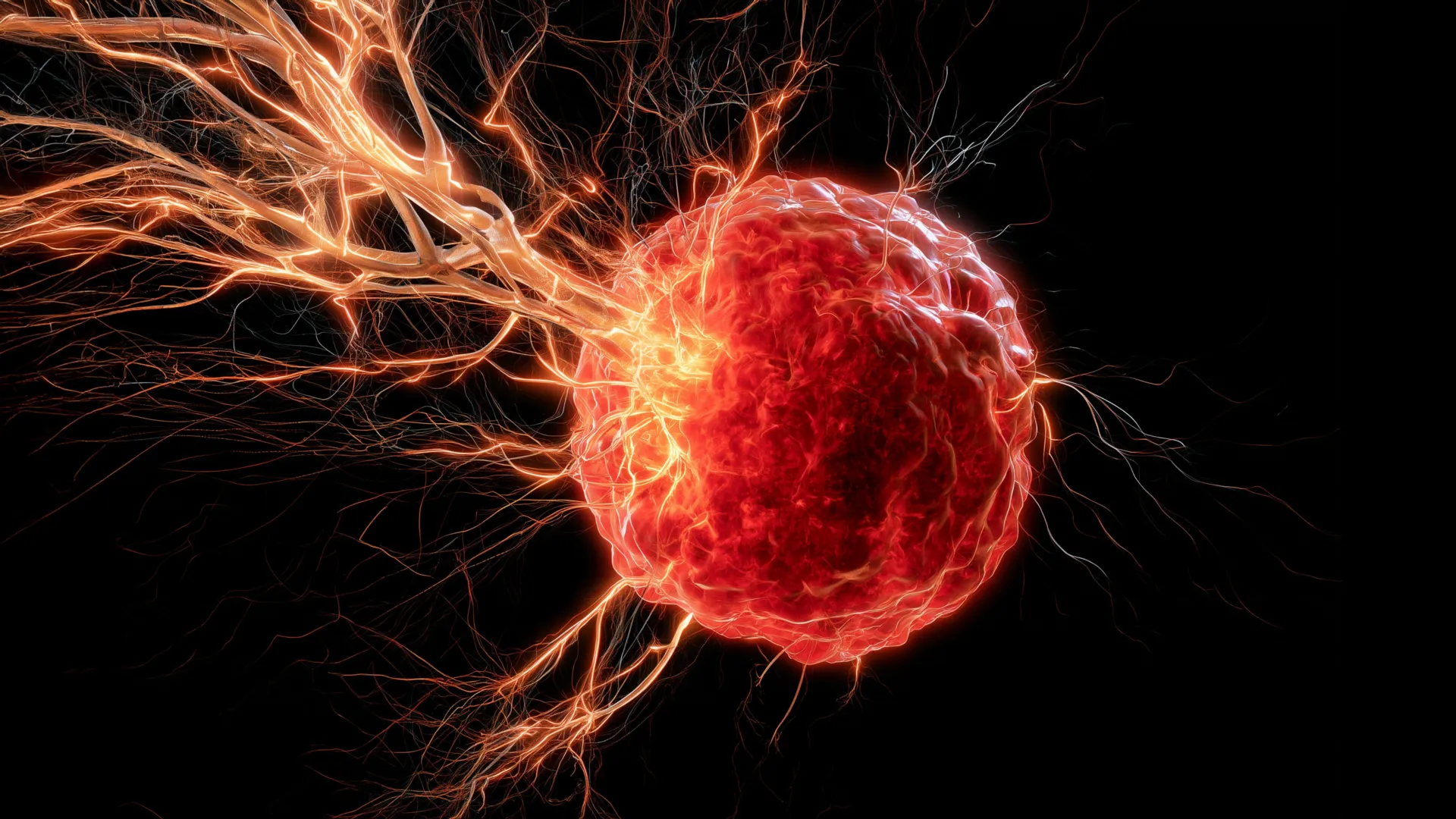
New research from the University of Oklahoma has revealed how an aggressive type of breast cancer, specifically triple-negative breast cancer, can manipulate the immune system to draw nerves into tumors, creating conditions that may help the cancer grow and potentially resist treatment. This groundbreaking study, published in Cell Death & Differentiation, sheds light on a previously underexplored mechanism of tumor development and offers a promising new avenue for therapeutic intervention, potentially involving the repurposing of existing drugs.
For decades, scientists have observed the presence of intricate nerve networks within many solid tumors. However, the precise mechanisms by which these nerves infiltrate the cancerous mass have largely remained a mystery. This latest investigation by researchers at the OU College of Medicine and OU Health Stephenson Cancer Center provides a crucial explanation for this phenomenon, particularly in the context of triple-negative breast cancer (TNBC), a form of the disease notoriously difficult to treat due to its aggressive nature and lack of targeted therapeutic options.
Deciphering the Tumor’s Neural Recruitment Strategy
The core discovery revolves around the cunning manipulation of the body’s own immune cells by cancer. The research team identified that tumors actively attract macrophages, a type of immune cell traditionally recognized for its protective roles in fighting infections and facilitating tissue repair. Once these macrophages infiltrate the tumor microenvironment – the complex ecosystem surrounding the cancerous cells – they undergo a sinister transformation, becoming complicit in the tumor’s growth strategy.
Crucially, these tumor-associated macrophages begin to release brain-derived neurotrophic factor (BDNF). BDNF is a protein widely recognized for its vital role in supporting the growth, survival, and differentiation of nerve cells, particularly in the brain. In a stark deviation from its beneficial neurological functions, the OU study found that breast cancer cells effectively hijack this fundamental biological signal. By prompting the release of BDNF from recruited macrophages, the tumor creates a powerful chemotactic gradient, encouraging nearby nerves to grow relentlessly towards and eventually into the cancerous tissue. This induced nerve growth within the tumor is hypothesized to be a significant contributor to cancer progression and, alarmingly, may enhance resistance to conventional therapies.
Dr. Maureen Cox, Ph.D., an assistant professor in the Department of Microbiology and Immunology at the OU College of Medicine and a research member of OU Health Stephenson Cancer Center, underscored the paradoxical role of these immune cells. "Macrophages are the critical source for drawing nerves into the tumor," Dr. Cox stated. "Although macrophages typically play a positive role in the body, they are facilitating a negative function in this scenario of breast cancer." This observation highlights the intricate and often deceptive ways in which cancers subvert normal physiological processes for their own survival and proliferation.
The Enigmatic Role of Nerves in Cancer Progression
The understanding of nerves as active participants in the tumor microenvironment is a relatively nascent but rapidly expanding field in oncology. Historically, nerves within tumors were largely considered passive bystanders, simply navigating the cancerous tissue. However, a growing body of evidence suggests that the nervous system and cancer are deeply intertwined, engaging in complex bidirectional communication that can profoundly influence tumor initiation, growth, metastasis, and even therapeutic response.
For instance, neural signaling has been implicated in promoting angiogenesis (the formation of new blood vessels that supply tumors with oxygen and nutrients), modulating the immune response within the tumor, and even acting as physical conduits for cancer cells to metastasize to distant sites. The OU research adds a critical piece to this complex puzzle by elucidating how these nerves are initially recruited and integrated into the tumor architecture, thereby setting the stage for these downstream pro-tumorigenic interactions.
Triple-Negative Breast Cancer: A Formidable Foe
To fully appreciate the significance of this discovery, it is essential to understand the unique challenges posed by triple-negative breast cancer. TNBC accounts for approximately 10-15% of all breast cancers, yet it disproportionately contributes to breast cancer mortality. It is characterized by the absence of three key receptors commonly found on breast cancer cells: estrogen receptors (ER), progesterone receptors (PR), and human epidermal growth factor receptor 2 (HER2). This "triple-negative" status means that TNBC does not respond to hormone therapies (like tamoxifen or aromatase inhibitors) or HER2-targeted therapies (like trastuzumab), which are highly effective for other breast cancer subtypes.
Patients with TNBC often face a more aggressive disease course, higher rates of recurrence, and a poorer prognosis compared to those with other breast cancer types. Current treatment primarily relies on chemotherapy, which, while effective for some, can be associated with significant side effects and is not universally curative. The lack of specific molecular targets has made the development of targeted therapies for TNBC a major unmet need in oncology. This new research, by identifying the macrophage-BDNF-nerve axis, offers a novel and potentially targetable pathway specific to TNBC’s unique biology, thereby opening a critical new front in the battle against this aggressive disease.
From Discovery to Therapeutic Promise: Blocking the Signal
The implications of the OU team’s findings extend beyond merely understanding cancer biology; they point towards a tangible new therapeutic strategy. Instead of solely focusing on cytotoxic approaches to destroy cancer cells, future therapies might pivot towards interrupting the intricate signaling pathways that foster tumor growth. The beauty of the current discovery lies in its immediate translational potential.
Cox and her colleagues rigorously tested this new strategy in preclinical models. In mice engineered with triple-negative breast cancer, the researchers administered a drug designed to block BDNF signaling. The results were compelling: not only did the drug effectively prevent nerves from growing into the tumors, but it also led to a significant reduction in overall tumor growth.
This preclinical success is particularly exciting because the drug used to block BDNF signaling is already on the market for other indications. This factor dramatically accelerates the potential timeline for clinical trials, as the safety profile of the drug in humans is already established. "It looks really promising that we can use this drug, which is already on the market, to target BDNF," Dr. Cox remarked, highlighting the potential for drug repurposing – a strategy that can bring new treatments to patients much faster and more cost-effectively than developing entirely new compounds.
Furthermore, Dr. Cox articulated a broader hypothesis regarding the role of nerves in the tumor microenvironment: "We believe that the nerves are immunosuppressive, so if we can stop the nerves from growing in the first place, maybe we can boost the immune response to help fight the cancer." This suggests that targeting the BDNF-nerve axis could have a dual benefit: directly impeding tumor growth by preventing nerve infiltration and indirectly by enhancing the efficacy of existing or emerging immunotherapies. The concept of "immuno-neuromodulation" in cancer treatment is gaining traction, recognizing the profound interplay between the nervous and immune systems in shaping tumor progression.
Validating the Mechanism in Human Patients
To ascertain the clinical relevance of their findings, the researchers did not stop at preclinical models. They meticulously examined data from human patients diagnosed with triple-negative breast cancer. This analysis sought to determine whether the biological pattern observed in mice — the macrophage-BDNF-nerve axis — also manifested in human disease.
The retrospective study of patient data provided strong correlative evidence: tumors from patients with higher levels of both macrophages and BDNF were significantly linked with poorer survival outcomes. This crucial finding provides compelling validation that the mechanism identified in mice is indeed relevant to human pathophysiology and underscores the potential clinical impact of targeting this pathway in TNBC patients. Such translational validation is critical for moving basic scientific discoveries closer to bedside applications.
The Path Forward: Unraveling Deeper Mechanisms and Expanding Scope
While the current study has illuminated a critical mechanism, Dr. Cox and her team are far from concluding their investigations. Their immediate next steps involve a deeper dive into the precise ways nerves contribute to tumor growth. Several hypotheses are under exploration. Some existing evidence suggests that nerves may actively stimulate angiogenesis, the formation of new blood vessels that are essential for supplying rapidly growing tumors with oxygen and nutrients. Other research indicates that nerves might serve as "highways" for cancer cells, facilitating their migration away from the primary tumor and enabling metastasis, the deadly spread of cancer to distant organs. Understanding these downstream effects will be crucial for optimizing therapeutic strategies.
Beyond breast cancer, the OU team plans to extend their research to other aggressive and difficult-to-treat malignancies. High-grade ovarian cancer is a prime candidate for their next investigation, given its aggressive nature, high mortality rate, and limited effective treatment options, mirroring some of the challenges seen in TNBC. If the macrophage-BDNF-nerve axis proves to be a conserved mechanism across different aggressive cancers, the implications for developing broad-spectrum anti-cancer therapies could be transformative.
"Ultimately, we want to turn the anti-tumor immunity back on in cancer patients so their own immune systems can reject the tumors," Dr. Cox affirmed. This overarching goal speaks to the potential for this research to not only directly inhibit tumor growth but also to re-engage the body’s natural defenses against cancer, offering a more holistic and potentially more durable treatment strategy.
Broader Impact and Implications for Cancer Research
This research from the University of Oklahoma represents a significant leap forward in understanding the complex interplay between cancer cells, the immune system, and the nervous system within the tumor microenvironment. It challenges the traditional view of nerves as passive bystanders and firmly establishes them as active, and often detrimental, participants in tumor progression.
The identification of BDNF as a key mediator and the promising results from blocking its signaling in preclinical models offer immediate hope for developing new, targeted therapies for triple-negative breast cancer – a disease that desperately needs them. The potential for drug repurposing is a particularly exciting aspect, as it could expedite the transition from laboratory discovery to clinical application, bringing relief to patients sooner.
This study also underscores the critical importance of foundational research, supported by institutions like the National Institutes of Health (NIH) and Oklahoma’s Tobacco Settlement Endowment Trust (TSET), which was a primary funder of the Stephenson Cancer Center and TSET Health Promotion Research Center at the University of Oklahoma. Such investments are vital for unraveling the intricate mysteries of diseases like cancer and ultimately translating scientific breakthroughs into life-saving treatments. As oncology continues its evolution towards precision medicine, understanding and targeting these novel communication pathways within the tumor microenvironment will be paramount in designing more effective and personalized strategies against cancer.
