
 By George Ongkojoyo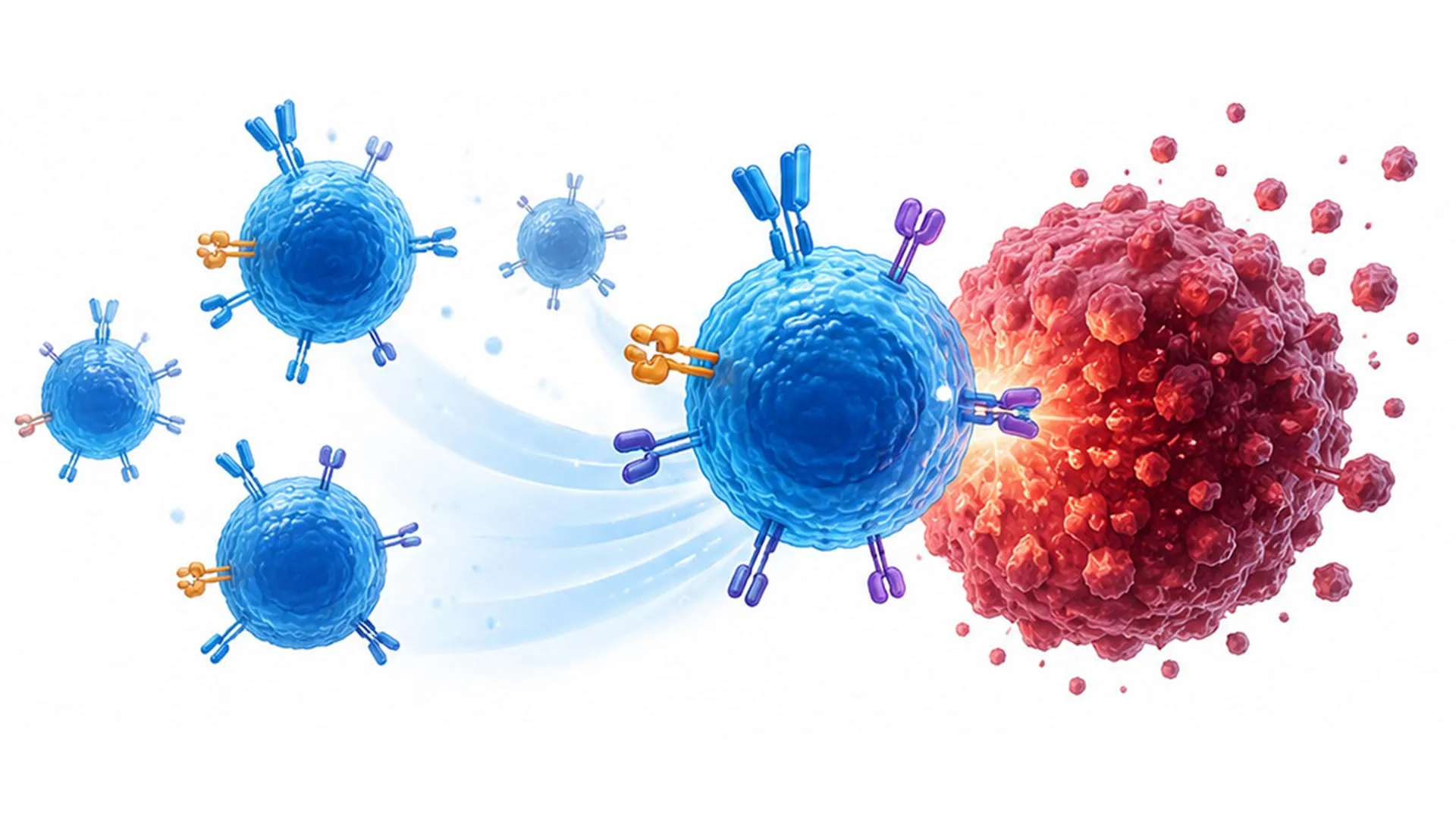
In a significant leap forward for cancer immunotherapy, researchers at the University of California, Los Angeles (UCLA) have unveiled a new strategy for producing "off-the-shelf" immune cells capable of targeting solid tumors with high precision. The study, published in the journal Cell Reports Medicine, describes a scalable manufacturing process that utilizes blood stem cells from donated umbilical cord blood to create standardized batches of T cell receptor (TCR) therapy. This approach potentially overcomes the two primary hurdles currently facing cell-based cancer treatments: the exorbitant cost of personalized manufacturing and the life-threatening risks associated with donor-derived immune cells.
TCR therapy is a sophisticated form of precision medicine that involves the genetic modification of T cells, the "soldiers" of the immune system, to help them recognize and destroy cancer cells. While similar in concept to the more widely known Chimeric Antigen Receptor (CAR) T-cell therapy, TCR therapy offers a critical advantage for treating solid tumors. While CAR T-cells can only detect proteins located on the exterior surface of a cell, TCRs are capable of identifying small protein fragments that originate within the cell’s interior. These fragments are ferried to the cell surface, serving as "identifying tags" that reveal the cell’s internal cancerous state. Because the vast majority of cancer-driving mutations occur inside the cell, TCR therapy provides access to a much broader range of targets than existing immunotherapies.
The Evolution of Immunotherapy and the Solid Tumor Challenge
To understand the magnitude of the UCLA breakthrough, one must consider the historical context of cancer immunotherapy. For the past decade, CAR T-cell therapy has revolutionized the treatment of "liquid" cancers, such as certain types of leukemia and lymphoma. However, the success of these therapies has not translated well to solid tumors, which account for approximately 90% of all adult cancer deaths. Solid tumors—including those of the lung, breast, prostate, and ovaries—are notoriously difficult to treat because they create a hostile microenvironment and often lack unique surface proteins for CAR T-cells to grab onto.
The UCLA team focused on a specific target known as NY-ESO-1. This protein is classified as a "cancer-testis antigen," meaning it is typically only expressed in the germ cells of the testes but becomes highly active in various cancers, including melanoma, sarcoma, and ovarian cancer. Because NY-ESO-1 fragments are presented on the cell surface via the Major Histocompatibility Complex (MHC), TCR therapy is uniquely suited to hunt down cells expressing this marker. However, the practical application of this science has been hindered by a logistical bottleneck: the need for autologous (patient-specific) treatment.
Overcoming the Autologous Bottleneck and Financial Toxicity
Currently, most approved T-cell therapies are autologous, meaning a patient’s own T cells must be extracted, shipped to a laboratory, genetically engineered, expanded in number, and then shipped back for infusion. This process is fraught with complications. First, it is slow, often taking several weeks—time that many late-stage cancer patients do not have. Second, the cells of heavily pre-treated cancer patients are often "exhausted" and do not function effectively once engineered. Finally, the cost is astronomical, with single-dose treatments often priced between $400,000 and $500,000, not including the costs of hospitalization and managing side effects.
The scientific community has long sought an "allogeneic" or off-the-shelf solution using healthy donor cells. However, using mature T cells from a donor carries the risk of Graft-versus-Host Disease (GvHD). In GvHD, the donor’s T cells recognize the patient’s healthy tissues as "foreign" and launch a systemic attack, which can be fatal. To prevent this, scientists usually have to perform complex gene-editing steps to remove the donor’s natural T-cell receptors, a process that adds complexity and potential for error to the manufacturing cycle.
The UCLA strategy bypasses these issues by starting earlier in the biological timeline. Rather than using mature, "educated" T cells from a donor, the researchers utilized hematopoietic (blood) stem cells derived from umbilical cord blood.
A Novel Engineering Strategy: From Stem Cells to Specialized Killers
The researchers, led by Dr. Lili Yang, a professor of microbiology, immunology, and molecular genetics, engineered these immature stem cells to express the TCR for NY-ESO-1. By introducing the cancer-targeting receptor at the stem cell stage, they essentially "hard-coded" the cells’ identity before they had a chance to develop their own random receptors.
"Stem cells are undifferentiated—they’re not yet mature T cells with a fixed receptor already in place," explained Yichen (John) Zhu, a graduate student and co-first author of the study. "When we differentiate our engineered stem cells into T cells, essentially all of the resulting cells carry the same receptor and go after the same tumor target."
This uniformity is the key to safety. Because the resulting "AlloESO-T" cells do not possess the diverse, random receptors of a mature donor T cell, the risk of them attacking healthy patient tissue is significantly reduced. This eliminates the need for the secondary gene-editing steps required in other allogeneic therapies, simplifying the production pipeline and improving the consistency of the final product.
Dual-Detection Mechanism: Closing the Escape Routes
One of the most persistent problems in oncology is "antigen escape." Cancer is an evolutionary process; even if a therapy successfully kills 99% of tumor cells, the remaining 1% may stop expressing the target protein (like NY-ESO-1) to evade the immune system. Once these "invisible" cells multiply, the cancer returns, and the original therapy becomes useless.
To combat this, the UCLA team equipped the AlloESO-T cells with a secondary detection system. In addition to the engineered TCR, the cells express natural killer (NK) cell receptors. These receptors do not look for specific protein fragments; instead, they recognize general "stress signals" that most cancer cells emit when they are in a state of rapid, uncontrolled growth.
Laboratory experiments conducted by the team demonstrated the efficacy of this "fail-safe" mechanism. When tested against human melanoma, ovarian, and prostate cancer cells, the AlloESO-T cells were able to destroy tumor cells that had lowered their NY-ESO-1 expression. This dual-pronged attack makes it much harder for the cancer to develop resistance, potentially leading to more durable remissions.
Preclinical Success and Manufacturing Scale
The researchers validated their approach through extensive testing in mouse models. In studies involving mice with ovarian cancer and melanoma, a single infusion of AlloESO-T cells led to significant tumor regression and extended survival.
The data revealed several striking differences between the AlloESO-T cells and conventional engineered donor cells:
- Proliferation: Once infused, the AlloESO-T cells expanded by approximately 100-fold, creating a massive internal army to fight the tumor.
- Persistence: The cells remained active in the body for weeks, continuing to monitor for cancer recurrence.
- Safety: Unlike mature donor T cells, which tended to accumulate in the lungs and liver and cause toxicities associated with GvHD, the AlloESO-T cells migrated primarily to the tumor sites and avoided healthy organs.
From a manufacturing perspective, the implications are profound. Because cord blood stem cells have a high capacity for self-renewal and differentiation, a single donation could theoretically be used to produce trillions of therapeutic cells.
"From a small number of cord blood stem cells, we can generate trillions of therapeutic cells—enough for thousands of doses—within about six weeks," said Yanruide (Charlie) Li, a postdoctoral scholar and co-senior author. The team estimates that this mass-production model could bring the cost per dose down to approximately $5,000, a fraction of the current cost of autologous therapies.
Chronology of Development and Future Directions
The development of the AlloESO-T platform is the result of years of iterative research at the UCLA Broad Stem Cell Research Center. The team previously developed a similar platform for "CAR-NKT" cells, which is another form of off-the-shelf immunotherapy. By leveraging the manufacturing infrastructure and regulatory pathways already established for their previous work, the researchers hope to fast-track AlloESO-T toward clinical applications.
The timeline for the project currently involves:
- 2020-2023: Preclinical validation, optimization of the stem cell differentiation protocol, and animal model testing.
- 2024: Publication of the Cell Reports Medicine study and initiation of discussions with the FDA.
- Prospective 2025-2026: Potential commencement of Phase 1 clinical trials to evaluate safety and dosage in human subjects.
While the results in mice are promising, the researchers emphasize that human trials are the necessary next step. Mouse immune systems and tumor environments are models, not perfect mirrors, of human biology. The primary goal of the upcoming trials will be to ensure that the AlloESO-T cells do not trigger GvHD in humans and that they can survive long enough in the human bloodstream to reach solid tumors.
Broader Implications for the Oncology Landscape
The UCLA study arrives at a time when the healthcare industry is grappling with the sustainability of high-cost cell therapies. If the $5,000-per-dose estimate holds true, it could democratize access to advanced cancer treatment, making it available not just at elite academic medical centers, but at regional hospitals and in developing nations.
Furthermore, the platform is designed to be modular. While the current study focused on the NY-ESO-1 protein, the researchers noted that the same stem cell framework could be used to host TCRs for other cancer markers, such as MAGE-A3 (common in lung and bladder cancer) or AFP (common in liver cancer).
"We’re not just presenting one therapy for one target. We want to share the platform itself," Li said. This "plug-and-play" capability could allow the medical community to rapidly develop a library of off-the-shelf T cells for a wide variety of solid tumors, fundamentally changing the standard of care for oncology.
As the research moves toward the clinic, it stands as a testament to the power of regenerative medicine—using the most basic building blocks of life, stem cells, to engineer a highly specialized and affordable weapon against one of humanity’s most resilient diseases.
