
 By Suherman Candra Maholtra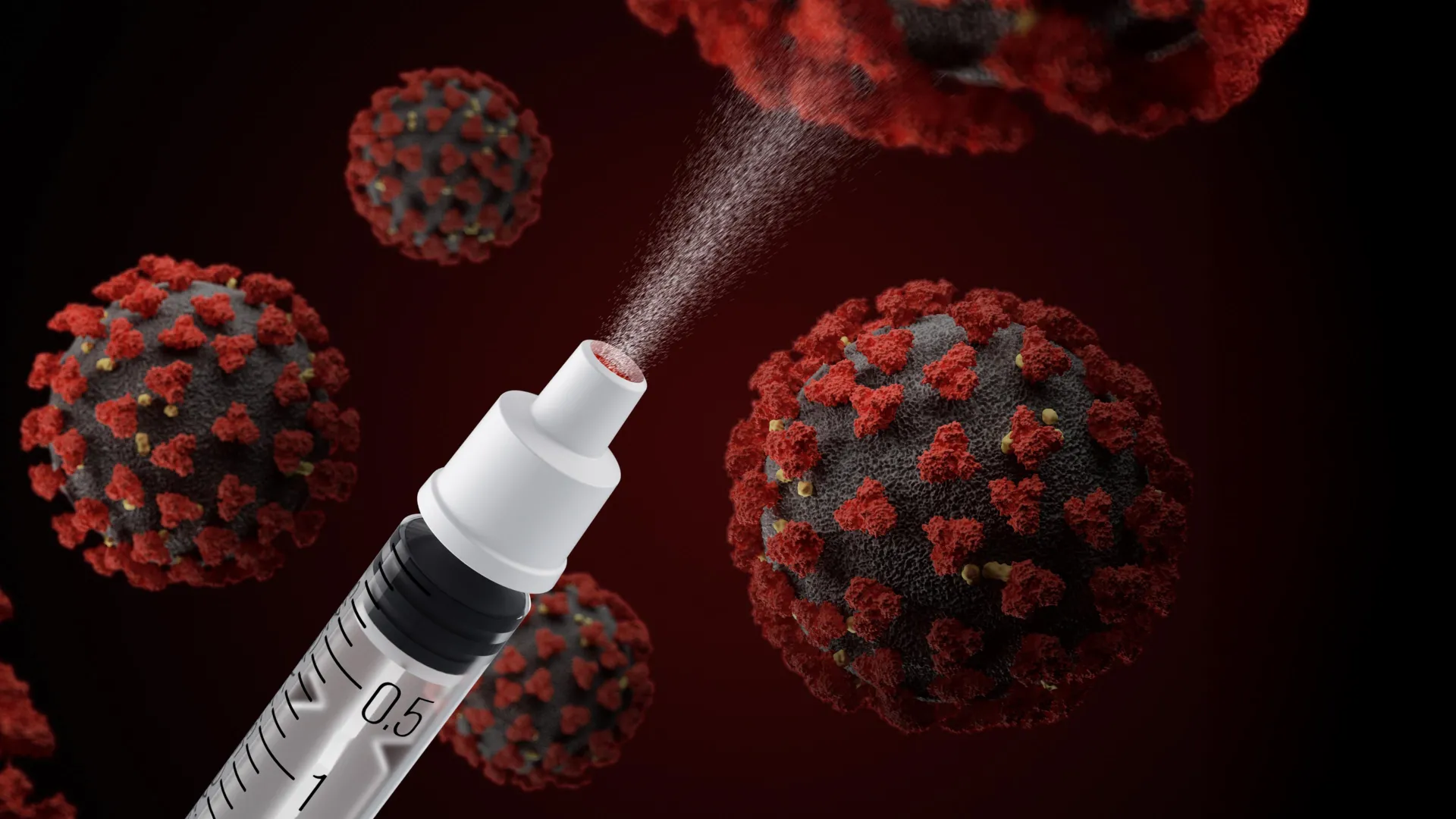
In a significant departure from more than two centuries of medical tradition, researchers at Stanford Medicine have announced the development of an experimental universal vaccine that provides broad-spectrum protection against a diverse array of respiratory threats. The study, published on February 19 in the journal Science, details a nasal spray formulation that shielded laboratory mice not only from various strains of coronaviruses but also from dangerous hospital-acquired bacteria and common environmental allergens. This breakthrough represents a potential paradigm shift in how the global medical community approaches immunization, moving away from the "one pathogen, one vaccine" model toward a more holistic, integrated defense strategy.
The research, led by senior author Bali Pulendran, PhD, the Violetta L. Horton Professor II and professor of microbiology and immunology, and lead author Haibo Zhang, PhD, a postdoctoral scholar, addresses one of the most persistent challenges in modern medicine: the rapid mutation of respiratory viruses. By targeting the fundamental ways the immune system communicates rather than focusing on specific viral markers, the Stanford team has created a "one-size-fits-many" solution that could eventually eliminate the need for annual booster shots and provide an immediate shield against emerging pandemic threats.
The Limitations of Traditional Vaccinology
To understand the magnitude of this advancement, it is necessary to look back at the history of immunization. Since 1796, when Edward Jenner pioneered the smallpox vaccine using cowpox material, the field of vaccinology has relied on "antigen specificity." This strategy involves introducing the immune system to a specific, recognizable piece of a pathogen—such as a protein or a deactivated virus—so the body can recognize and attack that specific threat in the future.
While this method has been remarkably successful in nearly eradicating diseases like polio and measles, it struggles against "shape-shifting" pathogens. Viruses like influenza and SARS-CoV-2 are notorious for their ability to mutate, changing their surface proteins (antigens) to evade the antibodies produced by previous infections or vaccinations. This biological "cat-and-mouse game" necessitates the constant reformulation of vaccines, leading to the annual flu shot cycle and the frequent updating of COVID-19 boosters.
The Stanford team recognized that the traditional approach was reaching its limits. Instead of trying to predict which mutation a virus might take next, they sought to bolster the body’s inherent, broad-spectrum defenses in the very location where these infections typically begin: the respiratory tract.
A New Mechanism: Integrated Immunity
The experimental vaccine, currently designated as GLA-3M-052-LS+OVA, functions by bridging the gap between the two primary arms of the human immune system: the innate and the adaptive.
The innate immune system is the body’s first line of defense. It consists of cells like macrophages, neutrophils, and dendritic cells that respond within minutes to any perceived foreign invader. However, this response is typically short-lived, often fading within a few days. The adaptive immune system, conversely, is highly specific. It creates T cells and B cells (which produce antibodies) tailored to a specific pathogen. While the adaptive response takes longer to activate—usually one to two weeks—it possesses a "memory" that can last for years.
The Stanford breakthrough involves a mechanism that keeps the innate immune system "switched on" for an extended period. By using a synthetic formulation that mimics the signals immune cells send to one another during a real infection, the researchers were able to recruit T cells to the lungs. These T cells then secrete cytokines—signaling molecules—that instruct the innate immune cells to remain in a state of high alert for months rather than days.
"Those T cells were providing a critical signal to keep the activation of the innate system," Pulendran explained. This coordinated effort creates a "double whammy" effect. The heightened innate response acts as a primary barrier, drastically reducing the amount of virus that can take hold, while the adaptive response is primed to finish off any remaining pathogens with unprecedented speed.
Experimental Results and Quantitative Data
The efficacy of the vaccine was tested in a series of rigorous mouse models. The vaccine was administered intranasally, mimicking the delivery of a standard nasal spray. Mice received three doses spaced one week apart, and the results exceeded the researchers’ initial expectations.
When exposed to SARS-CoV-2 and other related coronaviruses, vaccinated mice showed a 700-fold reduction in viral levels in their lungs compared to unvaccinated controls. While the unvaccinated mice suffered from severe weight loss, lung inflammation, and high mortality rates, the vaccinated group remained healthy, showing minimal weight loss and 100% survival.
Furthermore, the "alertness" of the immune system was significantly accelerated. In a typical unvaccinated mouse, it takes roughly 14 days to mount a full adaptive immune response. In the mice treated with the Stanford vaccine, the body launched virus-specific T cells and antibodies in as little as three days.
The protection extended beyond viruses. The researchers tested the vaccine against Staphylococcus aureus (Staph) and Acinetobacter baumannii, two of the most common and dangerous bacteria responsible for hospital-acquired infections and pneumonia. The vaccinated mice demonstrated robust protection against these bacterial threats for at least three months.
In a surprising final test, the team evaluated the vaccine’s impact on allergens. When exposed to house dust mite proteins—a primary trigger for allergic asthma—unvaccinated mice developed significant mucus buildup and a strong Th2 immune response (the type associated with allergies). Vaccinated mice, however, showed a significantly dampened allergic response and maintained clear, healthy airways.
Chronology of Development
The path to this universal vaccine began several years ago with an investigation into the Bacillus Calmette-Guerin (BCG) tuberculosis vaccine. For decades, clinicians noticed that newborns who received the BCG vaccine seemed to have lower mortality rates from unrelated infections, a phenomenon known as "off-target effects."
In 2023, Pulendran’s team published a study clarifying the mechanism behind this cross-protection. They discovered that the BCG vaccine was triggering a unique interaction where T cells kept the innate immune system active in the lungs for months. This 2023 discovery served as the blueprint for the current study.
Following the identification of the biological pathway, the team spent the next two and a half years developing a synthetic version that could replicate the effect without needing a live bacterial vaccine like BCG. The result was the GLA-3M-052-LS+OVA formulation, which uses toll-like receptor (TLR) stimuli and a harmless egg protein (ovalbumin) to anchor the protective response in the respiratory system.
Implications for Public Health and Pandemic Preparedness
The potential implications of a successful human version of this vaccine are vast. According to the World Health Organization (WHO), respiratory infections remain a leading cause of morbidity and mortality worldwide. Influenza alone causes between 290,000 and 650,000 respiratory deaths annually, while the economic burden of the common cold and seasonal respiratory illnesses runs into the billions of dollars due to lost productivity and healthcare costs.
A universal vaccine could provide several key advantages:
- Pandemic Readiness: If a new "Virus X" emerges, a universal nasal spray could provide immediate, broad protection to the population while scientists work on pathogen-specific vaccines.
- Simplified Immunization: Instead of multiple shots for flu, COVID-19, and RSV, individuals might only need a single seasonal nasal spray.
- Combating Antibiotic Resistance: By protecting against bacterial pneumonia, the vaccine could reduce the reliance on antibiotics, helping to slow the rise of "superbugs" like Acinetobacter baumannii.
- Allergy Management: The ability to modulate the immune response to allergens could offer new avenues for treating chronic asthma and environmental sensitivities.
Future Prospects and Clinical Challenges
While the results in mice are promising, the transition to human application involves significant hurdles. The next phase of the research involves a Phase I clinical trial to assess the safety and tolerability of the vaccine in humans.
"Imagine getting a nasal spray in the fall months that protects you from all respiratory viruses including COVID-19, influenza, respiratory syncytial virus and the common cold, as well as bacterial pneumonia and early spring allergens," Pulendran said. "That would transform medical practice."
However, the researchers caution that human immune systems are more complex than those of mice. The duration of protection in humans must be determined, and the dosage must be carefully calibrated to ensure that the "high alert" status of the innate immune system does not lead to unintended inflammatory side effects.
If funding remains steady and clinical trials proceed without major setbacks, Pulendran estimates that a universal respiratory vaccine could be available to the public within five to seven years. The research was a collaborative effort involving experts from Emory University, the University of North Carolina at Chapel Hill, Utah State University, and the University of Arizona, supported by the National Institutes of Health and various private endowments.
As the world continues to recover from the COVID-19 pandemic and prepares for future biological threats, the Stanford study offers a glimpse into a future where the "mythical" goal of universal protection becomes a cornerstone of routine medical care.
