
 By Suherman Candra Maholtra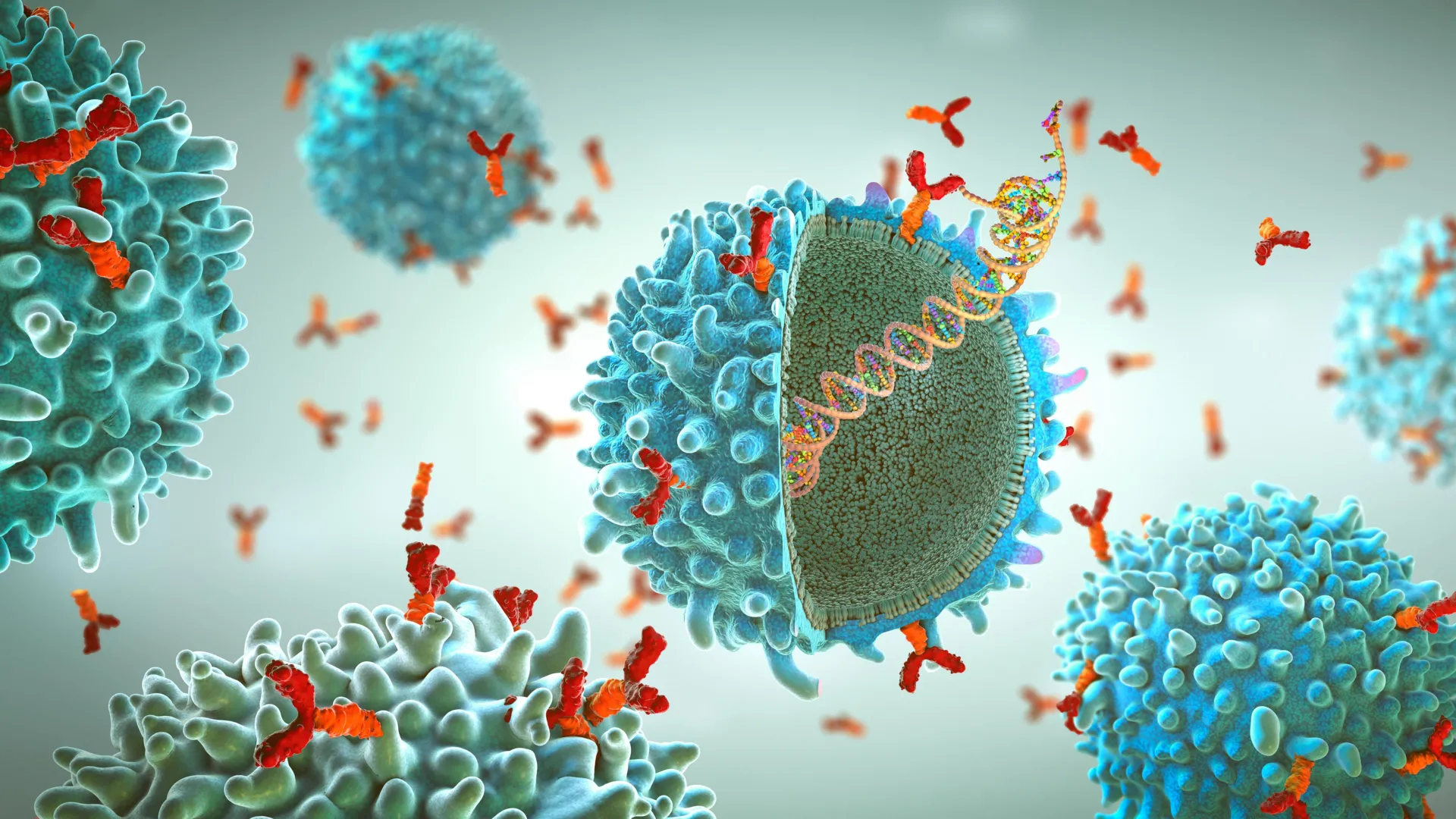
Researchers at Scripps Research and IAVI have pioneered a transformative laboratory platform that recreates the complex outer environment of viruses, offering a significant leap forward in the quest for effective vaccines against some of the world’s most elusive pathogens. By utilizing nanodisc technology to stabilize viral proteins in their natural, membrane-bound states, the team has addressed a long-standing hurdle in structural biology: the tendency of laboratory-grown viral proteins to lose their native shape when removed from their fatty outer shells. This breakthrough, recently detailed in the journal Nature Communications, provides a more accurate map for the immune system to follow, potentially accelerating the development of vaccines for HIV, Ebola, and future pandemic threats.
The Structural Challenge of Vaccine Design
To understand the significance of this platform, one must first look at the fundamental mechanics of viral infection. Viruses, such as HIV-1, Ebola, and SARS-CoV-2, are typically "enveloped," meaning they are wrapped in a lipid bilayer—a thin membrane of fatty molecules. Protruding from this membrane are specialized proteins known as glycoproteins. These glycoproteins act as the "keys" that unlock human cells, allowing the virus to enter and replicate. Because they are the most visible part of the virus to the human immune system, they are the primary targets for vaccines.
The goal of a vaccine is to teach the immune system to recognize these glycoproteins and produce antibodies that can "neutralize" them, effectively gumming up the keys so they can no longer turn the lock. However, studying these proteins in a laboratory setting has historically been a compromise. Glycoproteins are naturally anchored into the virus’s oily membrane. When scientists try to produce these proteins in a lab for study, the membrane-anchoring portions make the proteins "sticky" and difficult to isolate.
To bypass this, researchers have traditionally used "truncated" versions of the proteins—cutting off the parts that sit inside the membrane to make them water-soluble and easier to handle. While these simplified versions have been instrumental in many breakthroughs, they often fail to represent the true shape of the protein, especially the regions near the base. For a disease like HIV, where the most vulnerable parts of the virus are often hidden near the membrane, these simplified models are like trying to study the architecture of a house while ignoring its foundation.
Nanodisc Technology: A Biomimetic Solution
The new platform developed by Scripps Research and IAVI (International AIDS Vaccine Initiative) utilizes nanodisc technology to solve this structural riddle. Nanodiscs are synthetic, microscopic patches of lipid bilayer held together by "scaffold" proteins. By embedding full-length viral glycoproteins into these nanodiscs, scientists can create a stable, realistic environment that mimics the surface of a real virus.
"For many years, we’ve had to rely on versions of viral proteins that are missing important pieces," explains William Schief, PhD, a professor at Scripps Research and executive director of vaccine design at IAVI’s Neutralizing Antibody Center. "Our platform lets us study these proteins in a setting that better reflects their natural environment, which is critical if we want to understand how protective antibodies recognize a virus."
This biomimetic approach ensures that the glycoproteins maintain their "native conformation"—the specific three-dimensional shape they take during a real infection. This is particularly vital for identifying antibodies that target the Membrane-Proximal External Region (MPER), a highly stable part of the HIV protein that remains consistent even as the virus mutates. Because the MPER is located right at the interface of the protein and the membrane, it is almost impossible to study accurately without the presence of lipids.
Chronology of the Research and Testing
The development of the nanodisc platform was the result of years of interdisciplinary collaboration, bringing together experts in immunology, structural biology, and protein engineering. The project aimed to integrate several existing but disparate technologies into a single, high-throughput pipeline.
- Platform Integration: The team first worked to make nanodiscs compatible with standard laboratory tools. This included ensuring the discs could be used in flow cytometry (for sorting immune cells), surface plasmon resonance (for measuring how tightly antibodies bind), and cryo-electron microscopy (for taking high-resolution 3D images).
- HIV Proof-of-Concept: The researchers initially focused on HIV-1, specifically the "Env" trimer. HIV is notorious for its ability to mutate rapidly, but certain "broadly neutralizing antibodies" (bnAbs) can stop many different strains by targeting the stable MPER region. Using the nanodisc platform, the team successfully captured the first detailed structural views of these antibodies binding to the protein-membrane interface.
- Validation with Ebola: To prove the platform’s versatility, the team applied the same method to the Ebola virus glycoprotein. They demonstrated that the nanodisc-bound Ebola proteins were recognized by known protective antibodies just as effectively as the real virus would be, confirming that the technology could be adapted to different viral families.
- Optimization for Speed: A major milestone in the chronology of this project was the transition from slow, artisanal processes to a scalable system. The researchers refined the protocol so that a process that typically took over a month—from protein production to data analysis—could be compressed into a single week.
Supporting Data and Technical Advantages
The study published in Nature Communications provides compelling data regarding the efficiency and accuracy of the nanodisc platform. One of the key metrics cited is the "reproducibility and scalability" of the system.
In traditional vaccine analytics, isolating B cells (the cells that produce antibodies) that react to a specific part of a virus is like finding a needle in a haystack. By using nanodiscs as "molecular bait," the researchers were able to increase the precision of this sorting process. The lipid environment prevents the protein from collapsing or misfolding, which reduces "noise" in the data—meaning fewer false positives where antibodies bind to parts of a lab protein that don’t exist on the real virus.
Furthermore, the platform’s compatibility with cryo-electron microscopy (cryo-EM) allowed the team to achieve near-atomic resolution. This level of detail revealed new interactions at the membrane interface that were previously invisible. For example, the data showed how certain antibodies actually "tuck" into the lipid layer to reach their target, a discovery that could lead to the design of vaccines that specifically trigger these types of potent immune responses.
Official Responses and Collaborative Effort
The success of the platform is a testament to the collaborative nature of modern scientific inquiry. The study involved a massive team of researchers from Scripps Research, IAVI, and even industry partners like Moderna Inc.
Kimmo Rantalainen, a senior scientist in Schief’s lab and the study’s first author, emphasized that the breakthrough was less about inventing new parts and more about the engineering of the system as a whole. "Putting all of these components together into a single, reliable system was the key," Rantalainen says. "The individual pieces already existed, but making them work together in a way that’s reproducible and scalable opens up new possibilities for how vaccines are analyzed and designed."
The work was heavily supported by global health organizations, including the National Institute of Allergy and Infectious Diseases (NIAID), part of the National Institutes of Health (NIH), and the Bill & Melinda Gates Foundation. These organizations have long prioritized "structure-based vaccine design," an approach that uses the physical shape of a virus to engineer a vaccine, rather than the older method of using weakened or killed versions of the whole pathogen.
Broader Impact and Future Implications
The implications of this platform extend far beyond HIV and Ebola. The researchers noted that the technology is theoretically applicable to any virus with membrane-bound proteins. This includes seasonal threats like influenza, as well as the various coronaviruses, including SARS-CoV-2.
One of the most immediate impacts will be in "variant tracking." When a new variant of a virus emerges, scientists need to know quickly if existing antibodies (from prior infection or vaccination) can still recognize the mutated surface proteins. The nanodisc platform allows for the rapid creation of realistic models of these new variants, enabling researchers to test antibody responses in days rather than months.
Moreover, the platform offers a new way to study "difficult" targets. Some viruses have glycoproteins that are so unstable they fall apart the moment they are removed from the viral membrane. For these pathogens, the nanodisc might be the only way to see what the protein actually looks like, providing the first real chance at designing a vaccine.
Analysis: A New Era of Vaccine Analytics
The development of the virus glycoprotein nanodisc platform marks a shift from "trial and error" vaccine development to a more precise, "engineering-first" approach. By providing a more realistic window into the molecular battle between viruses and the human immune system, Scripps Research and its partners have provided the scientific community with a powerful new lens.
While the platform itself is not a vaccine, it acts as a high-tech "flight simulator" for vaccine candidates. It allows scientists to test how a vaccine might perform in the human body before entering expensive and time-consuming clinical trials. In an era where the threat of "Disease X"—a yet-unknown future pandemic—looms large, the ability to rapidly and accurately analyze viral structures is a critical component of global biosecurity.
The researchers are now looking to expand the platform’s capabilities even further, exploring how it can be used to study the interactions between viruses and the "innate" immune system, the body’s first line of defense. As the technology becomes more widely adopted, it is expected to become a standard tool in laboratories worldwide, potentially shortening the timeline for the next generation of life-saving vaccines.
