
 By admin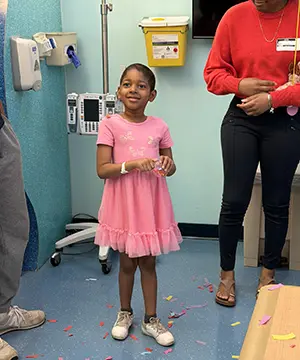
The intersection of sudden medical crisis and long-term clinical recovery was recently exemplified by the journey of Amari, a young pediatric cancer patient whose experience highlights the complexities of treating Stage 3 anaplastic Wilms tumor. What began as an acute emergency room visit following the discovery of blood in her urine—a common clinical presentation of renal issues in children—evolved into a grueling 32-week treatment regimen involving intensive chemotherapy and high-stakes surgical intervention. Her case, documented through the perspective of her mother, Cora H., serves as a focal point for Cancer Survivors Month in June, drawing attention to the medical advancements that allow for organ preservation and the psychological resilience required of families navigating the pediatric oncology system.
Clinical Presentation and the Diagnosis of Wilms Tumor
Amari’s diagnosis followed a classic, albeit terrifying, presentation of pediatric renal malignancy. Hematuria, or blood in the urine, is often one of the first visible signs of Wilms tumor, also known as nephroblastoma. This type of cancer primarily affects children and accounts for approximately 90% of all kidney cancers in the pediatric population. Upon admission to the emergency room, diagnostic imaging revealed a significant mass on Amari’s kidney, shifting the family’s reality from a routine school week to the high-pressure environment of specialized oncology.
The specific diagnosis—Stage 3 anaplastic Wilms tumor—represents a more challenging clinical path than the more common "favorable histology" Wilms tumor. In oncology, "anaplastic" refers to the appearance of the cancer cells under a microscope; these cells look significantly different from normal cells and tend to grow and spread more quickly. Stage 3 indicates that the tumor has spread beyond the kidney to nearby lymph nodes or other structures within the abdomen, though it has not yet reached distant organs like the lungs or liver. This staging necessitates a multi-modal treatment approach, typically involving a combination of surgery, chemotherapy, and sometimes radiation.
Surgical Innovation and Organ Preservation
One of the most critical turning points in Amari’s clinical journey was the surgical strategy employed by her medical team. Initially, the standard of care for a large renal tumor often involves a radical nephrectomy, which is the complete removal of the affected kidney. However, advancements in pediatric surgical oncology have increasingly prioritized nephron-sparing surgery (partial nephrectomy) where possible, to preserve long-term renal function and mitigate the risk of chronic kidney disease later in life.
Following several weeks of neoadjuvant chemotherapy—designed to shrink the tumor and make it more manageable for excision—Amari underwent a complex surgical procedure. The outcome was a significant success for the surgical team: they managed to remove the entirety of the malignant mass while preserving approximately 60 percent of her healthy kidney tissue. This preservation is vital for a growing child, as it ensures better systemic health and reduces the physiological burden on the remaining kidney.
The Chronology of Treatment and Recovery
The recovery process for pediatric cancer is rarely a linear path, and Amari’s case required a sustained 32-week protocol of chemotherapy following her surgery. This period is often characterized by significant physical and emotional tolls on the patient. For Amari, the regimen resulted in profound exhaustion and the various systemic side effects common to cytotoxic drugs, which target rapidly dividing cells but also affect healthy tissues.
Despite the intensity of the treatment, the medical narrative emphasizes the importance of maintaining a sense of normalcy and psychological well-being. Throughout her 32 weeks of treatment, Amari continued to participate in cheerleading, a detail that pediatric psychologists suggest can be instrumental in a child’s recovery. By remaining connected to her peers and her passions—including K-pop, the Dallas Cowboys Cheerleaders, and popular culture like Demon Slayer—Amari maintained a "light" and a sense of identity that transcended her patient status.
The conclusion of her treatment was marked by the "ringing of the bell," a tradition in many oncology wards that signifies the completion of a treatment cycle. For the H. family, this event took on additional emotional weight, occurring on the birthday of Amari’s late grandmother. This milestone transitioned Amari from an active patient to a "survivor," a status that requires ongoing monitoring but represents a return to a life no longer defined by active malignancy.
Supporting Data: The Landscape of Pediatric Oncology
Amari’s story is situated within a broader statistical context of pediatric cancer in the United States. According to the American Cancer Society and the National Cancer Institute, approximately 10,000 children under the age of 15 are diagnosed with cancer each year. While survival rates have improved dramatically over the last five decades—rising from less than 50% in the 1970s to over 80% today—the figures for specific aggressive subtypes like anaplastic Wilms tumor remain a focus for intense research.
Wilms tumor specifically affects about 500 to 600 children annually in the U.S. While the overall cure rate for Wilms tumor is high (approximately 90%), those with anaplastic histology face a more guarded prognosis and require more aggressive treatment protocols. Research funded by organizations like CureSearch for Children’s Cancer is specifically aimed at finding targeted therapies that can treat these aggressive cells more effectively while reducing the long-term toxicity of chemotherapy on developing young bodies.
Broader Implications and the Role of Advocacy
The narrative provided by Cora H. underscores a critical element of the pediatric cancer experience: the necessity of transparency and hope within the family unit. Cora’s commitment to never lying to her daughters about the severity of the situation reflects a growing trend in pediatric palliative and supportive care that advocates for age-appropriate honesty. This approach fosters trust and helps children process the trauma of invasive medical procedures.
Furthermore, Amari’s journey highlights the importance of June as Cancer Survivors Month. This period is dedicated to celebrating those who have completed treatment while acknowledging the unique challenges faced by the survivor community. Pediatric survivors often deal with "late effects" of treatment, which can include cardiovascular issues, secondary cancers, or psychological trauma. Consequently, the transition to survivorship is not an end to the medical journey but the beginning of a new phase of specialized long-term care.
Conclusion: A Call for Continued Research and Support
Amari’s successful transition into survivorship is a testament to the efficacy of modern surgical techniques and the resilience of the pediatric spirit. However, her story also serves as a reminder that the work of pediatric oncology is far from finished. The goal for researchers is to ensure that every child, regardless of their tumor’s histology or stage, has the opportunity to "ring the bell."
The implications of Amari’s case extend to the importance of funding and public awareness. As she continues to thrive—pursuing her dreams of dancing and cheerleading—she represents the potential of every child diagnosed with cancer when they are backed by cutting-edge research and a supportive community. For families currently navigating the "heavy moments" of an ER waiting room, Amari’s 60 percent preserved kidney and her return to the cheerleading mat offer a tangible reason to maintain hope.
In the professional landscape of healthcare, cases like Amari’s drive the demand for more personalized medicine. The ability to save a portion of an organ while eradicating a Stage 3 malignancy is a benchmark of progress. As Cancer Survivors Month continues, the focus remains on ensuring that the sounds of the "end of treatment" bell become a universal reality for all pediatric patients, transforming stories of crisis into enduring narratives of survival and achievement.
