
 By Budi Oetomo Narendra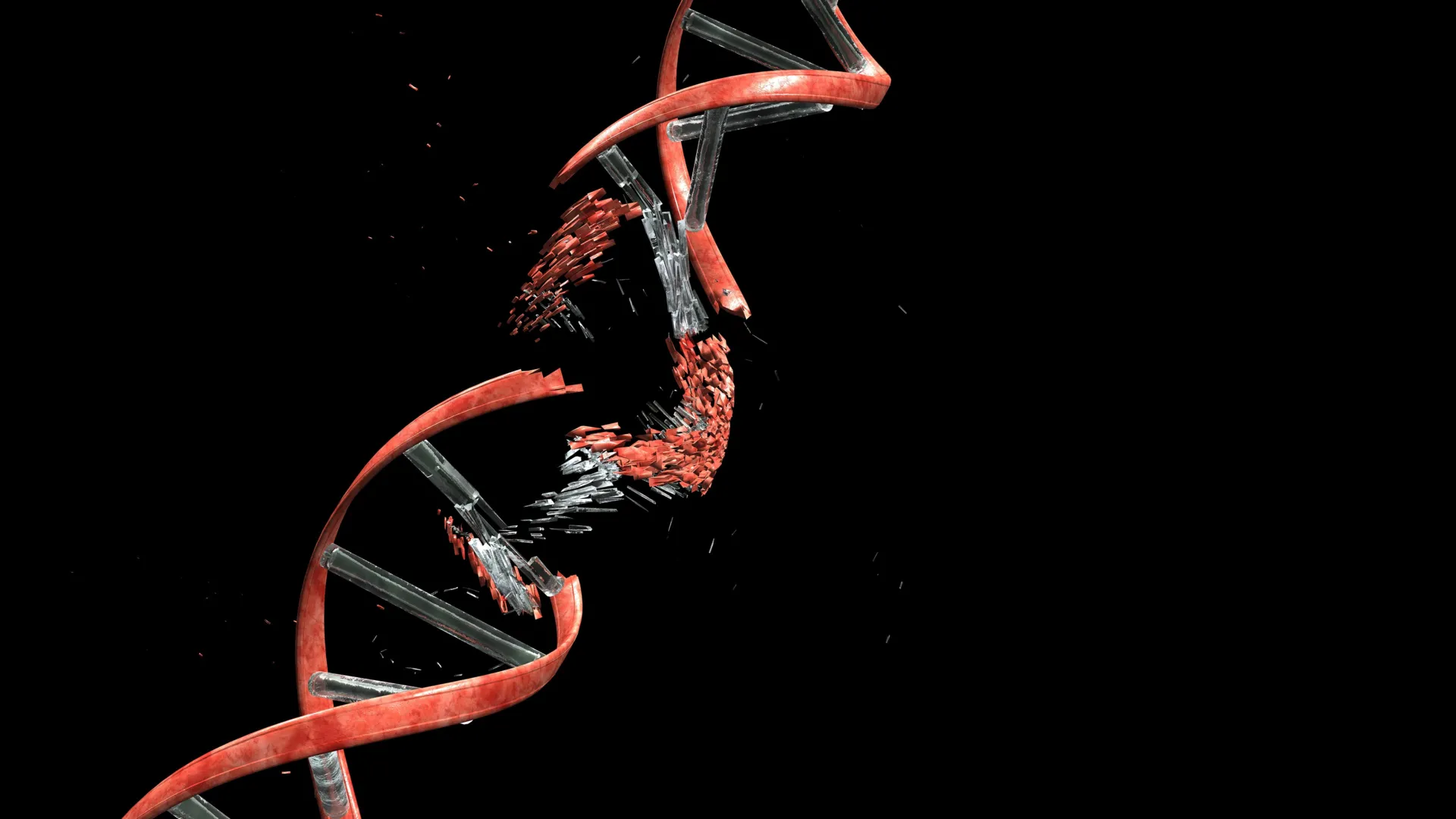
New research from the Hebrew University of Jerusalem suggests a novel mechanism by which cancer cells inadvertently accelerate their own evolution and increase their aggressiveness: by pushing critical genes to operate at extreme, unsustainable levels, they inflict severe damage upon their own genetic material. This groundbreaking study, published in Science Advances, identifies powerful DNA control regions known as super-enhancers as the culprits behind this unusually intense gene activity, which places immense strain on the DNA and can lead to serious double-strand breaks. Far from being a mere consequence, this self-inflicted damage and the subsequent repair cycles appear to be a fundamental driver of genetic instability, allowing tumors to accumulate mutations, adapt, and become more formidable adversaries.
The Relentless Engine of Tumor Growth: Super-Enhancers Under Scrutiny
Cancer’s defining characteristic is uncontrolled proliferation, a process that demands a highly orchestrated and often exaggerated activation of specific genes. These genes are instrumental in driving cell division, ensuring cell survival, and maintaining the metabolic and structural programs necessary for relentless growth. Unlike healthy cells, which carefully regulate gene expression, cancer cells often hijack and amplify these regulatory mechanisms, creating an environment where certain genes operate continuously at peak capacity.
At the heart of this amplified gene activity are "super-enhancers." These are not merely ordinary gene enhancers, which are DNA sequences that boost the transcription of nearby genes. Super-enhancers are distinguished by their extraordinary size, high density of transcription factors, and ability to drive exceptionally high levels of gene expression. Discovered relatively recently, these genomic elements have rapidly emerged as critical players in oncogenesis, frequently found driving the expression of oncogenes (genes that promote cancer) in a wide array of human malignancies. They are particularly active in cancer cells, often forming large regulatory hubs that dictate the identity and aggressive behavior of a tumor.
The study, spearheaded by PhD student Osama Hidmi under the expert guidance of Prof. Rami Aqeilan of the Hebrew University of Jerusalem, meticulously investigated the physical consequences of this super-enhancer-driven hyperactivity. Their findings illuminate a previously overlooked contributor to the pervasive genetic instability observed in cancer cells, suggesting that the very engine powering tumor growth might simultaneously be its Achilles’ heel and its accelerator for adaptation.
Self-Inflicted Wounds: When Intense Activity Leads to DNA Breaks
The research team’s central discovery posits that this unusually intense gene activity has a direct physical toll on the DNA molecule itself. Imagine a machine constantly running at maximum RPM; the sustained stress will inevitably lead to wear and tear. Similarly, as cancer cells compel important growth-related genes to operate at their full, often unnatural, capacity, the delicate DNA double helix in those regions becomes subjected to significant mechanical and transcriptional stress, culminating in physical damage.
The most severe form of DNA damage is a double-strand break (DSB), where both strands of the DNA molecule are severed. Unlike single-strand breaks, which are relatively easy for cellular machinery to repair accurately, DSBs are inherently dangerous. If left unrepaired or repaired incorrectly, they can lead to chromosomal rearrangements, loss of genetic material, or cell death. Cancer cells, however, are notoriously adept at repairing these breaks, a capability that allows them to survive the self-inflicted damage and continue their uncontrolled proliferation.
To pinpoint where these catastrophic breaks were occurring, the researchers employed a sensitive genome-mapping method. This technique allowed them to create highly detailed maps illustrating the precise locations of double-strand breaks across the entire cancer genome. What they observed was not a random scattering of damage, but a distinct pattern: the breaks consistently clustered within genes that were directly controlled by super-enhancers. This striking correlation strongly indicates that forcing certain genes to remain continuously active—a hallmark of super-enhancer function in cancer—exerts sufficient pressure on the DNA structure to cause it to literally snap.
The Vicious Cycle: Repair, Error, and Accelerated Evolution
While cancer cells are often able to mend the damaged DNA and resume their growth, the repeated cycles of breaking and repair are not without consequence. Every repair operation, especially for complex DSBs, carries an inherent risk of error. These errors, even minor ones, can introduce mutations into these highly active genomic regions. Over time, as the cycle of damage and repair continues, these mutations accumulate, further destabilizing the genome.
The researchers confirmed this cyclical nature by tracking a natural cellular "alarm" signal that is activated in response to damaged DNA and recruits the necessary repair machinery. Their results unequivocally demonstrated that cancer cells are caught in a relentless loop of repeatedly damaging and then attempting to restore DNA within these intensely active super-enhancer-driven regions.
"Cancer cells rely on super-enhancers to keep growth genes running at high speed," stated Prof. Rami Aqeilan. "What we found is that this same high-output activity can put real strain on the DNA, creating break hotspots that the cell has to repair again and again. That cycle may help tumors survive in the short term, but it also increases the risk of mutations that can fuel cancer’s evolution."
This insight is profoundly significant because genetic instability is a well-established hallmark of cancer. It provides the raw material for natural selection within the tumor, allowing it to evolve new traits. As mutations build up, cancer cells can acquire abilities to spread more effectively (metastasis), withstand challenging microenvironmental conditions, or, critically, become less responsive to conventional treatments. This research provides a direct mechanistic link between the intense transcriptional activity essential for tumor growth and the genomic instability that underpins its aggressive evolution. It suggests that genetic instability isn’t merely a passive side effect of cancer but, in some cases, an active consequence of the very mechanisms cancers use to thrive.
Broader Context: Genetic Instability in Cancer Research
The concept of genetic instability as a driver of cancer progression is not new. Seminal work by researchers like Peter Nowell in the 1970s laid the foundation for understanding clonal evolution in cancer, where successive rounds of mutation and selection lead to increasingly aggressive cell populations. More recently, the advent of whole-genome sequencing has dramatically expanded our appreciation for the vast landscape of genomic alterations in cancer. However, the precise mechanisms by which these mutations arise are still being elucidated.
This new study from the Hebrew University adds a critical piece to this complex puzzle by identifying a specific, stress-induced pathway to DNA damage directly linked to super-enhancer activity. Previously, much attention has focused on exogenous mutagens (like UV radiation or carcinogens), replication stress (errors during DNA copying), or defects in DNA repair pathways themselves as sources of genetic instability. While these factors remain crucial, the current findings highlight an endogenous, self-inflicting mechanism intrinsic to the cancer growth program.
Understanding the "where" and "why" of DNA damage hotspots can have significant implications. For instance, knowing that specific regions controlled by super-enhancers are prone to breaks might allow researchers to predict which genomic locations are most likely to harbor new mutations that could drive drug resistance or metastatic potential. This predictive power could transform how we monitor and treat cancer.
Turning Cancer’s Dependence into a Therapeutic Weakness
Perhaps one of the most exciting aspects of this research lies in its potential to inform novel therapeutic strategies. The very processes that cancer cells rely on for their survival and rapid proliferation—the intense, super-enhancer-driven gene activity and the subsequent DNA repair—could also represent their critical vulnerabilities.
"What is especially exciting," added Osama Hidmi, "Because cancer cells depend on these high-stress DNA regions to keep growing, they may also be more vulnerable there. This opens the door to treatments that target the very processes tumors rely on to survive."
This vulnerability opens two distinct, yet potentially synergistic, avenues for therapeutic intervention:
-
Disrupting Super-Enhancer Activity: If intense super-enhancer activity is the initial cause of DNA strain, then therapies designed to dampen or disrupt this activity could theoretically reduce the incidence of DNA breaks. Several classes of drugs, such as BET inhibitors (e.g., JQ1) and CDK7 inhibitors, are already under investigation or in clinical trials for their ability to modulate super-enhancer function and suppress oncogene expression. This new research provides a strong rationale for their use, suggesting they might not only halt growth but also mitigate the source of genetic instability. By reducing the "output" of these high-speed growth genes, such treatments could indirectly prevent DNA damage, thereby limiting the accumulation of new mutations that drive resistance and progression.
-
Interfering with DNA Repair Mechanisms: Since cancer cells rely heavily on efficient DNA repair to survive the constant onslaught of self-inflicted damage, inhibiting these repair pathways could prove devastating. Drugs that target DNA repair, such as PARP inhibitors (e.g., olaparib, niraparib), are already successfully used in the clinic, particularly for cancers with existing DNA repair defects (like BRCA-mutated breast and ovarian cancers). This study suggests that even in cancers without inherent repair pathway mutations, the chronic stress-induced damage in super-enhancer regions could make them acutely sensitive to DNA repair inhibitors. A combination strategy—using drugs to reduce super-enhancer activity alongside agents that cripple DNA repair—could represent a powerful one-two punch against tumor cells, pushing them past a critical threshold of unreparable damage.
The Path Forward: Research and Clinical Translation
The implications of this study extend beyond theoretical understanding; they lay groundwork for practical applications in oncology. Future research will undoubtedly focus on validating these findings in a wider array of cancer types and in patient-derived models. Investigating the precise molecular details of how super-enhancer activity translates into physical DNA stress will also be crucial. Is it purely mechanical stress from hyper-transcription, or are there specific enzymatic activities associated with super-enhancers that contribute to break formation?
Moreover, translational studies will be essential to determine if patients whose tumors exhibit high super-enhancer activity and associated DNA damage hotspots respond differently to existing therapies or if they might benefit from specific targeted interventions. The development of biomarkers to identify these "high-stress" tumors could enable more personalized treatment approaches, allowing oncologists to select therapies that specifically exploit these newfound vulnerabilities.
This research offers another compelling illustration of cancer’s paradoxical nature: its greatest strength—the drive for relentless growth—simultaneously creates its own critical weakness. The constant pressure exerted on the tumor’s own DNA, leading to a cycle of damage and potentially flawed repair, reveals a dynamic interplay between proliferation and evolution. By exposing this intricate connection, Prof. Aqeilan, Osama Hidmi, and their team have provided another vital piece of the puzzle behind cancer’s aggressive behavior and, crucially, illuminated new pathways toward more effective and targeted therapies.
