
 By Suherman Candra Maholtra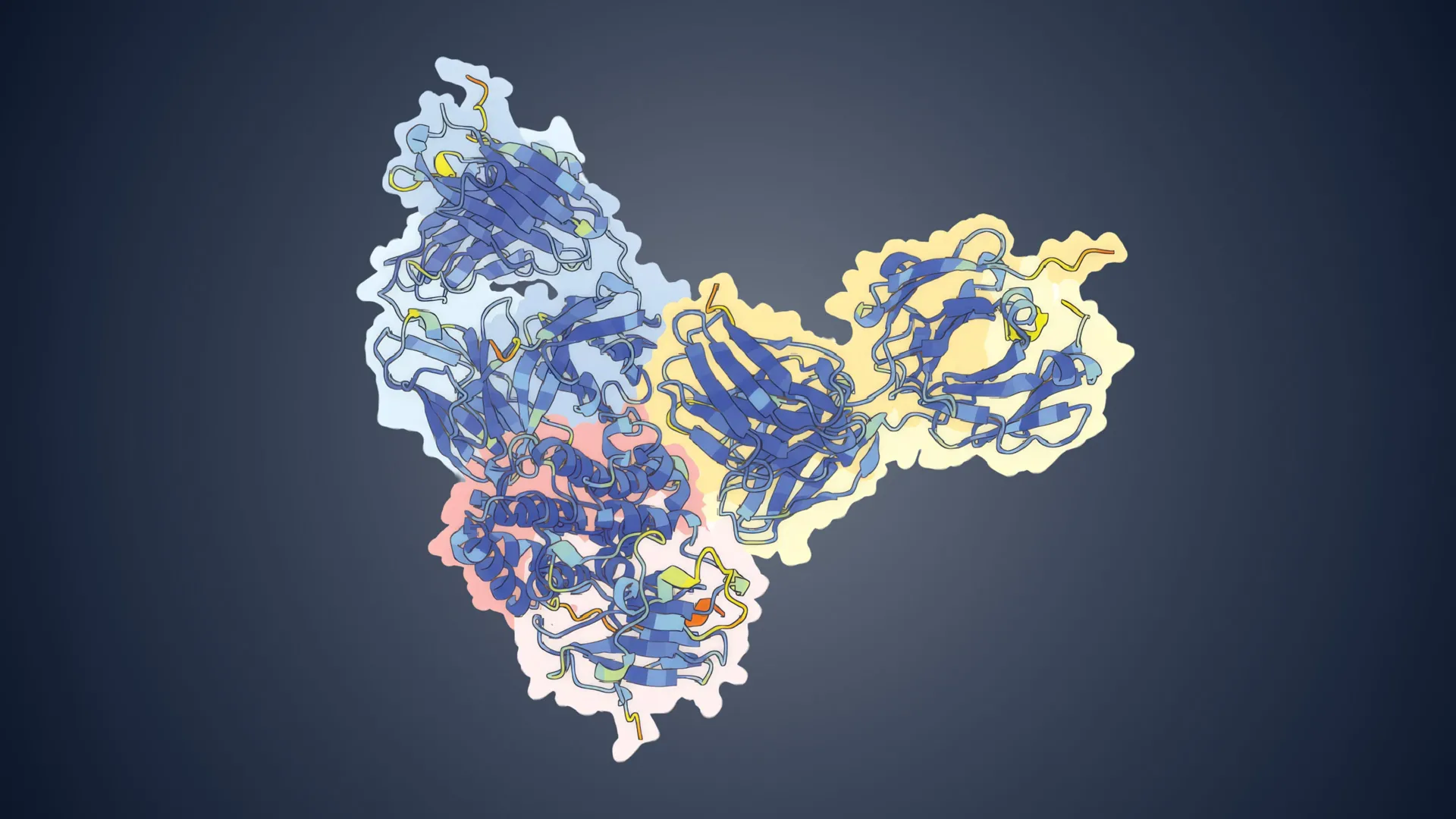
In a landmark achievement for computational biology and infectious disease research, an international consortium of scientists has utilized artificial intelligence to identify a critical viral protein that could revolutionize the prevention and treatment of the mpox virus (MPXV). The study, published in the prestigious journal Science Translational Medicine, details the discovery of OPG153, a surface protein previously overlooked by the scientific community. By isolating this protein through advanced AI modeling, researchers have successfully triggered robust immune responses in laboratory models, signaling a transformative shift toward more effective, scalable, and safer vaccines. This breakthrough comes at a critical juncture as global health organizations continue to monitor the evolution of orthopoxviruses, which include both mpox and the historically devastating smallpox virus.
The research was spearheaded by a collaborative team from The University of Texas at Austin and the Fondazione Biotecnopolo di Siena in Italy. Their findings demonstrate that mice immunized with the OPG153 protein produced high levels of neutralizing antibodies, which are the primary defense mechanism the body uses to block viral entry into cells. This discovery is particularly significant because current mpox defenses rely heavily on modified smallpox vaccines, which, while effective, present significant logistical and biological challenges. The move toward a protein-based vaccine—often referred to as a subunit vaccine—could provide a more targeted and less resource-intensive alternative to the whole-virus vaccines currently in use.
The Global Context: Lessons from the 2022 Mpox Outbreak
To understand the urgency of this research, one must look back at the 2022 global mpox outbreak. Previously confined largely to Central and West Africa, the virus crossed international borders with unprecedented speed, eventually reaching more than 110 countries. By the end of the year, the World Health Organization (WHO) had reported over 150,000 confirmed cases and nearly 500 deaths. The clinical manifestation of the disease is often agonizing, characterized by fever, lymphadenopathy (swollen lymph nodes), and a distinctive rash that progresses into painful lesions.
While the general population faced risks, the 2022 outbreak highlighted specific vulnerabilities among children, pregnant women, and individuals with compromised immune systems, such as those living with HIV. For these groups, the virus can lead to secondary infections, pneumonia, and encephalitis. The primary tool for containment was the JYNNEOS vaccine, originally developed for smallpox. However, the reliance on an older vaccine platform revealed a fractured global supply chain. Because these vaccines utilize a whole, weakened virus, they are expensive to manufacture, require stringent cold-chain storage, and are difficult to produce in the massive quantities needed during a global health emergency.
The Limitations of Current Orthopoxvirus Vaccines
The current generation of vaccines against orthopoxviruses—the family of viruses that includes MPXV, variola (smallpox), and cowpox—primarily uses live-attenuated viruses. These vaccines work by introducing a weakened form of the virus to the body to "train" the immune system. While effective, they carry risks for immunocompromised individuals and are complex to stabilize for global distribution.
"Unlike a whole-virus vaccine that’s big and complicated to produce, our innovation is just a single protein that’s easy to make," explained Jason McLellan, a professor of molecular biosciences at UT Austin and co-lead author of the study. McLellan, who holds the Robert A. Welch Chair in Chemistry, is no stranger to high-stakes vaccine development; his laboratory was instrumental in designing the stabilized spike protein used in several major COVID-19 vaccines. The shift to a protein-based approach for mpox represents a move toward "Precision Vaccinology," where only the most essential components of the virus are used to elicit an immune response, reducing side effects and simplifying the manufacturing process.
Reverse Vaccinology and the AI Breakthrough
The path to OPG153 began with a strategy known as "reverse vaccinology." Traditional vaccine development often starts by looking at the virus and trying to weaken it. Reverse vaccinology turns this process upside down: it starts by looking at the survivors of an infection. Rino Rappuoli and Emanuele Andreano at the Fondazione Biotecnopolo di Siena analyzed the blood of individuals who had either recovered from mpox or had been vaccinated against smallpox. From these samples, they isolated 12 potent antibodies that were highly effective at neutralizing the virus.
However, a significant hurdle remained. While the researchers knew these antibodies worked, they did not know exactly what the antibodies were "grabbing" on the surface of the virus. The mpox virus is structurally complex, displaying approximately 35 different proteins on its outer membrane. Identifying which of these proteins is the "Achilles’ heel" of the virus through traditional laboratory methods would have been an exhaustive, multi-year endeavor.
This is where artificial intelligence entered the fray. The researchers employed AlphaFold 3, a cutting-edge AI model developed by Google DeepMind and Isomorphic Labs. AlphaFold 3 is designed to predict the structures and interactions of biological molecules with high precision. By inputting the genetic sequences of the viral proteins and the structures of the patient-derived antibodies, the AI was able to simulate thousands of potential interactions.
The model identified OPG153 as the primary target with high confidence. OPG153 had previously been overlooked by researchers because it was not considered a major player in the virus’s infection cycle. Laboratory validation at UT Austin confirmed the AI’s prediction: the antibodies bound specifically and strongly to OPG153. "It would have taken years to find this target without AI," McLellan noted. "It was really exciting because no one had ever considered it before for vaccine or antibody development. It had never been shown to be a target of neutralizing antibodies."
Scientific Analysis: Why OPG153 Matters
The identification of OPG153 is more than just a technological feat; it is a significant addition to the molecular map of orthopoxviruses. Viral surface proteins, or antigens, are the "keys" that viruses use to unlock human cells. By targeting OPG153, the new vaccine approach seeks to "jam the lock."
In the study’s experimental phase, the team synthesized the OPG153 protein and administered it to mice. The results were definitive: the mice developed a high titer of neutralizing antibodies that successfully prevented the virus from infecting cells in subsequent challenges. This suggests that OPG153 is a highly "immunogenic" protein, meaning it is very effective at alerting the immune system to the presence of a threat.
Furthermore, the discovery has profound implications for smallpox preparedness. Although smallpox was declared eradicated in 1980, it remains a "Category A" bioterrorism threat due to its high mortality rate (approximately 30%) and ease of transmission. Because MPXV and the smallpox virus (variola) are closely related, they share many structural similarities. The researchers believe that a vaccine targeting OPG153 or its orthologs in the smallpox virus could provide a safer, more modern defense against a potential re-emergence of smallpox.
Chronology of the Discovery and Intellectual Property
The timeline of this discovery reflects the rapid pace of modern biotechnology when combined with international cooperation:
- May 2022: The WHO declares a global mpox outbreak as cases surge outside of endemic regions.
- Late 2022 – Early 2023: Researchers in Italy begin collecting and screening B-cells from recovered patients to identify neutralizing antibodies.
- 2023: The collaboration with UT Austin begins, focusing on structural biology and antigen design.
- Late 2023: AlphaFold 3 is utilized to screen the MPXV proteome, pinpointing OPG153 as the likely target for the most potent antibodies.
- Early 2024: Laboratory trials in mouse models confirm the efficacy of OPG153 as a vaccine candidate.
- Late 2024: Results are published in Science Translational Medicine, and patent applications are filed.
Currently, The University of Texas at Austin has filed a patent application for the use of OPG153 and its various derivatives as vaccine antigens. Simultaneously, the Fondazione Biotecnopolo di Siena has filed for patents regarding the specific antibodies that target the protein. These legal steps are essential for attracting the pharmaceutical partnerships required to move the research into human clinical trials.
Future Implications and the Path to Human Trials
The long-term goal of the research team—which included UT Austin contributors Emily Rundlet, Ling Zhou, and Connor Mullins—is to transition from animal models to human clinical trials. The next phase of research involves refining the antigen to ensure it is stable and can be manufactured at a low cost. This is a critical step for ensuring that the final product can be distributed in low-resource settings where mpox remains endemic.
The implications of this study extend beyond mpox. It serves as a proof-of-concept for how AI can be integrated into the pandemic preparedness toolkit. By significantly shortening the time between the emergence of a pathogen and the identification of a vaccine target, scientists can respond to "Disease X"—the term used by health officials for a future, unknown pathogen—with unprecedented speed.
Moreover, the shift toward subunit (protein-based) vaccines could democratize vaccine production. Unlike live-virus vaccines that require high-containment biosafety labs (BSL-3 or BSL-4) for production, protein antigens can often be produced in standard facilities using yeast or cell cultures. This could allow more countries to produce their own vaccine supplies, reducing the "vaccine nationalism" seen during previous global health crises.
As the international community continues to grapple with the tail-end of the mpox outbreak and the persistent threat of viral evolution, the discovery of OPG153 offers a beacon of scientific optimism. Through the synergy of human expertise and machine intelligence, the researchers have turned a devastating global health event into a catalyst for the next generation of life-saving medicine. The success of this study underscores a new era in medicine where the most complex puzzles of biology are solved not just in the lab, but through the power of the algorithm.
