
 By Suherman Candra Maholtra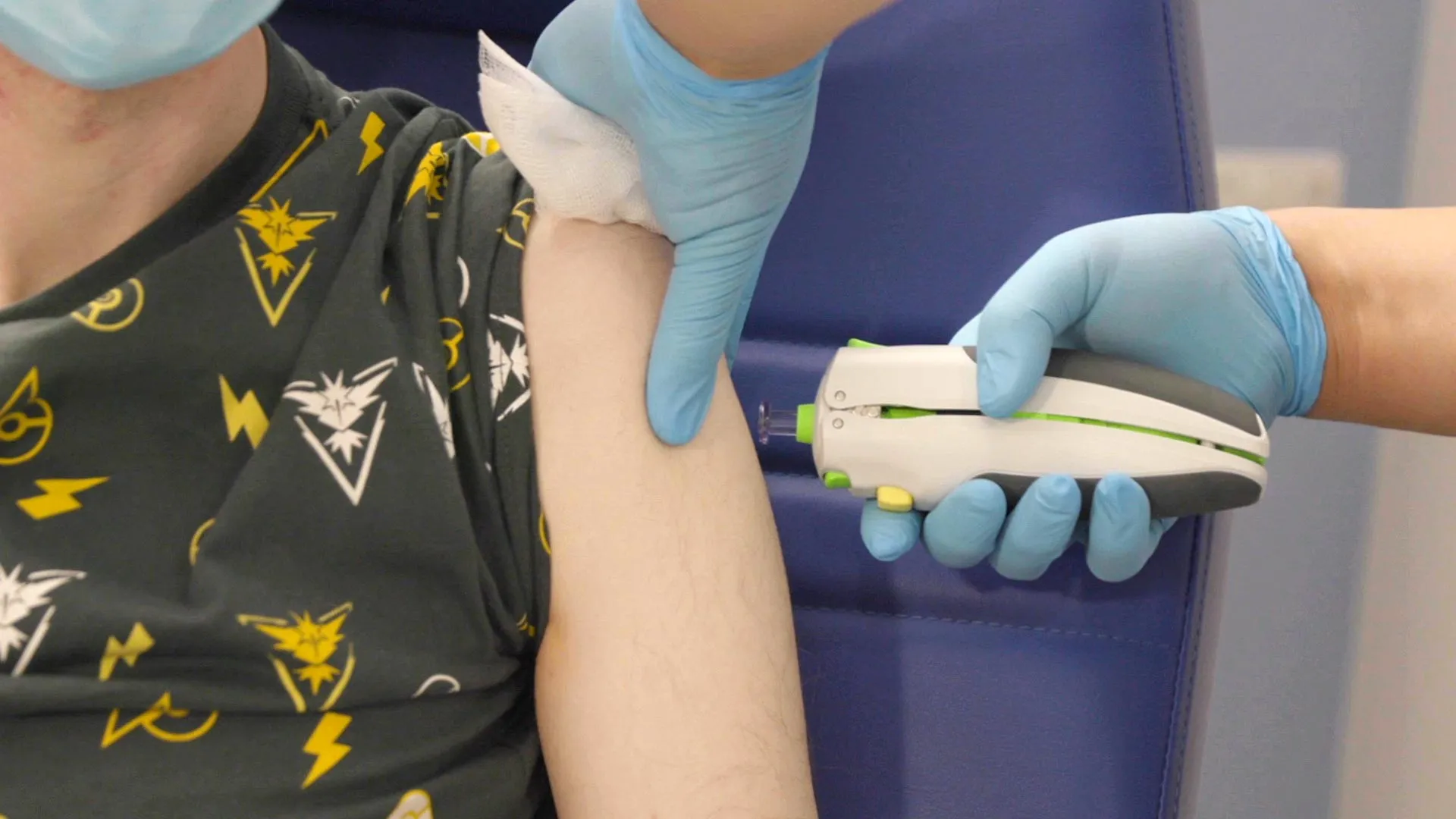
A groundbreaking universal coronavirus vaccine, developed using advanced artificial intelligence and machine learning, has successfully passed its first human clinical trial, representing a transformative shift in how the global scientific community approaches pandemic prevention. The trial results, published in the Journal of Infection, confirm that the experimental vaccine is safe, well-tolerated, and capable of inducing a broad immune response against multiple strains of the Sarbecovirus family, including the virus responsible for COVID-19 and several high-risk bat-borne viruses.
The vaccine was developed through a collaborative effort between researchers at the University of Cambridge and DIOSynVax (DVX) Ltd, a university spinout company. Unlike traditional vaccines that react to specific viral mutations after they have already emerged in the human population, this new "future-proof" technology aims to provide proactive protection against known and unknown variants alike. By targeting conserved genetic features across an entire family of viruses, the research team hopes to end the "reactive" cycle of vaccine development that has characterized the global response to the SARS-CoV-2 pandemic.
The Evolution of Vaccine Design: The AI Super-Antigen
At the heart of this scientific milestone is the first-ever human application of a vaccine whose active ingredient was designed entirely through computer simulations. Traditional vaccine development typically involves using a weakened or inactivated virus, or a specific piece of a virus—such as the spike protein of a known variant—to train the immune system. However, this method often leaves the immune system vulnerable when the virus undergoes significant mutations, as seen with the rapid succession of Alpha, Delta, and Omicron variants of SARS-CoV-2.
To overcome this limitation, the Cambridge-led team utilized artificial intelligence and machine learning to analyze the genetic structures of hundreds of different coronaviruses found in the Sarbeco family. This family includes SARS-CoV-2, the original SARS virus from 2003, and numerous related coronaviruses currently circulating in bat populations that have the potential for zoonotic spillover—the jump from animals to humans.
The AI system identified "highly conserved" regions—parts of the virus that rarely change because they are essential for the virus’s survival and replication. By synthesizing these common features into a single "super-antigen," the researchers created a blueprint for an immune response that recognizes the fundamental "skeleton" of the virus family rather than just its external, rapidly changing "decorations."
Phase 1 Clinical Trial Results and Safety Data
The Phase 1 clinical trial was designed primarily to assess the safety and tolerability of the vaccine in humans. The study involved 39 healthy adult volunteers between the ages of 18 and 50. Conducted at the National Institute for Health and Care Research (NIHR) Clinical Research Facilities in Southampton and Cambridge, the trial was sponsored by the University Hospital Southampton NHS Foundation Trust (UHSFT).
The findings were overwhelmingly positive. No significant adverse side effects were reported among the participants, and the vaccine demonstrated a strong safety profile. Crucially, the trial also provided preliminary evidence of the vaccine’s efficacy in stimulating the desired immune response. Blood samples from the volunteers showed that the vaccine successfully triggered the production of antibodies and T-cells capable of neutralizing not only SARS-CoV-2 and the original SARS virus but also several related bat-derived coronaviruses that have not yet made the jump to humans.
This "cross-reactive" immunity is the "holy grail" of vaccine research. It suggests that if a new coronavirus were to emerge from a wildlife reservoir tomorrow, individuals vaccinated with this universal candidate might already possess a baseline of protection, potentially preventing a local outbreak from escalating into a global pandemic.
Needle-Free Delivery: A Paradigm Shift in Administration
Beyond the AI-driven design of the antigen, the trial also tested an innovative delivery method. The vaccine was administered as a DNA-based vaccine using a specialized micro-fluid jet system. This technology uses a high-pressure stream of fluid to deliver the vaccine through the skin in less than a tenth of a second, completely bypassing the need for traditional needles.
The implications of needle-free delivery are significant for global public health. Beyond catering to individuals with needle phobia, this system offers logistical advantages. Needle-free devices can simplify large-scale vaccination campaigns, reduce the risk of needle-stick injuries to healthcare workers, and eliminate the medical waste associated with millions of disposable syringes. Furthermore, DNA vaccines are often more stable at higher temperatures than mRNA vaccines, which require ultra-cold storage chains—a major barrier to vaccine equity in developing nations.
Addressing the "Red Queen" Problem in Virology
For years, virologists have struggled with what is colloquially known as the "Red Queen" problem—a reference to Lewis Carroll’s Through the Looking-Glass, where one must run as fast as possible just to stay in the same place. In the context of COVID-19, this has manifested as a constant race to update boosters as the virus evolves.
Professor Jonathan Heeney, who leads the Lab of Viral Zoonotics at the University of Cambridge and is the CEO of DIOSynVax, emphasized that this trial marks the end of that reactive era. "We’ve converted vaccine development from being reactive to being future-proof," Heeney stated. "Our vaccines will continue to provide protection against viruses even as they mutate into new strains. We can escape the constant cycle of chasing the virus variants circulating in humans and updating the vaccines to try to catch up, like a dog chasing its tail."
By focusing on the Sarbecovirus family as a whole, the research team is essentially building a "firebreak" against future outbreaks. This approach is particularly vital given the increasing frequency of zoonotic events driven by climate change, habitat loss, and global travel.
A Chronology of Innovation and Support
The success of this trial is the culmination of years of interdisciplinary research. DIOSynVax was founded in 2017 as a University of Cambridge spinout, supported by Cambridge Enterprise. Long before the COVID-19 pandemic began, the team was already working on the concept of "Digitally Immune Optimised Synthetic Vaccines."
- 2017: DIOSynVax is established to develop platform technologies for universal vaccines.
- 2020: As the COVID-19 pandemic spreads, the team accelerates the application of their AI platform to the Sarbecovirus group.
- 2021-2022: Pre-clinical animal studies demonstrate that the AI-designed antigen generates broad-spectrum immunity.
- 2023: Phase 1 human trials commence in Southampton and Cambridge, funded primarily by Innovate UK.
- 2024: Results are published, confirming safety and cross-reactivity in humans.
The project has received widespread praise from the UK’s scientific infrastructure. Professor Marian Knight, Scientific Director for NIHR Infrastructure, noted that the milestone was made possible through the unique partnership between the life sciences sector and world-class clinical research facilities. "This pivotal leap forward in our ability to deliver broad, lasting viral protection was only made possible through the vital expertise and environment needed to safely fast-track this innovation," Knight said.
Broader Implications for Global Health and the Economy
The successful validation of AI-designed antigens has implications that extend far beyond coronaviruses. The researchers believe the same methodology can be applied to other viral families that pose an existential threat to human health. Work is already underway to apply this technology to influenza viruses—potentially leading to a universal flu shot that replaces the need for annual updates—as well as the Ebola virus group and other hemorrhagic fevers.
From an economic perspective, the development of universal vaccines could be revolutionary. The COVID-19 pandemic is estimated to have cost the global economy over $12 trillion. The ability to deploy a pre-existing, "future-proofed" vaccine at the very start of an outbreak could prevent the need for lockdowns, preserve international trade, and, most importantly, save millions of lives.
Professor Saul Faust, the trial’s chief investigator from the University of Southampton, highlighted the urgency of this work. "Viruses like influenza and coronaviruses are evolving continuously. By the time reactive vaccines are rolled out, they may be poorly matched. This new class of universal vaccines protects against many variants simultaneously, even those that haven’t yet emerged."
Next Steps: Phase 2 and Beyond
While the Phase 1 results are a landmark achievement, the vaccine must undergo further rigorous testing before it is approved for general public use. The research team is currently planning a Phase 2 clinical trial. This next stage will involve a larger and more diverse group of participants to further evaluate the strength and duration of the immune response across different demographics, including older adults and those with underlying health conditions.
The transition from a successful Phase 1 trial to a viable public health tool is a complex process involving regulatory hurdles and manufacturing scaling. However, the proof-of-concept established by the Cambridge and DIOSynVax team has provided a new roadmap for the future of vaccinology.
As the world continues to navigate the tail end of the COVID-19 pandemic, the success of this AI-designed "super-antigen" offers a glimmer of hope. It suggests a future where humanity is no longer caught off guard by the natural evolution of viruses, but is instead prepared with a digital and biological shield capable of neutralizing threats before they can become global catastrophes.
