
 By admin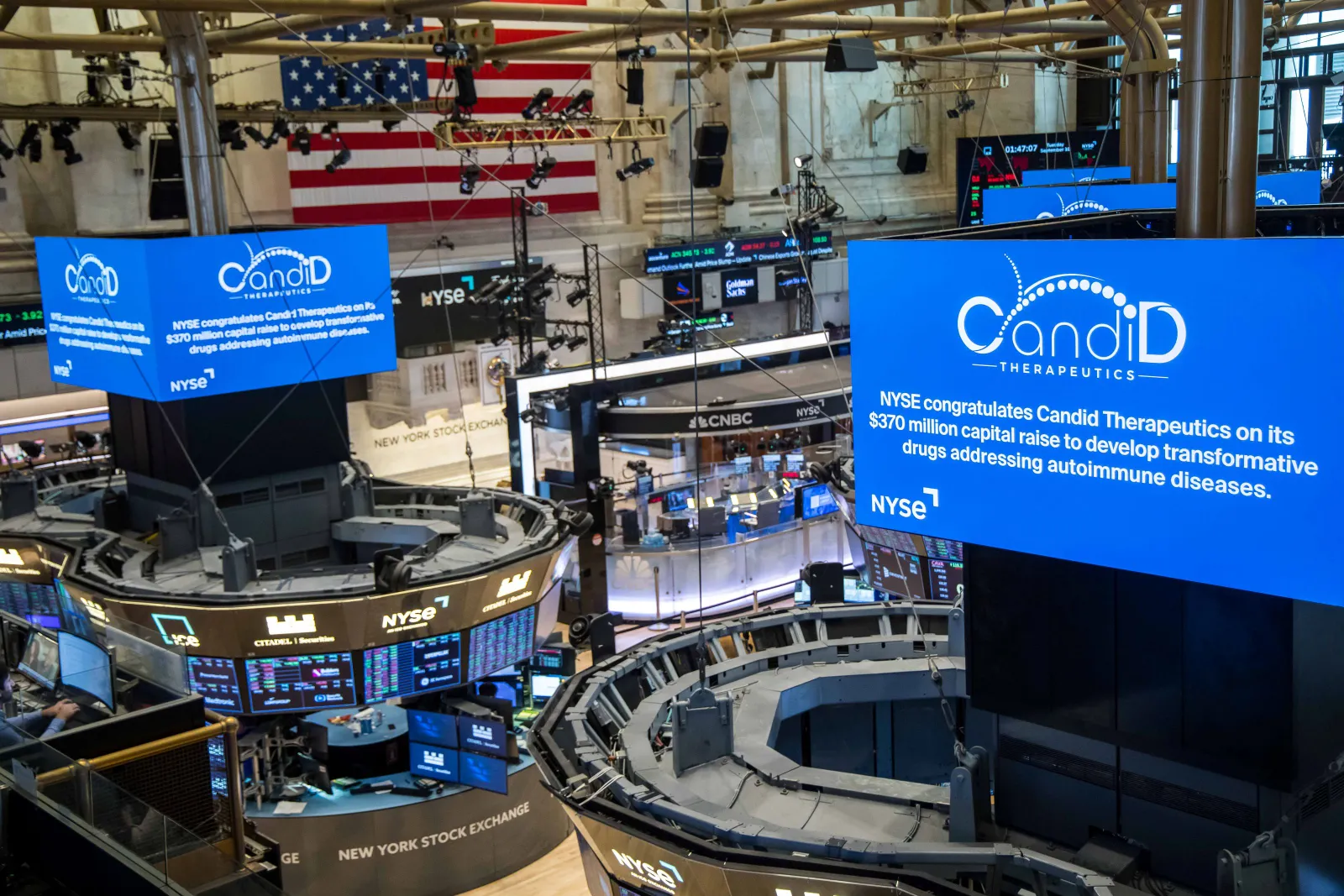
In the sophisticated boardrooms of law firms and the bustling trading floors of investment banks, where the world’s most significant biotechnology deals are brokered, a term once uttered with a hint of disdain is now circulating with renewed interest: "shells." While the more palatable, media-friendly descriptor is "vehicle," both refer to public companies whose primary value proposition lies in their existing stock exchange listing. Long dismissed by many top-tier investors as remnants of failed ventures, these entities have dramatically transformed into the linchpin of a burgeoning niche on Wall Street. Private drug developers are increasingly executing "reverse mergers" into these shells, bypassing traditional routes to tap into the myriad advantages that accompany a public listing.
The scale of this transformation is undeniable, with business booming across the sector. According to a comprehensive list compiled by life sciences advisory firm JB Strategy Partners, approximately two dozen reverse mergers involving biotech companies have been announced so far in 2026. This figure represents a staggering increase, more than doubling the 10 such deals observed throughout the entirety of 2025. This surge signifies a profound shift in strategic thinking within the cash-intensive biotechnology industry, where the development and testing of a single therapeutic molecule can easily necessitate hundreds of millions of dollars. Reverse mergers now offer an unconventional yet highly effective pathway for startups and their financial backers to capitalize on biotech’s recent resurgence, alongside leveraging a burgeoning pipeline of innovative medicines emerging from laboratories, particularly those in China. These deals provide a remarkably swift route to the vast and deep-pocketed investor pools found exclusively on major marketplaces like the Nasdaq.
This significant upswing in reverse merger activity is occurring even as initial public offerings (IPOs)—traditionally the preferred path for young drugmakers seeking Wall Street capital—are themselves experiencing a notable rebound. "The reverse merger move has just gotten so big," remarked Tim Opler, a managing director in the Global Healthcare Group at Stifel. "There’s no question they’ve taken off." With billions of dollars in potential business at stake, dealmakers are now fervently scouring the market for suitable "shells" that could serve as strong candidates for these mergers. Some market observers are already noting early signs that demand might soon begin to outstrip the available supply of high-quality vehicles. Any potential bottlenecks in this supply could send ripple effects throughout the entire biotechnology sector, influencing which companies secure funding, which critical medicines ultimately get developed, and which investors gain opportunities to participate. Furthermore, a slowdown could risk tarnishing the newly improved image of the reverse merger, potentially cutting short its renaissance and prompting private companies to pivot back towards traditional IPOs. "If there are any pitfalls, it’s in finding high-quality shells," cautioned Branden Berns, a partner at Gibson, Dunn & Crutcher, highlighting a critical concern for the industry.
Understanding the Mechanics of Reverse Mergers
Reverse mergers, while varied in their specific structures and intricacies, fundamentally involve a private company merging with a public one. The core objective is for the private entity to leverage the public company’s pre-existing and hard-won spot on the public markets. One well-known iteration involves Special Purpose Acquisition Companies (SPACs), which are "shells" in perhaps their purest form. These entities are essentially blank-check companies, established with the sole purpose of raising capital through an IPO to acquire an existing private company. They often function like male angler fish: their primary purpose is to find a suitable "mate" – an attractive private company – and then, through a merger, effectively cease to exist as a standalone SPAC, with the private company taking its place as the publicly traded entity. However, SPACs have historically had a mixed track record, and they are not the most common form of a "shell" in the current biotech context.
More frequently, the perils and inherent uncertainties of drug development lead once high-flying public biotechs to encounter significant setbacks or outright collapse. From the remnants of such companies, their public listing – a valuable ticker symbol and established market presence – becomes a stepping stone, or "shell," for a private company seeking to go public without the arduous IPO process.
The Historical Stigma and its Dissipation
Historically, investors largely harbored a negative view of reverse mergers. These deals were frequently associated with private companies that either lacked truly promising assets or were simply unable to successfully complete an IPO, whether due to market conditions or an inability to achieve a valuation acceptable to their insiders. Reverse merging was often branded as a pitiable last resort, a transaction between two struggling entities, or "washouts." "The knee-jerk reaction was to trade off," noted Daniel Lepanto, a senior managing director of healthcare mergers and acquisitions at Leerink Partners, describing the immediate negative market response to such announcements in the past.
However, this deeply ingrained stigma has largely dissipated over the past few years, a transformation significantly catalyzed by the Philadelphia-based investment firm Fairmount Funds. Fairmount essentially undertook a strategic "polish" of reverse mergers, imbuing them with the legitimacy and luster traditionally associated with an IPO. The firm’s innovative model involved first identifying a "fallen angel" – a public biotech company that had been severely impacted by clinical setbacks, had largely burned through its cash reserves, and possessed little remaining value beyond its coveted market listing.
Fairmount would then meticulously assemble a tightly curated, often institutional group of investors to line up substantial funding for the private biotech company slated to combine with the fallen angel. These carefully constructed syndicates marked a major departure from the reverse mergers of the past. Composed of sophisticated healthcare investors, these groups brought immediate legitimacy and substantial capital to the transactions. This demonstrated that reverse mergers no longer had to be desperate tie-ups between two struggling companies; they could, in fact, be heavily financed, strategic bets from some of the sector’s biggest and most respected players. This revamped strategy proved highly enticing to investors. Compared to the often-dilutive and competitive IPO process, where numerous parties commonly vie for smaller scraps of equity, a Fairmount-led reverse merger offered a narrow roster of institutional firms the invaluable opportunity to negotiate for more meaningful and substantial stakes in an emerging company. "There were reverse mergers before that were sponsored by well-known funds," Opler said, "but they didn’t become the dominant thing. Then all of a sudden, Fairmount made them the dominant thing."
Pioneering Deals and Market Validation
Fairmount Funds first demonstrated the efficacy of this new model in mid-2023 by orchestrating a landmark deal between Spyre Therapeutics and Aeglea Biotherapeutics. This transaction was accompanied by a robust $210 million private placement, drawing capital from an impressive catalog of big-name healthcare investors, including Fidelity Management & Research, Venrock, Perceptive Advisors, and Citadel’s Surveyor Capital. Since this foundational success, Fairmount has been instrumental in shepherding approximately half a dozen or more biotechs to the Nasdaq through similar reverse mergers, collectively facilitating around $2 billion in private financing alongside these transactions.
One of the most recent and striking examples of this trend is Avere Therapeutics, an inflammation-focused startup. In July 2026, Avere disclosed its plans to merge with NextCure. Avere’s management team boasted an established and highly successful resume, having previously steered the liver disease drugmaker Akero Therapeutics from its early stages, through a $92 million IPO, and ultimately to a substantial $4.7 billion sale to Novo Nordisk. Concurrent with the reverse merger announcement, Avere revealed it had raised an impressive $320 million from a laundry list of institutional investors. Less than a month later, it secured an additional $500 million through another private stock offering, underscoring the immense investor confidence. Ryan Murr, a partner and co-chair of Gibson Dunn’s Life Sciences Practice Group, noted that had all that capital gone down a different path, it could have easily made for the largest biotech IPO ever. Its allocation towards a reverse merger instead was "kind of breathtaking," illustrating the sheer scale and strategic importance of these deals.
The success of this model has encouraged more investors to embrace reverse mergers, fundamentally altering their perception. Just weeks ago, Ambros Therapeutics, a pain drug developer co-founded by entrepreneur and former presidential candidate Vivek Ramaswamy, announced its own reverse merger, coupled with $150 million in funding via a Private Investment in Public Equity (PIPE).
Another compelling outcome was showcased earlier in 2026 when Candid Therapeutics, led by industry veteran Ken Song, announced its intention to merge with Rallybio. Candid had built its company around autoimmune disease drugs in-licensed from Chinese biotechs and had aligned $506 million from a parallel financing round. However, before the merger could be completed, Candid accepted an astounding $2 billion buyout offer from Belgium-based UCB. Carlos Ramirez, a partner at the law firm Cooley, noted that how that story played out "opened up everybody’s eyes as to what was possible with this type of transaction." Connor Bernstein, a managing principal at JB Strategy Partners, succinctly summarized the shift: "It’s readily apparent the perception is night and day different."
Performance and the Shifting Narrative
Evidence suggests that the narrative surrounding reverse mergers began to brighten well before most investors fully recognized the trend. For instance, in the winter of 2022, a period when the biotech IPO market was largely frozen, Disc Medicine, a specialist in blood disorders, successfully merged with the struggling Gemini Therapeutics. Since then, Disc shares have quadrupled, soaring from almost $20 to nearly $80 as of early September 2026, a remarkable testament to the value created through this mechanism.
A comprehensive report from Stifel further corroborated this trend, finding that from 2022 through mid-2024, biotech reverse mergers substantially outperformed their IPO counterparts. In 2023 alone, the share prices of companies that underwent reverse mergers were up by an average of 150%, a stark contrast to the mere 7% average increase for those that opted for the traditional IPO route. "The idea that reverse mergers aren’t good deals has not been supported for quite some time," Ramirez stated. "Yet, people kept saying it, so it stayed true until now." He added, "It’s not that the data shifted; it’s that the anecdote shifted," highlighting the power of perception in market dynamics. This fundamental reckoning explains why, even with the IPO window as open as it has been in years, reverse merger activity remains persistently high. These deals "are no longer simply filling a gap when the IPO market is closed," according to a report released recently by investment bank Raymond James.
The Second Generation of Reverse Mergers
Cooley partner Rama Padmanabhan refers to this current phenomenon as the "second generation of reverse mergers." This new era is defined by a "super robust" PIPE market, characterized by credible institutional investors who now value these distressed public biotechs for far more than just the residual cash on their balance sheets. This represents a dramatically different landscape compared to even a few years ago, when firms like Tang Capital and Xoma Royalty built businesses around acquiring cash-rich "zombie biotechs."
Historically, Tang and Xoma capitalized on valuation gaps, snapping up drug developers whose cash and remaining assets were collectively worth more than the market was giving them credit for. They would then strategically return much of that value to shareholders, while attempting to extract additional value from any leftover assets, such as drug royalty rights. This practice, known in finance circles as "liquidation as a service," became an appealing option for investors in these floundering companies, desperate to claw back their losses. With Xoma since acquired and the pace of "zombie" deals slowing to a crawl, this newer generation of reverse mergers is now empowering drug companies to rapidly access public markets through transactions that, in many instances, are quickly handing their beneficiaries billion-dollar-plus valuations. "It turns out we really haven’t heard horror stories," Padmanabhan observed. "People are not scared about the reverse merger world anymore."
Structural Advantages and Investor Appeal
With historical fears largely in the rearview mirror, investors are now actively reveling in the distinct structural advantages that reverse mergers hold over traditional IPOs. A significant benefit is certainty. The syndicates of investors involved in these deals operate with a clear understanding that they can secure their desired stakes in the newly formed public company. Moreover, because so many critical terms—including valuation, financing, and ownership structures—are meticulously hammered out upfront, these deals are far less susceptible to the unpredictable mood swings and volatility of the broader biotech market.
Another compelling advantage is speed. Reverse mergers typically close within a few months, primarily because they bypass much of the protracted IPO process, including the extensive roadshow and complex bookbuilding phases that can often stretch an offering into a yearlong ordeal. In rarer cases, companies can even execute a "simultaneous sign and close," further shaving the timeline down by one to two months. Cooley, for instance, has advised on 11 such expedited deals this year alone. "The perpetual desire to move quickly where possible, that’s what’s driving this whole phenomenon," stated Murr of Gibson Dunn. "It allows you to strike while the iron is hot."
The newfound and widespread interest in reverse mergers has led to a flood of inquiries for financial and legal advisors. Murr noted a "real acceleration" of funds hoping to replicate the successful Fairmount recipe. According to Ramirez, boards of private biotechs are now proactively asking for assistance in preparing for all three primary "go-public" avenues simultaneously—an IPO, a reverse merger, and a SPAC—to ensure their options remain open and flexible. "The IPO, I think, will always be the gold standard for going public," he conceded, "but reverse mergers are definitely being discussed, and not as the plan B or C."
The Supply Challenge and Innovative Solutions
The potential rate-limiting factor in the continued expansion of this trend may soon be the supply of high-quality "shells." Experts agree that the most desirable shells are those unencumbered by complex issues such as drawn-out patent litigation, thorny licensing agreements, or substantial liabilities. However, much like finding pristine shells on a beach, the cleanest and most attractive ones are naturally the first to be snapped up. The extensive work required to bring other, less ideal shells into a merger-ready state can be daunting. Lepanto estimates that there are hundreds of potential vehicles "nobody’s touching" due to significant balance sheet and capital structure problems. "If you’re a biotech investor today, your appetite for taking unnecessary risk is very, very low," he explained. "To walk into one of these public companies and discover a litany of liabilities, people just say, ‘Life is too short. There’s no reason to do it. I can just go public versus dealing with all this complexity.’"
Despite these challenges, there are compelling reasons to believe that supply constraints might naturally resolve themselves. The inherently risky nature of drug development consistently produces a steady stream of down-on-their-luck companies at any given time, creating a continuous flow of potential shells. Furthermore, some specialized firms are actively capitalizing on the current market dynamics by advertising their expertise in either tracking down "move-in-ready" shells or skillfully refurbishing those on the cusp of being merger-friendly. "In general, I don’t think the supply of shells is a big issue," Opler maintained, expressing optimism.
Nevertheless, the inventory of suitable shells could be stretched even thinner due to a massive wave of experimental drugs originating from China’s burgeoning biotech ecosystem. The "natural place" for these assets to land, according to Murr, is within a vehicle that can swiftly go public in the U.S. This trend is already well underway. Prior to its eventual acquisition by UCB, Candid Therapeutics successfully amassed a pipeline of drugs through strategic licensing deals with various Chinese biotechs. Similarly, Avere Therapeutics secured an immune system-regulating therapy from Hansoh Pharmaceutical, a China-based firm that also played a role in taking Avere public. Fellow immunology specialist Caldera Therapeutics and gene editing startup Serapha Bio were also formed around China-originated assets, with both companies announcing reverse mergers this past summer. "Many licensors in China would rather have some equity slice in the entity that’s taking the license," Murr explained, highlighting a key driver of this cross-border activity.
Such growing demand is increasingly forcing dealmakers to become more creative in their approaches. For instance, a "shell" can be effectively created through a more obscure mechanism where, instead of undertaking an IPO, a company effectively becomes public by filing a "Form 10" document with the Securities and Exchange Commission (SEC). This filing, while not raising money on its own or immediately providing a stock listing, establishes an easy-to-slot-into public structure by officially registering a class of securities with the SEC. Intra-Cellular Therapies, a brain drugmaker that was eventually acquired by Johnson & Johnson for almost $15 billion, originally went public by reverse merging with a Form 10 company. Normally, such a deal would trigger "seasoning" requirements, mandating that a company must trade on minor exchanges for a year before applying to join the Nasdaq. However, a Form 10 company can leverage a sufficiently large underwritten offering as a loophole, effectively circumventing this waiting period and fast-tracking its way to the premier exchange.
Companies and their advisors have also begun meticulously combing lower-tier, "over-the-counter" (OTC) public markets, hoping to unearth clean and suitable shells. Obsidian Therapeutics successfully executed this strategy with oncology-focused Galera Therapeutics, which encountered significant difficulties after the Food and Drug Administration rejected its flagship medicine in the summer of 2023. Galera subsequently lost its Nasdaq listing and ended up on an OTC marketplace, where it languished for two years until Obsidian Therapeutics agreed to combine. Caldera Therapeutics’ merger followed a remarkably similar blueprint. "Like anything on Wall Street," Lepanto concluded, "when you have a lack of supply, people come along to create more." This ingenuity and adaptability underscore the dynamic nature of the biotech funding landscape, where reverse mergers have unequivocally transitioned from a stigmatized last resort to a sophisticated and increasingly favored route for ambitious drug developers seeking public market access.
