
 By Nana O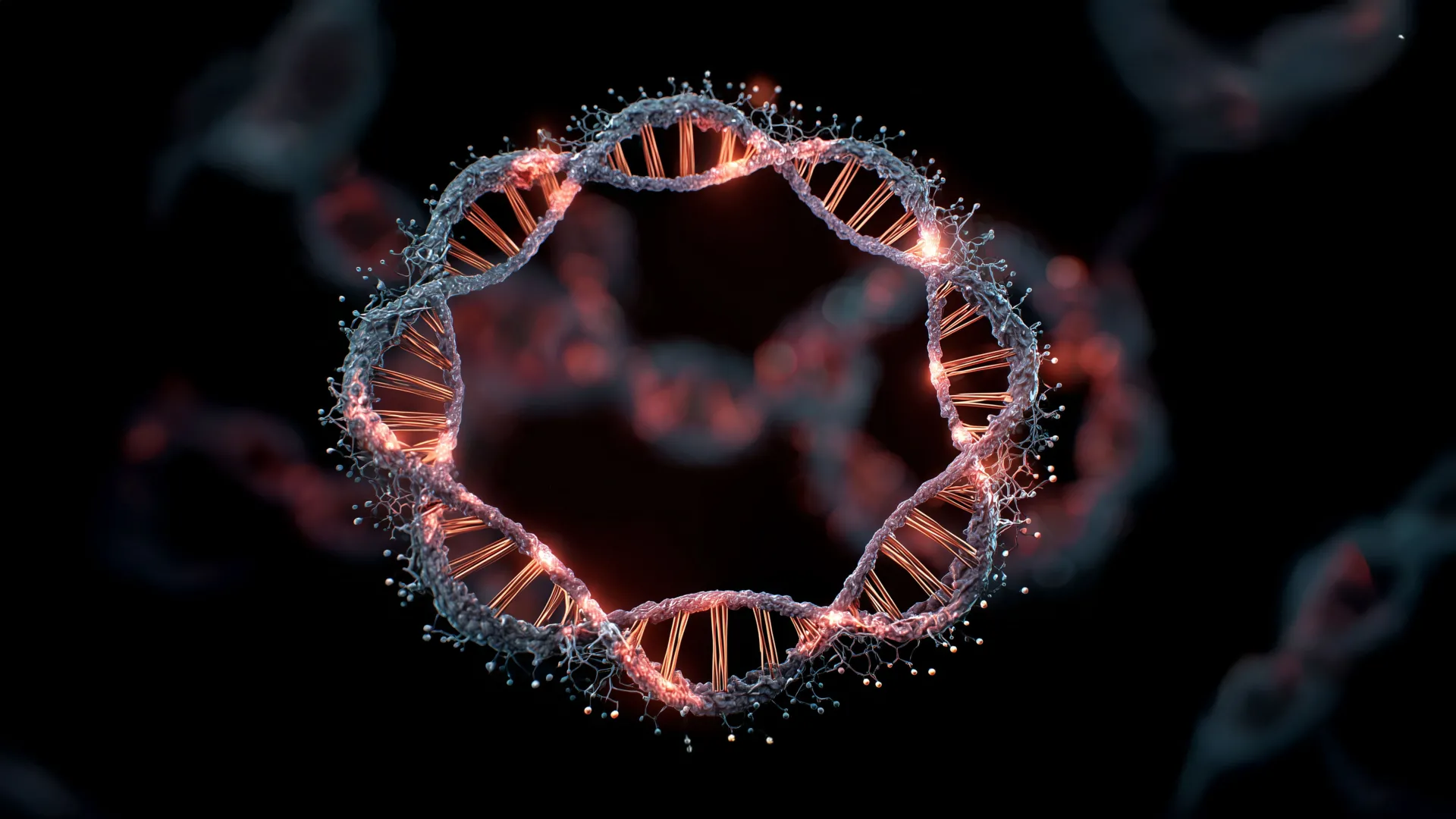
An international team of scientists has unveiled a groundbreaking discovery concerning the origins and progression of glioblastoma, the most prevalent and aggressive form of adult brain cancer. Their research, published on September 8 in the esteemed journal Cancer Discovery, elucidates how extrachromosomal DNA (ecDNA)—rogue rings of DNA found outside of the cell’s main chromosomes—play a pivotal role in driving the growth of a significant proportion of these devastating tumors. This revelation holds immense promise for developing novel strategies for earlier diagnosis, more accurate disease monitoring, and more effective treatment approaches for glioblastoma patients.
Unmasking the Early Architects of Aggressive Brain Cancer
The study’s most striking finding is the indication that ecDNA rings, particularly those harboring cancer-driving genes, are not merely late-stage contributors but often emerge in the very nascent stages of glioblastoma development. In some instances, these genetic anomalies have been observed even before a fully formed tumor is detectable. This early infiltration by ecDNA may be the critical factor predisposing glioblastomas to their characteristic rapid growth, remarkable adaptability, and formidable resistance to conventional therapies.
This seminal research was spearheaded by a collaborative effort involving Dr. Benjamin Werner, a group leader at the Barts Cancer Institute, Queen Mary University of London, and Professor Paul Mischel, a distinguished figure at Stanford University. Both are integral members of Cancer Grand Challenges’ international consortium, team eDyNAmiC. Professor Charlie Swanton, based at The Francis Crick Institute, also played a crucial leadership role in this ambitious project.
Glioblastoma: A Persistent and Devastating Challenge
Glioblastoma remains one of the most formidable adversaries in oncology. Despite decades of research and numerous therapeutic advancements in other cancers, the median survival for glioblastoma patients has stubbornly hovered around 14 months, indicating a critical unmet need for innovative interventions. The aggressive nature of this cancer, its infiltrative growth pattern, and its ability to evade treatment necessitate a fundamental shift in our understanding and approach.
Extrachromosomal DNA has been increasingly recognized as a significant, albeit complex and still largely mysterious, player in a wide spectrum of adult and pediatric cancers, including glioblastoma. Recognizing its profound implications, the Cancer Grand Challenges initiative—a joint venture between Cancer Research UK and the U.S. National Cancer Institute—identified the comprehensive understanding of ecDNA’s role as one of the most pressing challenges in cancer research today. In 2022, this imperative led to the establishment of team eDyNAmiC, a substantial $25 million international consortium. This multidisciplinary group, comprising experts in cancer biology, clinical research, evolutionary biology, computer science, and mathematics, was assembled with the singular goal of deciphering ecDNA’s intricate functions and identifying novel therapeutic targets. The current study represents a significant leap forward in achieving these ambitious objectives.
Excavating the Tumor’s Genesis: A Deep Dive into Genetic Evolution
To unravel the genesis of glioblastoma, the eDyNAmiC team and their collaborators employed a sophisticated, multi-pronged approach. They meticulously integrated genomic data with high-resolution imaging from glioblastoma patients. This was then combined with advanced computational modeling techniques designed to reconstruct the evolutionary trajectory of ecDNAs through space and time within the tumor microenvironment.
"We approached the study of these tumors with an archaeological mindset," explained Dr. Benjamin Werner, senior author of the study. "Instead of relying on a single tissue sample, we meticulously excavated multiple sites from around the tumor. This comprehensive sampling allowed us to build detailed computational models that illustrate how these genetic elements evolved. By simulating millions of potential scenarios, we could reconstruct the emergence, spread, and eventual contribution of the earliest ecDNAs to tumor aggressiveness, thereby providing an unprecedentedly clear picture of the tumor’s origins and its developmental pathway."
This in-depth analysis revealed a consistent pattern: the majority of the identified ecDNA rings contained the EGFR gene. EGFR (Epidermal Growth Factor Receptor) is a well-established oncogene, meaning it is a gene that has the potential to cause cancer. The presence of EGFR ecDNA was found to be an early event in the cancer’s evolution, often predating the formation of a clinically detectable tumor. Furthermore, these ecDNA rings were frequently observed to acquire additional genetic alterations, such as the EGFRvIII variant. This specific variant is known to confer a more aggressive phenotype and enhance resistance to various therapeutic interventions.
Identifying a Crucial Window of Opportunity for Intervention
The discovery of early EGFR ecDNA emergence and its subsequent acquisition of aggressive variants has profound implications for clinical practice. "These subtle mechanisms suggest that a critical window of opportunity exists to detect and intervene in the disease process," stated Dr. Magnus Haughey, a postdoctoral researcher in Dr. Werner’s group and one of the paper’s lead authors. "This window lies between the initial appearance of EGFR ecDNA and the development of these more aggressive, therapy-resistant variants. If scientists can develop a reliable method to detect early EGFR ecDNA—perhaps through a non-invasive blood test, for instance—it could enable clinicians to intervene at a much earlier stage, before the disease becomes significantly more challenging to manage."
The study also provided crucial confirmation that ecDNA can harbor multiple cancer-driving genes simultaneously. Each of these genes, acting in concert or independently, can uniquely influence how a tumor evolves and responds to treatment. This finding underscores the immense potential of tailoring therapeutic strategies based on the specific ecDNA profile of an individual’s tumor, paving the way for personalized oncology.
Despite these significant advancements, many questions remain regarding the precise mechanisms by which ecDNA influences glioblastoma. The researchers are now focused on investigating how different treatment modalities impact the abundance and types of ecDNA present within glioblastoma tumors. Team eDyNAmiC’s ongoing research will continue to explore the multifaceted role of ecDNAs across a broader spectrum of cancer types, with the ultimate aim of identifying further opportunities for earlier diagnosis, more precise disease tracking, and the design of more intelligent and effective therapeutic interventions.
Expert Perspectives on the Transformative Findings
The implications of this research have been met with significant enthusiasm from leading figures in the cancer research community.
Professor Charlie Swanton, Deputy Clinical Director and head of the Cancer Evolution and Genome Instability Laboratory at The Francis Crick Institute and chief clinician at Cancer Research UK, emphasized the transformative potential of this work: "These findings strongly suggest that ecDNA is not merely a passive bystander in glioblastoma but rather an early and potent driver of its development. By tracing the timing and mechanisms of ecDNA emergence, we open up the exciting possibility of detecting glioblastoma at significantly earlier stages and intervening before the cancer becomes highly aggressive and resistant to therapy. I believe this research has the potential to usher in a new era in how we diagnose, monitor, and treat this devastating cancer."
Dr. Paul Mischel, MD, the Fortinet Founders Professor and professor and vice chair of research in the pathology department at Stanford Medicine, echoed this sentiment: "These findings offer a crucial new insight into the role of ecDNA in tumor development and progression. Previous work from our collaborative team and other research groups has demonstrated that ecDNA can emerge early in tumor development, including at the stage of high-grade dysplasia, and can also arise later to drive tumor progression and treatment resistance. The current findings demonstrate that in glioblastoma, there is an early event driven by ecDNA that could potentially be more actionable. This raises the compelling possibility that glioblastoma may join the growing list of cancers for which earlier detection and intervention based on ecDNA profiling could be feasible."
Dr. David Scott, Director of Cancer Grand Challenges, highlighted the alignment of this research with the initiative’s core mission: "This study is a prime example of the bold, boundary-pushing science that Cancer Grand Challenges was established to support. By meticulously unraveling the evolutionary history of ecDNA in glioblastoma, team eDyNAmiC is not only deepening our fundamental understanding of one of the most devastating cancers but also illuminating novel pathways for earlier detection and treatment. It serves as a powerful testament to the fact that by uniting diverse disciplines and global talent, we can effectively tackle the most formidable challenges facing cancer research."
Broader Implications for Cancer Diagnosis and Treatment
The discovery that ecDNA, particularly EGFR ecDNA, can be an early driver of glioblastoma has far-reaching implications.
Early Detection: The potential for a blood-based test to detect early EGFR ecDNA could revolutionize glioblastoma diagnosis. Currently, diagnosis often occurs when symptoms are already advanced, limiting treatment options and prognosis. An early diagnostic tool could identify individuals at high risk or in the very early stages of the disease, enabling prompt intervention. This is particularly relevant given that glioblastoma is notoriously difficult to detect through standard screening methods.
Precision Medicine: The finding that ecDNA can carry multiple cancer-driving genes suggests a personalized approach to treatment. Analyzing the specific ecDNA profile of a patient’s tumor could guide oncologists in selecting the most effective combination of therapies, moving away from a one-size-fits-all approach towards tailored treatment plans. This could improve treatment efficacy and reduce the incidence of treatment resistance.
Therapeutic Targeting: Understanding the mechanisms by which ecDNA drives tumor growth and resistance opens up new avenues for drug development. Therapies specifically designed to target and eliminate ecDNA, or to inhibit the activity of genes carried on these rings, could offer novel treatment strategies for glioblastoma.
Understanding Tumor Evolution: The "archaeological" approach used in this study provides a powerful framework for understanding tumor evolution in other cancers. By mapping the emergence and spread of genetic alterations over time, researchers can gain deeper insights into the origins of cancer and identify critical junctures for intervention.
The ongoing research by team eDyNAmiC promises to further illuminate the complex world of ecDNA, with the ultimate goal of translating these fundamental discoveries into tangible benefits for patients battling glioblastoma and other cancers. This work underscores the critical importance of international collaboration and interdisciplinary research in tackling the most complex and urgent challenges in medicine.
