
 By admin
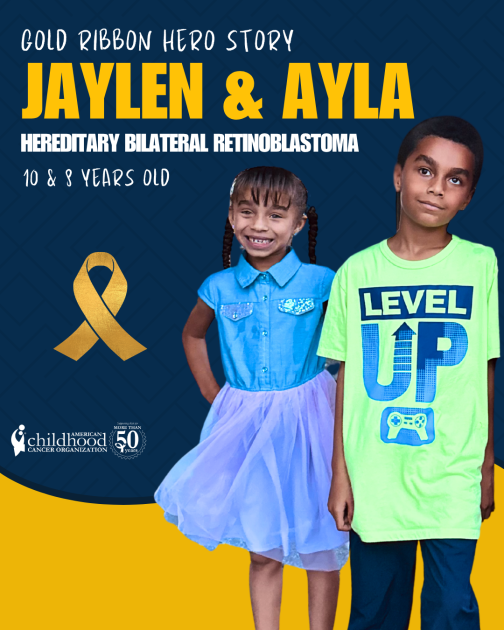
The harrowing journey of Jaylen and Ayla, two siblings diagnosed with hereditary bilateral retinoblastoma, serves as a poignant testament to the intersection of medical resilience and the critical need for accessibility in healthcare. Now aged 10 and 8, respectively, the siblings have navigated a decade of intensive oncological treatments, surgical interventions, and systemic challenges. Their story, championed by their mother, Denice, highlights not only the biological complexities of pediatric eye cancer but also the profound impact of parental advocacy when faced with institutional barriers. By sharing their experiences, the family aims to raise global awareness regarding early detection through the "glow" phenomenon and the importance of equitable medical care for the Deaf community.
Early Detection and the "Glow" Phenomenon
The family’s encounter with childhood cancer began when Jaylen was just two months old. His mother, Denice, observed a subtle but concerning physical symptom: his left eye appeared to veer outward, a condition known as strabismus. While strabismus can be a benign developmental issue, in the context of retinoblastoma, it is often one of the first clinical signs of an underlying intraocular tumor.
Parallel to this physical misalignment, early family photographs of Jaylen revealed a distinct white reflection in his pupil, a clinical sign known as leukocoria, or more commonly, "the glow." At the time, the family misinterpreted this as a common photographic artifact caused by camera flash. This is a frequent occurrence in retinoblastoma cases; because the tumor is often white or light-colored, it reflects light differently than a healthy retina, which typically produces a "red-eye" effect in flash photography. Experts in pediatric ophthalmology emphasize that leukocoria is a primary red flag for several serious eye conditions, with retinoblastoma being the most life-threatening.
Systemic Barriers to Specialized Medical Care
The transition from observation to diagnosis was fraught with unnecessary complications rooted in systemic inequity. When Jaylen was four months old, Denice sought a professional evaluation during a scheduled check-up. However, the medical facility refused to provide services, citing the lack of an American Sign Language (ASL) interpreter for Denice, who is Deaf. This refusal represented a significant breach of the Americans with Disabilities Act (ADA), which mandates that healthcare providers provide effective communication aids to patients and their guardians.
Faced with a medical system that momentarily turned its back, Denice was forced to navigate the complex healthcare landscape independently. Her persistence eventually led to a referral to a specialist who could accommodate her communication needs and provide the necessary diagnostic imaging for Jaylen. This delay, while eventually overcome, underscores a broader issue in the United States healthcare system where marginalized communities—including the Deaf and hard-of-hearing—face disproportionate hurdles in accessing life-saving care.
The Genetic Reality of Hereditary Retinoblastoma
Following Jaylen’s diagnosis of bilateral retinoblastoma—meaning the cancer was present in both eyes—the family was alerted to the hereditary nature of the disease. Retinoblastoma is caused by mutations in the RB1 gene. In approximately 40% of cases, the mutation is germline, meaning it is present in every cell of the body and can be passed from parent to child. When the condition is hereditary, it almost always manifests as bilateral disease, and tumors often develop at a much earlier age than in sporadic (non-hereditary) cases.
Because of Jaylen’s genetic profile, the family and medical team were on high alert when Ayla was born. Unlike her brother, whose diagnosis was delayed by systemic barriers, Ayla was monitored from birth. This proactive approach led to her diagnosis at just four weeks old. While the news was devastating, the early detection afforded by her brother’s history allowed for immediate intervention, illustrating the vital importance of genetic counseling and family screening in pediatric oncology.
A Comprehensive Timeline of Treatment and Intervention
The treatment protocols for Jaylen and Ayla were multifaceted, involving a combination of local and systemic therapies designed to eradicate the cancer while attempting to preserve as much vision as possible.
Chemotherapy and Localized Therapies
Both children underwent cycles of chemotherapy to shrink the tumors. In addition to systemic treatments, they received cryotherapy and laser therapy. Cryotherapy involves using extreme cold to freeze and destroy cancer cells, typically used for small tumors located in the front of the eye. Laser therapy, or photocoagulation, uses heat to destroy the blood vessels that supply the tumor, effectively starving the cancer of the nutrients it needs to grow.
Surgical Interventions
Despite these efforts, the aggressive nature of bilateral retinoblastoma necessitated surgical intervention. Jaylen underwent strabismus surgery to correct the misalignment of his eyes caused by the tumors. For Ayla, the progression of the disease required a more radical approach: enucleation. Enucleation is the surgical removal of the eye, a procedure performed when the tumor is too large to be treated by other means or when there is a high risk of the cancer spreading to the optic nerve and brain.
Adapting to Life with Prosthetics
Today, both Jaylen and Ayla live with prosthetic eyes. The transition to ocular prosthetics is both a physical and psychological journey. Modern prosthetics are custom-made by ocularists to match the patient’s remaining eye or to fulfill a specific aesthetic preference.
Ayla has embraced this aspect of her survivorship with a unique sense of agency and style. Rather than viewing her prosthetic as a limitation, she has curated a collection of custom-colored irises. This allows her to "swap" her eyes to match her mood or outfit, turning a medical necessity into a form of self-expression. Her ability to find joy and autonomy in her appearance has been a cornerstone of her recovery and a source of inspiration for other children facing similar surgeries.
The Role of Advocacy and Parental Resilience
Denice’s journey as a "manager" of her children’s health has been defined by what she describes as a need to be "completely fearless." The dual burden of managing a complex medical diagnosis while fighting for her right to accessible communication has shaped her parenting philosophy. She advocates for "living in the present moment," a sentiment born from the uncertainty that often accompanies a cancer diagnosis.
The family’s decision to share their story online has met with occasional criticism regarding their parenting choices—specifically Denice’s choice to "spoil" her children. However, Denice maintains that after the trauma of cancer, her children have earned the right to a life filled with joy and indulgence. This perspective highlights the "survivor’s mindset," where the focus shifts from the fear of the disease to the celebration of life and the milestones achieved.
Broader Implications for Pediatric Oncology and Disability Rights
The case of Jaylen and Ayla provides a clear lens through which to view several critical issues in modern medicine:
- Early Detection through Leukocoria: The "Know the Glow" campaign is a global initiative that educates parents on how to spot retinoblastoma using smartphone cameras. Jaylen’s story reinforces the need for this education, as many parents still mistake the "white glow" for a camera error.
- Genetic Screening: The stark difference between Jaylen’s four-month diagnosis and Ayla’s four-week diagnosis proves that genetic history is a powerful tool in improving outcomes. Families with a history of RB1 mutations require specialized, immediate care from the moment of birth.
- Medical Accessibility: The refusal of care for a Deaf mother highlights the ongoing need for medical facilities to prioritize ASL interpreters and other accessibility tools. Effective communication is not a luxury; it is a clinical necessity that directly impacts the speed and accuracy of a diagnosis.
- Psychosocial Support for Survivors: The transition to life after cancer, including the use of prosthetics and the management of long-term side effects, requires robust support systems. Jaylen and Ayla’s success is attributed not just to their doctors, but to a family environment that prioritizes joy and independence.
Conclusion: A Triumphant Path Forward
Jaylen and Ayla continue to thrive, proving that a childhood cancer diagnosis does not define a child’s future. Ayla’s pursuit of ASL during her post-operative recovery and Jaylen’s continued academic and social growth serve as beacons of hope for the pediatric cancer community. Their triumphs—beating cancer, adapting to prosthetics, and maintaining an "endlessly joyful" outlook—are legendary within their community.
As they move forward, the family remains dedicated to raising awareness for the American Childhood Cancer Organization (ACCO) and other entities that provide support to families in crisis. Their story is a reminder that while the fight against cancer is often a scientific and medical one, the fight for equity, visibility, and joy is equally vital in the journey toward healing. Through their smiles and their "glow," Jaylen and Ayla are lighting the way for the next generation of survivors.
