
 By admin
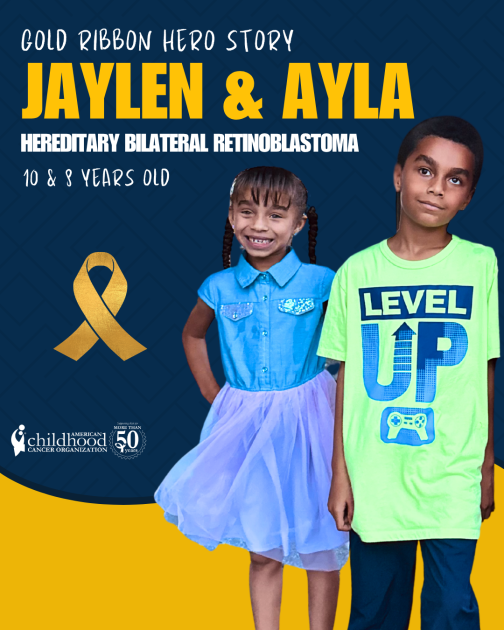
The narrative of childhood cancer is often defined by clinical milestones and survival statistics, but for the family of Jaylen and Ayla, it is also a testament to the power of parental advocacy in the face of systemic healthcare failures. Jaylen, now 10, and his sister Ayla, 8, are both survivors of hereditary bilateral retinoblastoma, a rare and aggressive form of eye cancer that affects infants and young children. Their journey from initial diagnosis to their current status as thriving advocates highlights the critical importance of early detection, the complexities of genetic predispositions, and the urgent need for accessible healthcare for parents with disabilities.
Understanding Hereditary Bilateral Retinoblastoma
Retinoblastoma is a malignancy that originates in the retina, the light-sensitive tissue at the back of the eye. While it is the most common primary intraocular cancer in children, it remains rare, occurring in approximately one out of every 15,000 to 20,000 live births. The disease typically presents in two forms: sporadic and hereditary. In Jaylen and Ayla’s case, the diagnosis was hereditary and bilateral, meaning the cancer was present in both eyes and was linked to a germline mutation in the RB1 gene.
Hereditary retinoblastoma accounts for about 40% of all cases. Children with this form of the disease are often diagnosed at a younger age than those with the sporadic form, and they face a lifelong risk of developing secondary cancers. The bilateral nature of their condition significantly complicates the treatment protocol, as clinicians must balance the necessity of eradicating the tumors with the goal of preserving as much vision and ocular structure as possible.
The Early Warning Signs: The Retinoblastoma Glow
The first indications of Jaylen’s condition appeared when he was just two months old. His mother, Denice, noticed his left eye veering outward—a condition known as strabismus, which is a common early symptom of intraocular tumors. Furthermore, early photographs of Jaylen revealed a phenomenon known as leukocoria, or the "white glow."
In healthy eyes, a camera flash produces a "red-eye" effect as light reflects off the blood vessels in the retina. However, when a tumor is present, the light reflects off the white mass of the cancer, creating a distinct white or yellowish glow in the pupil. At the time, the family mistook this for a simple photographic artifact or a reflection of ambient light. This misconception is a frequent hurdle in early diagnosis, as many parents are unaware that a "glow" in a photo can be a life-saving clinical indicator.
Navigating Systemic Barriers in the Healthcare System
The path to Jaylen’s diagnosis was fraught with obstacles that extended beyond the medical realm. When Denice took her four-month-old son to a scheduled check-up, the medical facility refused to see them. The reason cited was a lack of an American Sign Language (ASL) interpreter for Denice, who is Deaf. This refusal represented a significant breach of the Americans with Disabilities Act (ADA), which mandates that healthcare providers provide effective communication aids and services to patients and companions with disabilities.
Faced with a medical system that had effectively locked its doors, Denice was forced to navigate the complexities of pediatric oncology entirely on her own. Her persistence eventually led her to a provider capable of facilitating communication and addressing Jaylen’s symptoms. This period of delay, though navigated with maternal ferocity, underscores the health disparities faced by the Deaf community, where a lack of linguistic access can lead to delayed diagnoses and poorer health outcomes.
A Second Diagnosis: The Impact of Genetic Monitoring
Because Jaylen’s condition was identified as hereditary, the family was placed under strict surveillance following the birth of his sister, Ayla. The genetic nature of the RB1 mutation meant that Ayla had a 50% chance of inheriting the predisposition for retinoblastoma. This proactive monitoring proved essential.
At just four weeks old, clinical screenings confirmed that Ayla also had bilateral retinoblastoma. While the news was devastating, the early detection—made possible by the knowledge gained from Jaylen’s struggle—allowed for immediate intervention. The contrast between Jaylen’s four-month struggle for a diagnosis and Ayla’s four-week detection illustrates the vital role of genetic counseling and early screening for families with a history of the disease.
Clinical Interventions and the Path to Recovery
The treatment of bilateral retinoblastoma is an intensive, multi-year process. Both Jaylen and Ayla underwent a rigorous battery of therapies designed to eliminate the tumors while managing the side effects of toxic treatments on developing bodies. Their medical history includes:
- Chemotherapy: Used to shrink tumors (chemoreduction) to make them more manageable for local treatments.
- Cryotherapy: The application of extreme cold to freeze and destroy cancer cells in the retina.
- Laser Therapy (Thermotherapy): The use of infrared light to heat and kill tumor cells.
- Strabismus Surgery: Performed on Jaylen to correct the misalignment of his eyes caused by the tumors.
- Enucleation: For Ayla, the severity of the disease in one eye necessitated its surgical removal to prevent the cancer from spreading through the optic nerve to the brain.
Both children eventually transitioned to life with prosthetic eyes. For Ayla, this became an opportunity for self-expression rather than a mark of disability. She has curated a collection of custom-colored irises, allowing her to "rock her style" and approach her prosthetic as a fashion choice, a move that psychologists suggest can significantly improve the self-esteem of pediatric patients following disfiguring surgeries.
Analysis of Parental Advocacy and Digital Discourse
Denice’s experience as a "manager" of her children’s health highlights a growing trend in pediatric oncology where parents must become semi-experts in both medical terminology and legal rights. Her decision to share the family’s story online has been met with both support and, occasionally, criticism regarding her parenting choices—specifically her philosophy of "beautifully spoiling" her children.
From a sociological perspective, this "choice of joy" is a recognized coping mechanism for families dealing with chronic or life-threatening illnesses. By prioritizing presence and celebration over the rigid expectations of external observers, the family reclaims agency in a life that has been largely dictated by hospital schedules and clinical protocols. Denice’s stance—that she has "earned the right" to prioritize her children’s happiness—reflects a move toward trauma-informed parenting that values emotional resilience as much as physical health.
The Broader Impact: Awareness and Future Outlook
The survival rate for retinoblastoma in high-income countries like the United States exceeds 95%. However, the quality of life following treatment depends heavily on early intervention and the availability of supportive care. Jaylen and Ayla’s story serves as a vital case study for several broader public health initiatives:
- The "Know the Glow" Campaign: Their story reinforces the need for public awareness regarding leukocoria. Simple smartphone photos can serve as a preliminary screening tool, provided parents know what to look for.
- Linguistic Accessibility in Medicine: The family’s struggle with ASL interpretation highlights the need for stricter enforcement of ADA guidelines in clinical settings to ensure that no parent is turned away during a medical crisis.
- Prosthetic Normalization: Ayla’s independence and pride in her prosthetic eye contribute to the normalization of ocular prosthetics, reducing the stigma associated with childhood cancer and vision loss.
Today, both Jaylen and Ayla are reported to be thriving. Ayla has begun learning ASL, bridging the communication gap within her family and ensuring her own independence. Their "legendary" triumphs, as Denice describes them, are not just in beating the cancer itself, but in maintaining a sense of joy and autonomy after years of intensive medical intervention.
Conclusion and Call to Action
The journey of Jaylen and Ayla is a reminder that a cancer diagnosis is the beginning of a complex narrative that involves medical, social, and systemic challenges. Organizations like the American Childhood Cancer Organization (ACCO) continue to provide resources for families navigating these waters, emphasizing that "kids can’t fight cancer alone."
For families facing similar diagnoses, the story of the "glow" is a call to vigilance. For the medical community, it is a call to accessibility. And for the public, it is a testament to the fact that there is a vibrant, triumphant life possible on the other side of a childhood cancer diagnosis. Through continued research, better screening, and an unwavering commitment to patient rights, the goal remains to ensure that every child has the opportunity to turn a medical struggle into a story of survival and joy.
