
 By Billy Candra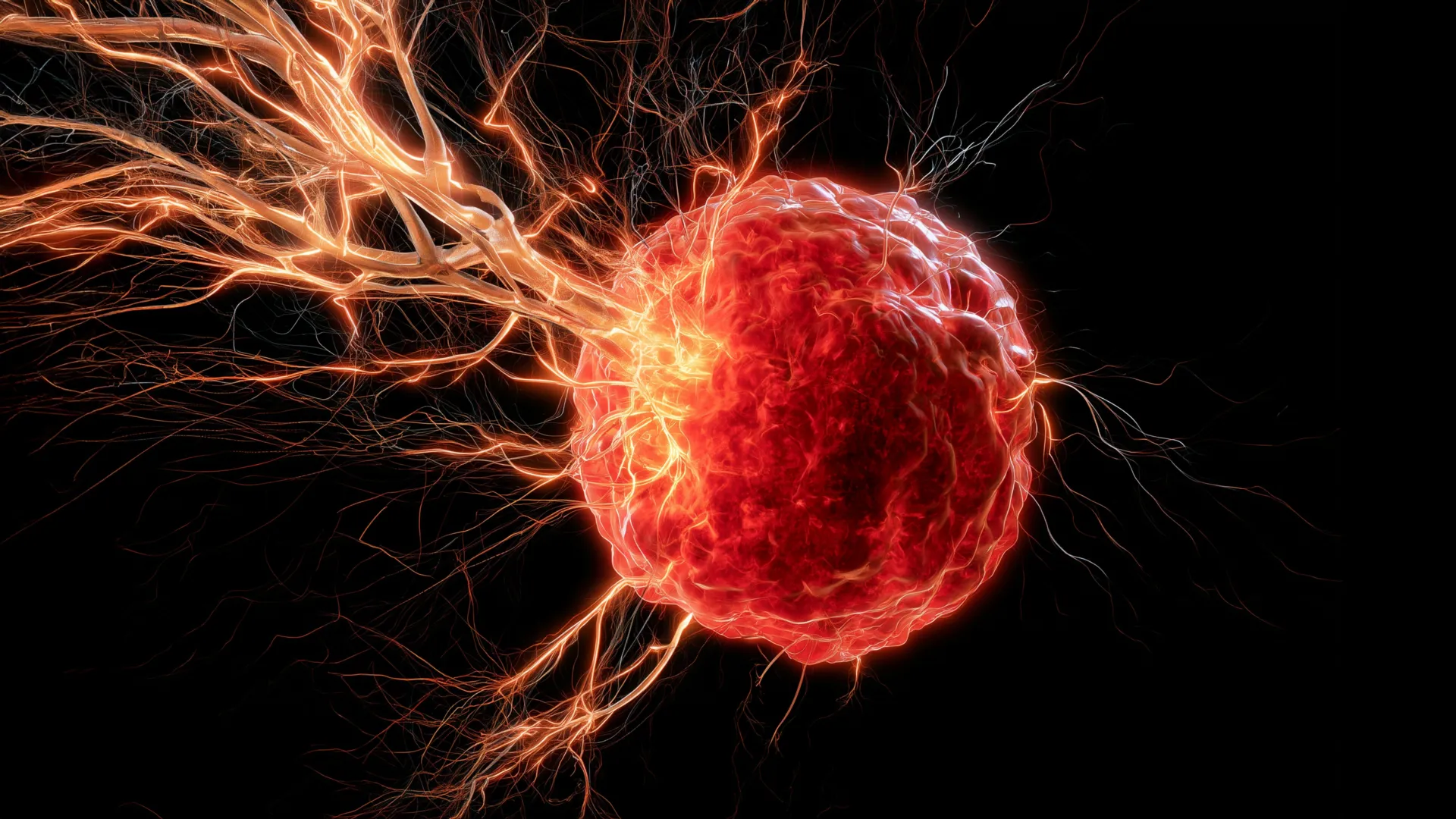
A groundbreaking study from the University of Oklahoma (OU) has illuminated a previously unclear mechanism by which an aggressive form of breast cancer, triple-negative breast cancer (TNBC), manipulates the body’s immune system to facilitate its growth. The research, published in the esteemed journal Cell Death & Differentiation, details how specific immune cells, known as macrophages, are co-opted by tumor cells to draw nerve fibers into the cancerous mass, creating an environment that appears to promote tumor progression and resistance to existing treatments. This discovery not only sheds light on a fundamental aspect of cancer biology but also proposes a promising new therapeutic strategy that could target this nerve-tumor interaction.
For decades, oncologists and cancer researchers have observed the presence of extensive nerve networks within many solid tumors. However, the precise pathways and signals that orchestrate the infiltration of these nerves into cancerous tissue have largely remained elusive. The OU team’s findings provide a crucial explanation for this phenomenon, particularly within the context of triple-negative breast cancer, a subtype notorious for its aggressive nature, limited treatment options, and poorer prognosis compared to other breast cancer types.
Understanding Triple-Negative Breast Cancer: A Formidable Foe
Triple-negative breast cancer accounts for approximately 10-15% of all breast cancers, yet it disproportionately contributes to breast cancer mortality. The "triple-negative" designation refers to the absence of three common receptors found on breast cancer cells: estrogen receptors (ER), progesterone receptors (PR), and human epidermal growth factor receptor 2 (HER2). The lack of these receptors means that TNBC does not respond to hormone therapies or HER2-targeted drugs, which are highly effective in other breast cancer subtypes. Consequently, treatment options for TNBC are primarily limited to chemotherapy, surgery, and radiation, often yielding less favorable outcomes and a higher risk of recurrence and metastasis. The urgent need for novel therapeutic targets for TNBC underscores the significance of the OU team’s research.
The Macrophage-Nerve Connection: A Deceptive Alliance
The core of the OU discovery revolves around the surprising role of macrophages, a type of immune cell traditionally recognized for its beneficial functions in the body. Macrophages are pivotal players in the immune response, acting as phagocytes that engulf pathogens and cellular debris, and as orchestrators of tissue repair and inflammation resolution. However, the OU study reveals a sinister twist in the tumor microenvironment: cancer cells actively recruit macrophages, which, once infiltrated into the tumor, undergo a phenotypic shift, transforming from protective agents into facilitators of cancer growth.
According to Dr. Maureen Cox, Ph.D., an assistant professor in the Department of Microbiology and Immunology at the OU College of Medicine and a research member of OU Health Stephenson Cancer Center, "Macrophages are the critical source for drawing nerves into the tumor. Although macrophages typically play a positive role in the body, they are facilitating a negative function in this scenario of breast cancer."
The research pinpointed a specific molecular signal responsible for this nerve recruitment: brain-derived neurotrophic factor (BDNF). Macrophages within the tumor microenvironment were found to secrete BDNF, a protein widely recognized for its crucial role in promoting the growth, survival, and differentiation of neurons in the central and peripheral nervous systems. In a healthy context, BDNF is vital for brain development and plasticity. However, the OU team demonstrated that TNBC tumors exploit this very biological signal, effectively hijacking BDNF to lure nearby nerves to grow towards and penetrate the cancerous mass. This intricate manipulation by the cancer creates a pro-tumorigenic nerve network within the tumor itself, a process previously observed but poorly understood in terms of its initiation.
Tracing the Chronology of Discovery: From Observation to Mechanism
The understanding of nerve-tumor interactions has evolved over time. Early histological observations noted the presence of nerves in tumors, but their functional significance and the mechanisms of their infiltration remained speculative. For many years, the focus of cancer research primarily centered on the cancer cells themselves and their genetic mutations. However, a growing body of evidence in the last two decades has shifted attention to the tumor microenvironment—the complex ecosystem surrounding the tumor, comprising immune cells, blood vessels, fibroblasts, and extracellular matrix.
Within this evolving understanding, the role of nerves began to gain prominence. Researchers started to hypothesize that nerves might not just be passive bystanders but active contributors to tumor growth, angiogenesis (formation of new blood vessels), and metastasis (spread of cancer). The challenge, however, was to identify the specific signals and cellular interactions driving this process.
The OU study marks a significant step forward in this chronology by identifying macrophages as the key cellular mediator and BDNF as the critical molecular switch. The research pathway likely involved:
- Initial Observation: Confirming the presence of nerve fibers within TNBC tumors.
- Hypothesis Generation: Proposing that specific cellular interactions within the tumor microenvironment are responsible for nerve recruitment.
- Cellular Screening: Identifying which cells in the tumor microenvironment might be producing nerve-growth factors. Macrophages, known for their plasticity and presence in tumors, likely became a prime suspect.
- Molecular Identification: Pinpointing BDNF as the specific neurotrophic factor secreted by tumor-associated macrophages.
- Functional Validation (In vitro/In vivo): Testing the hypothesis in controlled laboratory settings and animal models.
Preclinical Success: Blocking BDNF Slows Tumor Growth
The most compelling aspect of the OU research is not just the elucidation of a new biological pathway, but its immediate translational potential. Dr. Cox and her colleagues moved swiftly to test a therapeutic strategy aimed at disrupting this macrophage-BDNF-nerve axis. They utilized a pharmacological agent designed to block BDNF signaling in mouse models of triple-negative breast cancer. The results were remarkably encouraging.
In mice treated with the BDNF-blocking drug, the researchers observed a significant inhibition of nerve growth into the tumors. More critically, this intervention led to a substantial reduction in overall tumor growth. This finding suggests a potential new paradigm for cancer treatment: instead of solely targeting cancer cells directly, future therapies could focus on interrupting the intricate signaling networks within the tumor microenvironment that support cancer progression.
"It looks really promising that we can use this drug, which is already on the market, to target BDNF," Dr. Cox stated, highlighting the potential for accelerated clinical translation. The fact that a drug targeting BDNF signaling is already approved for other conditions (e.g., certain neurological disorders, though specific details of the drug’s current market use were not provided in the original text, its existence implies a known safety profile) significantly reduces the time and cost typically associated with developing new pharmaceutical agents from scratch. This could mean a faster path to clinical trials for cancer patients.
The researchers also put forth a compelling hypothesis regarding the mechanism behind the reduced tumor growth: "We believe that the nerves are immunosuppressive, so if we can stop the nerves from growing in the first place, maybe we can boost the immune response to help fight the cancer." This suggests a dual benefit: inhibiting a pro-tumorigenic pathway while simultaneously enhancing the body’s natural anti-cancer defenses, potentially making existing immunotherapies more effective.
Clinical Corroboration: Evidence from Human Patients
To ascertain the clinical relevance of their findings, the OU team meticulously examined data derived from human patients diagnosed with triple-negative breast cancer. This retrospective analysis sought to determine if the biological patterns observed in their laboratory models translated to real-world patient outcomes. The findings provided compelling corroboration: patients whose tumors exhibited higher levels of both macrophages and BDNF were found to have a poorer prognosis and significantly reduced survival rates.
This correlation strengthens the argument that the macrophage-BDNF-nerve pathway is not merely an experimental artifact but a clinically significant mechanism contributing to disease aggressiveness in human TNBC. This human data validation is crucial for moving research from preclinical models to clinical application, suggesting that measuring macrophage infiltration and BDNF levels could potentially serve as prognostic biomarkers, helping identify patients at higher risk who might benefit most from targeted interventions.
Broader Implications and Future Directions
The OU research opens several exciting avenues for future investigation and therapeutic development. Dr. Cox and her team are now focused on unraveling the precise mechanisms by which nerves contribute to tumor growth. Several hypotheses are being explored:
- Angiogenesis: Nerves may stimulate the formation of new blood vessels, a process known as angiogenesis, which is vital for supplying tumors with oxygen and nutrients necessary for their rapid proliferation.
- Metastasis: There is growing evidence that cancer cells might utilize nerves as conduits or "highways" to migrate away from the primary tumor site, facilitating metastasis to distant organs.
- Immunosuppression: As Dr. Cox suggested, nerves might actively create an immunosuppressive microenvironment, dampening the activity of anti-tumor immune cells and allowing the cancer to evade detection and destruction by the immune system. This would be particularly relevant in the era of immunotherapy, where overcoming immune evasion is a key challenge.
Beyond TNBC, the researchers plan to extend their investigations to other aggressive and difficult-to-treat cancers, specifically mentioning high-grade ovarian cancer. Ovarian cancer, particularly its aggressive subtypes, also presents significant therapeutic challenges and often displays extensive neural innervation, making it a logical candidate for exploring the generalizability of the macrophage-BDNF mechanism.
The overarching goal, as articulated by Dr. Cox, is profoundly impactful: "Ultimately, we want to turn the anti-tumor immunity back on in cancer patients so their own immune systems can reject the tumors." This vision encapsulates a shift towards harnessing the body’s intrinsic defenses, not just eradicating cancer cells with external agents. By disrupting the nerve-tumor axis, the hope is to remove a critical barrier that prevents the immune system from effectively fighting the cancer. This could pave the way for novel combination therapies, where BDNF inhibitors are used alongside immunotherapies or conventional treatments to enhance their efficacy.
Funding and Collaborative Support
This pioneering research was made possible through significant support from various esteemed institutions. The National Institute of General Medical Sciences of the National Institutes of Health (NIH) provided crucial funding through award numbers P20GM103447 and P20GM103639. Additionally, Oklahoma’s Tobacco Settlement Endowment Trust (TSET), a major benefactor of the Stephenson Cancer Center and TSET Health Promotion Research Center at the University of Oklahoma, played a vital role. Further support came from the Oklahoma Shared Clinical and Translational Resources through an Institutional Development Award from the National Institute of General Medical Sciences (grant no. U54GM104938). This collaborative funding structure underscores the national and state-level recognition of the importance and potential impact of this research.
In conclusion, the University of Oklahoma’s discovery represents a significant leap forward in understanding the complex interplay between cancer cells, the immune system, and the nervous system. By identifying the macrophage-BDNF axis as a key driver of nerve infiltration in aggressive breast cancer, the research not only provides a mechanistic explanation for a long-observed phenomenon but also unveils a highly promising, immediately actionable therapeutic target. As the scientific community continues to explore the intricate nuances of the tumor microenvironment, findings like these offer renewed hope for developing more effective and personalized treatments for some of the most challenging forms of cancer.
