
 By admin
The intersection of rare pediatric oncology and systemic healthcare barriers creates a complex landscape for families navigating life-threatening diagnoses. For Jaylen, now 10, and his sister Ayla, 8, the battle against hereditary bilateral retinoblastoma began in infancy, marked not only by the physiological challenges of cancer but by a significant struggle for equitable medical treatment. Their story serves as a critical case study in the importance of early detection, the genetic complexities of retinoblastoma, and the necessity of linguistic accessibility within the American healthcare system.
Retinoblastoma is a rare form of cancer that rapidly develops from the immature cells of a retina, the light-detecting tissue of the eye. It is the most common primary intraocular tumor of childhood, typically affecting children under the age of five. According to data from the American Cancer Society, approximately 200 to 300 children are diagnosed with retinoblastoma in the United States each year. While the survival rate in developed nations exceeds 95%, the preservation of vision and the prevention of secondary malignancies remain significant clinical challenges.
In the case of Jaylen and Ayla, the condition is hereditary and bilateral, meaning it affects both eyes and is rooted in a germline mutation of the RB1 gene. Hereditary retinoblastoma accounts for approximately 40% of all cases. Children with this form of the disease are born with a mutation in one copy of the RB1 gene in every cell of their body; a second mutation in a retinal cell then triggers the formation of a tumor. Because the mutation is systemic, these patients are at a higher risk of developing multiple tumors in both eyes and face an increased lifelong risk of developing other cancers, such as osteosarcoma or pinealoblastoma.
The diagnostic journey for Jaylen began when he was just two months old. His mother, Denice, noticed a physical abnormality: his left eye appeared to veer outward, a condition known medically as strabismus. Additionally, early family photographs revealed a distinct "glow" or white reflection in the pupil, a clinical sign known as leukocoria. In healthy eyes, a camera flash typically produces a "red-eye" effect caused by the blood vessels in the retina. A white reflection, however, often indicates an intraocular mass—such as a tumor—blocking the normal reflection.
Despite these early warning signs, the family initially attributed the "glow" to camera lighting, a common occurrence in many retinoblastoma cases where the lack of public awareness leads to delayed intervention. The situation was further complicated when Jaylen reached four months of age. During a scheduled check-up, the medical facility refused to see the family because they did not have an American Sign Language (ASL) interpreter available for Denice, who is Deaf.
This refusal highlights a significant breach of the Americans with Disabilities Act (ADA), which mandates that healthcare providers provide effective communication aids, including qualified interpreters, to ensure equal access to care. The resulting delay forced Denice to navigate the medical system independently, advocating for her son’s right to care until she secured a physician capable of facilitating communication and providing a specialized ophthalmological examination.
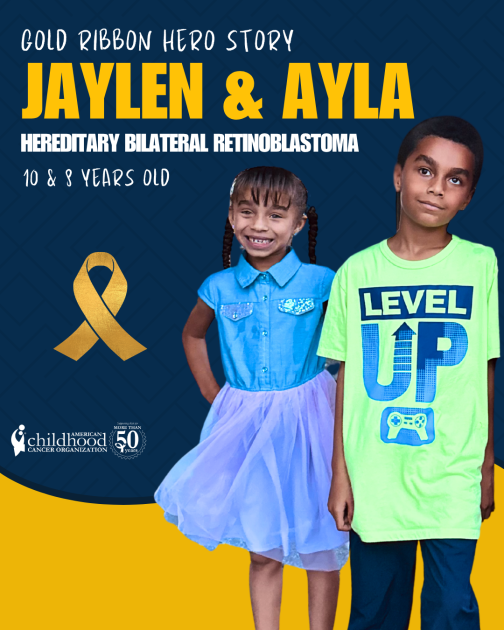
The eventual diagnosis of bilateral retinoblastoma for Jaylen necessitated immediate and aggressive intervention. However, the hereditary nature of his condition meant that any future siblings would be at an exceptionally high risk. When Ayla was born, she was monitored closely by specialists from birth. This proactive surveillance led to the discovery of tumors when she was only four weeks old. While the diagnosis was devastating for the family, the early detection—made possible by the knowledge gained from Jaylen’s experience—allowed for a more rapid initiation of treatment.
Clinical Interventions and Treatment Modalities
The treatment of bilateral retinoblastoma is a multi-modal process aimed at three primary goals: saving the patient’s life, preserving the eye, and maintaining as much vision as possible. For Jaylen and Ayla, the clinical path involved several years of intensive therapy.
- Systemic and Local Chemotherapy: Both children underwent chemotherapy to shrink the tumors (chemoreduction). In many modern cases, this is supplemented by intra-arterial chemotherapy, where medication is delivered directly to the ophthalmic artery to maximize potency while minimizing systemic side effects.
- Cryotherapy and Laser Therapy: These focal treatments are used to destroy small tumors. Cryotherapy uses extreme cold to freeze and kill cancer cells, while laser photocoagulation uses heat to seal off the blood vessels that supply the tumor.
- Strabismus Surgery: For Jaylen, the misalignment of his eyes required surgical intervention to realign the ocular muscles, a procedure often necessary when tumors or vision loss affect the brain’s ability to coordinate eye movement.
- Enucleation: When a tumor is too large to be treated by other means or when there is a risk of the cancer spreading via the optic nerve to the brain, the surgical removal of the eye (enucleation) is required. Ayla underwent this procedure to ensure the cancer did not metastasize.
Following enucleation or significant vision loss, patients are fitted with ocular prosthetics. Modern prosthetic technology allows for highly realistic "artificial eyes" made of medical-grade acrylic. For Jaylen and Ayla, adapting to life with prosthetics became a part of their daily reality. Ayla, in particular, has gained attention for her "legendary" approach to her prosthetic, maintaining a collection of custom-colored irises that allow her to express her personal style, effectively reclaiming agency over a medical necessity.
The Socio-Medical Implications of Parental Advocacy
The experience of Denice and her children underscores a critical theme in pediatric oncology: the role of the parent as a medical manager and advocate. For Denice, the challenge was twofold—managing a complex dual-cancer diagnosis while fighting for her own rights as a Deaf parent in a system that was initially dismissive.
"It was compounded by anger and frustration at the medical system that tried turning a deaf mother away," Denice stated, reflecting on the early days of Jaylen’s diagnosis. This sentiment is echoed by many disability advocates who argue that medical outcomes are often tethered to the accessibility of information. When a parent is denied an interpreter, the "informed consent" process is compromised, and the child’s care is potentially delayed.
Furthermore, Denice has addressed the public scrutiny that often accompanies sharing a medical journey online. In an era of social media, families of children with chronic illnesses frequently face unsolicited parenting advice or criticism. Denice has maintained a firm stance on "choosing joy" and living in the present, emphasizing that the survival and happiness of her children are the ultimate metrics of success.
The "Know the Glow" Campaign and Early Detection
The case of Jaylen and Ayla serves as a powerful endorsement for public health initiatives like "Know the Glow." This global awareness campaign educates parents on how to identify leukocoria through simple flash photography. Because the "glow" is often the first and only visible sign of retinoblastoma, early identification can mean the difference between vision preservation and enucleation, or in some cases, life and death.
Medical experts suggest that if a white, gold, or silver glow is detected in a child’s eye in a photograph, an immediate referral to a pediatric ophthalmologist is required. While leukocoria can also indicate other conditions such as Coats’ disease or cataracts, it is treated as a medical emergency until retinoblastoma is ruled out.
Long-term Outlook and Survivors’ Quality of Life
Today, Jaylen and Ayla are considered cancer-free, a milestone that marks the end of active treatment but the beginning of lifelong surveillance. Survivors of hereditary retinoblastoma must undergo regular screenings for the rest of their lives. The risk of secondary non-ocular cancers is a significant concern; studies indicate that survivors of the germline form of the disease have a cumulative risk of developing a second cancer of approximately 36% within 40 years of the initial diagnosis.
Despite these clinical shadows, the siblings are thriving. Ayla has integrated ASL into her life, ensuring she can communicate fluently with her mother while maintaining a fierce independence. Their resilience is reflective of a broader trend in pediatric oncology where the focus has shifted from mere survival to "thrivorship"—the ability of a child to lead a full, joyful, and productive life post-diagnosis.
The integration of prosthetic eyes, the mastery of alternative communication methods, and the psychological adjustment to a "new normal" are all components of this journey. The family’s transparency in sharing their story contributes to a larger movement aimed at destigmatizing childhood cancer and ocular prosthetics.
Conclusion and Future Directions
The narrative of Jaylen and Ayla highlights the intersection of genetic predisposition, medical accessibility, and the power of parental persistence. It brings to light the necessity for healthcare institutions to adhere strictly to accessibility laws to ensure that no child’s diagnosis is delayed due to communication barriers.
As research into the RB1 gene continues, scientists are looking for ways to use gene therapy and more targeted molecular treatments to reduce the reliance on aggressive chemotherapy and surgery. For now, the primary weapons against retinoblastoma remain early detection and specialized care. By raising awareness of the "glow" and advocating for equitable access to the medical system, families like Jaylen and Ayla’s are paving the way for improved outcomes for the next generation of survivors. Their triumph is not just in beating a diagnosis, but in asserting their right to a life defined by joy rather than by the limitations of a disease.
