
 By admin
The intersection of rare pediatric oncology and systemic healthcare barriers presents a formidable challenge for families navigating life-threatening diagnoses. For Jaylen, now 10, and his sister Ayla, 8, the battle against hereditary bilateral retinoblastoma began in infancy, marked not only by the rigors of chemotherapy and surgery but by a profound struggle for equitable medical access. Their story serves as a critical case study in the importance of early detection, the complexities of genetic cancer predispositions, and the necessity of inclusive healthcare practices for the Deaf and hard-of-hearing community.
Early Detection and the Clinical Presentation of Leukocoria
The clinical journey began when Jaylen was just two months old. His mother, Denice, observed a subtle but persistent misalignment in his left eye—a condition known medically as strabismus, where the eyes do not properly align with each other when looking at an object. While strabismus can be a benign developmental issue, in the context of pediatric oncology, it is often one of the primary presenting symptoms of retinoblastoma.
Furthermore, early photographs of Jaylen revealed a phenomenon known as leukocoria, or "the glow." In flash photography, instead of the standard "red-eye" caused by light reflecting off the blood vessels in the retina, a white or yellowish reflection appears. This occurs when the tumor, located at the back of the eye, reflects the light back through the pupil. At the time, the family attributed the white reflection to camera artifacts or lighting angles, a common occurrence that often delays the diagnosis of retinoblastoma in its earliest stages. It was only as Jaylen approached his four-month milestone that the urgency of his condition became undeniable.
Systemic Barriers and the Right to Accessible Healthcare
The path to a definitive diagnosis was complicated by a significant breach in medical accessibility. When Denice sought a four-month check-up for Jaylen, the medical facility refused to provide services because they did not have an American Sign Language (ASL) interpreter available. Denice, who is Deaf, faced a systemic refusal of care that not only delayed Jaylen’s diagnosis but highlighted a pervasive issue within the American healthcare system regarding the Americans with Disabilities Act (ADA).
Under the ADA, healthcare providers are required to provide "effective communication" to patients and companions with disabilities, which frequently necessitates the provision of a qualified sign language interpreter. The refusal to treat Jaylen based on the absence of an interpreter placed an undue burden on Denice, who was forced to navigate a complex medical landscape independently to secure the life-saving care her son required. Her persistence eventually led to a referral to a specialist who could accommodate her communication needs and provide the necessary oncological screening for Jaylen.
The Genetic Landscape of Hereditary Retinoblastoma
Upon examination, Jaylen was diagnosed with bilateral retinoblastoma, meaning tumors were present in both eyes. This diagnosis immediately signaled a hereditary component. Retinoblastoma is caused by a mutation in the RB1 gene, a tumor suppressor gene located on chromosome 13. While approximately 60% of cases are sporadic (unilateral and not inherited), roughly 40% are germline mutations. In hereditary cases, the child inherits one mutated copy of the RB1 gene from a parent or develops a new mutation in the egg or sperm prior to conception.
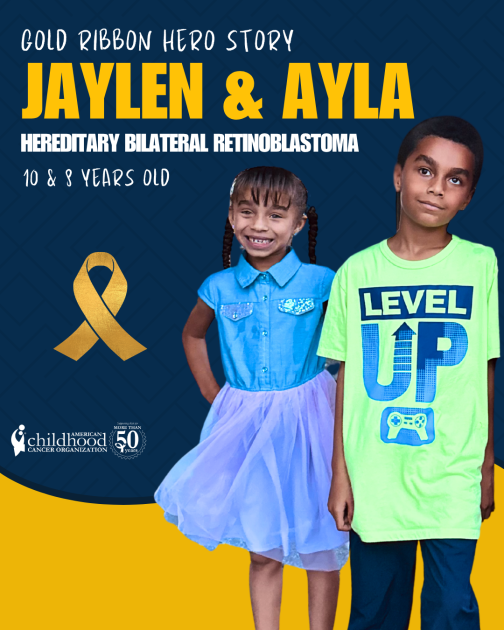
Because Jaylen’s condition was bilateral and hereditary, the risk for future siblings was significantly elevated. When Ayla was born two years later, she was placed under immediate medical surveillance. This proactive monitoring allowed doctors to identify tumors in her eyes when she was just four weeks old. While the news was devastating, the early detection afforded by her brother’s clinical history provided a critical advantage in her treatment timeline.
A Comprehensive Timeline of Therapeutic Intervention
The treatment of bilateral retinoblastoma is a multi-year process aimed at three primary goals: saving the patient’s life, preserving the eye, and maintaining as much vision as possible. For Jaylen and Ayla, the therapeutic roadmap was extensive and invasive.
Chemotherapy and Localized Treatments
Both children underwent systemic chemotherapy to reduce the size of the tumors, a process known as chemoreduction. This was supplemented by focal therapies designed to destroy remaining cancerous cells. These included cryotherapy, which uses extreme cold to freeze and kill tumor tissue, and laser photocoagulation, which uses heat to disrupt the blood supply to the tumors.
Surgical Interventions
For Jaylen, the progression of the disease required strabismus surgery to correct the alignment of his eyes after the tumors had been addressed. However, Ayla’s case presented further complications. Despite aggressive efforts to save her vision, the severity of the tumors in one of her eyes necessitated an enucleation—the surgical removal of the eye. This procedure is often a last resort used when the tumor is too large to be treated by other means or when there is a high risk of the cancer spreading through the optic nerve to the brain.
Adaptation to Ocular Prosthetics
Following their respective surgeries and treatments, both Jaylen and Ayla transitioned to life with prosthetic eyes. Modern ocular prosthetics are highly sophisticated, hand-painted to match the patient’s remaining eye. Ayla, in particular, has embraced this aspect of her recovery, viewing her prosthetics not as a sign of loss but as a medium for self-expression. She maintains a collection of custom-colored irises, allowing her to exercise autonomy over her appearance and "rock her style" with confidence.
Data and Statistics: The Broader Context of Pediatric Eye Cancer
Retinoblastoma is a rare disease, affecting approximately one in every 15,000 to 20,000 live births worldwide. In the United States, roughly 250 to 350 new cases are diagnosed each year. Despite its rarity, it is the most common primary intraocular tumor in children.
The survival rate for retinoblastoma in developed nations is exceptionally high, exceeding 95% when detected early. However, the prognosis for vision preservation varies significantly based on the stage of the tumor at the time of diagnosis. Bilateral cases, like those of Jaylen and Ayla, present a higher risk for long-term visual impairment and a secondary risk of developing other types of cancer later in life, such as osteosarcoma, due to the germline RB1 mutation. This necessitates lifelong follow-up care and rigorous screening.
Psychological Resilience and the "Choice of Joy"
The emotional toll of a childhood cancer diagnosis is profound, not only for the pediatric patients but for the primary caregivers. Denice has spoken openly about the "heartbreaking and overwhelming" nature of the double diagnosis, compounded by the frustration of medical discrimination. The family has also faced public scrutiny via social media, where their parenting choices and lifestyle have occasionally been criticized.
In response, Denice has championed a philosophy of "presence and joy." She asserts that the family has earned the right to live in the moment and celebrate their "legendary" triumphs. This resilience is mirrored in the children’s development. Ayla began learning ASL during her post-operative recovery, ensuring she has multiple modes of communication as she navigates a world that is not always designed for the disabled. Her independence and high activity level serve as a testament to the efficacy of early intervention and the adaptability of children facing chronic illness.
Advocacy and the Global "Know the Glow" Movement
The story of Jaylen and Ayla is now a cornerstone of advocacy efforts aimed at educating the public about the "glow." Organizations like the American Childhood Cancer Organization (ACCO) and various retinoblastoma awareness groups emphasize that a simple photograph can be a life-saving diagnostic tool.
The "Know the Glow" campaign encourages parents to look for leukocoria in photos and to insist on a dilated eye exam if they suspect any abnormalities. Early detection is the single most important factor in preventing enucleation and ensuring the survival of the child. By sharing their journey, Jaylen and Ayla are helping to bridge the gap between clinical knowledge and parental awareness.
Implications for Healthcare Policy and Inclusion
The challenges faced by Denice highlight a critical need for policy reform regarding ASL interpretation in medical settings. The delay in Jaylen’s care was not a result of medical complexity, but of a failure in administrative inclusivity. For families dealing with hereditary conditions, the stakes are too high for such barriers to exist.
Furthermore, the journey of these two siblings underscores the importance of genetic counseling for families with a history of retinoblastoma. Early genetic testing can identify at-risk infants before symptoms even appear, allowing for screenings to begin shortly after birth. In Ayla’s case, this surveillance was the difference between a late-stage emergency and a managed, proactive treatment plan.
As Jaylen and Ayla continue to thrive, their lives stand as a powerful rebuttal to the idea that a cancer diagnosis defines a child’s future. Through a combination of maternal advocacy, medical intervention, and personal resilience, they have transitioned from patients to survivors, and ultimately, to symbols of hope for families worldwide. Their story remains a call to action for better medical accessibility, increased awareness of pediatric cancer symptoms, and a deeper understanding of the genetic ties that bind families in their fight for health.
