
 By George Ongkojoyo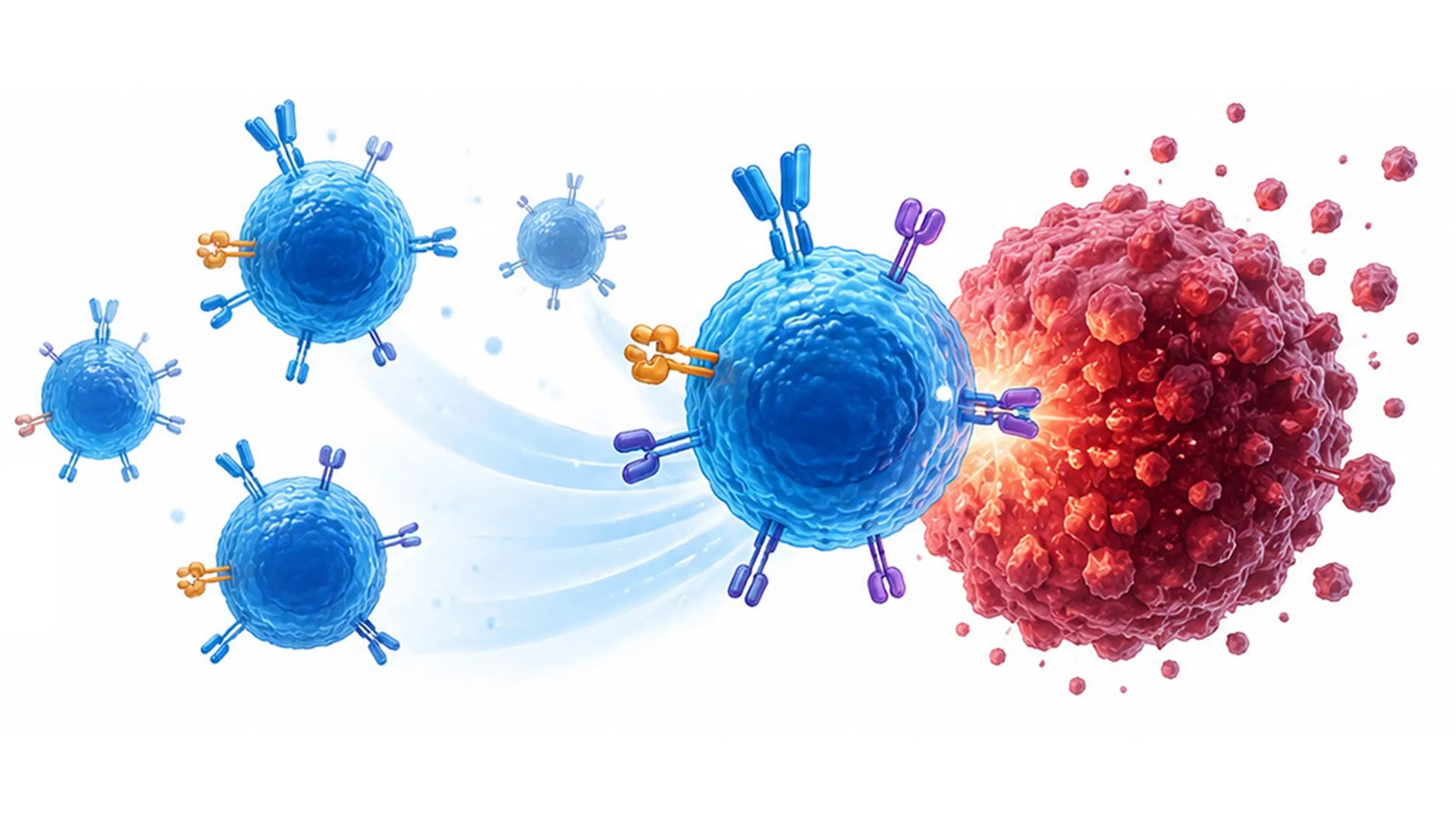
In a significant advancement for the field of regenerative medicine and oncology, researchers at the University of California, Los Angeles (UCLA) have unveiled a new method for producing high-precision cancer-fighting T cells. The study, published in the journal Cell Reports Medicine, describes a scalable platform that utilizes blood stem cells from donated umbilical cord blood to create "off-the-shelf" T cell receptor (TCR) therapies. This approach aims to overcome the two primary hurdles currently facing advanced immunotherapy: the prohibitive cost of personalized treatments and the biological risks associated with donor-derived immune cells. By engineering these cells at an early developmental stage, the UCLA team has demonstrated a way to mass-produce treatments that are both safer and more effective against solid tumors than current experimental models.
The Evolution of Immunotherapy: From CAR T to TCR Therapy
To understand the significance of the UCLA breakthrough, it is necessary to examine the current landscape of adoptive cell transfer (ACT). For the past decade, Chimeric Antigen Receptor (CAR) T-cell therapy has dominated the headlines, offering remarkable success in treating liquid cancers such as leukemia and lymphoma. CAR T-cells are engineered to recognize specific proteins—antigens—that sit on the exterior surface of a cell. However, CAR T-cell therapy has faced significant challenges when applied to solid tumors, which account for approximately 90% of adult cancer cases.
The primary limitation of CAR T-cells is their "surface-level" vision. Many of the most critical mutations that drive the growth of solid tumors occur deep within the cell’s internal machinery. These internal proteins are not accessible to the receptors used in CAR T-cell therapy. TCR therapy, by contrast, utilizes a more sophisticated recognition system. It can detect tiny fragments of internal proteins that are processed and "presented" on the cell surface by the Major Histocompatibility Complex (MHC). This allows TCR therapy to target a much broader array of cancer-specific markers, including those found in melanoma, ovarian cancer, and prostate cancer.
Despite this theoretical advantage, TCR therapy has remained largely trapped in the "autologous" model. This means that a patient’s own T cells must be extracted, shipped to a lab, genetically modified, expanded, and then infused back into the patient. This "vein-to-vein" process is not only logistically complex but also extremely time-consuming, often taking several weeks—a period during which a patient’s disease may progress significantly.
The Bottleneck of Personalization and the Allogeneic Dilemma
The high cost of autologous therapies—often exceeding $400,000 per dose—stems from the fact that each treatment is a custom-made biological product. Scientists have long sought an "allogeneic" or "off-the-shelf" alternative, where cells from a healthy donor are used to create batches of treatment that can be frozen and shipped to hospitals for immediate use.
However, using mature T cells from a donor introduces a severe risk: Graft-versus-Host Disease (GvHD). When mature immune cells from a donor enter a patient’s body, their existing, natural receptors may perceive the patient’s healthy tissues as foreign and launch a systemic attack. To prevent this, researchers have previously used complex gene-editing tools like CRISPR to "knock out" the natural receptors. While effective, this added layer of genetic manipulation increases the risk of unintended mutations and complicates the manufacturing process.
The UCLA researchers, led by Dr. Lili Yang, a professor of microbiology, immunology, and molecular genetics, proposed a different route. Instead of trying to "fix" mature donor cells, they decided to start with undifferentiated blood stem cells.
Building a Better T Cell: The AlloESO-T Platform
The UCLA team’s innovation lies in the use of hematopoietic stem cells (HSCs) derived from donated cord blood. Because these stem cells have not yet matured into specific immune cells, they do not possess the fixed, random receptors that cause GvHD.
The researchers inserted a gene for a specific T cell receptor designed to recognize NY-ESO-1. This protein is a "cancer-testis antigen," which is typically expressed only in the germ cells of the testes but becomes highly active in various cancers, including melanoma, sarcoma, and ovarian cancer. Because NY-ESO-1 is rarely found in healthy adult tissues, it serves as an ideal "identifying tag" for targeted therapy.
By introducing the TCR at the stem cell stage, the researchers ensured that as the cells matured into T cells in a controlled laboratory environment, they would all carry the same engineered receptor. "Stem cells are undifferentiated—they’re not yet mature T cells with a fixed receptor already in place," explained co-first author Yichen (John) Zhu. "When we differentiate our engineered stem cells into T cells, essentially all of the resulting cells carry the same receptor and go after the same tumor target."
This method effectively bypasses the need for the complex gene editing required to silence natural receptors, as the cells never develop those problematic receptors in the first place.
Addressing Antigen Escape with Dual-Targeting Capabilities
One of the most frustrating aspects of treating solid tumors is their heterogeneity. Even if a therapy successfully kills 99% of a tumor, the remaining 1% may lack the target protein (antigen), allowing the cancer to regrow and become resistant to the treatment. This process, known as "antigen escape," is a primary cause of relapse in targeted therapies.
To combat this, the UCLA team designed their AlloESO-T cells with a secondary "fail-safe" mechanism. In addition to the TCR that targets NY-ESO-1, the cells were engineered to express natural killer (NK) cell receptors. These receptors do not look for a specific protein; instead, they recognize general "stress signals" that most cancer cells emit when they are undergoing rapid, abnormal growth.
Laboratory experiments conducted on human melanoma and prostate cancer cells confirmed that this dual-detection system is highly effective. Even when cancer cells "hid" their NY-ESO-1 markers, the AlloESO-T cells were able to identify and destroy them using the NK receptor pathway. This two-pronged attack significantly narrows the escape routes available to the tumor.
Preclinical Success and Economic Implications
The efficacy of the AlloESO-T platform was tested in mouse models of aggressive ovarian cancer and melanoma. The results, according to the researchers, were "dramatic." A single infusion of the engineered cells provided lasting tumor control and significantly extended the survival of the animals.
In contrast, mice treated with conventional TCR therapies made from mature donor cells showed only temporary improvement and eventually developed signs of GvHD. Furthermore, the AlloESO-T cells exhibited a remarkable ability to proliferate. After infusion, the cells expanded by approximately 100-fold, migrating specifically to the tumor sites and remaining active for several weeks without causing toxicity in healthy organs like the liver or lungs.
Beyond the biological success, the economic potential of this platform is transformative. The researchers estimate that a single unit of donated cord blood can provide enough stem cells to generate trillions of therapeutic T cells. This translates to roughly several thousand doses from a single donor source.
"At an estimated $5,000 per dose, this approach would be far more accessible than today’s therapies," said co-senior author Yanruide (Charlie) Li. If these estimates hold true in a clinical setting, it would represent a nearly 98% reduction in the cost of T cell immunotherapy, potentially moving these treatments from "last-resort" options to first-line standards of care.
Future Outlook: The Path to Clinical Trials
While the results are promising, the researchers emphasize that the AlloESO-T cells are still in the preclinical phase. Human clinical trials are required to confirm that the safety and efficacy seen in mouse models translate to human patients.
The UCLA team is well-positioned for this next step. They have already partnered with the UCLA Health Center for Advanced Biotherapies to utilize existing manufacturing infrastructure developed for their previous work on CAR-NKT cells (a similar "off-the-shelf" project). This existing framework could significantly accelerate the timeline for bringing AlloESO-T to the clinic.
"We’re not just presenting one therapy for one target," Li noted. "We want to share the platform itself." The modular nature of the system means that researchers could theoretically swap out the NY-ESO-1 receptor for any other validated cancer target, creating a "library" of off-the-shelf treatments for various types of cancer.
The study was supported by the California Institute for Regenerative Medicine (CIRM) and several UCLA-based research centers. As the biotech industry shifts its focus toward more sustainable and scalable cell therapies, the UCLA cord blood platform stands as a milestone in the effort to democratize access to life-saving cancer treatments. If successful in humans, the "frozen and ready to go" future envisioned by Dr. Yang and her colleagues could redefine the oncology landscape, turning a personalized luxury into a mass-produced reality.
