
 By Gabriel Paijo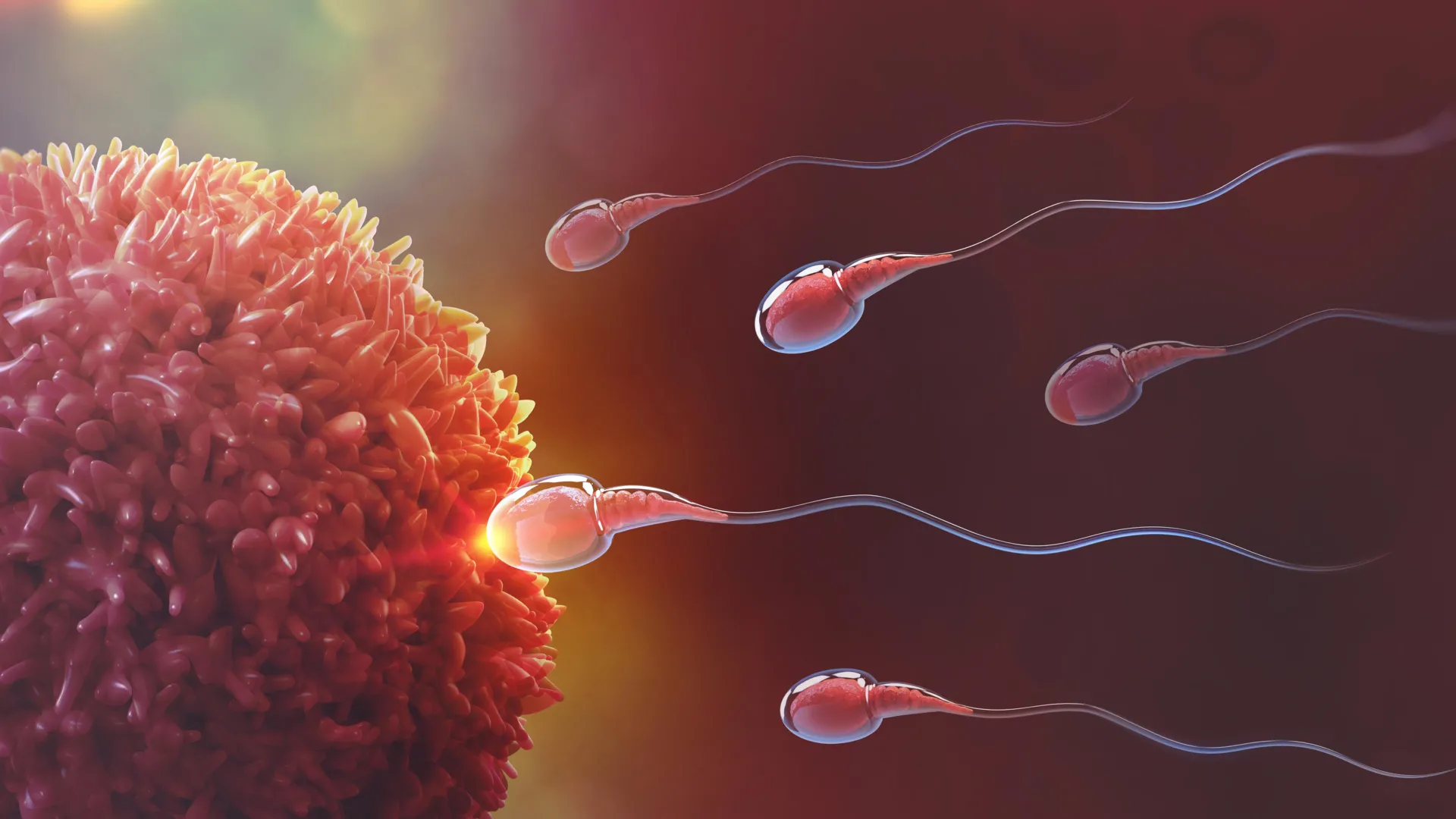
A groundbreaking study led by researchers at Michigan State University has unmasked the intricate molecular mechanisms that govern how sperm cells generate the massive burst of energy required for fertilization. By identifying a specific enzymatic "switch" that triggers a surge in sperm metabolism, the research team has provided a new blueprint for addressing two of the most pressing issues in reproductive health: the global rise in infertility and the long-standing lack of diverse, non-hormonal contraceptive options for men. The findings, published in the Proceedings of the National Academy of Sciences (PNAS), highlight the role of the enzyme aldolase as a primary regulator in the metabolic reprogramming that occurs as sperm prepare to penetrate an egg.
The research, led by Melanie Balbach, an assistant professor in the Department of Biochemistry and Molecular Biology at Michigan State University (MSU), clarifies a biological mystery that has long puzzled reproductive biologists. While it was well-understood that sperm undergo a dramatic physical transformation upon entering the female reproductive tract—a process known as hyperactivation—the precise biochemical "engine" driving this change remained elusive. The discovery of this metabolic switch suggests that sperm function can be modulated with high precision, potentially allowing scientists to either "turn up" the energy to treat infertility or "turn off" the energy to provide a safe, reversible form of male birth control.
The Mechanics of Sperm Hyperactivation and Metabolic Reprogramming
Sperm cells are biological outliers. Unlike most cells in the human body, which maintain a steady-state metabolism to support ongoing functions, sperm are designed for a singular, high-stakes mission. For the majority of their existence, mammalian sperm remain in a quiescent, low-energy state. This metabolic dormancy is a survival strategy, preserving the limited resources of the cell until the moment they are most needed.
Upon introduction into the female reproductive tract, sperm encounter a series of chemical signals that trigger a rapid transformation. They begin to swim with significantly more force, moving from a steady, rhythmic beat to a powerful, whip-like motion. Simultaneously, the outer membranes of the sperm cell undergo biochemical changes to prepare for fusion with the egg. This transition, known as capacitation and hyperactivation, requires a sudden and massive influx of adenosine triphosphate (ATP), the primary energy currency of the cell.
Dr. Balbach’s research focuses on how the sperm cell manages this "metabolic reprogramming." The study reveals that sperm do not merely speed up their existing processes; they fundamentally shift how they process nutrients. By utilizing advanced imaging and metabolic tracking, the MSU team observed that activated sperm prioritize specific pathways for glucose processing, moving through metabolic "intersections" at a rate far exceeding that of inactive sperm.
Chronology of Discovery: From Weill Cornell to Michigan State
The path to this discovery began several years ago during Dr. Balbach’s tenure at Weill Cornell Medicine. Working alongside prominent researchers in the field, Balbach contributed to foundational studies demonstrating that blocking specific enzymes in sperm could induce temporary, reversible infertility in animal models. This early work was a "proof of concept" for the idea that male contraception did not need to rely on hormones or the cessation of sperm production—strategies that have historically been plagued by side effects and long lead times for effectiveness.
In 2023, Balbach joined the faculty at Michigan State University to expand this line of inquiry, utilizing the university’s robust research infrastructure. Collaborating with experts from the Memorial Sloan Kettering Cancer Center and the Van Andel Institute, her team sought to map the precise "fuel lines" of the sperm cell.
The research team employed a sophisticated technique to track the movement of glucose through the cell. By "tagging" glucose molecules—a process Balbach likens to painting the roof of a car bright pink and tracking it via drone through city traffic—the researchers were able to visualize exactly where the fuel was going and where it was being bottlenecked. Using MSU’s state-of-the-art Mass Spectrometry and Metabolomics Core, the team identified that the enzyme aldolase acts as a critical traffic controller, directing the flow of glucose to maximize energy output during the final stages of the sperm’s journey.
Data-Driven Insights: The Role of Aldolase and Internal Reserves
The study’s findings provide several layers of new data regarding cellular energetics. First, it confirmed that while sperm absorb glucose and fructose from their environment, they also rely on internal energy reserves they carry from the start of their journey. This dual-fuel system ensures that the sperm has enough "on-board" energy to initiate activation even before it fully taps into external sugars found in the reproductive tract.
Key data points from the research include:
- Enzymatic Regulation: Aldolase was identified as a primary bottleneck. When this enzyme is highly active, energy production spikes; when it is inhibited, the sperm remains in a low-energy state, unable to achieve the force required for fertilization.
- Pathway Preference: The researchers found that activated sperm utilize a distinct metabolic route compared to other cells, making them an ideal target for "inhibitor-based" drugs that would not interfere with the metabolism of other organs like the heart or brain.
- Speed of Transition: The metabolic shift from low to high energy happens within minutes of exposure to the triggers found in the female reproductive tract, emphasizing the need for a contraceptive that acts instantaneously.
Addressing the Global Infertility Crisis
While much of the public interest in sperm research focuses on contraception, the implications for infertility are equally profound. According to the World Health Organization (WHO), approximately one in six people globally experience infertility in their lifetime. Male-factor infertility contributes to roughly 50% of these cases, yet diagnostic tools for male fertility remain relatively primitive, often limited to basic sperm counts and motility observations.
By identifying the metabolic switch, Balbach’s work opens the door for more sophisticated diagnostic tests. If a patient’s sperm are failing to "switch on" their metabolic engine despite having a normal appearance under a microscope, this research could explain the underlying cause of their infertility. Furthermore, in the context of Assisted Reproductive Technologies (ART), such as In Vitro Fertilization (IVF), these findings could lead to new media and treatments that "boost" the metabolic state of sperm, increasing the chances of successful fertilization in a lab setting.
A Paradigm Shift in Male Contraception
The quest for a "male pill" has lasted decades, but most attempts have focused on hormonal pathways similar to female birth control. These methods aim to suppress the production of sperm entirely by interfering with testosterone and other hormones. However, hormonal male contraceptives have faced significant hurdles, including mood swings, weight gain, and concerns regarding the long-term return of fertility.
The MSU study supports a different approach: targeting sperm function rather than production. A non-hormonal contraceptive based on these findings would likely involve a small-molecule inhibitor that temporarily blocks the aldolase enzyme or other metabolic regulators.
The advantages of this approach are manifold:
- On-Demand Effectiveness: Because the drug targets the "switch" that activates sperm, it could potentially be taken shortly before intercourse, rather than requiring weeks of daily doses to stop sperm production.
- Rapid Reversibility: Once the inhibitor leaves the system, the next batch of sperm would be unaffected, allowing for a quick return to fertility.
- Minimal Side Effects: Because the specific metabolic pathways identified are unique to sperm cells, the risk of "off-target" effects in other parts of the body is significantly reduced.
"Right now, about 50% of all pregnancies are unplanned," Balbach noted. "Providing men with more agency in their fertility would not only reduce this number but also alleviate the burden on women, who currently bear the majority of the health risks associated with hormonal birth control."
Future Outlook and Scientific Impact
The research conducted at Michigan State University is a critical first step, but the journey from a laboratory discovery to a pharmacy shelf is long. The next phase of Balbach’s research involves translating these findings from mouse models to human sperm. While mammalian sperm share many similarities, there are subtle differences in how human sperm utilize various fuel sources, such as the ratio of glucose to fructose.
Furthermore, the team is exploring whether these metabolic enzymes could be targeted for female-controlled contraception. If a vaginal gel or insert could inhibit these enzymes within the reproductive tract, it would effectively "disarm" the sperm upon entry, providing a non-hormonal alternative to current spermicides, which can be irritating to sensitive tissues.
The scientific community has reacted with optimism to the MSU findings. Reproductive endocrinologists suggest that this "metabolic mapping" approach could become a standard for studying other types of specialized cells that undergo rapid transitions, such as immune cells or cancer cells.
Supported by the National Institute of Child Health and Human Development, the study represents a significant investment in the future of reproductive science. As Balbach and her team continue to probe the intersections of the "sperm traffic map," the goal remains clear: to provide individuals with more precise, safe, and effective tools to manage their reproductive health, whether they are seeking to start a family or prevent an unplanned pregnancy. The discovery of the aldolase switch is not just a win for biochemistry; it is a potential turning point for global public health.
