
 By admin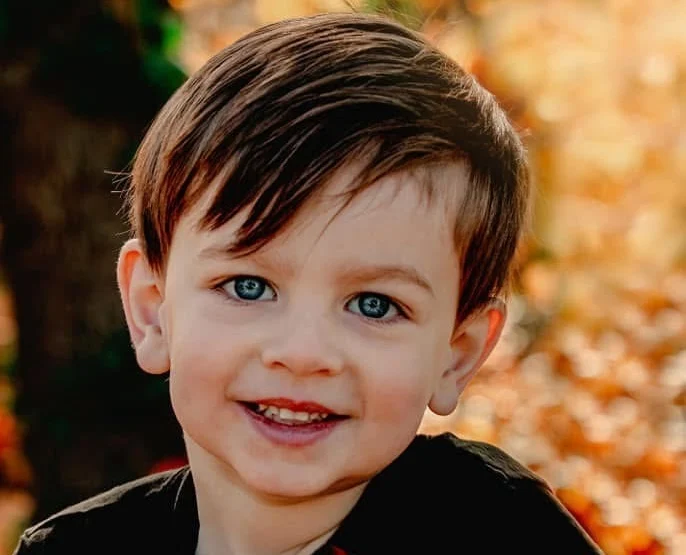
In May 2025, a residence in a quiet neighborhood became the setting for a conversation no parent is ever prepared to facilitate. Jay Hanson sat his seven-year-old son, Lincoln, down for what he described as a "man-to-man" talk. In an effort to convey the gravity of the situation and empower the young boy with a sense of maturity and agency over his own life, Jay allowed Lincoln to hold a beer—a symbolic gesture intended to signify that he was being treated as an equal in a discussion about his own survival. The news was devastating: the bruises Lincoln had been exhibiting were not the result of his active lifestyle or his participation in baseball. Instead, they were the primary clinical indicators that his leukemia had returned. However, this second diagnosis carried a much darker clinical profile than the first.
Lincoln’s medical journey began in 2021 when he was three and a half years old. At the time, his parents, Jay and Megan, noticed a significant decline in his energy levels. The symptoms progressed to the point where Lincoln requested to eat his meals while lying down, a red flag that prompted an immediate medical consultation. He was subsequently diagnosed with acute lymphoblastic leukemia (ALL). According to the American Cancer Society, ALL is the most common form of pediatric cancer, but it also boasts one of the highest success rates in modern oncology, with a five-year survival rate exceeding 90% for children. Lincoln’s initial response to the standard protocol was exemplary. He spent less than a week in the hospital and completed his chemotherapy regimen in the summer of 2023. For nearly two years, the Hanson family lived in the relief of remission, attending regular three-month checkups to ensure the cancer remained at bay.
The trajectory of Lincoln’s life shifted abruptly during a routine bloodwork appointment in 2025. The results indicated the presence of malignant cells, but further testing revealed a more complex and dangerous reality. Lincoln was not suffering from a relapse of ALL; he had developed acute myeloid leukemia (AML). AML is significantly rarer in the pediatric population and is known for its aggressive nature and resistance to conventional therapies. Most distressing for the family was the medical explanation for this second malignancy: doctors attributed the development of AML to the very treatments that had saved Lincoln’s life four years prior.
The Paradox of Pediatric Oncology: Therapy-Related Myeloid Neoplasms
The phenomenon Lincoln is experiencing is known in the medical community as therapy-related myeloid neoplasm (t-MN) or treatment-related AML. While chemotherapy is designed to eradicate cancer cells, certain agents—particularly topoisomerase II inhibitors and alkylating agents—can occasionally cause genetic damage to healthy bone marrow cells. This damage can lead to the development of a secondary, often more aggressive, cancer years after the primary treatment has concluded.
For Megan Hanson, a special education teacher, the revelation was a source of profound emotional conflict. The documents signed during Lincoln’s first bout with cancer contained disclosures regarding long-term risks, including secondary malignancies. However, as Megan noted, the immediate necessity of saving a child’s life often outweighs the abstract possibility of future complications. The second diagnosis has introduced a layer of "paranoia and second-guessing" into the family’s daily life. The realization that the cure for one disease acted as the catalyst for another has fundamentally altered their perspective on medical intervention, leaving them to wonder about the long-term consequences of every current treatment decision.
A Chronology of Treatment and Resistance
The clinical management of Lincoln’s AML has proven far more difficult than his initial encounter with ALL. While he tolerated the 2021 protocols with minimal complications, the medications required to combat AML have exacted a heavy physical toll. Lincoln has struggled with a loss of appetite, debilitating leg pain, and extended hospital stays. More concerning for his oncology team is the fact that the cancer has been classified as refractory.
In oncological terms, refractory cancer is a disease that does not respond to treatment or one where the response is insufficient to achieve remission. After three intensive rounds of chemotherapy failed to produce the desired results, the Hansons were forced to look beyond standard pediatric protocols. Lincoln’s medical team recommended the use of azacitidine (marketed as Aza), a hypomethylating agent that works by hindering the growth of cancer cells and encouraging them to mature into normal cells.
While azacitidine is a staple in treating certain adult blood cancers, it is not currently FDA-approved for pediatric AML. Its use in Lincoln’s case represents an "off-label" application necessitated by the lack of conventional options. The drug has successfully slowed the progression of the leukemia, providing a critical window of stability that allowed Lincoln to undergo a bone marrow transplant. Unlike his first diagnosis, which followed a well-documented roadmap with a 95% survival probability, Lincoln’s current battle is characterized by a lack of historical data and the absence of a guaranteed outcome.
The Emotional and Professional Toll on the Caregivers
The impact of a chronic, life-threatening illness extends far beyond the patient, reshaping the identities of the parents and their interactions with the world. Megan Hanson’s experience has deeply influenced her professional life as a special education teacher. She reports being in a state of constant hyper-vigilance, frequently scanning her students for signs of illness that others might overlook—paleness, lethargy, or subtle changes in mood.
Megan recounted an instance following her return from a leave of absence where she became fixated on a student who shared her son’s name. The boy appeared unusually tired, triggering a defensive emotional response that compelled her to involve the school nurse and other faculty members. This heightened state of "triggering" is a common symptom of secondary traumatic stress, a condition frequently observed in parents of children with complex medical needs.
To combat the darkness of the hospital environment, Megan has adopted a strategy of intentional joy. During Lincoln’s stays, the two engage in themed costume weeks, encouraging hospital staff to participate in voting for their favorite outfits. They construct complex LEGO sets and use scooters to navigate the sterile hallways of the pediatric ward. These activities are not merely distractions; they are a deliberate effort by Megan to protect Lincoln from developing post-traumatic stress disorder (PTSD) or a lifelong phobia of medical institutions. "I can’t protect myself from how this has changed me," Megan stated, "but I can protect him."
Broader Implications for the Future of Pediatric Cancer Research
Lincoln’s case highlights a critical gap in pediatric oncology: the need for "kinder" treatments that minimize long-term toxicity. While the survival rates for many childhood cancers have improved dramatically over the last several decades, the quality of life for survivors remains a significant concern. The National Cancer Institute (NCI) notes that by the age of 50, more than 99% of childhood cancer survivors will have a chronic health problem, and 80% will have a severe or life-threatening condition related to their original treatment.
The Hansons’ struggle to find effective treatments for refractory AML also underscores the disparity in research funding between adult and pediatric cancers. Because pediatric AML is relatively rare, clinical trials often struggle to recruit enough participants, leading to a slower pace of innovation compared to adult oncology. The use of adult medications like azacitidine in children is a necessary stopgap, but it highlights the urgent requirement for age-specific pharmacological studies.
Looking Toward a Life Beyond the Ward
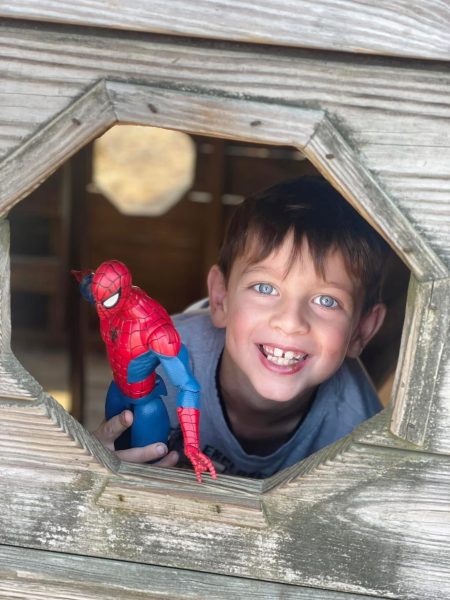
Despite the uncertainty of his prognosis, Lincoln Hanson is described by his mother as a "sensitive, old soul." His behavior in the hospital reflects a level of empathy rarely seen in seven-year-olds. He frequently visits other children in the playroom, offering words of encouragement about their bravery and inquiring about their treatments. His adherence to social graces—consistently using "please" and "thank you" with the medical staff—has made him a favorite among the nursing team.
The family’s hope is rooted in a future where cancer is a footnote rather than the focal point of Lincoln’s biography. Megan often uses humor to help Lincoln visualize a life after treatment, joking that his experiences will provide a compelling narrative for college application essays or serve as a source of perspective during the inevitable heartbreaks of adolescence.
Currently, the focus remains on the immediate success of his bone marrow transplant and the efficacy of his ongoing drug regimen. The Hanson family continues to navigate a landscape where every medical victory is tempered by the knowledge of past costs. Their story serves as a poignant reminder of the complexities of modern medicine, where the line between a life-saving cure and a new medical challenge can be tragically thin. For Lincoln, the goal remains simple: to transition from a patient defined by his resilience to a young man defined by his future.
