
 By Gabriel Paijo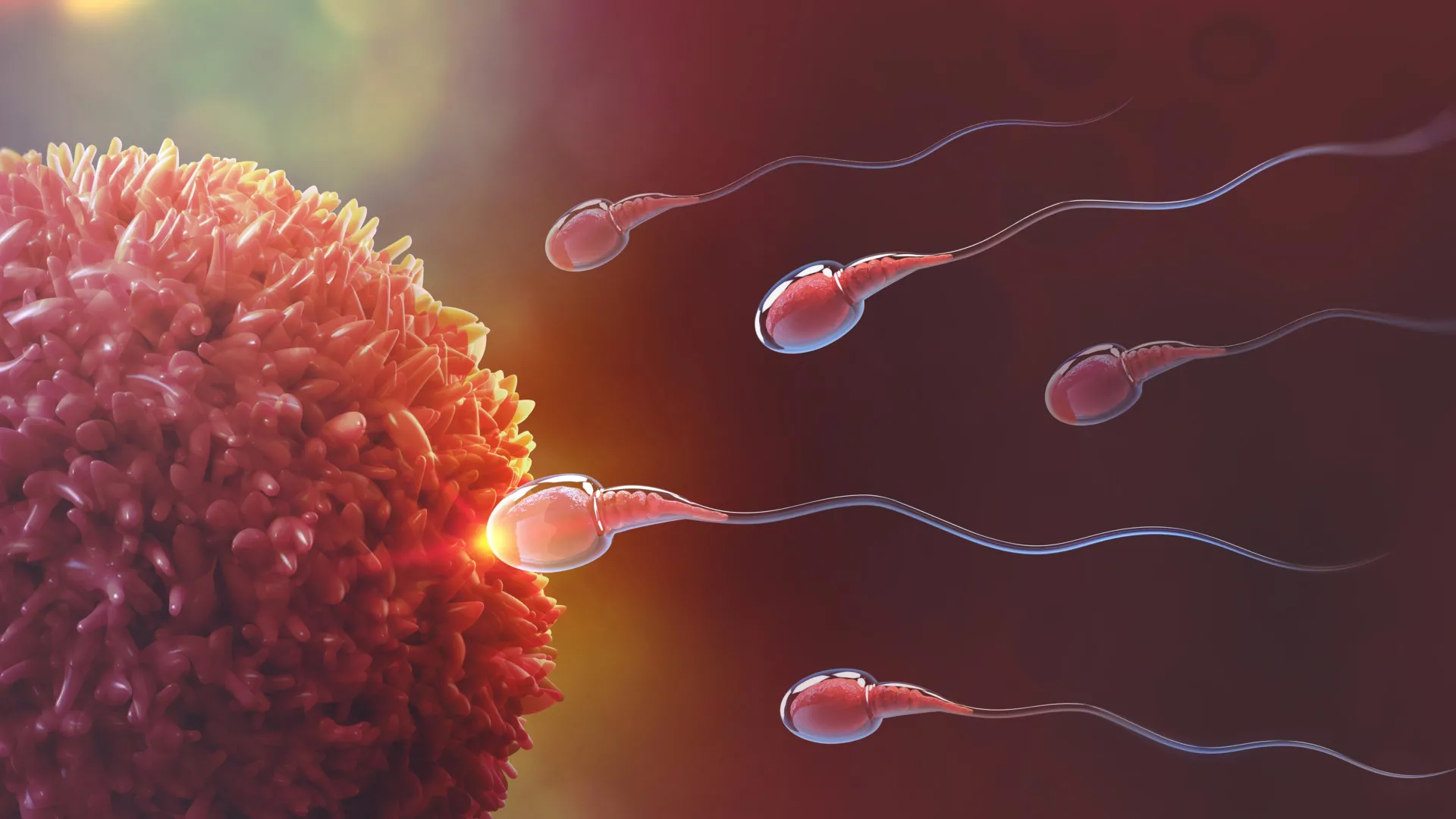
In a significant advancement for reproductive biology, researchers at Michigan State University (MSU) have pinpointed a specific molecular "switch" that governs the energy surge required for sperm to fertilize an egg. This discovery, centered on the metabolic reprogramming of sperm cells, offers a dual promise: the potential to refine clinical treatments for male infertility and the groundwork for the first generation of safe, non-hormonal male contraceptives. Led by Melanie Balbach, an assistant professor in the Department of Biochemistry and Molecular Biology at MSU, the study provides a detailed map of how sperm transition from a dormant state to a high-velocity mode capable of penetrating the protective layers of an oocyte.
The research, published in the Proceedings of the National Academy of Sciences (PNAS), highlights the unique nature of sperm metabolism. Unlike other cells in the human body that manage a variety of physiological functions, a sperm cell is a highly specialized biological machine with a singular objective. This singular focus makes it an ideal model for studying metabolic transitions, as its entire energetic framework is geared toward achieving fertilization.
The Energetic Threshold of Fertilization
For much of their existence, mammalian sperm are kept in a state of metabolic quiescence. While stored in the male reproductive tract, specifically the epididymis, they remain relatively inactive to preserve energy and prevent premature depletion of their limited resources. However, upon ejaculation and entry into the female reproductive tract, a dramatic transformation known as "capacitation" occurs.
During capacitation, sperm must undergo rapid physiological changes. They begin to swim with significantly more force—a state called hyperactivation—and their outer membranes are remodeled to prepare for the eventual fusion with the egg. These processes are energetically expensive. Until this MSU-led study, the precise mechanism that triggered this sudden "power-up" remained a mystery to reproductive scientists.
"Sperm metabolism is special since it’s only focused on generating more energy to achieve a single goal: fertilization," Balbach noted. She emphasized that while many cell types undergo metabolic reprogramming—including cancer cells and immune cells—sperm offer a clear, unobstructed view of this "switch" in action.
Mapping the Path: The "Pink Car" Analogy and Metabolic Tracing
To uncover the mechanics of this energy boost, Balbach and her team, in collaboration with experts from Memorial Sloan Kettering Cancer Center and the Van Andel Institute, utilized advanced metabolomics. The team developed a sophisticated method to track how sperm process glucose, the primary sugar they absorb from their environment to use as fuel.
The researchers employed a technique involving isotopic labeling, which allows scientists to follow specific molecules as they move through various chemical reactions within a cell. Balbach described this process using a vivid analogy: "You can think of this approach like painting the roof of a car bright pink and then following that car through traffic using a drone. In activated sperm, we saw this painted car moving much faster through traffic while preferring a distinct route and could even see what intersections the car tended to get stuck at."
By utilizing Michigan State University’s Mass Spectrometry and Metabolomics Core, the researchers were able to visualize the multi-step pathway of glycolysis—the process of breaking down glucose to produce Adenosine Triphosphate (ATP), the universal energy currency of cells. The data revealed that activated sperm do not just speed up their existing metabolism; they fundamentally reroute it.
The Role of Aldolase as a Metabolic Regulator
The study identified a key enzyme called aldolase as the primary regulator of this metabolic surge. Aldolase acts as a gatekeeper in the glycolytic pathway. In inactive sperm, the flow of glucose through this enzyme is restricted. However, upon activation, the enzyme facilitates a massive increase in glucose throughput, providing the ATP necessary for the sperm’s tail to beat with the intensity required to navigate the female reproductive tract.
Furthermore, the research discovered that sperm do not rely solely on external glucose. They also utilize internal energy reserves—metabolic "backpacks" of fuel—to supplement their energy needs during the initial stages of their journey. The study also highlighted that certain other enzymes act as "traffic controllers," directing glucose into specific pathways that influence how efficiently energy is produced under different environmental conditions, such as varying oxygen levels or the presence of other sugars like fructose.
A New Era for Male Contraception
The discovery of the aldolase-driven switch has profound implications for the development of male birth control. Historically, the burden of contraception has fallen disproportionately on women, with options ranging from hormonal pills and patches to intrauterine devices (IUDs). Male options have remained largely stagnant for decades, limited primarily to condoms or permanent surgical vasectomies.
Previous efforts to develop a "male pill" have largely focused on hormonal interventions aimed at suppressing sperm production (spermatogenesis). However, these efforts have faced significant hurdles, including side effects such as mood swings, weight gain, and changes in libido, similar to those experienced by many women using hormonal birth control. Furthermore, hormonal suppression of sperm production can take months to become effective and just as long to reverse.
The findings by Balbach’s team suggest a "non-hormonal, on-demand" alternative. By targeting the metabolic switch rather than sperm production, it may be possible to create a medication that temporarily "turns off" the sperm’s ability to produce the energy needed for fertilization. Because this approach targets the sperm themselves rather than the endocrine system, the risk of systemic side effects is significantly reduced.
"Right now, about 50% of all pregnancies are unplanned, and this would give men additional options and agency in their fertility," Balbach explained. Such a contraceptive could potentially be taken shortly before intercourse, providing a localized and temporary inhibition of fertility that does not interfere with testosterone levels or long-term reproductive health.
Addressing the Global Infertility Crisis
While the study offers a path toward new contraceptives, it is equally vital for the field of infertility. According to the World Health Organization (WHO), approximately one in six people globally experience infertility in their lifetime. In about half of these cases, male factors are a primary or contributing cause.
Currently, many cases of male infertility are labeled "idiopathic," meaning the underlying cause is unknown. Balbach believes that defects in the sperm’s metabolic switch could be responsible for many of these cases. If a man’s sperm are unable to activate the aldolase enzyme or properly process glucose, they will lack the energy to reach or penetrate the egg, even if they appear healthy under a standard microscope.
By understanding the metabolic requirements for fertilization, clinicians could develop better diagnostic tests to assess sperm "energy health." Additionally, this knowledge could improve assisted reproductive technologies (ART), such as In Vitro Fertilization (IVF). For instance, optimizing the nutrient media used in labs to better support the sperm’s metabolic switch could increase the success rates of fertilization procedures.
Timeline and Institutional Context
The research represents a culmination of work that Balbach began during her time at Weill Cornell Medicine. In her earlier work, she contributed to studies showing that blocking a specific sperm enzyme (soluble adenylyl cyclase) could induce temporary, reversible infertility in mice. This earlier breakthrough laid the conceptual foundation for the current metabolic study.
Since joining Michigan State University in 2023, Balbach has expanded her scope to include the broader metabolic landscape of the cell. Her move to MSU allowed her to leverage the university’s high-tech mass spectrometry facilities, which were essential for the "pink car" mapping of glucose pathways. The collaboration with the Van Andel Institute in Grand Rapids and Memorial Sloan Kettering in New York further underscores the multi-institutional effort required to solve complex biochemical puzzles.
Analysis: The Broader Impact on Public Health
The implications of this research extend beyond the laboratory. The development of a non-hormonal male contraceptive could shift the socio-economic dynamics of family planning. By providing a method that is effective, reversible, and free of hormonal side effects, the research addresses a long-standing gap in reproductive health equity.
From a biochemical perspective, the study also contributes to our understanding of "metabolic reprogramming," a phenomenon seen in several diseases. For example, cancer cells often switch to a specific type of glucose metabolism (the Warburg effect) to fuel rapid growth. The insights gained from how sperm rapidly toggle their energy states could eventually inform research into other fields where metabolic control is lost or altered.
Conclusion and Future Directions
The next phase of Balbach’s research involves translating these findings from mouse models to human sperm. While the basic metabolic pathways are conserved across many mammals, human sperm have unique characteristics that must be accounted for before clinical applications can be developed.
"Better understanding the metabolism of glucose during sperm activation was an important first step," Balbach said. "Now we’re aiming to understand how our findings translate to other species… One option is to explore if one of our ‘traffic-control’ enzymes could be safely targeted as a non-hormonal male or female contraceptive."
Supported by the National Institute of Child Health and Human Development, this line of inquiry remains a priority for federal health agencies. As the scientific community continues to seek solutions for the global decline in fertility rates and the need for better family planning tools, the identification of the sperm’s metabolic switch stands as a landmark achievement in the quest to master the mechanics of life’s beginning.
