
 By admin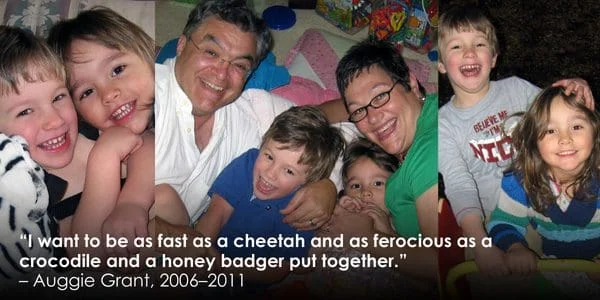
The narrative of Augusto “Auggie” Grant, a five-year-old whose life was claimed by acute monoblastic leukemia within a span of five days, has become a cornerstone for pediatric cancer advocacy in the United States. His story, characterized by its sudden onset and the subsequent mobilization of his family and community, highlights the critical gaps in early detection and the urgent need for targeted research in the field of childhood oncology. Since his passing in December 2011, his parents, Jon and Cheryl Grant, have transitioned from personal tragedy to public advocacy, leveraging their experience to support CureSearch for Children’s Cancer and the annual Ultimate Hike. Their efforts underscore a broader national movement to address the fact that childhood cancer remains the leading cause of death by disease among children in the United States, despite significant advancements in adult oncology.
Clinical Background: Understanding Acute Monoblastic Leukemia
Acute monoblastic leukemia (AMoL), the specific subtype of leukemia that claimed Auggie Grant’s life, is a form of acute myeloid leukemia (AML). In the clinical classification system, it is often categorized as AML-M5. Unlike the more common acute lymphoblastic leukemia (ALL), which has seen survival rates climb toward 90% in recent decades, AML—and specifically the monoblastic subtype—remains significantly more challenging to treat. AMoL is characterized by the rapid proliferation of monoblasts, which are immature white blood cells, in the bone marrow and blood. These cells interfere with the production of normal blood cells, leading to a precipitous drop in immunity, oxygen transport, and blood clotting capabilities.
In Auggie’s case, the disease was "unknowingly spreading through his blood" while he remained active, a common and terrifying characteristic of pediatric AML. The symptoms can often mimic common childhood ailments—fatigue, bruising, or mild fever—until the disease reaches a critical threshold. For the Grant family, the transition from a seemingly healthy child to a terminal diagnosis was nearly instantaneous. As Cheryl Grant noted, a five-minute blood test was eventually the only tool required to reveal the severity of the illness, but by that point, the systemic infiltration was too advanced for intervention.
A Chronology of Crisis and Response
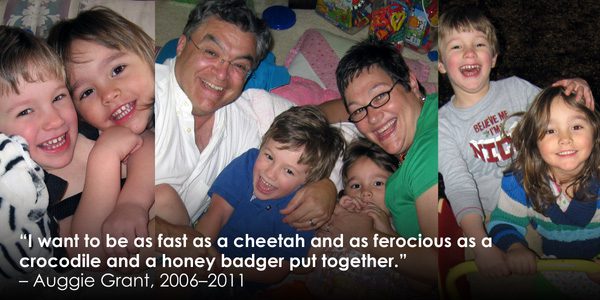
The timeline of Auggie Grant’s illness serves as a stark reminder of the volatility of pediatric blood cancers. In late 2011, Auggie was a vibrant five-year-old with aspirations of becoming an astronaut or a "ninja warrior." His parents describe a child of "jubilant ferocity" who lived with an expansive imagination. However, the internal progression of leukemia was reaching a tipping point.
On December 1, 2011, the family received the devastating diagnosis of acute monoblastic leukemia. The speed of the disease’s progression outpaced the available medical protocols. Just five days later, on December 5, 2011, Auggie passed away. The suddenness of the loss left the family with a profound choice: to retreat into private mourning or to utilize the outpouring of community support to effect systemic change.
Following the funeral, Cheryl Grant contacted the office of Auggie’s oncologist to seek recommendations for an organization that could best utilize memorial donations. The objective was to find a group focusing on research that could prevent other families from experiencing a similar five-day trajectory. This inquiry led the family to CureSearch for Children’s Cancer, a national non-profit foundation that accelerates pediatric cancer research by driving targeted funds into clinical trials and innovative treatments.
Statistical Landscape of Childhood Cancer Funding
The advocacy sparked by Auggie’s legacy is set against a backdrop of significant funding disparities. According to data from the National Cancer Institute (NCI) and the American Cancer Society, pediatric cancer research receives a disproportionately small fraction of federal funding compared to adult cancers. Historically, only about 4% of the NCI’s annual budget is directed toward childhood cancer research. This "4% gap" has necessitated the rise of private philanthropic organizations like CureSearch to bridge the funding deficit.
The implications of this funding gap are profound. Many drugs used to treat pediatric patients were originally developed for adults and can be highly toxic to developing bodies. Survivors of childhood cancer often face lifelong "late effects," including heart damage, secondary cancers, and cognitive impairments, due to the intensity of traditional chemotherapy and radiation. CureSearch focuses on projects that are "fast-tracked to the clinic," prioritizing research that can be translated into human trials within a three-year window, a strategy that acknowledges the urgency expressed by families like the Grants.
The Evolution of "Auggie’s Honey Badgers" and the Ultimate Hike
In the years following their loss, Jon and Cheryl Grant formalized their fundraising efforts through the creation of a team named "Auggie’s Honey Badgers." The name was inspired by Auggie’s own description of himself as being as "ferocious as a crocodile and a honey badger put together." The team participates in the Ultimate Hike, the only national hiking fundraiser for childhood cancer that challenges participants to complete a nearly 30-mile trek in a single day.
For Jon Grant, the Ultimate Hike has functioned as both a philanthropic vehicle and a therapeutic outlet. He describes the experience as transformative, noting that the collective effort of the team has evolved his grief into a sense of communal purpose. "I tell people about Auggie because I want to share him. That way, I can keep him alive just a little longer," Jon stated, emphasizing that the goal is not merely remembrance, but active resistance against the disease.
The "Honey Badgers" have consistently been among the top fundraising teams for the organization, contributing to the millions of dollars raised by Ultimate Hike participants since the program’s inception. These funds are directed toward the CureSearch Acceleration Fund, which supports international research collaborations and the development of new therapies specifically designed for the unique genetic profiles of childhood tumors.
Broader Impact and Policy Implications
The story of Auggie Grant is reflective of a larger national conversation regarding the "orphan" status of many pediatric diseases. Because childhood cancer is technically considered rare compared to adult cancers—affecting approximately 15,000 children and adolescents in the U.S. annually—pharmaceutical companies often find less financial incentive to develop pediatric-specific drugs. This market failure places the burden of innovation on academic researchers and non-profit organizations.
Advocacy during Childhood Cancer Awareness Month in September aims to bring these issues to the forefront of public policy. The Grant family’s emphasis on the "five minutes" it takes to set up a recurring donation is a tactical response to a systemic problem. By securing consistent, predictable funding, organizations like CureSearch can sustain long-term research projects that might otherwise lose momentum.
Furthermore, the Grant family’s involvement highlights the importance of the RACE (Research to Accelerate Cure and Equity) for Children Act, which was enacted to require pharmaceutical companies to test new adult oncology drugs in children if the molecular targets are relevant to pediatric cancers. Stories like Auggie’s provide the human context that drives such legislative changes, ensuring that pediatric oncology remains a priority for federal regulators and private industry alike.
Analysis: The Role of Community-Driven Research
The shift from individual grief to organized advocacy seen in the Grant family represents a critical component of the modern medical research ecosystem. In the absence of massive commercial investment, community-driven fundraising becomes the primary engine for early-stage "high-risk, high-reward" research. By funding the initial phases of drug development, CureSearch and its supporters de-risk the projects, making them more attractive for later-stage investment by larger entities or federal grants.
The legacy of Auggie Grant is not merely a memorial to a life cut short, but a functional contribution to the infrastructure of pediatric oncology. Through the Ultimate Hike and the "Honey Badgers" team, the Grant family has ensured that the "force" Auggie exerted in life continues to drive scientific progress. The focus remains on reducing the time between diagnosis and effective treatment, with the ultimate goal of eliminating the five-day window that defined the end of Auggie’s life.
As Childhood Cancer Awareness Month continues to draw attention to these issues, the Grant family’s message remains one of "jubilant ferocity." Their ongoing work serves as a reminder that while the statistics of childhood cancer are sobering, the mobilization of dedicated families and the strategic allocation of research funds offer a tangible pathway toward a future where a diagnosis is a beginning, rather than an end. Through their efforts, the dreams of an aspiring five-year-old astronaut are being translated into a mission to save the lives of children across the globe.
