
 By Gabriel Paijo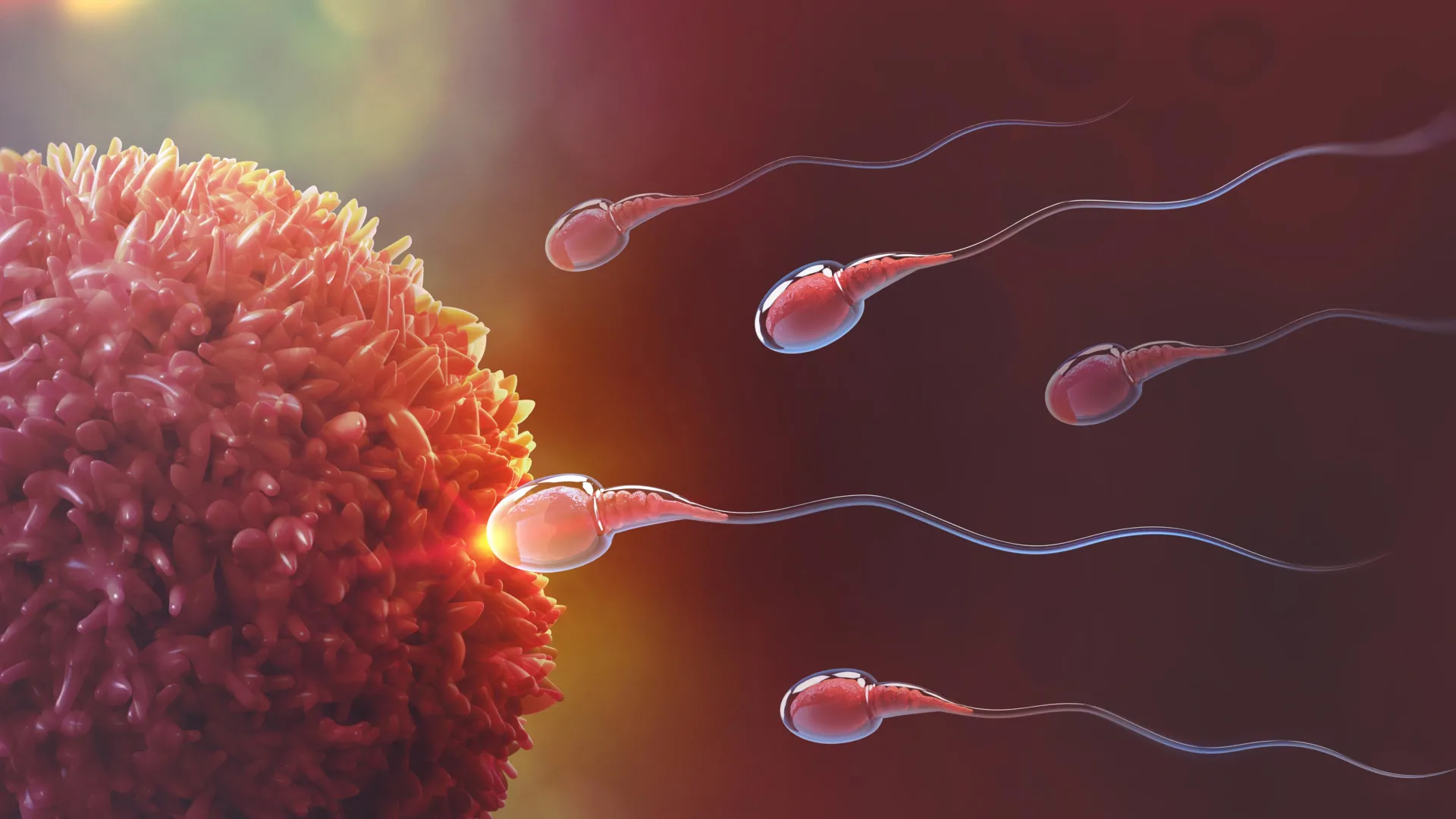
In a landmark development for reproductive medicine, researchers at Cornell University have announced a significant advancement in the quest for a safe, reversible, and 100% effective nonhormonal male contraceptive. For decades, the scientific community has sought a "holy grail" of birth control—a method for men that matches the reliability of the female pill without the systemic side effects of hormonal manipulation. The results of a six-year study, published in the Proceedings of the National Academy of Sciences, suggest that by targeting the fundamental process of meiosis, scientists can temporarily suspend sperm production without compromising long-term fertility or the health of future offspring.
The study, led by the Cornell Reproductive Sciences Center, utilized a proof-of-principle approach in murine models to demonstrate that interrupting a specific stage of sperm development can render a male temporarily infertile. Unlike previous attempts at male contraception that focused on testosterone suppression or physical barriers, this method intervenes at the cellular level during the earliest stages of germ cell differentiation. The breakthrough offers a potential shift in the global landscape of family planning, moving the burden of contraception toward a more equitable distribution between partners.
The Biological Mechanism: Targeting Meiosis
At the heart of this discovery is the process of meiosis, the specialized type of cell division that reduces the chromosome number by half, creating haploid gametes—sperm in males and eggs in females. For sperm to be viable, they must undergo a complex series of transformations beginning with spermatogonial stem cells and ending with the release of mature spermatozoa.
The Cornell team, led by Paula Cohen, a professor of genetics and director of the Cornell Reproductive Sciences Center, focused their intervention on a specific phase known as prophase 1 of meiosis. This is a critical juncture where homologous chromosomes pair up and exchange genetic material. By disrupting this phase, the researchers were able to ensure that the transition from a diploid cell to a haploid sperm cell was effectively halted.
The decision to target meiosis rather than later stages of sperm development was strategic. "We didn’t want to impact the spermatogonial stem cells, because if you kill those, a man will never become fertile again," Cohen explained. Conversely, if the intervention occurred too late in the process—during spermiogenesis—there remained a risk that viable sperm could "leak" through the biological blockade and result in an unintended pregnancy. By stopping the process during prophase 1, the researchers ensured a 100% failure rate for sperm maturation during the window of treatment.
The Role of JQ1: From Cancer Research to Contraception
To achieve this targeted interruption, the research team employed a small molecule inhibitor known as JQ1. Originally developed for the study of cancer and various inflammatory diseases, JQ1 is known to bind to bromodomain proteins, which play a vital role in chromatin remodeling and gene expression. In the context of the testis, JQ1 interferes with the specific epigenetic environment required for meiosis to proceed.
While JQ1 itself is not considered a viable candidate for a commercial human drug due to its short half-life and potential neurological side effects, its use in this study served as a vital proof-of-concept. It proved that a pharmacological agent could successfully navigate the blood-testis barrier and selectively shut down the meiotic machinery.
The study involved administering JQ1 to male mice over a three-week period. During this window, the researchers observed a total cessation of sperm production. Histological analysis of the testicular tissue revealed that the developing sperm cells were effectively "stuck" in prophase 1, eventually undergoing programmed cell death (apoptosis) because they could not complete the division process. Crucially, the treatment did not alter the testosterone levels of the subjects, avoiding the mood swings, libido changes, and weight gain often associated with hormonal contraceptive trials.
A Six-Year Chronology of Rigorous Testing
The path to these findings was neither quick nor simple. The study spanned six years of meticulous data collection and observation to ensure the safety and reversibility of the method. One of the primary concerns in contraceptive research is the "recovery period"—the time it takes for fertility to return once the medication is ceased—and whether the "new" sperm produced after treatment are genetically sound.
The timeline of the Cornell study followed a strict protocol:
- Dosing Phase: Male mice received JQ1 for 21 days, during which time they were monitored for physiological changes and activity levels.
- Infertility Confirmation: Fertility tests confirmed a 0% conception rate during the peak of the treatment.
- Washout Period: Following the final dose, the mice were allowed to recover. The researchers tracked the gradual return of normal meiotic processes.
- Recovery and Breeding: Within approximately six weeks of stopping the treatment—a timeframe roughly equivalent to one full cycle of spermatogenesis in mice—normal sperm production resumed.
- Offspring Analysis: The recovered mice were bred with healthy females. The resulting offspring were monitored through their own maturity to ensure no developmental defects or heritable abnormalities were passed down as a result of the father’s treatment.
"Our study shows that mostly we recover normal meiosis and complete sperm function, and more importantly, that the offspring are completely normal," Cohen stated. This finding addresses the single largest hurdle in nonhormonal male contraceptive development: the guarantee of genetic integrity post-treatment.
The Current Landscape and the Need for Innovation
The global demand for new male contraceptive options is supported by significant public health data. Currently, men have only two primary choices: condoms, which have a "typical use" failure rate of approximately 13%, and vasectomies, which are surgical and intended to be permanent. While vasectomy reversals are possible, they are expensive, not always successful, and involve further surgical intervention.
Previous attempts to develop a "male pill" have largely focused on hormonal pathways, mimicking the mechanism of female oral contraceptives. However, these trials have frequently been plagued by setbacks. In 2016, a major World Health Organization (WHO) study on a male hormonal injection was halted early due to side effects including depression, acne, and increased libido—side effects that, while common in female contraceptives, were deemed unacceptable for the male trial participants by the reviewing safety board.
The Cornell study bypasses these hormonal pitfalls entirely. By focusing on the cellular mechanics of the testis rather than the endocrine system, the research provides a pathway toward a "cleaner" side-effect profile. This approach is gaining traction among researchers worldwide who believe that the future of male contraception lies in non-systemic, organ-specific interventions.
Expert Reactions and Future Implications
The publication of the Cornell findings has been met with cautious optimism from the reproductive health community. Independent urologists and reproductive biologists have noted that while the mouse model is an essential first step, the transition to human trials involves navigating the complexities of human spermatogenesis, which takes approximately 74 days—significantly longer than the murine cycle.
"We are practically the only group that’s pushing the idea that contraception targets in the testis are a feasible way to stop sperm production," Cohen noted, highlighting the novelty of their approach in a field often dominated by hormonal research.
The potential delivery methods for a human version of this drug are already being considered. Cohen suggests that a future contraceptive based on this research could be administered as a long-acting injection given every three months, or perhaps even a transdermal patch. This "set it and forget it" model would mirror the convenience of long-acting reversible contraceptives (LARCs) available to women, such as the hormonal implant or the IUD, while remaining entirely non-invasive and non-permanent.
Socio-Economic and Public Health Impact
The implications of a 100% effective male contraceptive extend beyond individual convenience. Public health experts argue that expanding male options could significantly reduce the 121 million unintended pregnancies that occur globally each year. Furthermore, it addresses a long-standing social imbalance where the health risks and daily responsibilities of pregnancy prevention have fallen almost exclusively on women.
Economically, the development of a nonhormonal male option represents a multi-billion dollar opportunity for the pharmaceutical industry. Market research suggests that a significant majority of men in stable relationships would be willing to use a new contraceptive if it were proven safe and reversible. Furthermore, surveys of women indicate a high level of trust that their partners would consistently use such a method.
Next Steps Toward Human Trials
While the Cornell study provides the biological roadmap, the journey from the laboratory to the pharmacy shelf remains long. The next phase of research will involve identifying a molecule similar to JQ1 that lacks its toxicity and is optimized for human biology. This will require high-throughput screening of chemical libraries to find inhibitors that are even more selective for the proteins involved in meiotic prophase 1.
Once a candidate molecule is identified, it must undergo rigorous Phase I, II, and III clinical trials to establish safety profiles in humans, determine precise dosing, and confirm that the recovery of fertility in humans matches the success seen in mice.
The Cornell team’s work stands as a definitive proof-of-concept that the "holy grail" of male contraception is not only a biological possibility but a foreseeable reality. By successfully decoupling fertility from hormonal health and ensuring the safety of the next generation, the research marks the beginning of a new era in reproductive autonomy. As the scientific community continues to build on these findings, the prospect of a world where men can take an active, reliable, and reversible role in family planning has never been closer.
