
 By Gabriel Paijo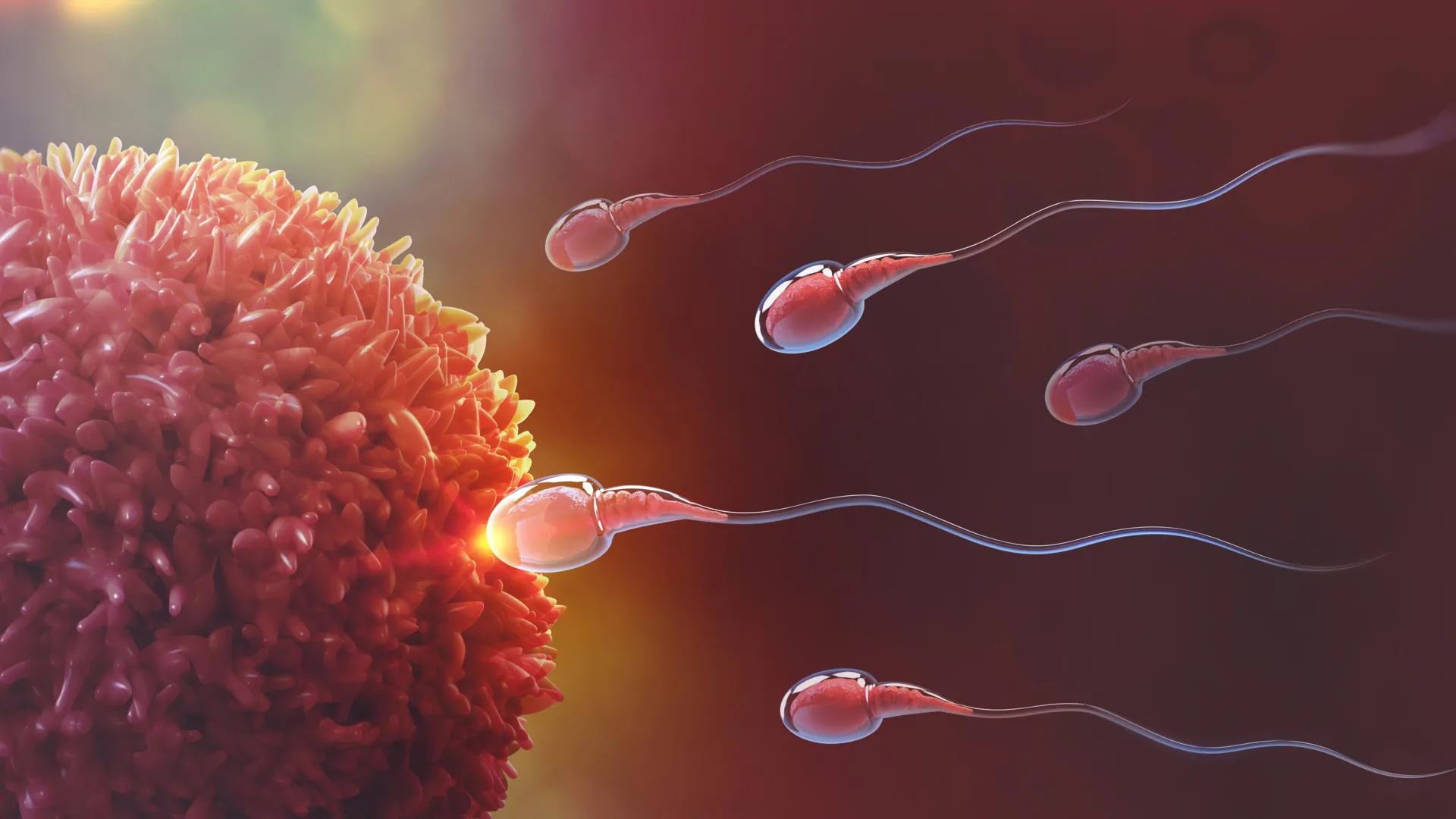
Scientists at Michigan State University have identified a critical molecular "switch" that regulates the sudden surge of energy sperm require to fertilize an egg. This discovery, centered on the metabolic reprogramming of sperm cells, offers a dual-purpose breakthrough in reproductive medicine: it provides a potential roadmap for treating male infertility while simultaneously laying the groundwork for a new class of safe, nonhormonal male contraceptives. The research, published in the Proceedings of the National Academy of Sciences (PNAS), sheds light on the complex biochemical pathways that govern the final, frantic moments of a sperm’s journey toward an oocyte.
The study was led by Melanie Balbach, an assistant professor in the Department of Biochemistry and Molecular Biology at Michigan State University. Balbach and her team focused on the unique metabolic demands of mammalian sperm, which remain largely dormant until they enter the female reproductive tract. Upon entry, these cells must undergo a rapid transformation to achieve fertilization—a process that requires a massive and immediate influx of cellular energy. By identifying the specific enzyme that acts as a gatekeeper for this energy production, researchers have opened the door to interventions that can either enhance this process for those struggling to conceive or inhibit it for those seeking reliable birth control.
The Biological Mechanism of Sperm Activation
To understand the significance of this discovery, one must first look at the unique life cycle of a sperm cell. Unlike most cells in the human body, which maintain a steady-state metabolism to support ongoing functions, sperm are highly specialized "delivery vehicles" with a singular purpose. For the majority of their existence, particularly while stored in the male reproductive system, sperm remain in a low-energy, quiescent state. This conservation of energy is vital for their survival during the days or weeks they may spend waiting for ejaculation.
However, once introduced into the female reproductive tract, the environment changes drastically. The sperm must navigate a complex landscape of varying pH levels, mucus consistency, and chemical signals. To reach the egg, they undergo a process known as "capacitation." During this phase, sperm begin to swim with a much more forceful, whip-like motion known as hyperactivation. Simultaneously, the outer membranes of the sperm head are remodeled to prepare for the "acrosome reaction," which allows the sperm to penetrate the egg’s protective layers.
"Sperm metabolism is special since it’s only focused on generating more energy to achieve a single goal: fertilization," Balbach explained. This sudden shift from a "sleep mode" to a "high-performance mode" requires a sophisticated metabolic switch. The MSU-led research team successfully identified that the enzyme aldolase is the primary regulator of this transition.
Mapping the Metabolic Path: The "Pink Car" Analogy
The breakthrough was made possible through advanced metabolomics and mass spectrometry. Working with collaborators at Memorial Sloan Kettering Cancer Center and the Van Andel Institute, Balbach’s team developed a novel method to track how sperm process glucose. Glucose serves as the primary fuel source that sperm absorb from their surroundings to power their journey.
To visualize this process, the researchers used a technique that allowed them to map the chemical trajectory of glucose molecules as they were broken down within the cell. Balbach compared this high-tech tracking to a logistical exercise: "You can think of this approach like painting the roof of a car bright pink and then following that car through traffic using a drone. In activated sperm, we saw this painted car moving much faster through traffic while preferring a distinct route, and could even see what intersections the car tended to get stuck at."
By observing these "traffic patterns," the researchers discovered that in activated sperm, glucose does not just move faster; it moves differently. The enzyme aldolase acts as a critical intersection. When sperm are activated, aldolase facilitates the rapid conversion of glucose into adenosine triphosphate (ATP), the universal energy currency of cells. The study also revealed that sperm do not rely solely on external glucose; they also tap into internal energy reserves they carry from the start of their journey, ensuring they have a "backup tank" for the final sprint toward the egg.
A Chronology of Discovery and Scientific Collaboration
The identification of aldolase as a metabolic switch is the culmination of years of research. Balbach’s interest in sperm metabolism began during her tenure at Weill Cornell Medicine. There, she was part of a research effort that demonstrated that blocking a specific sperm enzyme—soluble adenylyl cyclase (sAC)—could lead to temporary, reversible infertility in mice. That earlier work proved the concept that sperm function could be "turned off" without affecting the underlying hormonal balance of the male body.
In 2023, Balbach joined the faculty at Michigan State University to expand on these findings. Her goal was to move beyond simply knowing that sperm could be stopped and instead understand the fundamental "why" and "how" of their energy production. By utilizing MSU’s Mass Spectrometry and Metabolomics Core, her team was able to move from observing sperm behavior to mapping the actual molecular machinery driving that behavior.
This timeline reflects a broader shift in reproductive science. For decades, male contraceptive research focused almost exclusively on hormonal methods, such as testosterone-based injections or gels, which aim to stop the production of sperm entirely. However, these methods often come with side effects similar to those experienced by women on the pill, including mood swings, weight gain, and acne. Furthermore, hormonal methods can take months to become effective and months to reverse. Balbach’s research into metabolic inhibitors offers a "fast-acting" alternative that targets the sperm’s ability to function rather than the body’s ability to produce them.
Addressing the Global Crisis of Infertility
While the contraceptive potential of this research is significant, its implications for infertility are equally profound. Current statistics from the World Health Organization (WHO) indicate that infertility affects approximately one in six people globally. In about half of these cases, "male factor" infertility is a contributing or primary cause. Often, the reasons for male infertility remain "idiopathic" or unexplained, leaving couples with few options beyond expensive and invasive procedures like in vitro fertilization (IVF) or intracytoplasmic sperm injection (ICSI).
The discovery of the aldolase switch provides a new diagnostic lens. By understanding the metabolic "intersections" where sperm energy production can fail, clinicians may eventually be able to test for metabolic deficiencies in a patient’s sperm. If a patient’s sperm are unable to "flip the switch" to high-energy mode, this could explain why they are unable to reach or penetrate the egg naturally.
"Better understanding the metabolism of glucose during sperm activation was an important first step," Balbach noted. "Now we’re aiming to understand how our findings translate to other species, like human sperm." If the same metabolic pathways are confirmed in humans, it could lead to the development of media or supplements used in fertility clinics that optimize sperm energy levels before they are used in assisted reproductive technologies, potentially increasing the success rates of IVF.
Analysis: The Shift Toward Nonhormonal Contraception
The social and economic implications of a nonhormonal male contraceptive cannot be overstated. Currently, nearly 50% of all pregnancies worldwide are unplanned. While female-based contraception is highly effective, the burden of pregnancy prevention has historically fallen on women, many of whom suffer from the systemic side effects of hormonal birth control.
The "on-demand" nature of a metabolic inhibitor—targeting enzymes like aldolase or those that regulate it—could revolutionize family planning. Because these inhibitors target a specific enzyme found primarily in sperm cells, the risk of "off-target" effects in other parts of the body is significantly reduced. Unlike a vasectomy, which is often difficult to reverse, or hormonal pills that require daily adherence over long periods, a metabolic-based contraceptive could theoretically be taken shortly before intercourse to provide a temporary window of infertility.
This approach also sidesteps the biological hurdle of stopping sperm production. The male body produces approximately 1,000 sperm cells every heartbeat. Trying to suppress this massive, ongoing production through hormones is biologically difficult and often leads to incomplete suppression. By focusing on the sperm’s "engine" (metabolism) rather than the "factory" (the testes), researchers are finding a more efficient way to manage male fertility.
Supporting Data and Future Directions
The MSU study provides a detailed picture of the multi-step, high-energy process sperm rely on. Data from the research indicates that when the metabolic pathways were inhibited in a laboratory setting, sperm motility dropped significantly, rendering them unable to perform the hyperactivated swimming required for fertilization.
Key data points from the research and related fields include:
- Metabolic Flux: Activated sperm showed a 3- to 5-fold increase in glucose uptake compared to quiescent sperm.
- Enzyme Specificity: Aldolase was identified as a "bottleneck" enzyme; without its full activation, the entire glycolytic pathway slowed down, leading to energy depletion.
- Global Need: With approximately 121 million unintended pregnancies occurring each year, the demand for diverse contraceptive options is at an all-time high.
Looking forward, Balbach plans to investigate how sperm utilize different fuel sources. While glucose is a major player, the female reproductive tract also contains high levels of fructose and other sugars. Understanding how sperm switch between these fuels—or if they use them simultaneously—will be crucial for developing a contraceptive that is effective across the varied environments of the human body.
The research was supported by the National Institute of Child Health and Human Development, highlighting the federal government’s interest in expanding reproductive health options. As the team moves toward human clinical trials, the focus will remain on safety and reversibility.
"I’m excited to see what else we can find and how we can apply these discoveries," Balbach said. The work at Michigan State University serves as a reminder that even in a field as well-studied as human reproduction, there are still fundamental molecular "switches" waiting to be discovered—switches that could change the lives of millions by offering more control over when, and if, they choose to start a family.
