
 By admin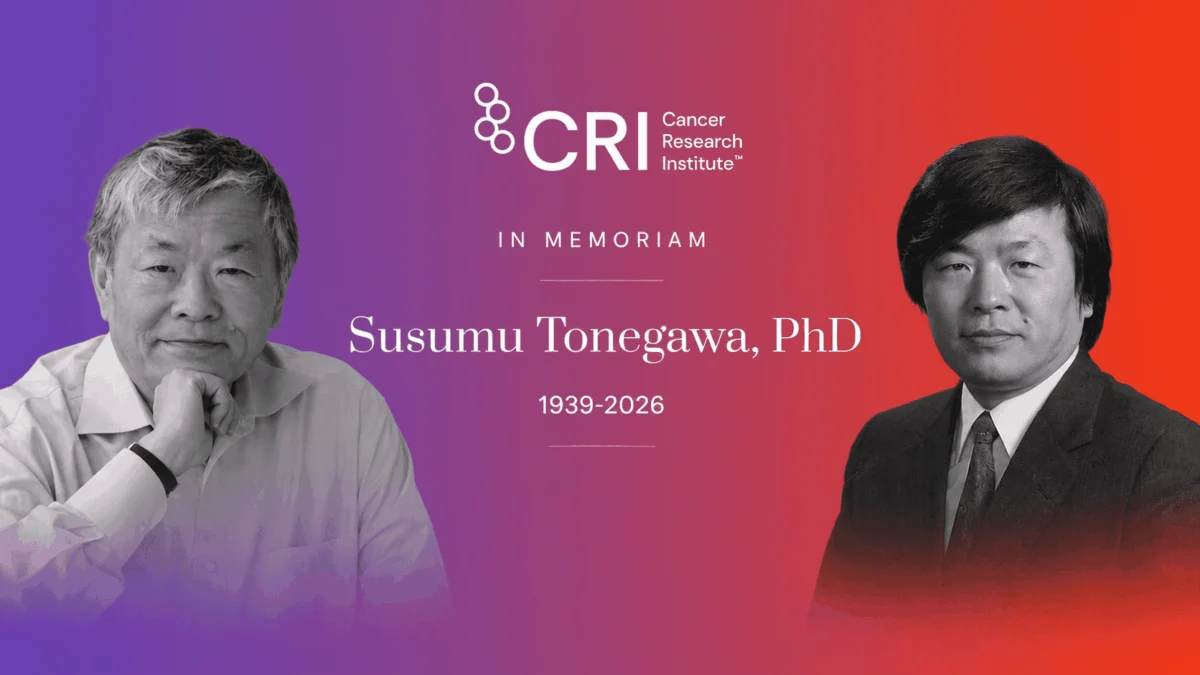
The global scientific community mourns the passing of Susumu Tonegawa, PhD, a towering figure in molecular biology whose groundbreaking discoveries transformed humanity’s understanding of the immune system and the molecular underpinnings of memory. Dr. Tonegawa, a Nobel laureate and a cherished member of the Cancer Research Institute’s (CRI) Scientific Advisory Council, passed away on July 11, 2026, at the age of 86. His departure marks the end of an era defined by profound intellectual curiosity, relentless scientific rigor, and an unwavering commitment to unraveling life’s most complex mysteries.
A Fundamental Breakthrough in Immunology: The Mechanism of Antibody Diversity
Before Dr. Tonegawa’s seminal work in the 1970s, one of the most perplexing enigmas in biology concerned the immune system’s seemingly limitless capacity to recognize and combat an astronomical array of foreign pathogens. Scientists grappled with a fundamental paradox: how could the human body, with a finite number of genes, generate an almost infinite diversity of antibodies capable of targeting countless novel threats? The prevailing dogma of molecular biology dictated that genes were stable and unchanging within an organism’s somatic cells. However, the sheer scale of immunological specificity seemed to defy this principle.
Dr. Tonegawa, then working at the Basel Institute for Immunology in Switzerland, challenged this conventional wisdom. Through meticulous and innovative experiments, he uncovered the revolutionary genetic mechanism underlying antibody diversity: somatic gene rearrangement. He demonstrated that immune cells, specifically B lymphocytes, do not inherit a complete set of genes for every possible antibody. Instead, during their development, these cells literally cut, shuffle, and paste segments of their DNA, selecting from a limited repertoire of gene fragments (V, D, J, and C segments for immunoglobulin heavy chains, and V, J, C for light chains). This process, known as V(D)J recombination, generates an astronomical number of unique gene combinations, each encoding a distinct antibody. Furthermore, he elucidated how somatic hypermutation and junctional diversity further augment this variability, creating a vast immunological lexicon capable of recognizing an estimated 10^11 to 10^13 distinct antigenic specificities.
This discovery was nothing short of revolutionary. It solved a central dogma-defying mystery and provided the genetic blueprint for adaptive immunity. It revealed that the immune system is not pre-programmed with all possible defenses but possesses an inherent, dynamic mechanism for generating molecular diversity on demand. For this profound insight, Dr. Tonegawa was awarded the 1987 Nobel Prize in Physiology or Medicine, a testament to the transformative impact of his work on modern biology.
A Chronology of a Remarkable Scientific Career
Susumu Tonegawa was born in Nagoya, Japan, in 1939. His early academic journey led him to Kyoto University, where he earned his bachelor’s degree in chemistry. He then moved to the United States for his doctoral studies, receiving his Ph.D. in biology from the University of California, San Diego, in 1968. Following postdoctoral research at the Salk Institute, he joined the Basel Institute for Immunology in 1971, a period that would culminate in his Nobel-winning research. The Basel Institute, a hub of immunological innovation, provided an environment ripe for such groundbreaking investigations, attracting brilliant minds and fostering a culture of bold inquiry.
His discovery of gene rearrangement, published throughout the 1970s, culminated in the 1987 Nobel Prize. The Nobel Committee recognized his singular achievement as having fundamentally reshaped the understanding of how the body mounts specific immune responses. This recognition not only elevated Dr. Tonegawa to the pantheon of scientific giants but also highlighted the immense potential of molecular biology to decode the most intricate biological processes.
Following his Nobel triumph, Dr. Tonegawa embarked on another ambitious scientific frontier. In 1981, he joined the Massachusetts Institute of Technology (MIT) as a professor in the Department of Biology and later became a Howard Hughes Medical Institute Investigator. It was at MIT that he pivoted his research focus from immunology to neuroscience, a transition that showcased his remarkable intellectual breadth and fearlessness in tackling new challenges. At MIT’s Picower Institute for Learning and Memory, he pioneered research into the molecular and cellular mechanisms of learning and memory, making significant contributions to our understanding of engram cells, hippocampal function, and the genetic basis of cognitive processes. His work in neuroscience provided crucial insights into how memories are formed, stored, and retrieved, further cementing his legacy as a polymathic scientist.
Throughout his tenured career, whether at the forefront of immunology or neuroscience, Dr. Tonegawa remained steadfast in pushing the boundaries of scientific discovery. He was known for his rigorous experimental design, incisive analytical skills, and a profound curiosity that transcended disciplinary silos. He generously mentored generations of researchers, instilling in them not only scientific knowledge but also the critical thinking and perseverance essential for scientific advancement.
From Fundamental Insight to Therapeutic Innovation
The impact of Dr. Tonegawa’s work extends far beyond the confines of basic scientific understanding. His elucidation of antibody diversity laid the foundational principles for decades of subsequent research into adaptive immunity, profoundly deepening our understanding of how immune cells distinguish healthy cells from diseased ones, and self from non-self. This fundamental insight has been instrumental in numerous biomedical advancements, particularly in the burgeoning field of cancer immunology and immunotherapy.
The principles he uncovered continue to underpin the development of therapies that harness the immune system to recognize and eliminate cancer cells. Modern immunotherapies, such as checkpoint inhibitors (e.g., Keytruda, Opdivo) and CAR T-cell therapies, directly leverage the adaptive immune system’s ability to specifically target and destroy cancer. Without the foundational knowledge provided by Tonegawa’s work on how the immune system generates its vast repertoire of specific recognition molecules, the rational design and development of such sophisticated immunotherapies would have been severely hampered.
For example, understanding V(D)J recombination and the subsequent diversification processes was crucial for developing techniques to analyze the T-cell receptor (TCR) and B-cell receptor (BCR) repertoires in cancer patients. This analysis allows researchers to identify tumor-specific immune responses and track the efficacy of immunotherapies. The global market for cancer immunotherapies, estimated to be tens of billions of dollars annually and projected to grow significantly, stands as a testament to the real-world application of the basic science he championed. His work has not only informed cancer treatment but has also been pivotal in vaccine development, the understanding of autoimmune diseases, and the design of therapeutic antibodies for a wide range of conditions.
Voices of Admiration and Legacy
As a longtime member of the Cancer Research Institute’s Scientific Advisory Council, Dr. Tonegawa generously shared his unparalleled expertise and visionary scientific insights. His contributions were invaluable in guiding CRI’s strategic commitment to supporting innovative, high-risk, high-reward research with the potential to fundamentally transform cancer treatment. His characteristic curiosity, intellectual rigor, and unwavering willingness to challenge conventional thinking perfectly embodied the spirit of discovery that has driven CRI’s mission for over seven decades.
Alicia Zhou, PhD, CEO of CRI, articulated the profound impact of his contributions: “The history of cancer immunotherapy rests on a handful of discoveries that fundamentally changed how we think about the immune system. Dr. Tonegawa’s discovery of the genetic mechanism that creates antibody diversity is undeniably one of them. His work revealed the remarkable adaptability of the immune system and forever changed how scientists study immunity, disease, and cancer. We were profoundly honored to benefit from his wisdom as a member of our Scientific Advisory Council. His legacy will continue to inspire generations of scientists working tirelessly to improve the lives of patients worldwide.”
Leaders from other institutions also shared their sentiments. Professor Li-Huei Tsai, Director of the Picower Institute for Learning and Memory at MIT, where Dr. Tonegawa conducted his groundbreaking neuroscience research, remarked, “Susumu was a scientific titan whose brilliance spanned disciplines. His transition from immunology to neuroscience was seamless, marked by the same rigor and creativity that defined his Nobel-winning work. He leaves an indelible mark on our understanding of how the brain works and how memories are formed. His pioneering spirit will continue to inspire researchers at MIT and beyond.” The Nobel Foundation, in a statement, reiterated the enduring significance of his 1987 prize, noting how his discoveries continue to be a cornerstone of immunological research and clinical applications.
The Philosopher of Science: Tonegawa’s Vision of Creativity
Beyond his monumental scientific achievements, Dr. Tonegawa was also a profound thinker on the nature of scientific inquiry and creativity itself. Later in his life, when asked how he defined creativity, he articulated principles that underscored his own career: an openness to new ideas, a willingness to challenge established paradigms, and the courage to pursue unconventional paths. While the specific tenets he outlined are available in recorded discussions, his career exemplifies these very qualities. He approached scientific problems not merely as puzzles to be solved but as opportunities to fundamentally rethink existing frameworks. This philosophical approach, coupled with his meticulous experimental execution, made him a true visionary.
His humble yet inspiring reflections on creativity underscore the foundational principles of open-mindedness, interdisciplinary collaboration, and intellectual bravery that are essential for truly great scientific advancements. He understood that progress often requires stepping outside comfort zones and embracing the unknown, a philosophy he embodied throughout his diverse and impactful career.
An Enduring Influence on Future Generations
Dr. Susumu Tonegawa’s legacy is not merely etched in scientific papers and Nobel citations; it lives on in the countless researchers he mentored, the groundbreaking therapies inspired by his work, and the fundamental shift in biological understanding he catalyzed. His discoveries changed the course of immunology, fundamentally shaped modern biomedical research, and continue to inspire scientists working tirelessly to improve the lives of patients suffering from cancer and countless other diseases.
His journey from unraveling the mysteries of antibody diversity to decoding the complexities of learning and memory serves as a beacon for aspiring scientists, demonstrating that intellectual curiosity knows no bounds and that the pursuit of knowledge can bridge disciplines. The global scientific community extends its heartfelt condolences to Dr. Tonegawa’s family, friends, colleagues, and former trainees. His passing represents an immense loss, but his profound contributions will continue to illuminate the path for scientific discovery for generations to come.
