
 By admin
The sun went down hours ago, casting the world outside into shadow, yet inside a dimly lit laboratory, the only lights glow from a benchtop and a computer screen. A precise timer dings, piercing the quiet concentration. A scientist, moving with practiced efficiency, rises, dons a fresh pair of gloves, and meticulously takes the next sample, resetting the timer. The cycle continues as the scientist returns to analyzing intricate data, patiently awaiting the next critical time point in an ongoing experiment. This quiet dedication, far removed from public accolades and dramatic announcements, represents the true face of cancer research—the relentless, often solitary, day-to-day work that underpins every celebrated breakthrough and new treatment.
The Unsung Heroes of Discovery: A Glimpse into the Lab
While public perception often associates cancer research with dramatic headlines of new cures and scientific milestones, the reality is a testament to perseverance, meticulous repetition, and profound intellectual resilience. This unseen labor, characterized by late nights, experiments repeated dozens of times to ensure accuracy, data that demands months of interpretation, and questions that defy immediate answers, is the bedrock upon which future advancements are built. During National Cancer Research Month, organizations like the Cancer Research Institute (CRI) endeavor to shed light on these incredible scientists, acknowledging their tireless commitment to engineering the next generation of life-saving therapies. This behind-the-scenes effort, rarely witnessed but utterly essential, transforms nascent ideas into tangible progress. Crucially, it is precisely this foundational scientific work that sustained funding helps to make possible—and it is increasingly facing significant risks.
A Critical Juncture: Funding Challenges Threaten Future Innovations
The current landscape of scientific funding presents a looming challenge, particularly impacting the pipeline of future discoveries. Dr. Alicia Zhou, CEO of the Cancer Research Institute, articulates this concern vividly: “Funding cuts are disproportionately impacting young investigators and researchers. These are folks who are just beginning in their careers, hoping to start a long career in scientific research.” The implications of such cuts extend far beyond individual careers; they threaten to stifle innovation at its source, potentially delaying or preventing breakthroughs that could save millions of lives.
Cancer remains a formidable global health challenge. According to the World Health Organization, cancer is a leading cause of death worldwide, accounting for nearly 10 million deaths in 2020. In the United States alone, the National Cancer Institute estimates that approximately 1.9 million new cancer cases will be diagnosed in 2023, with over 600,000 deaths. These staggering statistics underscore the urgent and ongoing need for robust, sustained investment in research. Historically, government agencies like the National Institutes of Health (NIH) and the National Cancer Institute (NCI) have been primary funders of basic and translational research. However, fluctuating budgets and competing priorities can create an unpredictable environment for scientists, particularly those early in their careers who rely on grants to establish their labs and pursue innovative, often high-risk, high-reward projects. Private philanthropic organizations, such as CRI, play a vital complementary role, often funding cutting-edge immunotherapy research that might be considered too nascent for conventional grants.
The Bedrock of Science: The Imperative of Reproducibility

The seemingly monotonous repetition in the lab, as exemplified by the scientist re-running an experiment, is not a sign of inefficiency but rather the cornerstone of scientific validity: reproducibility. Consider the analogy of a cherished recipe. You follow it precisely, yet the dish tastes subtly different each time. What changed? Perhaps the brand of an ingredient, a slight fluctuation in oven temperature, or even the material of the pan. Identifying and controlling these variables is paramount to consistently achieving the desired outcome.
Science operates on the same principle, albeit with vastly greater complexity and higher stakes. Experiments, even when executed with meticulous adherence to protocols, can yield varying results. It is the scientist’s responsibility to act as a detective, identifying the subtle variables—be they reagent quality, equipment calibration, environmental conditions, or even biological variability within cell lines or animal models—and systematically adjusting them until results are consistent, verifiable, and, most importantly, trustworthy. Only when data consistently holds up under rigorous scrutiny can a scientist confidently analyze and interpret the findings, draw broader conclusions, and advance to the next critical stage of discovery. This painstaking process, often invisible to the public, is what differentiates anecdotal observation from robust scientific fact. The "reproducibility crisis" in some scientific fields has highlighted the critical importance of these foundational practices, reinforcing the need for exhaustive validation before findings are widely accepted and built upon.
The Marathon of Discovery: From Bench to Bedside
The path from an initial scientific hypothesis to a transformative patient treatment is a lengthy and arduous marathon, not a sprint. This journey, often spanning years, sometimes decades, involves distinct and challenging stages:

- Basic Research: This is where the initial lab work takes place, focused on understanding fundamental biological processes, disease mechanisms, and identifying potential therapeutic targets. The scientist in the opening vignette is operating at this stage, laying the groundwork. This stage is characterized by high uncertainty and often does not have immediate clinical applications, yet it is indispensable.
- Preclinical Research: Once a promising target or compound is identified, it moves into preclinical studies, typically involving cell cultures (in vitro) and animal models (in vivo). The goal is to assess efficacy, toxicity, and optimal dosing before human trials. This stage alone can take 3-6 years.
- Clinical Trials: If preclinical results are promising, the intervention progresses to human trials, divided into three phases:
- Phase I: Small group (20-100 volunteers), primarily to assess safety, dosage, and side effects.
- Phase II: Larger group (100-300 patients), to evaluate effectiveness and further assess safety.
- Phase III: Largest group (hundreds to thousands of patients), to confirm effectiveness, monitor side effects, compare to standard treatments, and collect information for safe use. This phase can take several years.
- Regulatory Approval: After successful clinical trials, the data is submitted to regulatory bodies (like the FDA in the U.S.) for review and approval before the treatment can be marketed. This process can take 1-2 years.
- Post-Market Surveillance (Phase IV): Ongoing monitoring of the treatment once it’s on the market to detect any rare or long-term side effects.
The overall success rate for drugs entering clinical trials is remarkably low, with only about 10-12% of compounds ultimately receiving regulatory approval. For oncology drugs, this figure is often even lower. Dr. Valsamo (Elsa) Anagnostou, a CRI CLIP Investigator, emphasizes a critical bottleneck in this process: “There is a huge need for support of translational research and support for taking scientific discoveries in the lab and translating those into interventions that make a difference in clinical outcomes.” Translational research bridges the gap between basic science and clinical application, ensuring that discoveries made in the lab can actually benefit patients.
The Power of Persistence: Learning from "Failure"
This "slow churn behind progress" is frequently unglamorous and can be incredibly frustrating. Experiments fail, sometimes for obvious reasons, but often for baffling, elusive ones. Weeks of dedicated work can culminate in inconclusive results, and months can pass without a clear answer emerging. Yet, cancer scientists exhibit extraordinary resilience, returning to their labs day after day. They adjust their hypotheses, rethink their methodologies, and try again.
Each "failure" is not an endpoint; it is, in fact, invaluable information. It’s a clue, a piece of the puzzle that brings them one step closer to understanding something previously unknown. Over time, these small, incremental steps accumulate. A faint signal becomes clearer, a hidden pattern begins to emerge, and a tentative hypothesis starts to solidify. Eventually, what once felt uncertain transforms into something robust enough to build upon. This is the nascent moment of true discovery—when an idea, rigorously tested and retested, evolves into a finding that other scientists can trust, expand upon, and propel forward.
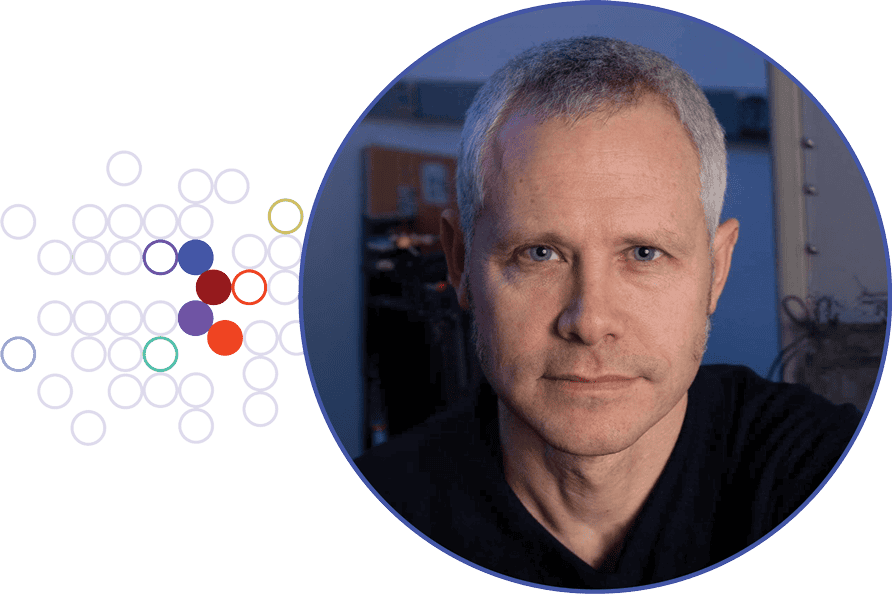
Even then, the journey is far from over. That finding must be shared through peer-reviewed publications, scrutinized by the broader scientific community, and independently validated by other laboratories. It must hold up across diverse experimental conditions and different research questions. Only after this extensive validation can it truly begin its journey beyond the bench, navigating the complex pathways of preclinical studies, clinical trials, and, ultimately, reaching patients as a life-saving treatment. Dr. Kenneth Murphy, a recipient of the 2026 AACR-CRI Lloyd J. Old Award in Cancer Immunology, eloquently captures this iterative process: “The truth of it is, we stumbled across that gene for the wrong reasons, and it was a disaster, and we finally figured out what was missing.” Dr. Murphy’s persistence led to fundamental discoveries concerning dendritic cells, profoundly reshaping our understanding of immune responses and paving the way for modern immunotherapies.
Investing in Tomorrow: The Indispensable Role of Funding
This caliber of foundational research—the meticulous experimentation, the intellectual exploration, the patient pursuit of elusive answers—cannot occur without adequate resources. It demands time, specialized equipment, access to cutting-edge technologies, and, critically, consistent funding. Funding provides scientists with the freedom to ask difficult, fundamental questions and the essential patience required to systematically uncover their answers.
Support fuels every stage of discovery, especially the initial, uncertain phase where ideas are first tested, where hypotheses are challenged, and where the very first, tentative steps toward a breakthrough are taken. Without robust funding, promising research lines are abandoned, talented scientists are forced out of the field, and the pace of discovery slows dramatically. Dr. E. John Wherry, Associate Director of CRI’s Scientific Advisory Council, issues a stark warning: “If we don’t protect this next generation of researchers, we risk losing the very people who will drive the discoveries of tomorrow.” The economic impact of medical research is also significant; studies have shown that every dollar invested in NIH research yields a substantial return in terms of economic growth, job creation, and improved public health.

A Testament to Hope: The Human Impact
Ultimately, every new therapy, every improved outcome, and every life extended or saved traces back to these moments of persistent inquiry in the lab—to the unwavering dedication of scientists who kept pushing forward when the answers were anything but obvious. The profound impact of this work is perhaps best encapsulated by those who have directly benefited. Sharon Belvin, a Stage 4 Melanoma Survivor, powerfully affirms, “My life, and the lives of so many others, are living proof that this work actually matters.” Her statement serves as a potent reminder of the tangible, life-altering consequences of sustained investment in cancer research. Advances in immunotherapy, for example, which originated from decades of basic immunology research, have transformed the treatment landscape for several cancers, offering hope to patients with previously untreatable conditions.
Before the splashy headlines, before the rigorous clinical trials, and long before the life-saving treatments reach patients, there is the lab. And within its walls, there are dedicated individuals engaged in the careful, repetitive, and profoundly determined work that meticulously transforms mere possibility into undeniable progress. Tonight, long after the sun has set and most of the world sleeps, a light will still burn brightly in a laboratory somewhere. And another experiment will begin, another step taken on the arduous but vital journey toward a future free from cancer.
For those interested in supporting or learning more about the cutting-edge research driving these advancements, the Cancer Research Institute encourages exploration of the incredible work being done by CRI-funded scientists.
