
 By Hendra Lukman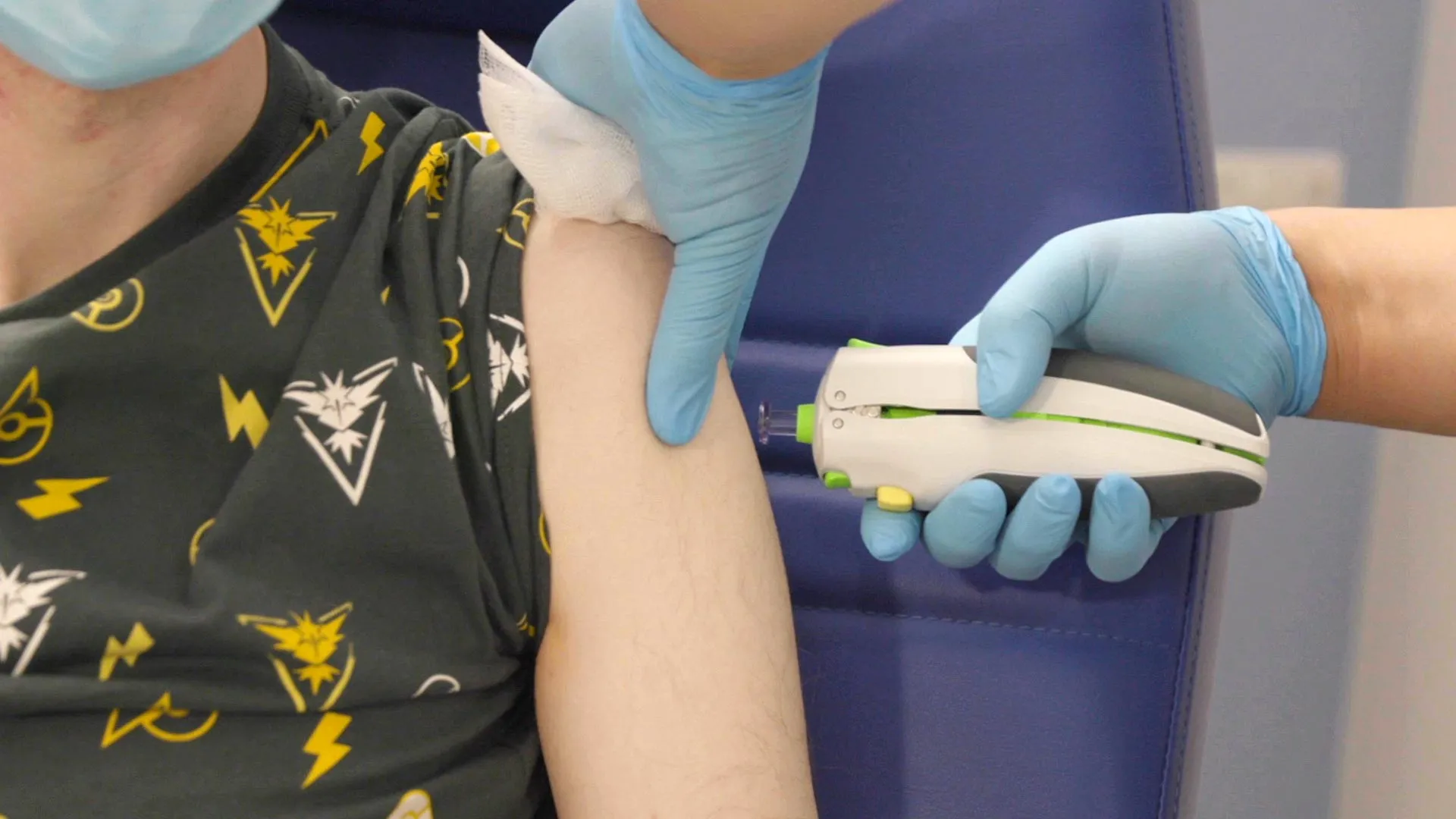
A groundbreaking advancement in global health security has emerged as a novel, AI-designed universal coronavirus vaccine has successfully completed its initial human clinical trial. This significant milestone, achieved by researchers at the University of Cambridge and its spinout company DIOSynVax (DVX) Ltd, represents a pivotal step toward achieving broad-spectrum protection against current and future viral threats, potentially revolutionizing our approach to pandemic preparedness. The experimental vaccine demonstrated a strong safety profile and elicited no significant adverse effects in a cohort of 39 healthy volunteers, paving the way for more extensive testing and development.
Pioneering a Future-Proof Vaccine Strategy
Unlike traditional vaccines that are meticulously engineered to target specific strains of a virus, this innovative vaccine adopts a fundamentally different philosophy. Its design is intended to confer immunity against a wide array of viruses within the Sarbeco coronavirus family. This family is of particular concern due to its known members, including SARS-CoV-2, the causative agent of the ongoing COVID-19 pandemic, as well as SARS, a virus responsible for a significant outbreak in the early 2000s. Crucially, the Sarbeco family also encompasses numerous bat coronaviruses that pose a latent risk of zoonotic spillover, meaning they could potentially jump from animal populations to humans in the future.
The Phase 1 trial results, published in the esteemed Journal of Infection, revealed that the vaccine not only stimulated robust immune responses against SARS-CoV-2 and SARS but also elicited protective reactions against related bat viruses that have not yet been documented to infect human populations. This broad reactivity is a testament to the vaccine’s sophisticated design, which aims to preemptively equip the immune system against emerging viral threats.
The Dawn of AI-Driven Vaccine Design
This pioneering human trial also marks a historic moment as it is the first instance where a vaccine, whose critical active ingredient was entirely conceptualized and generated through advanced computational simulations, has been administered to human participants. Researchers harnessed the power of artificial intelligence (AI) and machine learning (ML) to construct what they term a "super-antigen." An antigen is the fundamental component of any vaccine responsible for educating the immune system, enabling it to recognize and neutralize a specific pathogen.
The AI system’s methodology was a departure from conventional approaches. Instead of focusing on the genetic makeup of a single virus strain, the AI meticulously analyzed vast datasets of genetic information from a multitude of Sarbeco coronaviruses. This comprehensive genetic library was assembled from global surveillance programs that track circulating viruses in animal reservoirs. By identifying conserved features – genetic elements that remain consistent across the entire virus group – the AI was able to synthesize these shared characteristics into a single, potent vaccine antigen. The overarching objective of this novel strategy is to establish a durable immune defense not only against viruses already known to infect humans but also against future, as-yet-undiscovered strains that are predicted to emerge from this viral family.
Professor Jonathan Heeney, a leading figure in the research and based at the University of Cambridge’s Department of Veterinary Medicine, emphasized the transformative potential of this technology. "This trial proves the safety of an entirely new way of designing vaccines," he stated. "The technology uses an AI-designed ‘super-antigen’ to provide lasting protection against a broad range of viruses — for example the Ebola group, or Sarbeco coronavirus group — even as they mutate." The implications of this breakthrough are far-reaching, with researchers expressing optimism that this AI-driven design strategy could be adapted for the development of universal vaccines against other major viral families, including those responsible for Ebola and influenza outbreaks.
Escaping the Cycle of Constant Vaccine Reformulation
The persistent need for annual updates to vaccines, such as seasonal flu shots and reformulated COVID-19 vaccines, stems from the inherent mutability of viruses. These traditional vaccines are often developed in response to specific virus strains that are already circulating within human populations. As viruses continuously evolve and mutate, the efficacy of existing vaccines can diminish over time, necessitating a reactive cycle of reformulation and re-vaccination.
The new AI-driven approach championed by Professor Heeney and his team offers a potential solution to this perpetual challenge. "We’ve converted vaccine development from being reactive to being future proof," Professor Heeney explained. "Our vaccines will continue to provide protection against viruses even as they mutate into new strains." He further elaborated on the limitations of conventional vaccines, stating, "We’ve overcome the problem of traditional vaccines, which have limited protection. It means we can escape the constant cycle of chasing the virus variants circulating in humans and updating the vaccines to try to catch up, like a dog chasing its tail." By targeting conserved features common to an entire viral family, the researchers aim to create a vaccine that remains highly effective even as new variants emerge and circulate.
The Human Clinical Trial: Safety and Delivery Innovation
The initial human trial, conducted at the National Institute for Health and Care Research (NIHR) Clinical Research Facilities in Southampton and Cambridge, involved 39 healthy volunteers aged between 18 and 50 years. The study was sponsored by University Hospital Southampton NHS Foundation Trust (UHSFT). The vaccine’s unique super-antigen can be integrated with various vaccine delivery platforms. In this Phase 1 trial, the super-antigen was administered as a DNA vaccine using an advanced microfluidic jet system.
This needle-free delivery method holds significant promise. For individuals who experience anxiety or discomfort associated with traditional injections, this non-invasive approach offers a compelling alternative. Furthermore, researchers believe this technology could streamline and accelerate large-scale vaccination campaigns, particularly in resource-limited settings or challenging environments where administering traditional injections may present logistical difficulties. Prior to the human trials, extensive animal studies had already demonstrated the vaccine’s capacity to induce potent immune responses against a spectrum of coronaviruses, providing a strong foundation for human testing.
The journey of this vaccine is far from over. Before it can be considered for widespread public use, it must undergo further rigorous testing. A larger Phase 2 study is now being planned. This subsequent trial will aim to assess the immune responses generated in a broader and more diverse participant group, further validating the vaccine’s ability to induce strong and wide-ranging protection against the targeted viral family.
Fortifying Defenses Against Future Pandemic Threats
The scientific community has consistently highlighted the urgent need for more comprehensive and adaptable vaccine strategies, given the ongoing circulation of numerous potentially dangerous viruses in animal populations worldwide. Professor Saul Faust, the trial’s chief investigator from the University of Southampton, underscored this critical imperative. "Viruses like Influenza, Coronaviruses and the Ebola group are evolving continuously and by the time vaccines are rolled out, they may be poorly matched — the current ‘reactive’ vaccine system struggles to keep pace," he remarked.
Professor Faust further articulated the forward-looking nature of the new vaccine class: "This new class of universal vaccines are future-proofed. They not only protect against many variants simultaneously, but potentially against related viruses that haven’t yet emerged and spilt over to humans." He expressed a profound belief that the successful clinical advancement of such vaccines before the onset of a new viral outbreak could have a monumental impact, potentially saving millions of lives, averting the need for disruptive lockdowns, and preserving global economic stability.
Professor Marian Knight, Scientific Director for NIHR Infrastructure, lauded the trial results as a "pivotal leap forward." She stated, "The remarkable success of this AI-designed ‘super-antigen’ trial marks a pivotal leap forward in our ability to deliver broad, lasting viral protection." She attributed this significant achievement to the synergistic collaboration between the life sciences sector and the NIHR’s world-class infrastructure in Cambridge and Southampton, whose Clinical Research Facilities provided the essential expertise and environment to accelerate this innovation safely, bringing it closer to patients.
While SARS-CoV-2 and other Sarbeco coronaviruses remain significant public health concerns, scientists are keenly aware that countless other viruses continue to circulate in animal reservoirs. These viruses hold the potential for zoonotic transmission, although identifying the precise virus that might emerge next, or when such an event might occur, remains an unpredictable challenge.
The development of this AI-designed universal vaccine was primarily funded by Innovate UK. DIOSynVax, an acronym for Digitally Immune Optimised Synthetic Vaccines, was established in 2017 as a spinout from the University of Cambridge, with crucial support from Cambridge Enterprise, the university’s commercialization arm. The company’s ambitious vaccine development pipeline extends beyond coronaviruses, encompassing candidates targeting seasonal influenza, potential pandemic influenza threats, hemorrhagic fever viruses, and other coronavirus strains. Professor Jonathan Heeney’s expertise as Professor of Comparative Pathology at the University of Cambridge and a Fellow of Darwin College has been instrumental in guiding this groundbreaking research.
