
 By admin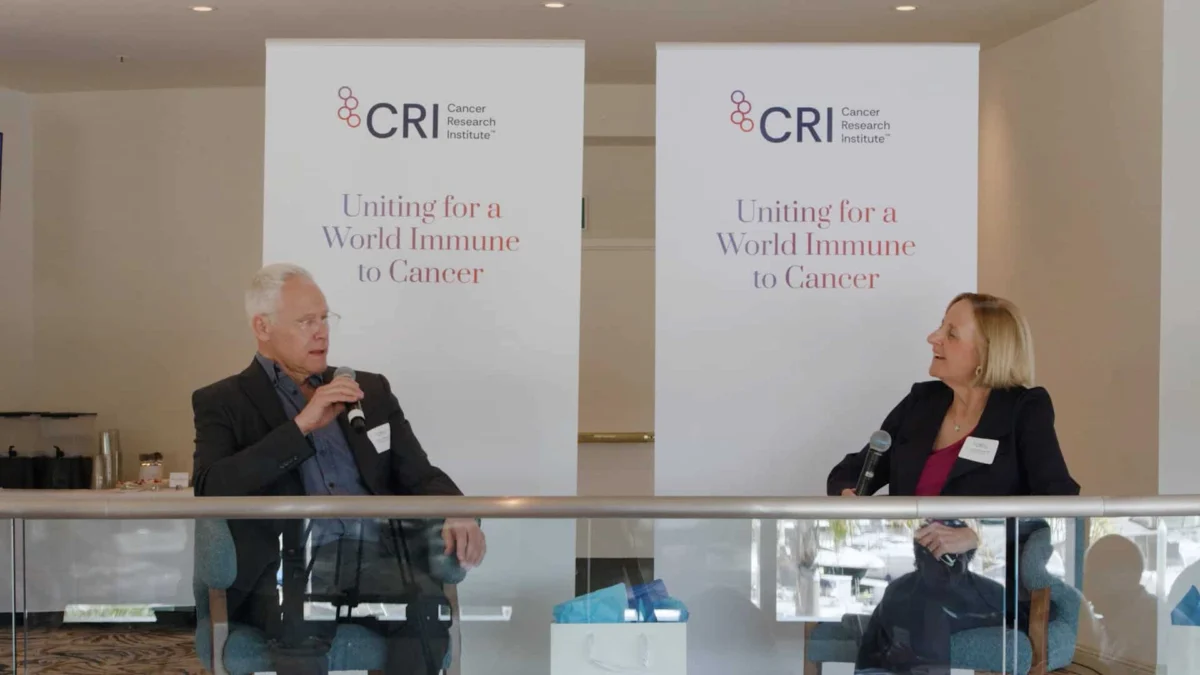
At the prestigious 2026 AACR Annual Meeting, held as a pivotal gathering for the global cancer research community, the Cancer Research Institute (CRI) and the American Association for Cancer Research (AACR) jointly presented the esteemed AACR–CRI Lloyd J. Old Award in Cancer Immunology to Kenneth M. Murphy, MD, PhD. This distinguished accolade acknowledges scientists whose groundbreaking work has fundamentally transformed the field of cancer immunology. Dr. Murphy’s decades of relentless inquiry into the nature and function of dendritic cells (DCs) and their indispensable role in orchestrating immune responses have not merely contributed to, but have profoundly shaped the trajectory of modern cancer immunology, laying essential groundwork for many of today’s most effective immunotherapies.
The ceremony this year featured an innovative format designed to illuminate the profound insights of the award recipient: a dynamic fireside-style conversation. Dr. Murphy engaged in a candid and wide-ranging discussion with Dr. Crystal Mackall, MD, last year’s recipient of the same prestigious award. This dialogue offered a unique window into the often-nonlinear process of scientific discovery, providing invaluable perspectives on how breakthroughs truly happen and where the burgeoning field of cancer immunology might be headed in the years to come. The full discussion, offering deep dives into scientific methodology and future challenges, was made available for broader dissemination, serving as a rich resource for researchers and enthusiasts alike.
The Legacy of the Lloyd J. Old Award and Its Namesake
The AACR–CRI Lloyd J. Old Award in Cancer Immunology is one of the highest honors in the field, recognizing individuals who have made paradigm-shifting discoveries that have significantly advanced our understanding of the immune system’s interaction with cancer. The award is named in honor of Dr. Lloyd J. Old, a towering figure often hailed as the "Father of Modern Cancer Immunology." Dr. Old, through his pioneering work at the Cancer Research Institute, established the fundamental principles of cancer immunology, including the concept of tumor antigens and immunosurveillance, the idea that the immune system constantly monitors the body for and eliminates nascent cancer cells. His foundational research in the mid-20th century provided the intellectual framework for much of the subsequent development in the field, including the realization that the immune system could be harnessed to fight cancer. The award bearing his name thus represents a continuum of excellence, celebrating scientists who embody Dr. Old’s spirit of innovation and dedication to unraveling the complexities of the immune system’s role in cancer. The selection of Dr. Murphy, whose work on dendritic cells directly informs the mechanisms by which the immune system recognizes and responds to cancer, is a testament to the enduring impact of Old’s legacy and the critical importance of foundational immunological research.
Dr. Murphy’s Foundational Contributions to Dendritic Cell Biology
Dr. Murphy’s research has been instrumental in elucidating the critical role of dendritic cells (DCs) in initiating and shaping immune responses. Discovered by Ralph Steinman and Zanvil Cohn in the early 1970s, dendritic cells were initially recognized for their unique tree-like morphology and their potent ability to present antigens. However, it was the subsequent decades of work by researchers like Dr. Murphy that meticulously defined the diverse subsets of DCs and their specialized functions, particularly in the context of anti-tumor immunity.
A central theme of Dr. Murphy’s career has been the identification and characterization of the cDC1 subset of dendritic cells. His laboratory’s groundbreaking work revealed that cDC1s are uniquely capable of cross-presenting antigens, a crucial process by which extracellular antigens are processed and presented on MHC class I molecules to activate CD8+ T cells, often referred to as cytotoxic T lymphocytes (CTLs). These CTLs are the primary effector cells responsible for directly recognizing and killing cancer cells. This discovery was not merely an academic exercise; it provided a mechanistic understanding of how the immune system mounts robust and durable anti-tumor responses. Prior to this, the precise cellular machinery responsible for initiating potent CD8+ T cell immunity against tumors was not fully understood, leading to significant challenges in developing effective immunotherapies.
The impact of understanding cDC1 function cannot be overstated. It reshaped the accepted understanding of anti-tumor immunity, revealing why even highly successful treatments like immune checkpoint inhibitors (e.g., PD-1/PD-L1 blockers, CTLA-4 inhibitors) ultimately depend on proper DC function to prime and maintain effective T cell responses. Without functional cDC1s to initiate these responses, checkpoint inhibitors, which primarily remove brakes on existing T cells, would have limited efficacy. For instance, studies have shown that the presence and activation status of cDC1s within the tumor microenvironment correlate with better responses to checkpoint blockade therapy in various cancers, including melanoma and lung cancer. This underscores the profound clinical relevance of Dr. Murphy’s basic science investigations.
The Nonlinear Path of Scientific Discovery
During the fireside conversation, a prominent theme that resonated deeply was the inherently nonlinear nature of scientific progress. Dr. Murphy vividly described his extensive career not as a meticulously planned series of breakthroughs, but rather as an organic sequence of incremental steps, frequently guided more by an insatiable curiosity than by a rigidly defined endpoint. "We’re still asking the same question that we started off with," he reflected, encapsulating decades of rigorous work dedicated to dissecting how the immune system precisely directs various types of responses. This profound statement highlights a fundamental truth in basic research: often, the most significant discoveries emerge from a persistent, iterative exploration of foundational questions, rather than a direct march toward a predetermined solution.
This "following biology" mindset, prioritizing empirical observation and the inherent complexities of biological systems over forcing a preconceived hypothesis, has been absolutely central to some of the field’s most transformative advances. In his accompanying award lecture, Dr. Murphy meticulously traced how these foundational discoveries about dendritic cells – particularly the cDC1 subset – laid the essential groundwork for the sophisticated immunotherapies that are now transforming patient care. His work exemplified how deep, mechanistic understanding of basic immunological processes is the bedrock upon which applied clinical innovations are built.
Unresolved Questions and Future Directions in Cancer Immunology
Despite the monumental strides made in cancer immunology, the conversation with Dr. Mackall underscored just how much remains to be fully understood. Dr. Murphy emphasized that several key questions in immune biology persist, particularly concerning the precise mechanisms by which immune responses are initially triggered and then sustained over time. One critical area he highlighted in this context is the complex transition between "stem-like" T cells and "short-lived effector cells." This distinction is profoundly important because the ability of T cells to maintain a stem-like phenotype, capable of self-renewal and sustained anti-tumor activity, may ultimately dictate the long-term durability of anti-tumor responses and the prevention of relapse in patients. Understanding and manipulating this cellular differentiation pathway holds immense promise for developing next-generation immunotherapies that can induce lasting remission.
This same level of complexity extends to the development of cancer vaccines, an area that both speakers acknowledged has experienced cycles of fervent optimism followed by periods of disappointment. Dr. Murphy pointed out that the success of these approaches may hinge less on the specific antigen targeted by the vaccine and more on which cells are responsible for presenting that antigen to the immune system. His work has definitively shown that not all dendritic cells are created equal; cDC1-driven priming consistently leads to stronger, more robust, and more durable CD8+ T cell responses, whereas other DC subsets may be significantly less effective at initiating potent anti-tumor immunity. New findings emanating from his laboratory further solidify this understanding, suggesting that in advanced mRNA and cDNA vaccine platforms, the efficient activation of these vital anti-tumor responses is critically dependent on the functional integrity and presence of specific DC populations. This insight is crucial for optimizing vaccine design, pushing the field toward strategies that specifically target or enhance cDC1 function to maximize therapeutic efficacy.
The Evolving Landscape of Scientific Research
Beyond the specific immunological challenges, the discussion broadened significantly to encompass the evolving landscape of science itself. Both Dr. Murphy and Dr. Mackall offered insightful reflections on how the broader research environment is undergoing profound changes and what these shifts portend for the next generation of scientists. They touched upon a range of issues, from the persistent pressures related to research funding to the rapidly expanding role of artificial intelligence (AI) in scientific inquiry.
Dr. Murphy characterized AI as an undeniably useful and powerful tool, particularly for the arduous tasks of managing, analyzing, and extracting patterns from the increasingly vast and complex datasets generated in modern biological research. He acknowledged its capacity to accelerate certain aspects of discovery and provide novel insights into intricate biological systems. However, he also offered a crucial caveat: AI, in its current form, is not a substitute for the fundamental core of scientific discovery. This core, he argued, resides in the uniquely human capacities to identify the right questions to ask, to design experiments that can genuinely answer those questions, and critically, to interpret the results with profound insight, contextual understanding, and a nuanced appreciation for biological complexity. AI can process data, but it currently lacks the intuitive leaps, the creative hypothesis generation, and the deep biological reasoning that characterize truly transformative scientific breakthroughs.
Dr. Mackall underscored a related and equally pressing challenge: the sheer, overwhelming volume of scientific information and data now readily available. Paradoxically, she noted, this abundance can make it harder, rather than easier, for young scientists to discern and focus on those truly critical and unanswered questions that will drive the field forward. In such an information-saturated environment, the traditional pillars of scientific training—mentorship, the ability to synthesize disparate pieces of knowledge into a coherent understanding, and the skill of critical thinking—become even more vitally important. Effective mentorship is essential to guide nascent researchers through the noise, helping them develop the discernment to identify high-impact problems and the intellectual rigor to pursue them. The ability to synthesize vast amounts of information into actionable understanding is a skill that AI can augment, but not replace, in the human scientist.
Broader Impact and Implications for Cancer Patients
If there was a unifying and resounding message that emerged across both the engaging conversation and Dr. Murphy’s illuminating lecture, it was this: the profound breakthroughs currently transforming cancer immunotherapy are deeply and inextricably rooted in decades of fundamental basic science. The clinical advances that are now saving and extending patient lives—ranging from the revolutionary impact of immune checkpoint blockade to the burgeoning promise of next-generation cancer vaccines and adoptive cell therapies—are all meticulously built upon a bedrock of foundational discoveries concerning the intricate workings of the immune system. Without the tireless efforts of scientists like Dr. Murphy to meticulously map out the cellular and molecular mechanisms of immune recognition and response, these clinical applications would simply not exist.
The implications of Dr. Murphy’s work, and the ongoing dialogue among leaders in the field, are far-reaching. They highlight the absolute necessity of sustained investment in basic research, even when immediate clinical applications are not apparent. They reinforce the idea that true innovation often emerges from curiosity-driven inquiry, rather than solely from targeted, translational efforts. Furthermore, the insights into dendritic cell biology continue to inform the design of more effective immunotherapies, driving the development of personalized cancer treatments and combination strategies that leverage the immune system’s full potential. The understanding that cDC1s are pivotal for initiating strong CD8+ T cell responses is already leading to novel therapeutic approaches, such as strategies to recruit or activate these specific DC subsets within tumors, or to engineer vaccines that more effectively engage them.
As Dr. Murphy’s ongoing work continues to demonstrate, there remains an enormous amount to learn about the immune system and its complex interactions with cancer. The challenges are significant, but the potential rewards—in terms of improved patient outcomes and ultimately, cures—are immeasurable. If history serves as a reliable guide, the next wave of transformative progress in cancer treatment will not originate from rigid, preconceived plans or purely technological advancements alone. Instead, it will most likely stem from a continued dedication to "following biology"—meticulously unraveling its mysteries, one fundamental question at a time. This approach, championed by luminaries like Dr. Kenneth M. Murphy, remains the most potent engine for scientific discovery and the ultimate hope for eradicating cancer.
