
 By admin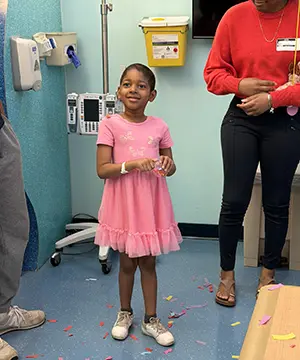
The journey of pediatric cancer for Amari and her family began with a sudden, harrowing medical emergency on a typical school night, a moment that transitioned from a domestic routine to a life-altering crisis in a matter of hours. After discovering blood in her urine, Amari was rushed to the emergency room by her mother, Cora H., expecting a routine examination for what they hoped would be a minor ailment. Instead, at approximately 3:00 AM, medical professionals delivered a diagnosis that redefined the family’s reality: a tumor had been discovered on Amari’s kidney. This initial discovery marked the family’s entry into the complex and often overwhelming world of pediatric oncology, specifically the treatment of Wilms tumor, a form of kidney cancer that primarily affects children.
The Initial Diagnosis and Surgical Innovation
Wilms tumor, or nephroblastoma, is the most common type of kidney cancer in children, accounting for about 95% of childhood kidney cancers in the United States. While the prognosis for many pediatric renal cancers is generally positive, the path to recovery involves high-stakes medical decisions. In Amari’s case, the initial clinical assessment suggested a total nephrectomy—the complete removal of the left kidney. However, the medical team sought to explore more conservative surgical options to preserve as much renal function as possible.
Following a regimen of preoperative chemotherapy intended to shrink the mass, surgeons performed a complex procedure aimed at tumor extraction while sparing the healthy organ tissue. This approach, known as nephron-sparing surgery, is a specialized technique used to maintain long-term kidney health, particularly in pediatric patients who face decades of life ahead. The surgery was a resounding success; the medical team was able to remove the entire tumor while preserving approximately 60 percent of Amari’s healthy kidney. This outcome was a critical victory in her treatment plan, providing a better foundation for her physical development and long-term health.
The Challenge of Stage 3 Anaplastic Wilms Tumor
Despite the surgical success, the subsequent pathology reports introduced new challenges. The tumor was identified as a Stage 3 anaplastic Wilms tumor. In the classification of pediatric renal tumors, "anaplastic" refers to the appearance of the cancer cells under a microscope. Anaplastic cells are characterized by large, distorted nuclei and irregular DNA patterns, indicating a more aggressive form of cancer that is often more resistant to standard chemotherapy than "favorable histology" tumors.
A Stage 3 designation indicates that the cancer has spread beyond the kidney to nearby lymph nodes or other structures within the abdomen, or that the tumor ruptured before or during surgery. For Amari, this diagnosis necessitated an intensive 32-week chemotherapy protocol. This period represented a grueling marathon of hospital stays, systemic exhaustion, and the emotional toll inherent in watching a child undergo aggressive medical intervention.
Maintaining Resilience and Normalcy
Throughout the eight-month treatment period, Cora H. maintained a policy of radical transparency with her daughters. Pediatric psychologists often emphasize that honest, age-appropriate communication can reduce anxiety in siblings and patients alike, fostering a sense of agency in an environment where they have little control. This family-centric approach became a cornerstone of Amari’s resilience.
Despite the physical demands of chemotherapy, Amari continued to pursue her passion for cheerleading. Maintaining a connection to her social circles and extracurricular activities provided a vital psychological buffer against the isolation often felt by pediatric patients. A significant milestone during her treatment was an encounter with the Dallas Cowboys Cheerleaders. For Amari, who aspires to join their ranks in the future, this interaction served as a powerful motivator, shifting her focus from the limitations of her illness to the possibilities of her future.
The Symbolism of the Victory Bell
In pediatric oncology wards across the country, "ringing the bell" has become a profound rite of passage. It signifies the completion of active treatment and the transition into the survivorship phase. For Amari and her family, the anticipation of this moment was a recurring theme during their 32 weeks of chemotherapy. They frequently viewed videos of other children reaching this milestone to maintain a sense of hope.
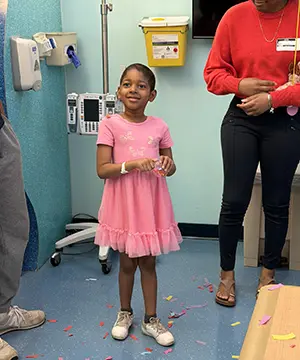
Amari’s turn to ring the bell eventually arrived, coinciding poignantly with the birthday of her late grandmother. Surrounded by a multidisciplinary team of doctors, nurses, family members, and friends, the sound of the bell marked the end of her intensive medical journey. Today, Amari is officially in the survivorship phase, a period characterized by ongoing monitoring to ensure she remains cancer-free and to manage any late effects of the chemotherapy and surgery.
Understanding the Broader Context of Pediatric Cancer
Amari’s story is a microcosm of the broader battle against pediatric cancer. According to the American Cancer Society, about 500 to 600 new cases of Wilms tumor are diagnosed in the United States each year. While the five-year survival rate for Wilms tumor has climbed to approximately 90% due to advancements in multi-modal therapy (surgery, chemotherapy, and sometimes radiation), anaplastic cases remain more difficult to treat, highlighting the ongoing need for targeted research.
The month of June is recognized as National Cancer Survivors Month, a time dedicated to celebrating those who have finished treatment while acknowledging the unique challenges they face. Survivorship is not merely the absence of disease; it is a lifelong process. Pediatric survivors, in particular, require specialized follow-up care to monitor for potential "late effects," which can include cardiovascular issues, secondary cancers, or reproductive challenges resulting from the toxicity of early-life treatments.
The Role of Research and Philanthropy
The evolution of Amari’s treatment—from the decision to attempt a partial nephrectomy to the specific chemotherapy agents used to combat anaplastic cells—is the direct result of decades of clinical trials. Organizations such as the Children’s Oncology Group (COG) coordinate research across hundreds of institutions to refine these protocols.
Advocacy and fundraising during Cancer Survivors Month play a pivotal role in sustaining this progress. Public donations fund the basic science and clinical trials necessary to discover less toxic treatments and better surgical techniques. For families like Amari’s, these advancements are the difference between a devastating prognosis and a future filled with possibility.
Current Status and Future Outlook
Today, Amari is described as a thriving young girl with a diverse range of interests, from K-pop and the anime series Demon Slayer to playing with Barbies and shopping at Target. Her continued involvement in dance and cheerleading serves as a testament to her physical recovery and her refusal to let a Stage 3 diagnosis define her identity.
Cora H.’s message to other families facing similar diagnoses is one of unwavering hope. She emphasizes that while the journey is fraught with moments of despair, the support of the medical community and the strength of the family unit can lead to the "unforgettable sound" of the victory bell. Amari’s story serves as both an inspiration to families currently in the "hallway" of an emergency room and a reminder of the critical importance of supporting pediatric cancer research.
As Amari moves forward, her journey remains a powerful example of why medical innovation and emotional support must go hand-in-hand. Her survivorship is a victory not only for her family but for the entire field of pediatric oncology, proving that even the most aggressive diagnoses can be met with resilience and successful clinical outcomes. Through the lens of Cancer Survivors Month, her story encourages a global community to continue investing in the lives of children, ensuring they have the opportunity to grow, dream, and, most importantly, keep cheering.
