
 By admin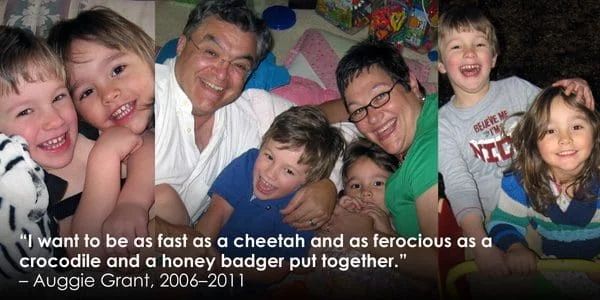
The story of Augusto “Auggie” Grant serves as a poignant and urgent case study in the devastating speed of pediatric leukemia and the systemic gaps in childhood cancer research funding. A vibrant five-year-old with aspirations of becoming an astronaut, a superhero, and a “ninja warrior,” Auggie’s life was abruptly terminated by acute monoblastic leukemia in December 2011. His death, occurring a mere five days after his initial diagnosis, underscores a critical reality in pediatric oncology: for many children, the window for intervention is catastrophically narrow, and the need for accelerated, specialized research is a matter of life and death.
In the years following his passing, Auggie’s parents, Jon and Cheryl Grant, have transitioned from personal tragedy to public advocacy, partnering with CureSearch for Children’s Cancer to drive awareness and financial support for medical breakthroughs. Their efforts, centered around the annual "Ultimate Hike" and the team known as "Auggie’s Honey Badgers," highlight the growing role of family-led philanthropy in addressing the chronic underfunding of pediatric-specific medical research.
The Clinical Reality: Understanding Acute Monoblastic Leukemia
To understand the urgency of Auggie Grant’s story, one must examine the medical context of his diagnosis. Acute monoblastic leukemia (AML-M5) is a subtype of acute myeloid leukemia (AML). While leukemia is the most common form of cancer in children, AML accounts for about 20% of childhood leukemia cases and is generally more difficult to treat than the more common acute lymphoblastic leukemia (ALL).
AML-M5 is characterized by the rapid proliferation of immature monoblasts in the bone marrow and blood. These malignant cells interfere with the production of normal white blood cells, red blood cells, and platelets. The progression of the disease is often described as "explosive." As Cheryl Grant noted, Auggie appeared healthy and active—running “faster than a cheetah”—even as the cancer was unknowingly saturating his bloodstream. This asymptomatic progression is a hallmark of the disease, often leading to late-stage diagnosis where the systemic burden of the cancer is already overwhelming.
Medical data indicates that while five-year survival rates for pediatric cancers have improved significantly over the last several decades, reaching nearly 85% overall, certain subtypes like AML continue to have lower success rates, hovering between 60% and 70%. Furthermore, the aggressive nature of the treatments—often involving intensive chemotherapy and bone marrow transplants—can leave survivors with lifelong "late effects," including heart damage, infertility, and secondary cancers.
Chronology of a Crisis: The Five-Day Window
The timeline of Auggie Grant’s illness illustrates the terrifying pace at which pediatric cancer can move.
- Pre-Diagnosis (Late 2011): Auggie remained highly active, displaying no overt signs of distress that would suggest a life-threatening malignancy. His parents recall his high energy and imaginative play, which masked the internal biological crisis.
- Early December 2011: Subtle symptoms prompted a medical consultation. A standard blood test, which takes only minutes to process, revealed a critical imbalance in his blood cell counts, leading to the diagnosis of acute monoblastic leukemia.
- The Clinical Struggle: Upon diagnosis, the severity of the disease was immediately apparent. The malignancy had already reached a stage where medical intervention faced insurmountable odds.
- December 5, 2011: Only five days after the diagnosis, Auggie Grant passed away at the age of five.
- Post-2011 Legacy: Following his death, his parents sought a way to channel their grief into a productive force. After consulting with oncologists, they identified CureSearch as a primary vehicle for their advocacy, leading to the formation of "Auggie’s Honey Badgers" and their ongoing participation in the Ultimate Hike program.
The Funding Gap in Pediatric Oncology
A central theme in the advocacy of the Grant family is the disparity in research funding between adult and pediatric cancers. Data from the National Cancer Institute (NCI) and various advocacy groups reveals a stark reality: only a small fraction of federal cancer research funding is dedicated specifically to pediatric cases. Historically, this figure has hovered around 4%.
This funding gap has significant implications for drug development. Because pediatric cancers are biologically distinct from adult cancers, "repurposing" adult drugs for children is often ineffective or unnecessarily toxic. Over the last 30 years, only a handful of drugs have been developed and approved specifically for use in children with cancer, compared to hundreds for adult malignancies.
CureSearch for Children’s Cancer addresses this gap by focusing on "translational research." This model prioritizes projects that have the highest potential to move quickly from the laboratory setting into clinical trials. By targeting "fast-tracked" research, the organization aims to reduce the time it takes for new, safer treatments to reach the children who need them most. For families like the Grants, this speed is the most critical factor in preventing future tragedies.
The Ultimate Hike and Philanthropic Impact
The "Ultimate Hike" represents a unique intersection of physical endurance and charitable fundraising. As CureSearch’s signature endurance event, it challenges participants to complete high-mileage treks—often 28 miles in a single day—to raise funds for research.
For Jon Grant, the experience has been "transformative." He notes that the hike allows participants to evolve their grief into a sense of community and purpose. The team name, "Auggie’s Honey Badgers," was inspired by Auggie’s own admiration for the animal’s legendary ferocity and resilience. This spirit of "jubilant ferocity" has become a rallying cry for the team, which hikes annually to ensure that Auggie’s name remains associated with the fight for a cure.
The financial impact of such grassroots efforts is substantial. Recurring donations and team-based fundraising provide the consistent capital necessary for long-term clinical trials. Cheryl Grant emphasizes the simplicity of this contribution, noting that while it took only five minutes to diagnose Auggie’s terminal illness, it also takes only five minutes to set up a recurring donation that could fund a lifetime of research for another child.
Broader Implications and the Role of Awareness Month
September is designated as Childhood Cancer Awareness Month, a time intended to elevate the discourse surrounding pediatric malignancies to the national stage. The use of the gold ribbon symbolizes the "preciousness" of children and the high value of the cause.
The implications of increased awareness are multifaceted:
- Policy and Legislation: Increased public pressure can lead to legislative victories, such as the Research to Accelerate Cure and Equity (RACE) for Children Act, which requires companies developing adult cancer drugs to also investigate their potential for pediatric use if the molecular targets are similar.
- Precision Medicine: Funding directed toward pediatric research is increasingly focused on genomic sequencing and precision medicine. This allows oncologists to tailor treatments to the specific genetic makeup of a child’s tumor, potentially increasing efficacy while reducing side effects.
- Economic Stability for Families: Beyond research, awareness campaigns often highlight the secondary crisis of childhood cancer: the economic ruin of families. The "indirect costs" of cancer—lost wages, travel for treatment, and non-covered medical expenses—can be devastating. Organizations that fund research also help create a future where treatments are more efficient and less burdensome on the family unit.
Analysis of the Path Forward
The narrative of Auggie Grant is a reminder that the "war on cancer" is not a monolith; it is a series of specific, urgent battles fought in pediatric wards every day. The fact that a five-minute blood test can reveal a disease that ends a life in five days highlights a terrifying efficiency in nature that medical science has yet to match.
However, the shift from "flowers to funding" seen in Auggie’s obituary signals a broader trend in how society handles medical tragedy. By moving away from traditional mourning and toward strategic philanthropy, families are becoming the primary stakeholders in medical innovation. The success of "Auggie’s Honey Badgers" and CureSearch suggests that the future of pediatric oncology will be driven by those who have the most to lose.
As Childhood Cancer Awareness Month continues, the focus remains on the urgency of the "now." For children currently in treatment, the long-term horizons of medical research are less relevant than the immediate availability of clinical trials. The legacy of Augusto Grant, therefore, is not just one of memory, but of active, "ferocious" pursuit of a world where a five-year-old’s dreams of being an astronaut are not cut short by a biological fluke.
The call to action remains clear: through fundraising, participation in endurance events like the Ultimate Hike, and the promotion of specialized research, the "force" that was Auggie Grant continues to push the medical community toward a more hopeful conclusion for the thousands of children diagnosed with cancer each year. His story is a testament to the fact that while a life can be short, its impact, when channeled through dedicated advocacy, can be infinite.
