
 By Suherman Candra Maholtra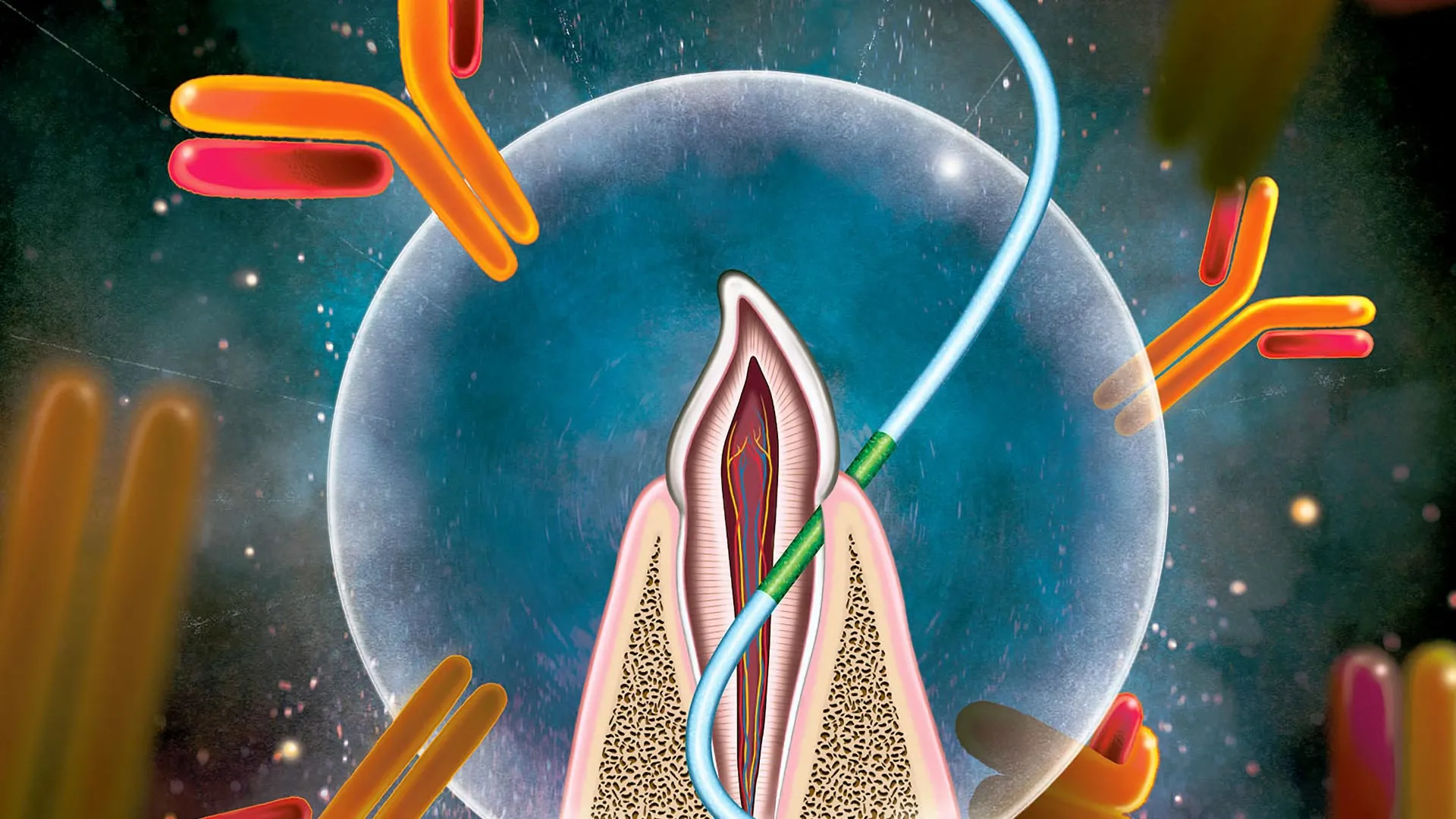
In a groundbreaking development for the field of nanomedicine and immunology, researchers have successfully demonstrated a novel vaccine delivery method that utilizes dental floss to target the junctional epithelium—the specialized tissue located between the teeth and gums. This innovative approach, tested in animal models and evaluated for human practicality, has shown the ability to stimulate robust antibody production in mucosal surfaces, including the lining of the nose and lungs. The study, published in the journal Nature Biomedical Engineering, suggests that this unconventional route could revolutionize how we protect the body against respiratory pathogens like influenza and COVID-19 by providing an additional line of defense at the primary points of viral entry.
The Biological Frontier of the Junctional Epithelium
To understand the significance of this discovery, one must first look at the unique anatomy of the human mouth. The term epithelium refers to the cellular tissue that lines the surfaces of body parts, acting as a protective barrier for organs such as the lungs, stomach, and intestines. Most epithelial tissues are designed to be impenetrable, featuring tight junctions that prevent pathogens, toxins, and environmental debris from entering the bloodstream.
However, the junctional epithelium is a biological outlier. Located at the deepest part of the gingival sulcus—the pocket between the tooth and the gum—this tissue is significantly thinner and more permeable than the rest of the oral mucosa. Its natural function is to allow the passage of immune cells from the body into the mouth to combat oral bacteria. Researchers led by Harvinder Singh Gill, the Ronald B. and Cynthia J. McNeill Term Professor in Nanomedicine at North Carolina State University, identified this permeability as a "unique opportunity" for vaccine delivery.
"Mucosal surfaces are important because they are a source of entry for pathogens, such as influenza and COVID," explains Dr. Gill. "However, if a vaccine is given by injection, antibodies are primarily produced in the bloodstream throughout the body, and relatively few antibodies are produced on mucosal surfaces." By targeting the junctional epithelium, the research team aims to trigger a dual immune response: one that protects the systemic bloodstream and another that fortifies the mucosal linings of the respiratory tract.
Comparative Study and Experimental Results
The research team, which included scientists from North Carolina State University, Texas Tech University, and Emory University, conducted a series of rigorous tests using lab mice to determine the viability of this delivery method. The primary experiment involved applying a peptide-based flu vaccine to unwaxed dental floss and then flossing the mice’s teeth to introduce the vaccine to the junctional epithelium.
To measure the effectiveness of this method, the researchers compared it against two established mucosal delivery routes: nasal administration (into the nose) and sublingual administration (placing the vaccine under the tongue). The results were definitive. The flossing technique produced an antibody response on mucosal surfaces that was far superior to the sublingual method, which is currently considered the gold standard for oral cavity vaccination.
Furthermore, the flossing method provided protection against the flu virus that was comparable to nasal delivery. This is a critical finding because nasal delivery, while effective, faces significant clinical hurdles. "Most vaccine formulations cannot be given via the nasal epithelium because the barrier features in that mucosal surface prevent efficient uptake," says Dr. Gill. "Intranasal delivery also has the potential to cause the vaccine to reach the brain, which can pose safety concerns. Vaccination via the junctional epithelium offers no such risk."
Versatility Across Vaccine Platforms
One of the most promising aspects of the study was the versatility of the flossing method across different vaccine technologies. The researchers tested whether the junctional epithelium could successfully process four distinct classes of vaccines:
- Peptides: Short chains of amino acids representing viral proteins.
- Proteins: Larger, more complex viral structures.
- Inactivated Viruses: Killed versions of a pathogen that can no longer cause disease.
- mRNA: The technology used in prominent COVID-19 vaccines, which instructs cells to produce a protein that triggers an immune response.
In all four categories, the delivery technique via the epithelial junction produced robust antibody responses both in the bloodstream and across mucosal surfaces. This suggests that the method could be adapted for a wide range of existing and future vaccines, potentially providing a universal platform for non-invasive immunization.
The researchers also addressed practical concerns regarding the "washout" effect. In the animal model, the immune response remained consistent even if the mice consumed food or water immediately after the vaccine was administered. This indicates that the vaccine is absorbed quickly enough by the junctional epithelium that common oral activities do not interfere with its efficacy.
Human Practicality and the Floss Pick Study
While the mouse models proved the biological concept, the researchers recognized that traditional string floss would be difficult for individuals to use for self-vaccination accurately. To solve this, they pivoted to the use of floss picks—small plastic tools with a pre-strung piece of floss between two prongs.
To test the feasibility of this delivery system in humans, the team recruited 27 participants. Instead of an actual vaccine, the floss picks were coated with a fluorescent food dye. Participants were instructed on how to target the junctional epithelium and were asked to use the pick as they would for normal dental hygiene.
The results of this human trial were encouraging: approximately 60% of the dye was successfully deposited in the gum pocket. Rohan Ingrole, the paper’s first author and a former Ph.D. student under Dr. Gill, noted that this level of deposition suggests that floss picks are a practical and effective vehicle for delivering vaccines to the targeted tissue in a real-world setting.
Timeline of Research and Development
The development of the floss-based vaccination method has been a multi-year effort supported by significant federal and institutional funding. The project was backed by the National Institutes of Health (NIH) under grants R01AI137846 and R01DE033759, alongside support from the Whitacre Endowed Chair in Science and Engineering at Texas Tech University.
- Initial Concept: Identification of the junctional epithelium as a permeable mucosal site.
- Animal Testing Phase: Successive trials using mouse models to compare peptide, protein, inactivated virus, and mRNA delivery.
- Human Feasibility Study: The 27-participant dye deposition study confirming the utility of floss picks.
- Patent Filing: Dr. Gill, Dr. Ingrole, and Akhilesh Kumar Shakya have filed for a patent related to targeting the junctional epithelium for vaccination.
- Future Outlook: The team is currently optimizing the vaccine-coating process for floss and preparing for potential clinical trials to evaluate safety and efficacy in humans.
Implications for Public Health and Global Logistics
The potential implications of a floss-based vaccine are vast, particularly in the context of global health and pandemic preparedness. One of the primary barriers to universal vaccination is "needle phobia," a condition that affects a significant portion of the population and leads to vaccine hesitancy. A needle-free, familiar tool like a floss pick could significantly increase uptake rates.
From a logistical standpoint, the method offers several advantages:
- Ease of Administration: Unlike injections, which require trained healthcare professionals, a floss-based vaccine could potentially be self-administered or given by minimally trained personnel, easing the burden on healthcare systems.
- Cost-Effectiveness: The researchers believe the technique will be price-competitive with existing delivery methods, as the materials (plastic picks and floss) are inexpensive and mass-produced.
- Safety Profile: By avoiding the nasal route, the risk of the vaccine migrating to the central nervous system is eliminated.
However, the researchers are also transparent about the limitations. The method would not be suitable for infants or toddlers who have not yet developed teeth. Furthermore, the efficacy of the vaccine in individuals with periodontal issues—such as gingivitis or advanced gum disease—remains an open question. "We would need to know more about how or whether this approach would work for people who have gum disease or other oral infections," Dr. Gill cautioned.
Conclusion and Future Directions
The study, titled "Floss-based vaccination targets the gingival sulcus for mucosal and systemic immunization," represents a paradigm shift in how we view the oral cavity’s role in the immune system. By leveraging a "weak link" in the body’s epithelial defenses, the research team has turned the junctional epithelium into a powerful gateway for immunization.
As the world continues to grapple with respiratory viruses that mutate and bypass traditional systemic immunity, the need for mucosal-level protection has never been greater. If subsequent clinical trials mirror the success of the animal models, the next time a patient visits a pharmacy for a seasonal flu shot, they might instead be handed a small, vaccine-coated floss pick—a simple tool for a complex biological challenge.
The research team, which includes experts from North Carolina State, Texas Tech, and Emory University, remains optimistic. With the patent in place and the proof-of-concept established, the focus now shifts to the rigorous path of clinical validation, aiming to turn this "promising" experiment into a cornerstone of modern preventive medicine.
