
 By admin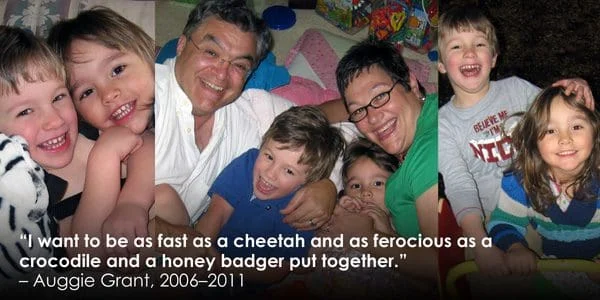
The story of Augusto “Auggie” Grant is one of vibrant life, sudden tragedy, and a profound, enduring legacy that continues to shape the landscape of pediatric oncology research. In 2011, the Grant family faced every parent’s ultimate nightmare: the rapid onset of an aggressive form of cancer that claimed their five-year-old son’s life just five days after diagnosis. In the decade since, his parents, Jon and Cheryl Grant, have channeled their grief into a powerhouse of advocacy and fundraising, partnering with CureSearch for Children’s Cancer to ensure that other families might be spared the same outcome. Their efforts highlight a critical gap in the medical field: the urgent need for specialized research and faster clinical transitions for pediatric cancer treatments.
A Life of Boundless Imagination
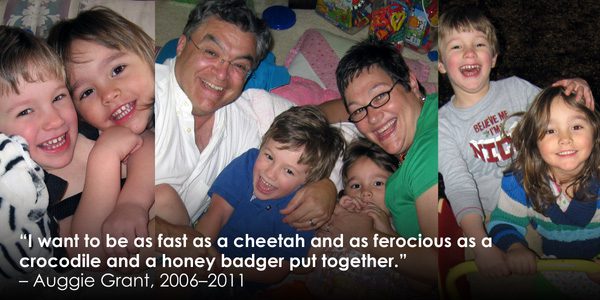
Before the diagnosis that would change everything, Auggie Grant was defined by an energy that his parents describe as "consuming the room." At five years old, Auggie’s world was one of "uniforms"—his word for the various costumes that allowed him to inhabit his dreams. Whether he was dressing as an astronaut, a superhero, or his self-invented ninja warrior persona, "Sherman," Auggie lived with a ferocity and joy that left a lasting impression on everyone he met.
His father, Jon Grant, recalls Auggie’s insistence on wearing full firefighter gear during a routine trip to an auto repair shop, just in case a fire broke out. This proactive, imaginative spirit was the hallmark of his personality. Even as an undiagnosed illness began to take hold, Auggie remained undeterred, frequently telling his parents he wanted to be "as fast as a cheetah and as ferocious as a crocodile." This "jubilant ferocity," as his mother Cheryl Grant describes it, would later become the guiding philosophy for their philanthropic work.
The Five-Day Crisis: A Chronology of Diagnosis
The timeline of Auggie’s illness serves as a sobering reminder of the aggressive nature of certain pediatric leukemias. In late 2011, Auggie appeared to be a healthy, active child, yet beneath the surface, a rare and virulent form of cancer was spreading through his bloodstream.
The family’s world fractured in late November. On what seemed like a routine medical inquiry, a blood test was administered. The results were catastrophic. Auggie was diagnosed with acute monoblastic leukemia (AML-M5), a subtype of acute myeloid leukemia known for its rapid progression and difficulty to treat, especially in its advanced stages.
The chronology of the subsequent five days was a whirlwind of hospitalizations and emergency interventions. Despite the best efforts of his medical team, the disease had progressed too far before it was detected. On December 5, 2011, only five days after his initial diagnosis, Auggie Grant passed away. The speed of the tragedy left the family and their community in a state of shock, highlighting a terrifying reality: for many children, the window for effective treatment is agonizingly small.
Medical Context: Understanding Acute Monoblastic Leukemia
Acute monoblastic leukemia (AML-M5) is a specific classification of AML where more than 80% of the leukemic cells are of the monocytic lineage. In pediatric patients, AML accounts for approximately 20% of all childhood leukemias, yet it is responsible for a disproportionate number of leukemia-related deaths.
Unlike Acute Lymphoblastic Leukemia (ALL), which has seen survival rates climb to nearly 90% due to decades of targeted research, AML survival rates remain significantly lower, often hovering between 60% and 70% depending on the subtype. AML-M5 is particularly noted for its potential to spread to extramedullary sites, including the central nervous system and the skin, making it a formidable challenge for oncologists. The Grant family’s experience underscores the critical need for early detection methods and more potent, fast-acting therapeutic interventions that can keep pace with the disease’s aggressive biology.
Turning Grief into Philanthropic Purpose
In the immediate aftermath of Auggie’s death, Cheryl and Jon Grant were faced with the task of writing an obituary that could somehow encapsulate their son’s massive spirit. Rather than asking for flowers, Cheryl reached out to Auggie’s oncologist to ask where donations could make the most significant impact on the future of pediatric oncology. The recommendation was CureSearch for Children’s Cancer.
CureSearch is a national non-profit foundation that accelerates the search for cures by driving innovation and eliminating barriers to clinical trials. The organization’s focus is unique: it does not merely fund general research but specifically targets projects that are "fast-tracked" to reach the clinic. This mission resonated deeply with the Grants, who knew firsthand that for children with aggressive cancers, time is the most precious and scarcest resource.
The response to the obituary was overwhelming. The funds raised in Auggie’s memory became the foundation for a long-term partnership with CureSearch, turning a private tragedy into a public mission to "better the outcomes for children like Auggie."
Auggie’s Honey Badgers and the Ultimate Hike
To sustain their fundraising efforts, the Grants founded a team known as "Auggie’s Honey Badgers." The name was inspired by Auggie’s favorite animal, known for its fearlessness and tenacity. The team participates annually in the "Ultimate Hike," a signature CureSearch event that challenges participants to complete a 28.3-mile trek in a single day.
For Jon Grant, the Ultimate Hike has been a transformative experience in his journey through grief. He notes that the physical challenge of the hike mirrors the emotional endurance required to live with loss. Over the years, the "Honey Badgers" have evolved from a group of friends and family into a community of advocates, raising hundreds of thousands of dollars for pediatric cancer research.
The hike serves two purposes: it raises the necessary capital to fund high-impact research, and it provides a support system for families who have lost children. Jon describes the team as a "family" rather than just a group of hikers, emphasizing the psychological importance of communal action in the face of individual loss.
The Funding Gap in Pediatric Oncology
The advocacy of families like the Grants is necessitated by a significant disparity in medical research funding. Despite cancer being the leading cause of death by disease in children in the United States, pediatric cancer research receives only a small fraction of the funding allocated to adult cancers.
According to data from the National Cancer Institute (NCI), approximately 4% of federal cancer research funding is dedicated specifically to childhood cancers. This "4% gap" means that many pediatric treatments currently in use are decades old, originally designed for adults and repurposed for children, often leading to severe long-term side effects or "late effects" that can impact survivors for the rest of their lives.
CureSearch addresses this gap by incentivizing pharmaceutical companies and academic researchers to focus on pediatric-specific drug development. By funding the "Valley of Death"—the gap between laboratory discovery and clinical application—CureSearch ensures that promising treatments do not languish on a shelf due to lack of commercial interest.
Broader Implications and the Importance of Awareness
September is recognized as Childhood Cancer Awareness Month, a time when the stories of children like Auggie are brought to the forefront of the national conversation. The Grant family uses this period to remind the public that while progress has been made, the urgency remains.
The implications of their work extend beyond fundraising. They are part of a broader movement advocating for legislative changes, such as the Research to Accelerate Cure and Equity (RACE) for Children Act, which requires pharmaceutical companies to test new adult cancer drugs in children if the molecular targets are relevant to pediatric cancer.
Analysis of the current landscape suggests that the shift toward "precision medicine"—treatments tailored to the genetic profile of an individual’s tumor—holds the most promise for treating aggressive leukemias like Auggie’s. However, these advancements require sustained, reliable funding that federal sources alone have yet to provide.
Conclusion: A Legacy of Jubilant Ferocity
Augusto "Auggie" Grant lived for only five years, but the impact of his life is measured in the decades of research his story has inspired. Through the "Honey Badgers" and their partnership with CureSearch, Cheryl and Jon Grant have ensured that their son’s name is synonymous with the fight for a future where no child’s life is cut short by a five-day crisis.
As Cheryl Grant points out, it takes only five minutes to set up a recurring donation or to share a story of a child battling cancer. Those five minutes represent a stark contrast to the five days that redefined her family’s existence. By channeling Auggie’s "ferocity" into a structured, professional, and highly effective movement, the Grants are not just remembering their son; they are actively working to change the statistics of pediatric oncology, one mile and one dollar at a time. The message of Auggie’s legacy is clear: children cannot wait for the slow wheels of traditional research to turn. They need the speed of a cheetah and the tenacity of a honey badger today.
