
 By admin
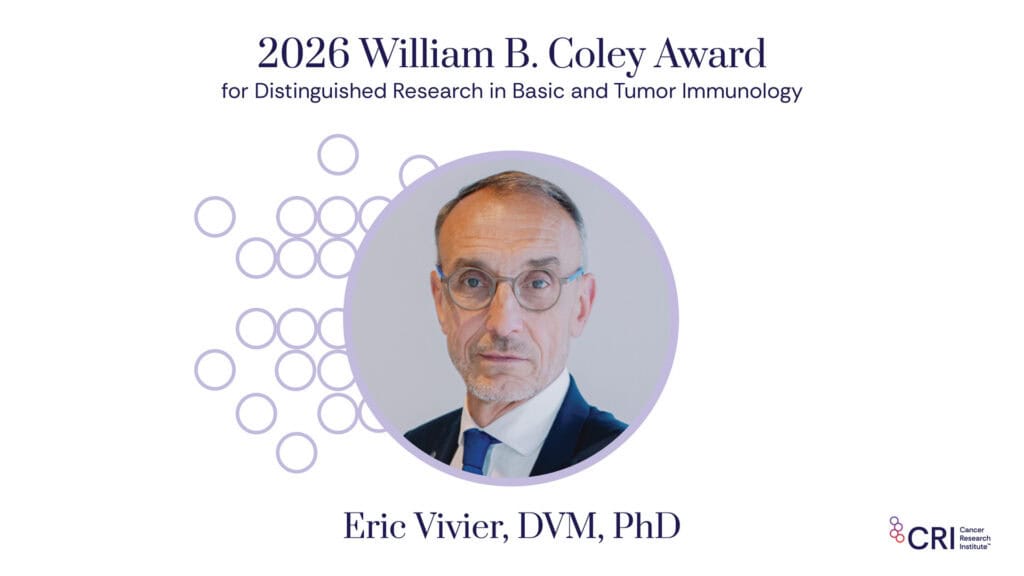
The Cancer Research Institute (CRI) has proudly unveiled the recipients of its prestigious 2026 Scientific Achievement Awards, recognizing two luminaries whose pioneering work has profoundly advanced the field of immunology and its application to cancer treatment. Dr. Eric Vivier, DVM, PhD, a towering figure in innate immunity research, has been honored with the William B. Coley Award for Distinguished Research in Basic and Tumor Immunology. Concurrently, Dr. Joseph Sun, PhD, whose transformative discoveries have redefined our understanding of immunological memory, will receive the Frederick W. Alt Award for New Discoveries in Immunology. These accolades underscore CRI’s unwavering commitment to fostering groundbreaking science that translates into tangible benefits for patients battling cancer worldwide.
The highly anticipated awards will be formally presented at CRI’s Annual Awards Gala, an evening dedicated to celebrating scientific excellence and philanthropic support. This esteemed event is scheduled for Tuesday, October 20, 2026, at the elegant Guastavino’s in New York City. Further details regarding the gala, including keynote speakers and special guests, are expected to be announced by the Institute in the coming weeks, building anticipation for what promises to be a landmark occasion in the biomedical community.
The Significance of CRI’s Scientific Achievement Awards
The Cancer Research Institute, a global non-profit leader in funding and coordinating research to harness the immune system’s power to conquer cancer, established these awards to recognize individuals whose contributions have fundamentally shaped the landscape of cancer immunology. The William B. Coley Award, named after the pioneering surgeon often regarded as the "Father of Immunotherapy," honors scientists whose distinguished research has significantly advanced basic and tumor immunology. Dr. William B. Coley’s work in the late 19th century, utilizing bacterial toxins to induce tumor regression, laid the conceptual groundwork for what would much later become modern immunotherapy. This award, therefore, connects contemporary breakthroughs directly to the historical roots of the field, emphasizing the enduring legacy of scientific courage and innovation.
The Frederick W. Alt Award for New Discoveries in Immunology, on the other hand, celebrates scientists who have made exceptionally impactful new discoveries that challenge existing paradigms and open entirely new avenues of immunological research. Named in honor of Dr. Frederick W. Alt, a renowned geneticist and immunologist whose own work has been instrumental in understanding immune system development and function, this award specifically highlights the dynamic and ever-evolving nature of immunology. Both awards are not merely commendations but serve as powerful endorsements, bringing international recognition to research that holds immense promise for future therapeutic development.
Dr. Eric Vivier: Unraveling the Mysteries of Innate Immunity
Dr. Eric Vivier’s recognition with the William B. Coley Award is a testament to his profound and sustained impact on our understanding of natural killer (NK) cells and the broader field of innate immunity. Internationally acclaimed, Dr. Vivier serves as a Professor of Immunology at Marseille Medical School and leads the Innate Lymphoid Cells laboratory at the Centre d’Immunologie de Marseille-Luminy. His research journey has been characterized by a relentless pursuit of knowledge regarding how the body’s intrinsic defense mechanisms identify and eradicate cancerous cells.
NK cells, a critical component of the innate immune system, are specialized lymphocytes capable of detecting and destroying infected or cancerous cells without prior sensitization. Dr. Vivier’s seminal work has elucidated many of the intricate molecular pathways and cellular mechanisms that govern NK cell activation, function, and their crucial role in anti-tumor surveillance. His laboratory has been at the forefront of demonstrating how NK cells recognize stress signals on tumor cells and how they are regulated by other immune cells, fundamentally advancing the understanding of this "first line of defense."
The practical implications of Dr. Vivier’s research are far-reaching. By illuminating the critical role of innate immunity, his discoveries have solidified its position as a cornerstone of modern cancer immunotherapy. This conceptual shift has paved the way for novel therapeutic strategies designed to enhance NK cell activity and integrate innate immune responses into comprehensive cancer treatment plans. Beyond academic pursuits, Dr. Vivier has been a driving force in translating his scientific insights into clinical development. His leadership in biotechnology, notably as a co-founder of Innate Pharma, a leading clinical-stage biotechnology company focused on harnessing the innate immune system to improve cancer treatment, exemplifies his commitment to patient impact. Innate Pharma’s robust pipeline, featuring several NK cell-targeted therapies, directly reflects the translational power of Dr. Vivier’s foundational research.
Dr. Vivier’s distinguished career is punctuated by numerous accolades, reflecting his global influence. He has been consistently recognized as a Highly Cited Researcher since 2015, a clear indicator of the profound and widespread impact of his publications on the scientific community. His election to the French National Academy of Medicine and EMBO (European Molecular Biology Organization), alongside receiving some of France’s highest civilian distinctions, further underscores his status as a scientific luminary.
Adding another significant dimension to his award, Dr. Vivier is slated to deliver the prestigious 2026 Coley Lecture at the Society for Immunotherapy of Cancer (SITC) Annual Meeting. This highly anticipated event, a cornerstone of the global cancer immunology calendar, will take place from November 4-8, 2026, in Phoenix, Arizona. Dr. Vivier’s lecture, scheduled for Sunday, November 8, is expected to provide a comprehensive overview of his pioneering work, insights into the future of innate immunity in cancer therapy, and potentially unveil new, unpublished findings, drawing a large audience of researchers, clinicians, and industry professionals eager to learn from his expertise.
Dr. Joseph Sun: Redefining Immunological Memory
The Frederick W. Alt Award recognizes Dr. Joseph Sun for his truly transformative discoveries that have fundamentally reshaped our understanding of immunological memory. Currently a Member of the Immunology Program at Memorial Sloan Kettering Cancer Center and Professor and Director of the Immunology and Microbial Pathogenesis Program at Weill Cornell Medical College, Dr. Sun’s research has challenged long-held dogmas within immunology.
For decades, immunological memory—the ability of the immune system to remember past encounters with pathogens and mount a faster, stronger response upon re-exposure—was almost exclusively attributed to adaptive immune cells like T cells and B cells. Innate immune cells, such as NK cells, were traditionally thought to lack this adaptive characteristic. Dr. Sun’s groundbreaking work dramatically altered this perspective.
His pivotal research began during his tenure as a CRI Irvington Postdoctoral Fellow from 2007 to 2009, working in the esteemed laboratory of Dr. Lewis Lanier, PhD, at the University of California, San Francisco (UCSF). During this critical period, Dr. Sun provided compelling evidence that NK cells can indeed exhibit adaptive immune features. He demonstrated that following viral infection, NK cells undergo clonal expansion, a hallmark of adaptive immunity, and can form long-lived memory populations. This discovery was revolutionary, blurring the traditional lines between innate and adaptive immunity and opening up entirely new avenues for research into how the immune system learns and remembers.
Dr. Sun’s subsequent research has continued to build upon these foundational insights, illuminating the intricate molecular pathways that drive immune memory in both infection and cancer. His work has profound implications for the development of next-generation immunotherapies. By understanding how NK cells and T cells develop and maintain memory, scientists can devise strategies to engineer more durable and effective anti-cancer immune responses. For instance, developing "memory-like" NK cells or enhancing the persistence of anti-tumor T cells could lead to more robust and long-lasting cancer protection.
The significance of Dr. Sun’s contributions is perhaps best encapsulated by the endorsement of his former mentor and a key figure in immunology. Dr. Lewis Lanier, who is also a distinguished Member of CRI’s Scientific Advisory Council, remarked, "Dr. Sun has been an absolute leader in his field, and I’m so happy that we’re going to acknowledge him as being one of the superstars that launched their careers with his CRI Irvington Fellowship." This statement not only highlights Dr. Sun’s exceptional talent and leadership but also underscores the vital role CRI’s fellowship programs play in nurturing the next generation of scientific pioneers. The CRI Irvington Postdoctoral Fellowship, in particular, has a storied history of supporting promising young scientists at critical junctures in their careers, providing them with the freedom and resources to pursue high-risk, high-reward research that often leads to transformative discoveries like Dr. Sun’s.
Broader Impact and Implications for Cancer Treatment
The collective work of Dr. Vivier and Dr. Sun exemplifies the synergistic power of basic scientific discovery and its potential for clinical translation. Their research has not only expanded our fundamental understanding of immune cell biology—how NK cells and T cells develop, function, and remember—but has also directly opened new avenues for harnessing the immune system to prevent and treat cancer.
In the realm of cancer immunotherapy, which has emerged as a fourth pillar of cancer treatment alongside surgery, chemotherapy, and radiation, the insights provided by these scientists are invaluable. The global immunotherapy market continues to expand rapidly, projected to reach hundreds of billions of dollars in the coming years, driven by the success of therapies like checkpoint inhibitors. However, not all patients respond to current immunotherapies, and many who do eventually relapse. The work of Dr. Vivier and Dr. Sun offers critical pathways to overcome these challenges.
Dr. Vivier’s research on NK cells provides a blueprint for developing new "off-the-shelf" cell therapies or drug combinations that can activate endogenous NK cells to target a broader range of tumors, especially those resistant to T cell-based therapies. His insights are crucial for understanding how to unleash the full potential of the innate immune system, ensuring a rapid and potent initial response against cancer.
Similarly, Dr. Sun’s groundbreaking discoveries on immunological memory offer strategies to make anti-cancer immune responses more durable and effective. By engineering immune cells to "remember" cancer better, or by developing vaccines that elicit potent and long-lasting memory responses from both innate and adaptive immune cells, the goal is to achieve sustained remission and potentially even cures. His work is particularly relevant for developing personalized cell therapies and next-generation cancer vaccines that can train the immune system for a lifetime of surveillance.
Together, their contributions underscore a critical trend in immunology: the increasing recognition of the interplay between innate and adaptive immunity. Rather than operating as distinct entities, these two arms of the immune system are now understood to cooperate intricately, and successful cancer therapies often rely on orchestrating this complex dance. By elucidating the fundamental mechanisms governing these interactions, Vivier and Sun are providing the foundational knowledge needed to design more sophisticated, multi-pronged immunotherapeutic approaches.
The Cancer Research Institute, through these awards, not only celebrates past achievements but also catalyzes future innovation. By highlighting the work of scientists like Dr. Vivier and Dr. Sun, CRI reinforces the message that sustained investment in basic research is paramount for driving the next generation of medical breakthroughs. Their dedication and visionary science offer immense hope for millions of patients and their families, promising a future where cancer is not just treated, but truly conquered by the body’s own defenses.
